

Why Do Cats Sleep So Much? A Professional Explains His Craft
Cats sleep more than almost anyone, but the famous 16-hour figure is fuzzier than it looks. What surveys and sleep labs actually measured, plus dreams, twitching, and when to worry.
Published August 28, 2026Updated September 8, 2026 7 min read
Contents
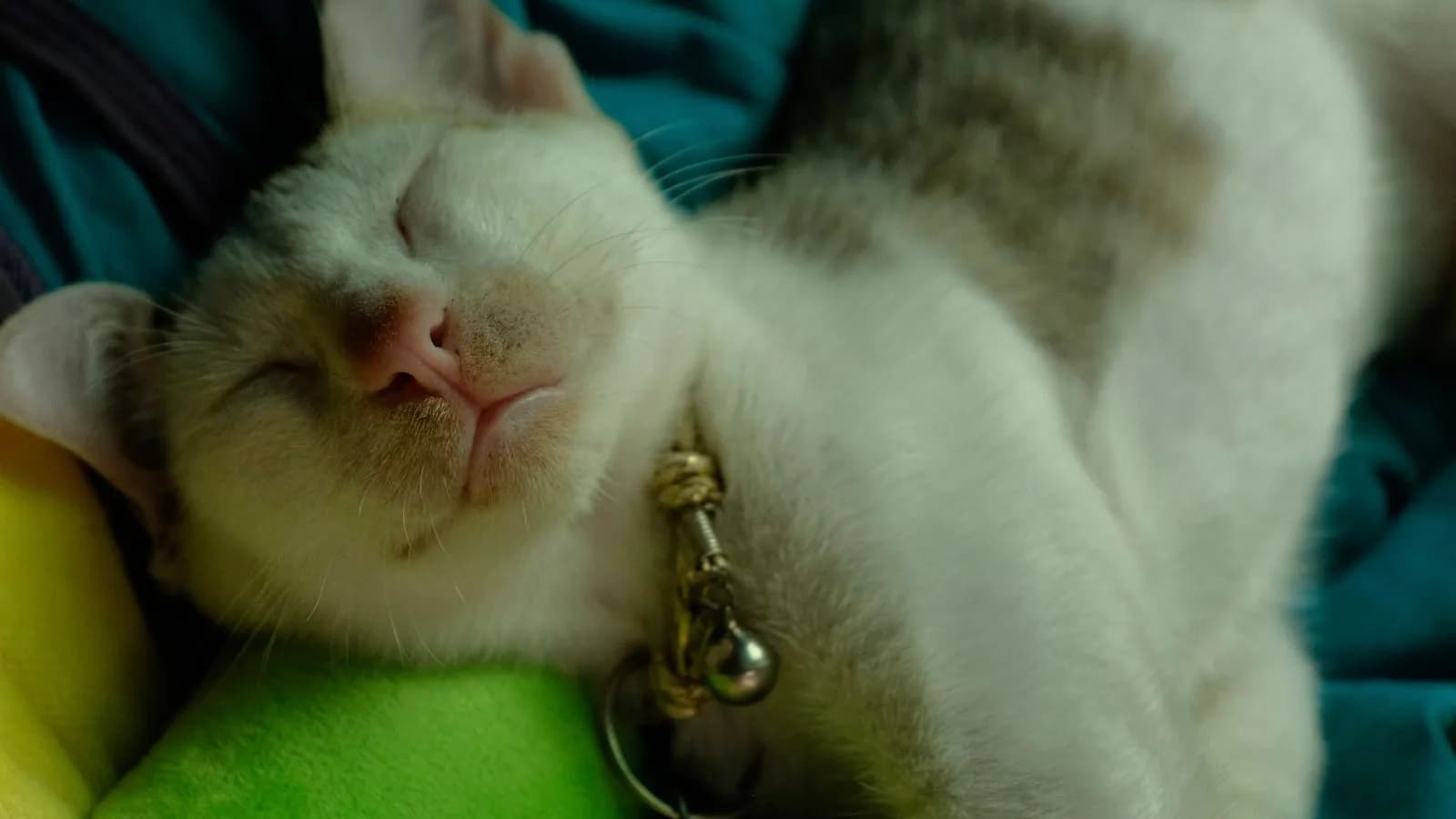
Cookie here, editor-in-chief. The humans asked me to explain why cats sleep so much, which is like asking a chef why food tastes good. Finally, a subject worthy of my byline. Here is the short version: sleeping is not laziness, it is the core competency of a top predator, and I happen to be excellent at it. The long version has surveys, brain scientists, and one properly humbling discovery about that "16 hours a day" number everyone keeps quoting. Pull up a warm blanket.
How many hours do cats sleep? The honest count
Open five cat websites and you will find five confident numbers. Twelve to sixteen hours. Twelve to eighteen. Fifteen on average. Up to twenty. I respect the ambition of whoever keeps rounding these up, but here is the thing our fact-checking desk found: none of those pages points to a study that actually measured it. The ranges drift from site to site because they are editorial habits, not measurements. Repeated often, sourced rarely.
What HAS been measured is still impressive, and it comes from a large owner survey. In a cohort of 1,233 cats aged 11 and older, 54.8 percent were reported sleeping 50 to 75 percent of the day, and another 39.5 percent slept more than three quarters of the day. Do the arithmetic on "50 to 75 percent" and you land around 12 to 18 hours, which is very likely where the famous range comes from. Note the fine print: owner-reported, and senior cats specifically. Nobody has strapped a sleep lab to the general cat population for 24 hours and published the grand total. A scandalous gap in science funding, in my opinion. I volunteer.

Priya · Health desk
Fact-check from the health desk: we traced the famous ranges. The only consumer page that cites a source at all, the National Sleep Foundation, points to Sordo 2020, which is an owner survey of cats aged 11 and up reporting percentages of the day asleep, not hours. Every hours figure out there is a rounding of that, or of nothing. Our wording stands: commonly cited, never measured.
Cookie · Editor-in-chief
So science has no exact idea how much I sleep, and rounded up out of respect. I accept the tribute. For the record, my personal program is twenty hours, artisanal, small-batch, unpublished. Peer review may apply in person, quietly, with snacks.

Sleeping is the job: the predator's energy budget
Why so much, then? Because hunting is expensive and my ancestors did not have a food bowl refilled twice daily by loyal staff. The UK charity Cats Protection puts it plainly: a tired cat cannot hunt or protect itself, so sleeping lots keeps it ready for anything. The vet charity agrees: running, stalking and pouncing are very tiring, and sleep is how the energy comes back for the next hunt. Cat behavior consultant Pam Johnson-Bennett compresses it to one line: sleep is needed to conserve energy and recharge for the next hunt.
In other words, cats sleep like athletes because cats are athletes. The wild hunt is a series of short, explosive sprints with a long recovery program in between. Your couch cat inherited the recovery program in full and outsourced the sprints. Humans call this "sleeping all day." I call it maintaining peak readiness for a hunt that has been rescheduled indefinitely. The readiness is real: you have seen the 6 a.m. hallway sprint. That energy came from somewhere.
Naps, not marathons: how cat sleep is actually built
Here is what the "16 hours" mental image gets wrong: it is not one heroic block of sleep. Cat sleep is a stack of naps, most of them shallow. According to , a cat's light dozing runs in cycles of roughly 15 to 30 minutes, the deep sleep bouts last only about 5 to 7 minutes, and only around a quarter of total sleep time is spent truly deep. The rest is standby mode: ears still on duty, ready to boot instantly if a threat appears, or a fridge opens.
Science has started looking inside a single nap. A 2024 study in the Journal of Mammalogy fitted 12 family cats with noninvasive electrodes and recorded one afternoon nap each, reporting naps of about 51 minutes on average with the full staircase of stages inside: drowsiness, deeper sleep, then REM. Small study, one nap each, but a real measurement, on real living-room cats.
Do cats dream? What the twitching means
Watch a sleeping cat long enough (I recommend it, we are majestic) and you will see the show: whiskers twitch, ears flick, paws paddle, the eyes dart under closed lids, sometimes a tiny chirp escapes. Cats Protection lists exactly these as signs of , the stage where human dreaming happens.
The science behind this is genuinely famous. In the 1960s, French sleep researcher Michel Jouvet showed in laboratory cats that a small region of the brainstem, the , is what keeps the body switched off during . When that off-switch was disabled by lesions in that region, sleeping cats got up and moved through complex, seemingly purposeful behavior while fully asleep, as if acting out whatever was playing in their heads. That line of research, extended by veterinary neurologist Adrian Morrison, gave medicine its model for what is now called REM sleep behavior disorder in humans. Historic, invasive, decades-old work; it is the reason anyone can say with confidence that cats have the full machinery of dreaming sleep.
So: cats have , and REM-linked twitching, vocal squeaks and paw-paddling are normal and documented. Whether the dream stars a red dot, a rival cat or an unguarded roast chicken, nobody can say.
Priya · Health desk
One boundary before the poetry starts: in cats is documented, the twitching is documented, and that is where the evidence ends. Cats Protection states it flat: there is currently no scientific evidence showing what cats dream about. Any sentence about your cat dreaming of chasing mice is speculation wearing a lab coat.
Cookie · Editor-in-chief
Noted and ignored. My dreams are none of science's business. A gentleman never tells what he hunts at night. It was the roast chicken.
Dawn patrol: why the concert starts before your alarm
Cats are : tuned to dawn and dusk, the working hours of the small prey they evolved to hunt. A 2022 telemetry study that tracked 23 cats in captivity for three weeks found activity climbing before sunrise and after sunset in both indoor and outdoor groups, with one very honest wrinkle: the biggest peaks lined up with the humans' arrival and feeding times. Staff schedules shape cat schedules. I could have told them that for free.
The practical consequence is the 5 a.m. wake-up concert and the evening sprint session known to science as a and to you as the zoomies. A twilight-tuned athlete on a long recovery cycle has to put the sprints somewhere, and it will not be noon.
Kittens, adults, seniors: a sleep career
Age moves the numbers, in a direction every source agrees on, even if the exact hours are the same commonly-cited-not-measured class as before:
- Kittens: the most sleep of anyone's life, commonly put near 20 hours a day. Growth is expensive, and it happens during sleep. Where your kitten sits on the growth road is a different question, and our kitten age chart answers it week by week.
- Adults: the commonly cited 12 to 15 hours, structured as the nap stack above.
- Seniors (about 10 and up): more again, commonly cited toward 16 to 20 hours. Cats Protection's framing is about mechanics, not numbers: aging bodies tire faster, so recharging takes longer.
When sleeping more (or less) means something
The amount was never the useful signal; the CHANGE is. Four independent veterinary and welfare institutions say the same thing in different words: Cats Protection flags a cat sleeping a lot more than usual, or hiding more, as a reason to check with your vet. calls a sudden change in sleeping pattern or excessive napping a possible sign of an underlying condition. Cornell's senior-cat guidance lists changed sleeping or eating patterns among the signs that warrant a vet visit without delay. And Tufts veterinary behaviorist Nicholas Dodman notes that changes in sleep patterns may signal illness.
Less sleep counts too. A senior cat that stops sleeping and starts pacing and yowling may be running on an overactive thyroid; restlessness is part of the classic picture in our hyperthyroidism guide. And a senior cat whose nights have turned into crying tours is not just "sleeping less": that pattern has its own list of causes, most of them treatable, and our cat meowing at night guide walks through all six.

The Vet's Take · Veterinary review
Clinical note: the baseline that matters is your cat's own. A real change held over days, sleeping much more or much less, night pacing, new hiding, appetite or weight shifts, is worth an appointment, and faster in a cat over ten. A sleep change is one of the earliest signs an owner can actually observe at home.
Cookie · Editor-in-chief
You heard the professional. Observe me closely. Log every nap, and if I appear to need anything during observation, the standard consulting rate is one treat per data point. The invoice is on the fridge.
What to take away
- No study has ever measured a clean "cats sleep X hours a day" figure for the general cat population; the famous 12 to 16 hours is an editorial consensus, not a measurement.
- The best real data, an owner survey of 1,233 cats aged 11 and up, found over half sleeping 50 to 75 percent of the day and nearly 40 percent sleeping more than that.
- Cats sleep so much because they are burst predators: short, expensive sprints, long recovery, a budget inherited intact by cats whose hunts are now catered.
- Cat sleep is a stack of naps: light dozing in 15 to 30 minute cycles, deep bouts of only 5 to 7 minutes, roughly a quarter of sleep time spent truly deep ( figures).
- Cats have full , shown by Michel Jouvet's 1960s brainstem research; sleep twitching, paw-paddling and little squeaks during REM are normal, and what cats dream about remains scientifically unknown.
- The red flag is change, not quantity: a cat sleeping clearly more OR less than its own normal earns a vet visit, especially past age 10.
 The vet's take

Veterinary review
Are you a vet?
Your professional read belongs here: every verified practitioner can leave a note, published once our editors have reviewed it.
Sign in and get your license number verified. We check it in the public register, we never ask for or keep a copy of your diploma, and your number is never published.
Frequently asked questions
How many hours a day do cats sleep?
Commonly cited ranges run from 12 to 16 hours for adults, up to 20 for kittens and seniors, but no study has measured a general average. The best measured data is an owner survey of cats aged 11 and up, where most cats slept between half and three quarters of the day, which works out to roughly 12 to 18 hours.
Why do cats sleep so much?
Because they are ambush predators built for short, intense bursts of hunting effort followed by long recovery. Sleep is how the energy budget balances. Veterinary and welfare sources agree the drive persists in well-fed indoor cats: the biology of the hunt stayed, even though dinner is now delivered.
Do cats dream?
They have all the machinery for it. Cats show full REM sleep, and 1960s brainstem research by Michel Jouvet demonstrated that sleeping cats freed of REM's muscle switch-off acted out complex behaviors, as if living a dream. Whether they dream and what the content might be, science cannot say: no evidence shows what cats dream about.
Why does my cat twitch in its sleep?
Twitching whiskers, flicking ears, paddling paws, darting eyes under closed lids and small squeaks are documented signs of REM sleep, the deep stage. It is normal, and waking a cat mid-twitch is not necessary. A cat that trembles or jerks while clearly awake is a different situation and a vet question.
Is my cat sleeping too much?
Compare your cat to its own baseline, not to a number. Sleeping a lot is normal; a clear change from that cat's usual pattern, more sleep or less, especially with hiding, appetite change or weight change, is what veterinary sources flag for a check-up. Sudden changes in senior cats deserve the quickest call.
Do kittens sleep more than adult cats?
Yes. Kittens sleep the most of any life stage, commonly cited near 20 hours a day, because growth hormone release and body development happen during sleep. Sleep amounts drop through adulthood, then rise again past about age 10 as older bodies tire faster and recover more slowly.
 Community questions
Got a question this page doesn't cover? Ask it: the best ones get published here with their answer.
This is information, not veterinary advice, and it cannot tell you what is wrong with your cat. Our rule is a simple one: if something is wrong with your cat, call your vet, and call an emergency clinic if it is out of hours. Nothing you read here is a reason to wait.
Medical information applies to every reader. Prices, legal duties and common practice do not: unless stated otherwise, they are given for the United States, and they differ in the UK, Canada and Australia, and often between states or provinces. Check with your own vet and your own local authority.
Our sources
- Sordo et al 2020, prevalence of disease and age-related behavioural changes in cats (the owner survey behind the sleep percentages; Veterinary Sciences)
- Parker et al 2022, comparison of locomotor and feeding rhythms between indoor and outdoor cats (the crepuscular telemetry study, 23 cats)
- Mahowald & Schenck 2004, REM sleep without atonia, from cats to humans (Jouvet's 1965 lesion findings)
- Luppi 2018, Jouvet's animal model of RBD and REM sleep mechanisms (Sleep Medicine)
- Sleep Research Society, in memoriam Dr. Adrian R. Morrison (the REM-without-atonia model and RBD)
- Cornell Feline Health Center, loving care for older cats (sleep-pattern change as a senior warning sign)
- PDSA, why do cats sleep so much (sleep-cycle structure and the energy-recovery framing)
- Cats Protection, cats and sleep (predator energy budget; sleep-change warning)
- Cats Protection, do cats dream (the REM sign list; no evidence of dream content)
- National Sleep Foundation, how many hours do cats sleep (the hours conversion layered on Sordo 2020)
- PetMD, why do cats sleep so much (veterinary-reviewed; age-band figures)
- Hill's Pet Nutrition, why do cats sleep so much (Pam Johnson-Bennett and Nicholas Dodman quotes)
- Bálint et al 2024, noninvasive EEG measurement of sleep in the family cat (Journal of Mammalogy; abstract-level only, page bot-walled)
- Purina UK, do cats dream (Jouvet and Morrison, popular summary)

Worth keeping a paw on
Pin this guide
So you can find it the day you need it, and share it with someone whose cat does the same thing. One click and it sits in your board.
Pin it on PinterestAlso worth reading
All cat facts →
Article
What Does Catnip Do to Cats? A Ten-Minute Party, Scientifically Catered
What does catnip do to cats? A short euphoric high, an opioid-backed glow, and a built-in mosquito repellent. The science of nepetalactone, the silver vine backup, and the safety notes.
Read
Article
The Cat Loaf: Why Cats Turn Into Bread, and How to Read One
The cat loaf, decoded: why cats fold into bread (your house is colder than they want), what tucked paws say about trust, five loaf variants, and the one hunched version that needs a vet.
Read
Article
How Do Cats Mate? The Scream, the Trigger, and the Litter With Three Fathers
Cats do not ovulate until they mate, which explains the scream, the repeat performances, and why one litter can have several fathers. The studies, with their numbers.
Read
The floor belongs to our members. Keep it kind, links are not allowed, and images go through moderation before anyone else sees them.