

What Does Catnip Do to Cats? A Ten-Minute Party, Scientifically Catered
What does catnip do to cats? A short euphoric high, an opioid-backed glow, and a built-in mosquito repellent. The science of nepetalactone, the silver vine backup, and the safety notes.
Published August 28, 2026Updated September 8, 2026 8 min read
Contents
Cookie here, editor-in-chief. The humans asked me to explain catnip, which is like asking a sommelier to explain wine: I am both the expert and the target audience. Fine. Here is what this unassuming gray-green herb in the mint family does to us, why it does it, and why the science, and I say this with professional envy, is genuinely better than most of what gets written about it. Catnip, botanical name Nepeta cataria, carries a volatile compound called . One good sniff and roughly two cats out of three throw a short, private, perfectly legal party. I will also cover the guest list, because not everyone is invited, and the backup venue, which is called silver vine.
What catnip actually does to a cat
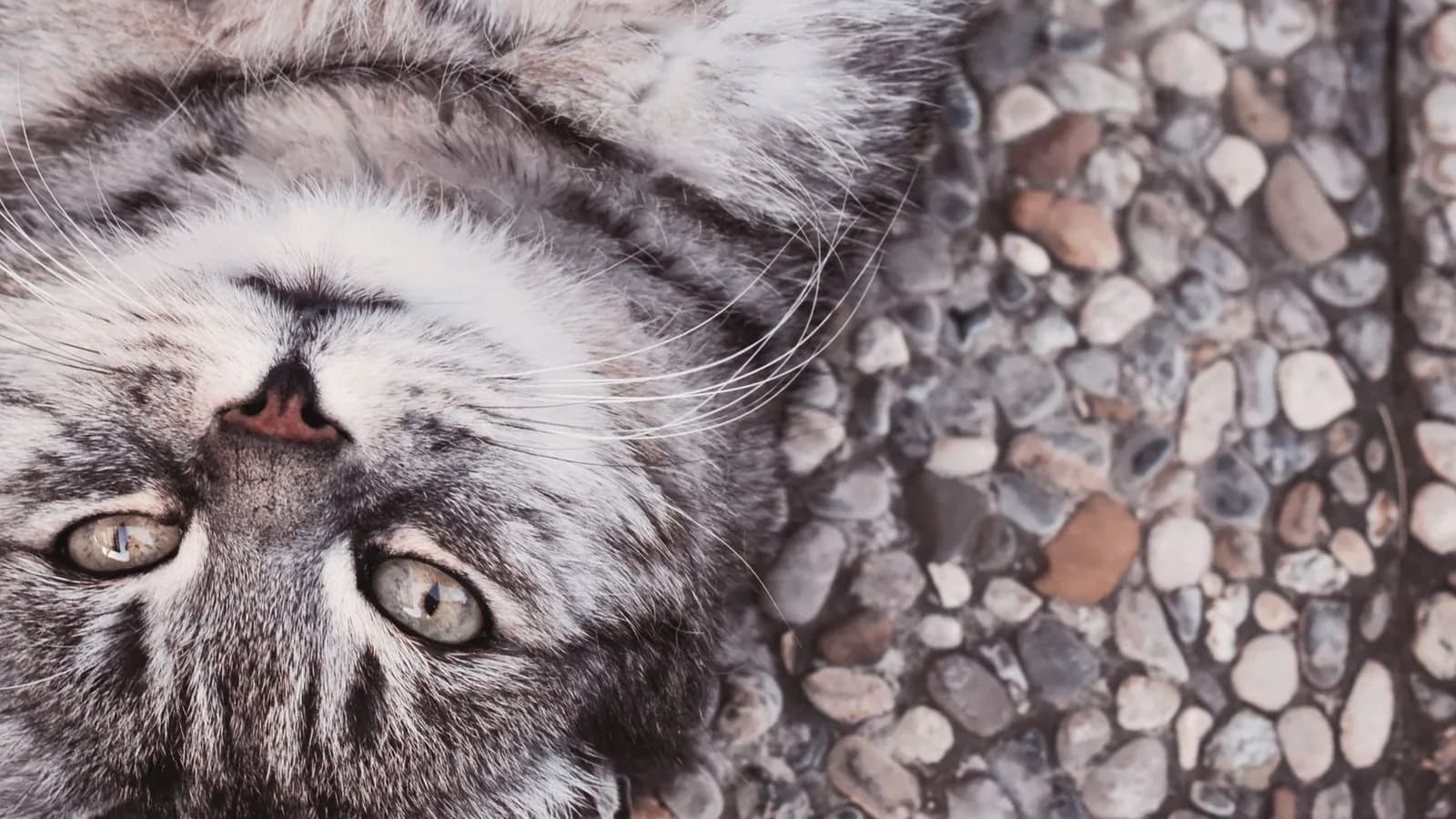
The classic show, described the same way from the 1960s research on: prolonged sniffing, head shaking, cheek and chin rubbing against the source, then the signature move, rolling over on the ground like the floor suddenly became excellent. Scientific American's veterinary description adds jumping, vocalizing and salivating to the list. If the drooling part surprises you, our drooling guide explains that a relaxed, overstimulated cat can leak a little; some of us also get a burst of running afterward that looks a lot like the zoomies. Dignified? No. Voluntary? Barely.
Two practical details every catnip owner notices. First, the party is short: the commonly cited figures are five to fifteen minutes of response, then a reset period of half an hour to a couple of hours during which the cat is temporarily immune and more catnip does nothing. Second, the route matters: sniffed catnip is commonly described as the stimulating version, while eaten catnip tends to land calmer, closer to sedation than fireworks. That eaten-versus-sniffed split is pet-care consensus rather than a nailed-down lab finding, which is exactly the kind of thing my health desk enjoys pointing out.
It is also searched as a remedy for a cat in heat; it distracts a responsive cat for minutes and changes nothing about the cycle, as our cat in heat page sets out.

Priya · Health desk
Health desk, one correction before those numbers become gospel. The five-to-fifteen-minute high and the thirty-minute-to-two-hour reset are often repeated, rarely sourced: no single measured study pins them down. What is measured: responder counts, 68 of 100 cats in the 2017 plant study, 18 of 25 and 17 of 30 in the 2021 paper. The ballpark holds. The stopwatch does not.
Cookie · Editor-in-chief
I stopped listening at 'high'. My performances are not a data problem, Priya, they are a gift. Readers: the numbers are hers, the artistry is mine. Moving on.

How it works: the nose, not the mystery organ
Here is the part most articles get wrong, and we will not. Cats have two scent systems: the regular nose, and the in the roof of the mouth, the one behind the open-mouthed grimace. It sounds exotic, so the internet loves crediting it with the catnip response. The measured answer says otherwise. In 1985, Hart and Leedy tested it directly: cats with the vomeronasal organ surgically disconnected kept responding to catnip exactly as before, while removing the olfactory bulbs, the brain's regular smell station, in the researchers' own words "virtually eliminated all response behaviors." The catnip reaction runs through the plain old nose. The mystery organ sits that dance out.
What happens after the nose is where it gets properly chemical. A 2021 study in Science Advances measured plasma β-endorphin, one of the body's own opioid messengers, in cats exposed to these plant compounds: it rose markedly after exposure and did not rise after a control. When the researchers then blocked μ-opioid receptors with naloxone, the rubbing-and-rolling response shrank significantly. Translation: the catnip glow is the cat's own endorphin system being rung like a dinner bell. Nobody is "high on a plant" so much as high on themselves, which, frankly, has always been my policy.
The mosquito twist: why this behavior exists at all
For decades the honest answer to "why do cats do this" was a shrug. Then the same 2021 Science Advances team tested an idea with actual mosquitoes. When cats rub their faces and heads in catnip or silver vine, they wipe the plant's compounds onto their fur, and those compounds repel insects. In the experiment, a cat head treated with , silver vine's main iridoid, drew on average half as many Aedes albopictus mosquito landings as an untreated control. Cats that had rubbed on the leaves themselves also took significantly fewer landings than unstimulated cats. The rolling and face-rubbing suddenly reads less like a party trick and more like a self-applied bug spray with excellent reviews.
The 2022 follow-up made it better. When a cat licks and chews the leaves, the damage multiplies the plant's airborne output roughly tenfold, and shifts the chemical mix toward a cocktail that repels mosquitoes faster and at lower doses. So the full sequence, chew, rub, roll, is a coordinated application protocol. Ancestral cats that felt rewarded for marinating themselves in this plant got fewer bites, and fewer bites means fewer bite-borne problems. Evolution built a spa treatment and made it feel fantastic. I would like this noted the next time someone calls my rolling "silly": I am operating sophisticated equipment.
Two cats out of three: responders, non-responders and late bloomers
Not every cat gets the invitation, and this is genetics, not personality. The foundational count comes from Neil Todd's 1962 heredity study, where about a third of sampled cats showed no response. Modern numbers land in the same neighborhood while refusing to be one tidy figure: 68 of 100 cats responded to catnip in a 2017 BMC Veterinary Research study, 18 of 25 laboratory cats and 17 of 30 Japanese feral cats in the 2021 paper. Across studies the responder share runs from just under 60 to about 80 percent. Todd read his data as a single dominant gene; a 2011 analysis of 210 cats found no such tidy pattern and estimated the trait as strongly heritable but polygenic, several genes stacking the odds rather than one switch.
Two footnotes worth having. A 2017 Mexican study found that only about 20 percent of cats displayed the full active performance, the rolling, while around 80 percent showed some quieter, passive response, a relaxed sphinx settle rather than a floor show. So "non-responder" cats may simply be understated guests. And kittens: the response is generally absent before roughly three months of age, switching on somewhere between three and six months, with some individuals reporting late. A kitten ignoring catnip is not broken. She is underage, and the club checks ID.
Silver vine and the other party herbs
If your cat is a true catnip non-responder, the 2017 BMC study tested the alternatives head to head on 100 domestic cats, and the results deserve their table:
| Plant | Cats responding | Of catnip non-responders |
|---|---|---|
| Silver vine (Actinidia polygama) | 79 of 100 | 71% responded |
| Catnip (Nepeta cataria) | 68 of 100 | (baseline) |
| Tatarian honeysuckle (wood) | 53 of 100 | 32% responded |
| Valerian root | 47 of 100 | 19% responded |
Silver vine, a climbing plant from the mountains of Japan and China where it has been cat currency for centuries, actually out-scored catnip itself, and it caught 71 percent of the cats catnip missed. Its main compound is , a close chemical cousin of , related but not identical. Practical takeaway for staff: if the catnip mouse gets a shrug, the odds say try silver vine before concluding your cat is immune to joy.
Do big cats get the same party?
Species by species, and the results are gloriously inconsistent. A 1976 zoo study of 33 wild cats found lions and jaguars reacting strongly even at low doses, tigers and cougars barely bothering, and the two cheetahs tested refusing to approach at all. The 2021 Science Advances paper confirmed responders among an Amur leopard, two jaguars and two Eurasian . And the 2017 BMC study found eight of nine tigers indifferent to catnip while all five of its bobcats partied on both catnip and silver vine.
| Species | Verdict | Study |
|---|---|---|
| Lion, jaguar | Strong responders | 1976 zoo study |
| Amur leopard, Eurasian | Responders | Science Advances 2021 |
| Bobcat | Responders (5 of 5) | BMC Vet Research 2017 |
| Tiger | Mostly indifferent | 1976 and 2017, independently |
| Cheetah | No response observed | 1976 zoo study |
The mighty tiger, unmoved. The cheetah, too cool to attend. Meanwhile the domestic cat, the jaguar and I share the fun gene. Draw your own conclusions about who won evolution.
Is catnip safe?
Short answer: yes, with normal-sized asterisks. Catnip sits in the 's plant database with unusually gentle wording, quoted here exactly: "Many cats love catnip, but it can cause vomiting and diarrhea. It makes some cats sedated and others stimulated." That is the honest risk profile. There is no documented dangerous dose; the widely repeated view among pet-care sources is that a cat who eats too much dried catnip may vomit or get loose stools, both self-limited. A cat that keeps vomiting is a different story, and our throwing-up guide explains where the line sits. Cats chewing on greenery generally is its own subject, covered in our grass-eating article.
On frequency: the common guideline among pet-care sources, and it is a guideline, not a veterinary standard, is a couple of catnip sessions per week, partly because the reset mechanism means daily exposure just blunts the magic. And for the humans wondering about themselves: does nothing recreational for your species. People have brewed catnip tea for mild relaxation for centuries, which is adorable, but the receptor party is cats-only. You built the internet; we got this. Fair trade.

The Vet's Take · Veterinary review
One note from the clinic before anyone refills the bowl. Catnip has no documented dangerous dose, and the 's wording is deliberately mild: vomiting and diarrhea are possible, and it sedates some cats while it stimulates others. But vomiting or diarrhea that persists after the effect has worn off is not a catnip question anymore. That is a call to your veterinary practice.
Cookie · Editor-in-chief
Noted, doctor. I will restrict myself to responsible portions, effective the moment my consulting invoice for this article is paid. I bill in freeze-dried chicken. Net zero days.
What to take away
- Catnip's active compound is , and the response runs through the main olfactory system: in the 1985 study that settled the mechanism, disconnecting the changed nothing while removing the olfactory bulbs virtually eliminated the response.
- Across studies, roughly 60 to 80 percent of cats respond to catnip (68 of 100 in the 2017 BMC study); the trait is heritable and, per a 2011 analysis of 210 cats, polygenic rather than a single dominant gene.
- The 2021 Science Advances study found the likely purpose: face-rubbing wipes plant iridoids onto the fur, and a treated cat head drew half as many mosquito landings; the response itself releases β-endorphin and works through μ-opioid receptors.
- The 2022 follow-up measured that a cat's chewing damage multiplies a leaf's emission roughly tenfold, turning the plant into a faster-acting insect repellent, which is the proposed evolutionary payoff of the whole ritual.
- Kittens generally do not respond before about 3 months of age; the response appears between roughly 3 and 6 months.
- Silver vine out-performed catnip in the 2017 four-plant study (79 vs 68 of 100 cats) and worked on 71 percent of catnip non-responders.
- Catnip has no documented dangerous dose; the notes it can cause vomiting and diarrhea and can sedate or stimulate. Vomiting or diarrhea that persists is a call-your-vet matter, not a catnip matter.
 The vet's take

Veterinary review
Are you a vet?
Your professional read belongs here: every verified practitioner can leave a note, published once our editors have reviewed it.
Sign in and get your license number verified. We check it in the public register, we never ask for or keep a copy of your diploma, and your number is never published.
Frequently asked questions
Why do cats like catnip?
The plant's compound nepetalactone triggers the cat's own reward chemistry: a 2021 study measured elevated β-endorphin after exposure, and blocking opioid receptors shrank the response. The best-supported reason the behavior exists at all is practical: rubbing the compounds into fur measurably repels mosquitoes, so evolution made the bug-spray application feel wonderful.
How long does a catnip high last?
The commonly cited window is five to fifteen minutes of active response, followed by a reset of roughly thirty minutes to two hours during which the cat temporarily stops reacting. Those figures are repeated across sources rather than pinned to a single measured study, so treat them as a reliable ballpark, not a stopwatch.
Can kittens have catnip?
It is not harmful, it is just wasted: kittens generally show no response before about three months of age, and the sensitivity switches on somewhere between three and six months. Some cats report to the party as late as their first birthday. If a young kitten ignores catnip, nothing is wrong.
Can a cat overdose on catnip?
There is no documented dangerous dose. A cat that eats a lot of dried catnip can vomit or get diarrhea, and both normally settle on their own. Vomiting or diarrhea that persists is no longer a catnip question: contact your veterinary practice. The behavioral effect itself always fades within the hour.
Why doesn't my cat react to catnip?
Genetics. Across studies, somewhere between one in five and one in three cats shows no classic response, and a 2011 pedigree analysis found the trait polygenic. Before declaring your cat immune to fun, try silver vine: in the 2017 study of 100 cats it worked on 71 percent of the cats that catnip missed.
Does catnip affect big cats like lions and tigers?
Species by species. Lions and jaguars responded strongly in a 1976 zoo study, and a 2021 paper added an Amur leopard, jaguars and Eurasian lynx to the responder list. Tigers were mostly indifferent in two independent studies, and the cheetahs tested in 1976 never approached the catnip at all.
Does catnip work on humans?
Not the way it works on cats: the feline response runs through receptors and reward chemistry humans do not share in the same way. Catnip has a long history as a mild herbal tea for people, but nobody is rolling on the kitchen floor over it.
 Community questions
Got a question this page doesn't cover? Ask it: the best ones get published here with their answer.
This is information, not veterinary advice, and it cannot tell you what is wrong with your cat. Our rule is a simple one: if something is wrong with your cat, call your vet, and call an emergency clinic if it is out of hours. Nothing you read here is a reason to wait.
Medical information applies to every reader. Prices, legal duties and common practice do not: unless stated otherwise, they are given for the United States, and they differ in the UK, Canada and Australia, and often between states or provinces. Check with your own vet and your own local authority.
Our sources
- Uenoyama et al 2021, domestic cat response to iridoids: silver vine, nepetalactol and mosquito repellency (Science Advances)
- Uenoyama et al 2022, domestic cat damage to plant leaves containing iridoids enhances chemical repellency to pests (iScience; the leaf-damage follow-up)
- Bol et al 2017, responsiveness of cats (Felidae) to silver vine, Tatarian honeysuckle, valerian and catnip (BMC Veterinary Research; the 100-cat four-plant comparison)
- Hart & Leedy 1985, analysis of the catnip reaction: mediation by olfactory system, not vomeronasal organ (Behavioral and Neural Biology)
- Espin-Iturbe et al 2017, active and passive responses to catnip are affected by age, sex and early gonadectomy (Behavioural Processes; the 20 percent active / 80 percent passive finding)
- ASPCA, toxic and non-toxic plants: catnip (the safety wording, quoted verbatim)
- Todd 1962, inheritance of the catnip response in domestic cats (Journal of Heredity; the foundational heredity study, figures read via secondary aggregation)
- Villani 2011, heritability and characteristics of catnip response in two domestic cat populations (the 210-cat polygenic re-estimate, read via secondary summary)
- Hill et al 1976, species-characteristic responses to catnip by undomesticated felids (Journal of Chemical Ecology; the 33-animal zoo study, read via secondary summary)
- Scientific American, how does catnip work its magic on cats? (veterinarian Ramona Turner's lay explanation and the duration estimate)

Worth keeping a paw on
Pin this guide
So you can find it the day you need it, and share it with someone whose cat does the same thing. One click and it sits in your board.
Pin it on PinterestAlso worth reading
All cat facts →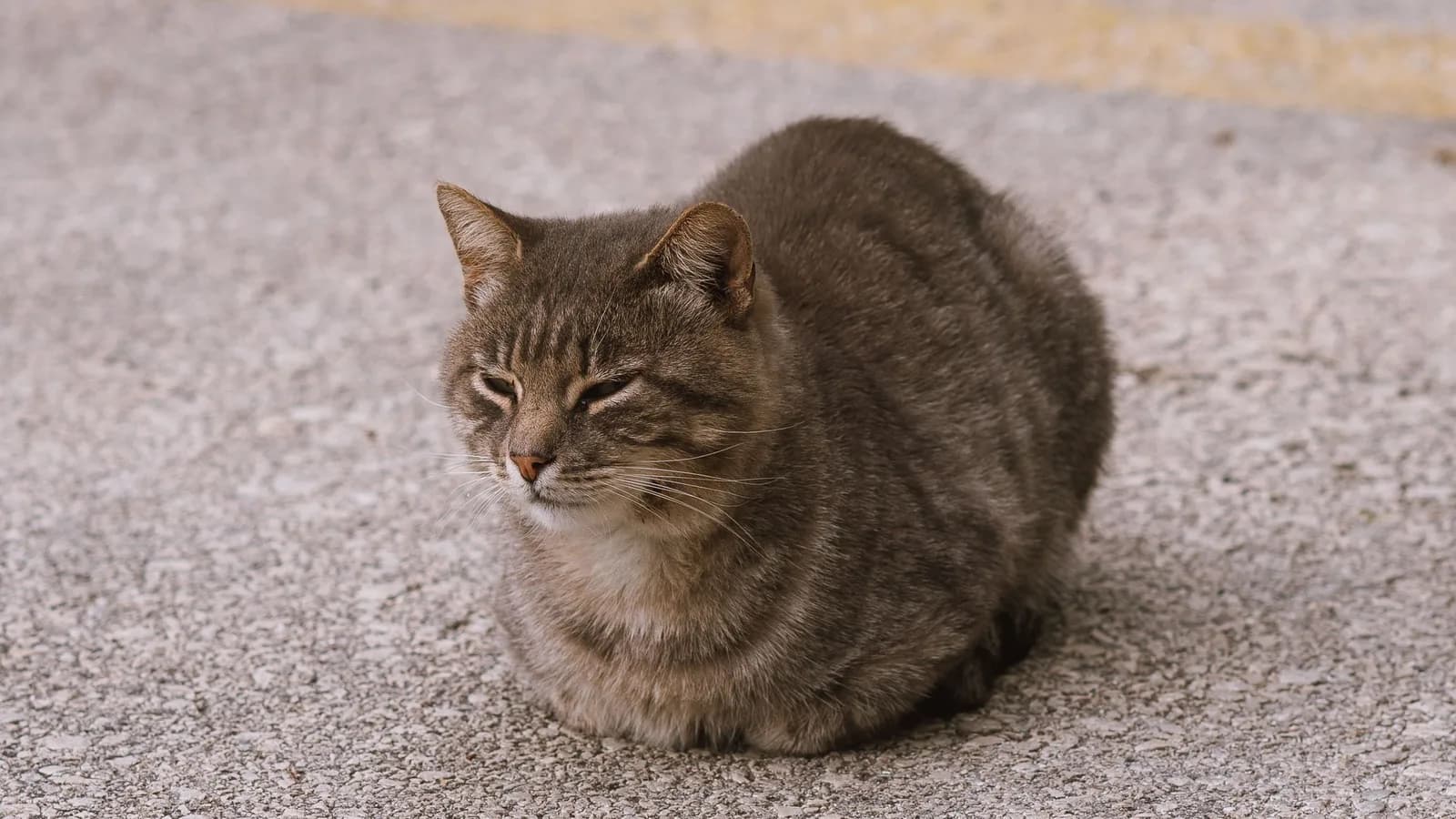
Article
The Cat Loaf: Why Cats Turn Into Bread, and How to Read One
The cat loaf, decoded: why cats fold into bread (your house is colder than they want), what tucked paws say about trust, five loaf variants, and the one hunched version that needs a vet.
Read
Article
How Do Cats Mate? The Scream, the Trigger, and the Litter With Three Fathers
Cats do not ovulate until they mate, which explains the scream, the repeat performances, and why one litter can have several fathers. The studies, with their numbers.
Read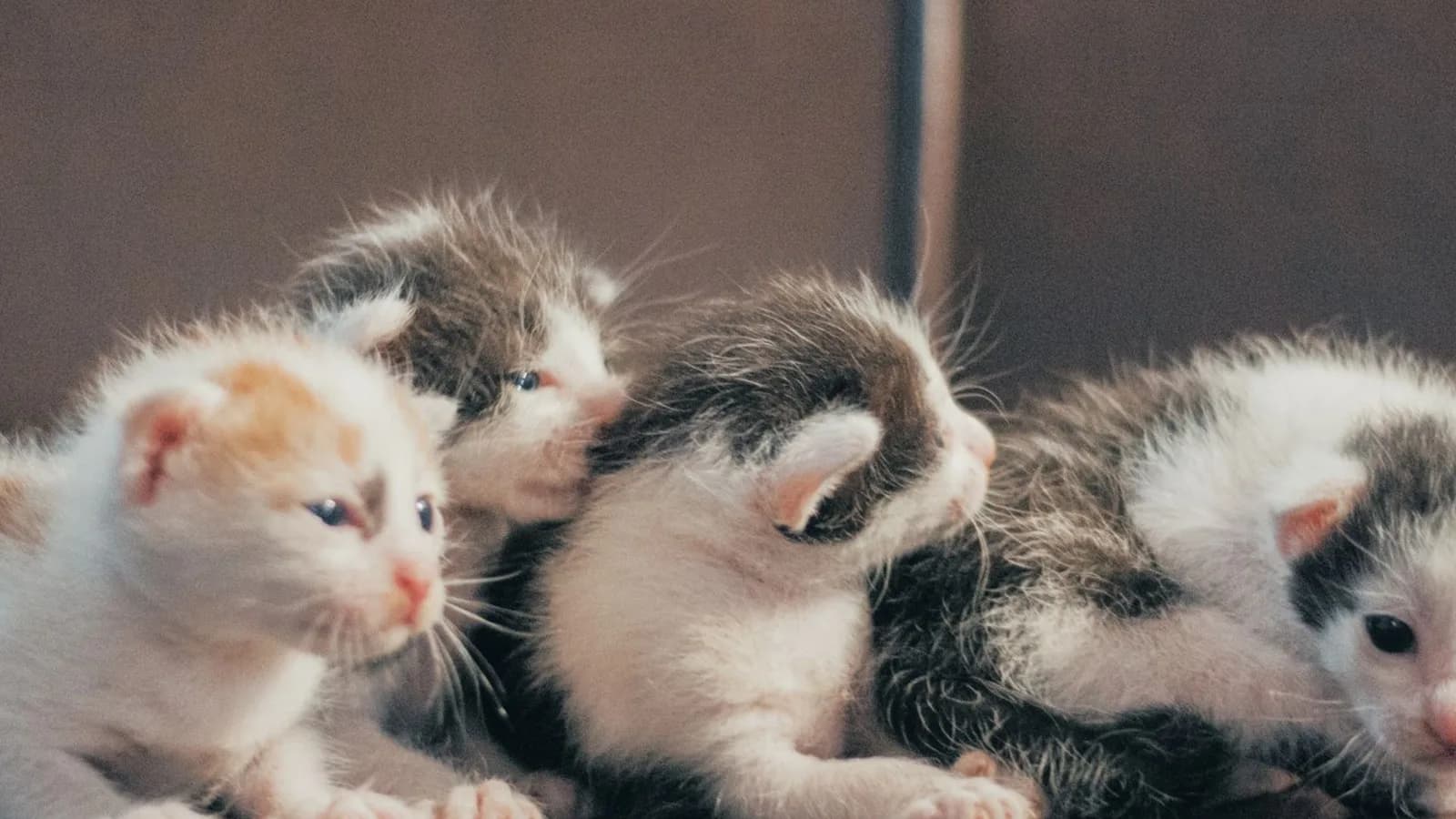
Article
Kitten Age Chart: How Old Is This Kitten, and What Does It Need Right Now?
Weight, eyes, ears and teeth week by week: tell a kitten's age at a glance, and know exactly what care each week needs, from bottle to first vaccines.
Read
The floor belongs to our members. Keep it kind, links are not allowed, and images go through moderation before anyone else sees them.