

Siberian Cat Colors: A Palette With Its Genes Named
Every Siberian color explained by its actual gene, including sunshine, the golden mechanism this breed owns, and the registry disagreements nobody else maps.

Published August 21, 2026 7 min read
Contents
Most Siberian color lists are adjective collections. This one is a map. Every color family below carries the gene that builds it. The source is a February 2026 peer-reviewed review, the only comprehensive synthesis of Siberian coat genetics yet published, checked against five registries' own standard documents. And this breed holds one genuine genetic celebrity: a golden color, sunshine, whose mechanism belongs to the Siberian in a way no other breed's palette can claim.
The base palette: black, red, and their dilutes
Siberian color starts from black-based pigment (the B locus, TYRP1). Red is the X-linked O locus. The actual switch, per two 2025 genomic studies, is a small deletion near the gene. Because it rides the X chromosome, males are red or not, while two-X females can be both at once: the tortoiseshell weave. The dilution gene (, a single fully recessive frameshift) softens black to blue and red to cream. That yields the everyday palette: black, blue, red, cream, , , each in solid or tabby.
Where the registries genuinely disagree
Chocolate, cinnamon, lilac and fawn are where the paperwork splits. 's current standard (revised May 2026) bars them plainly: "chocolate, lilac, cinnamon, fawn and caramel are not allowed." WCF bars them for Siberian and Neva Masquerade alike. excludes chocolate and lavender/lilac as evidence of hybridization. 's exclusion list is the widest of the five we read.
The genuine exception is Canada: 's own color tables list chocolate, cinnamon, fawn and lilac at every pattern level, a registry position no other body we read shares. So "can a Siberian be chocolate?" has a real answer. Not at four of the five registries we read; yes on paper in Canada. (A 2026 review described as the one registry NOT excluding these colors. TICA's own May 2026 standard, read directly, now says otherwise. A reminder that standards move and review articles freeze.)
Tabby: four patterns and a forehead M
The gene () decides whether hairs are banded. The tabby patterns themselves come from (mackerel versus blotched, with spotted best understood as a mackerel variant) and DKK4 (ticked). Siberians show classic, mackerel, spotted and ticked, with one registry quirk: permits no ticked pattern in the breed. The agouti "M" on the forehead and a pale chin are pattern features, not white spotting. That distinction is worth knowing before reading a .
Sunshine: the color this breed gave to genetics
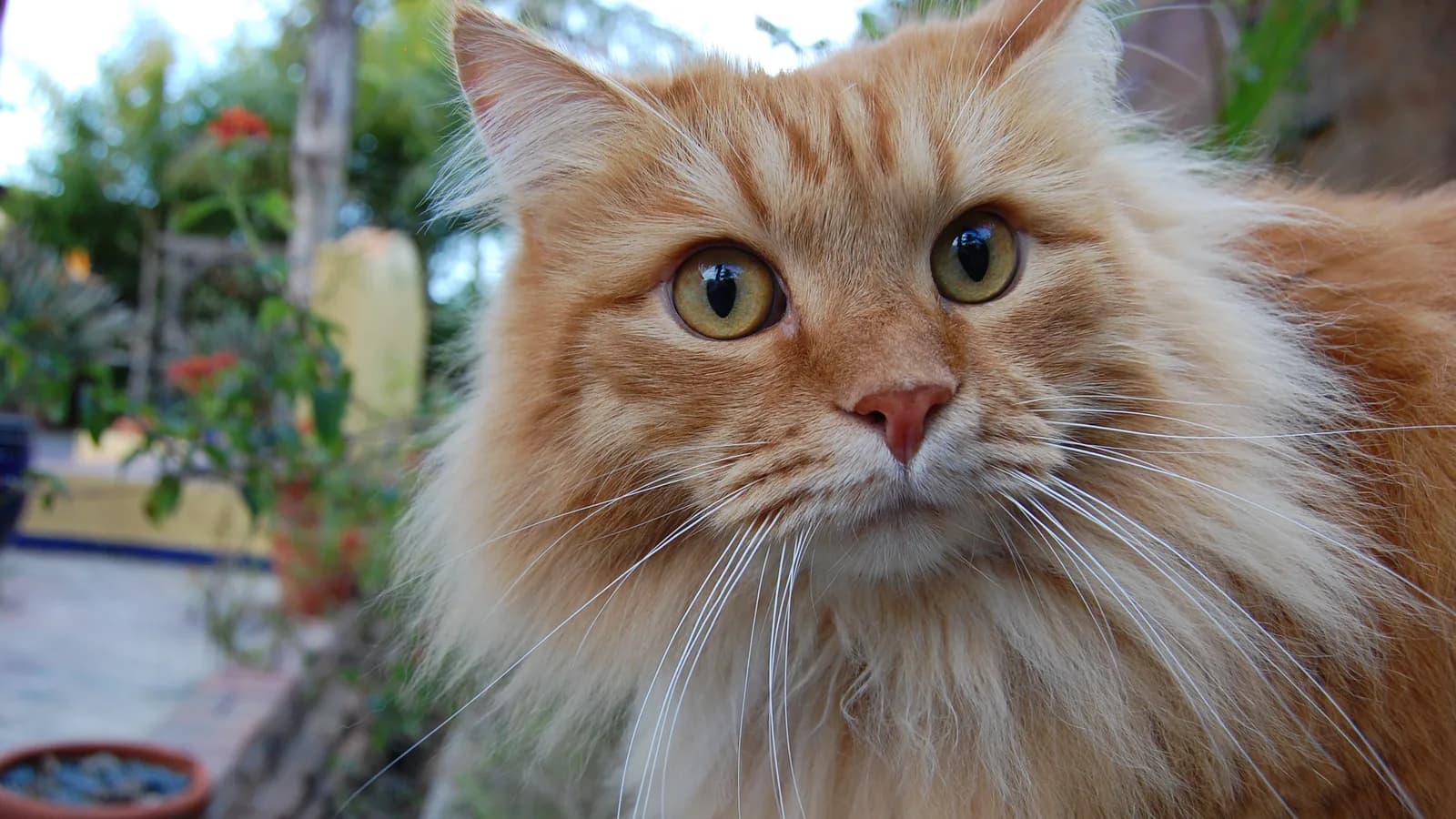
The warm, honeyed gold some Siberians wear is not ordinary rufousing, and not the Persian "golden." It is its own mechanism: a recessive variant in the CORIN gene (c.2383C>T, the allele written wbSIB), identified in 2021 by genome-wide association in sunshine Siberians. A second, intensifying variant followed in 2022 (c.839G>A, wbeSIB, "extreme sunshine"). The dominance order runs Wb+ > wbeSIB > wbSIB. British Shorthairs later turned out to carry their own, different CORIN variant for their "copper" look. That confirmed the point: golden mechanisms are breed-specific, and this one is the Siberian's.
The look, per 's own standard (rare among registries in naming the gene outright): warm undercoat, lightened tabby marks, an enlarged off-white zone around a pink, un-outlined nose. Recognition travels under three names. TICA says "Corin." registers "Zolotoy." WCF coded the color "u" in 2017. 's 2025 acceptance is the strictest: provisional, black-based cats only, and requiring a DNA test of the CORIN variant before registration. One caution from the current SERP: a top-ranking competitor page describes this mechanism backwards (as a DARK color added to the hair). The effect is the opposite, a widening of the pale warm band.
Bimetallic: silver and gold at once
Silver is the inhibitor locus: dominant, its causal gene still unidentified at the molecular level despite two competing unpublished lab claims. It suppresses pigment at the hair base. Classical coat genetics assumed silver and golden were mutually exclusive; sunshine Siberians broke the rule. A cat carrying both the inhibitor allele and the CORIN variant wears "silver sunshine," the bimetallic coat: cool silver and warm gold in one hair shaft, recognized by name at and among others.
One practical note from the breeder testing record, labeled as breeder-reported: silver, smoke and bimetallic lines (historically involving Persian outcrosses) typically test HIGH on allergen levels. Worth knowing if the allergy question is what brought you to this breed. And "dark sunshine," a look breeders describe (golden roots under darker marking), currently rests on a breeder hypothesis about genotype, published nowhere. We name it as exactly that.
White: spotting, dominant white, and an honest gap
White patches and all-white coats are both gene events of different sizes. An insertion causes patchy absence (spotting, from lockets to van patterns, with registries drawing the bicolour/harlequin/van percentage lines differently). A larger insertion silences pigment entirely (). Dominant white is the deafness-linked one. In white, especially blue-eyed cats generally, the same developmental pathway that removes pigment cells can affect the inner ear.
That is why WCF, and all require a veterinary hearing certificate before a white cat breeds. The honest Siberian-specific fact: no peer-reviewed study has ever measured deafness prevalence in Siberians specifically. We state that as the gap it is, rather than borrowing a general figure. A white kitten's hearing can be checked objectively ( testing): ask the breeder for the certificate rather than a reassurance. And for any concern about a cat you own, something wrong with your cat means call your vet, out of hours an emergency clinic.
Colorpoint, and eye color to check against the coat
The pointed, blue-eyed Siberians have their own page: genetically the same population, one temperature-sensitive allele apart. What belongs here is the eye-color rule a buyer can actually use, stated near-identically by and . Pointed cats MUST have blue eyes. Non-pointed cats run green, gold, green-gold or copper. Blue or odd eyes in a non-pointed cat are only accepted with solid white or with-white coats. A straight-coated, blue-eyed brown tabby "Siberian" is either carrying the separate, PAX3-linked dominant blue eye trait or mislabelled. Either way, ask questions. All kittens are born blue-eyed; adult color settles later.
The palette at a glance
 The vet's take
Veterinary review
Are you a vet?
Your professional read belongs here: every verified practitioner can leave a note, published once our editors have reviewed it.
Sign in and get your license number verified. We check it in the public register, we never ask for or keep a copy of your diploma, and your number is never published.
Frequently asked questions
What colors do Siberian cats come in?
Black and red and their dilutes (blue, cream), tortoiseshell mixes, all four tabby patterns, silver and smoke, sunshine gold and bimetallic, every degree of white, and the colorpoint Neva Masquerade: nearly the full feline palette, with chocolate/cinnamon/lilac/fawn barred by most registries.
What is a sunshine Siberian?
A cat carrying a recessive CORIN gene variant unique to this breed's golden look: warm undercoat, lightened tabby marks, pink un-outlined nose. Identified in 2021; FIFe now requires the DNA test before registering the color.
Can Siberian cats be chocolate or lilac?
Not at TICA, CFA, WCF or Australia's ACF, whose standards exclude those colors; Canada's CCA-AFC is the one registry we read that lists them as accepted.
Are white Siberians deaf?
Some blue-eyed white cats of any breed carry congenital deafness, which is why three registries require hearing certificates for white breeding cats. No study has measured the rate in Siberians specifically; ask for a BAER test result, not a guess.
 Community questions
Got a question this page doesn't cover? Ask it: the best ones get published here with their answer.
This is information, not veterinary advice, and it cannot tell you what is wrong with your cat. Our rule is a simple one: if something is wrong with your cat, call your vet, and call an emergency clinic if it is out of hours. Nothing you read here is a reason to wait.
Medical information applies to every reader. Prices, legal duties and common practice do not: unless stated otherwise, they are given for the United States, and they differ in the UK, Canada and Australia, and often between states or provinces. Check with your own vet and your own local authority.
Our sources
- Górska et al. 2026, color variants review
- Beauvois et al. 2021, CORIN sunshine study (PubMed)
- Abitbol et al. 2022, Golden cats: the story goes on (PubMed)
- Abitbol et al. 2022, Golden cats: a never-ending story (PubMed)
- TICA Siberian standard (PDF)
- CFA Siberian standard (PDF)
- WCF Siberian standard (PDF)
- ACF Siberian standard (PDF)
- CCA-AFC Siberian standard (PDF)
- GCCF Siberian breed page
- The Little Carnivore, the sunshine color
- Lundberg Siberians, allergen page

Worth keeping a paw on
Pin this guide
So you can find it the day you need it, and share it with someone whose cat does the same thing. One click and it sits in your board.
Pin it on Pinterest
 Purr or Pass
The cat newsletter
Our verified guides, no spam. Unsubscribe in one click.
More Siberian guides
The Siberian profile →
Siberian guide
Are Siberian Cats Hypoallergenic? Read This Before You Believe Anyone
All cats make Fel d 1, Siberians included. What the one academic study found in 4 cats, what breeder testing claims in a thousand, and who never published what.
Read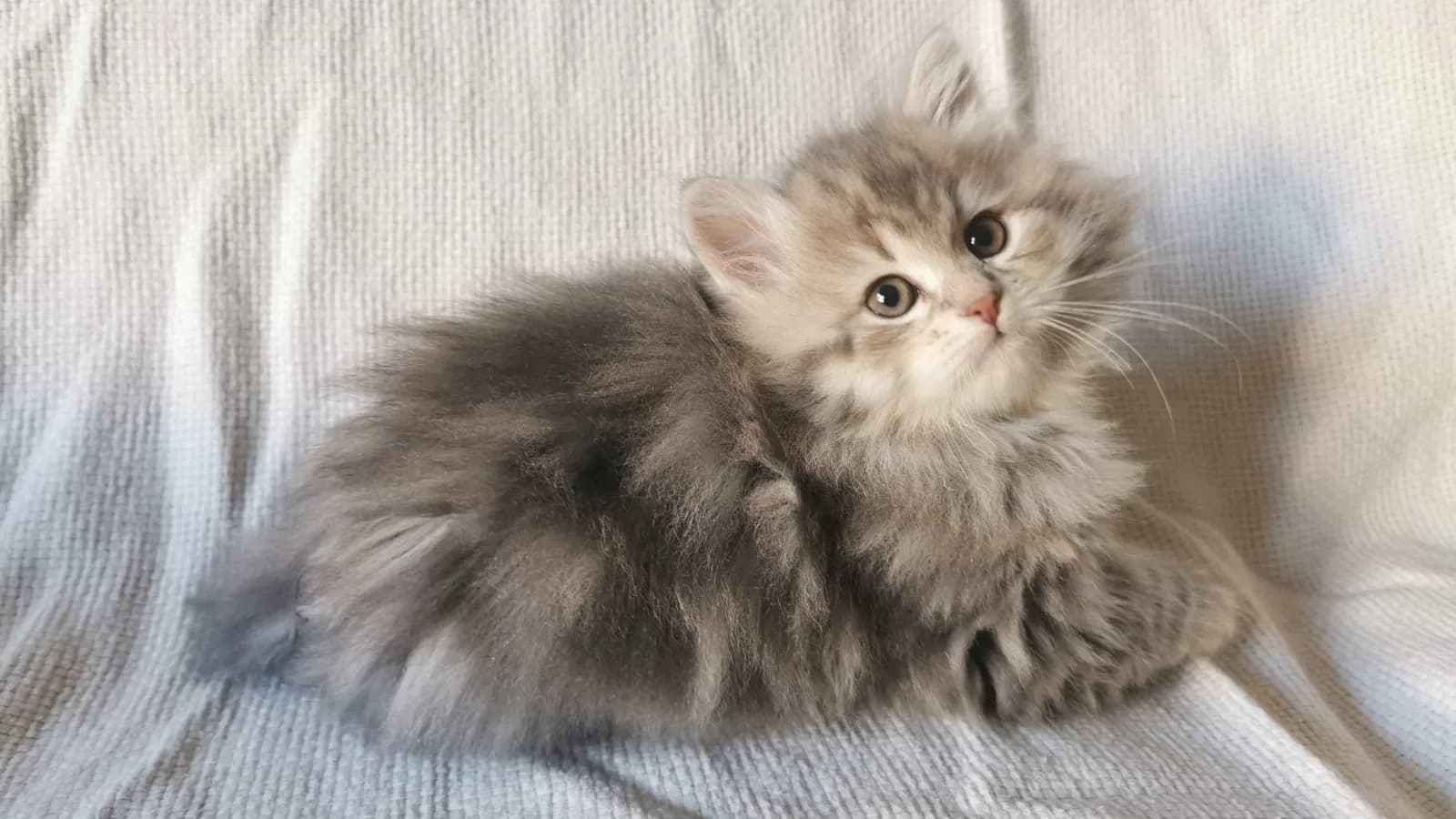
Siberian guide
Siberian Cat Price: What Named Breeders Actually Charge
Real published prices from named catteries in the US, UK, Canada and Australia, including the breed's strangest pricing pattern: kittens priced by tested allergen level.
Read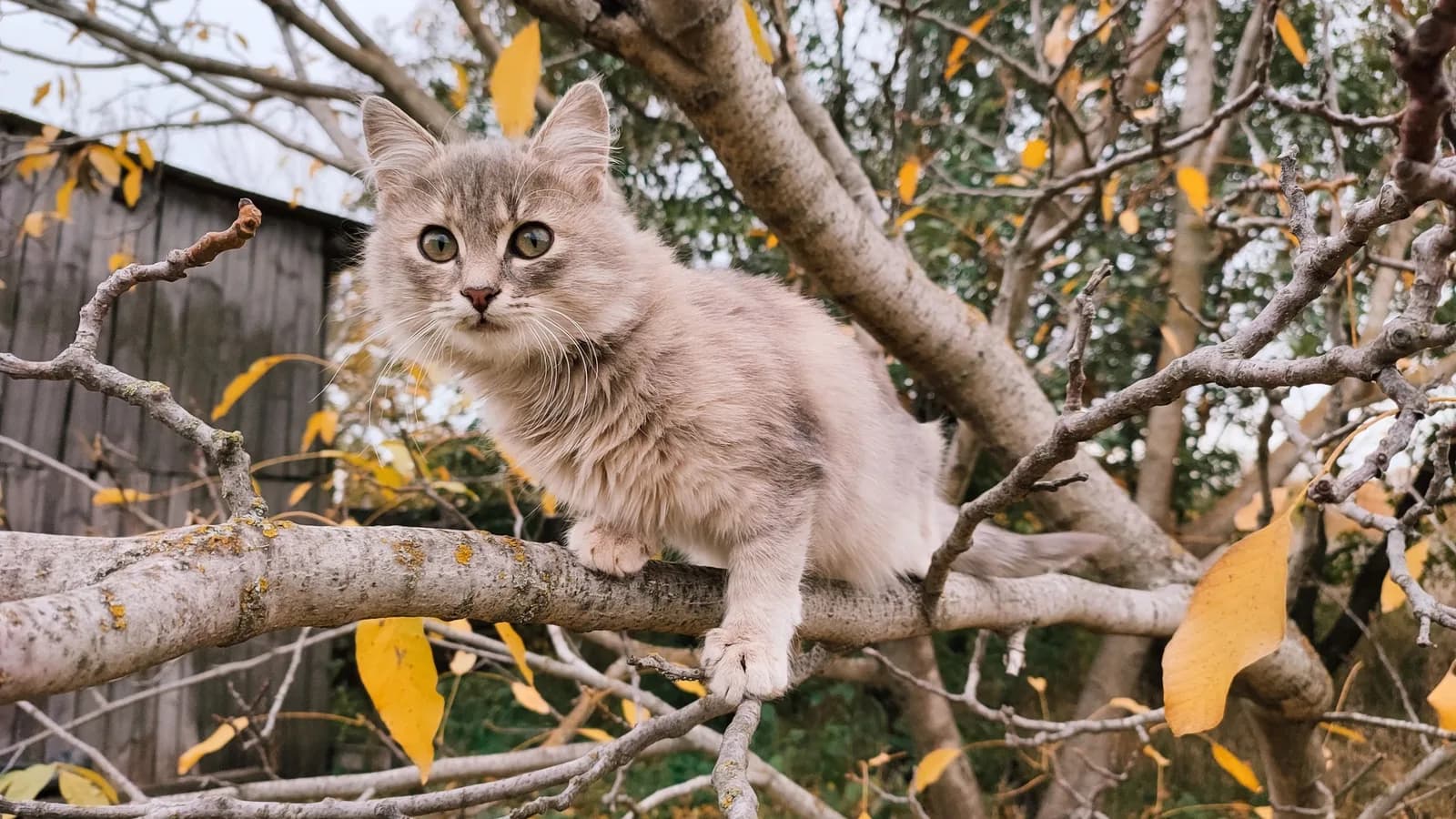
Siberian guide
How Big Is a Siberian Cat? Start With the Scale, Not the Legend
What 7,341 weighed Siberians actually average, what each registry claims, and why the UK's official range towers above everything else on record.
Read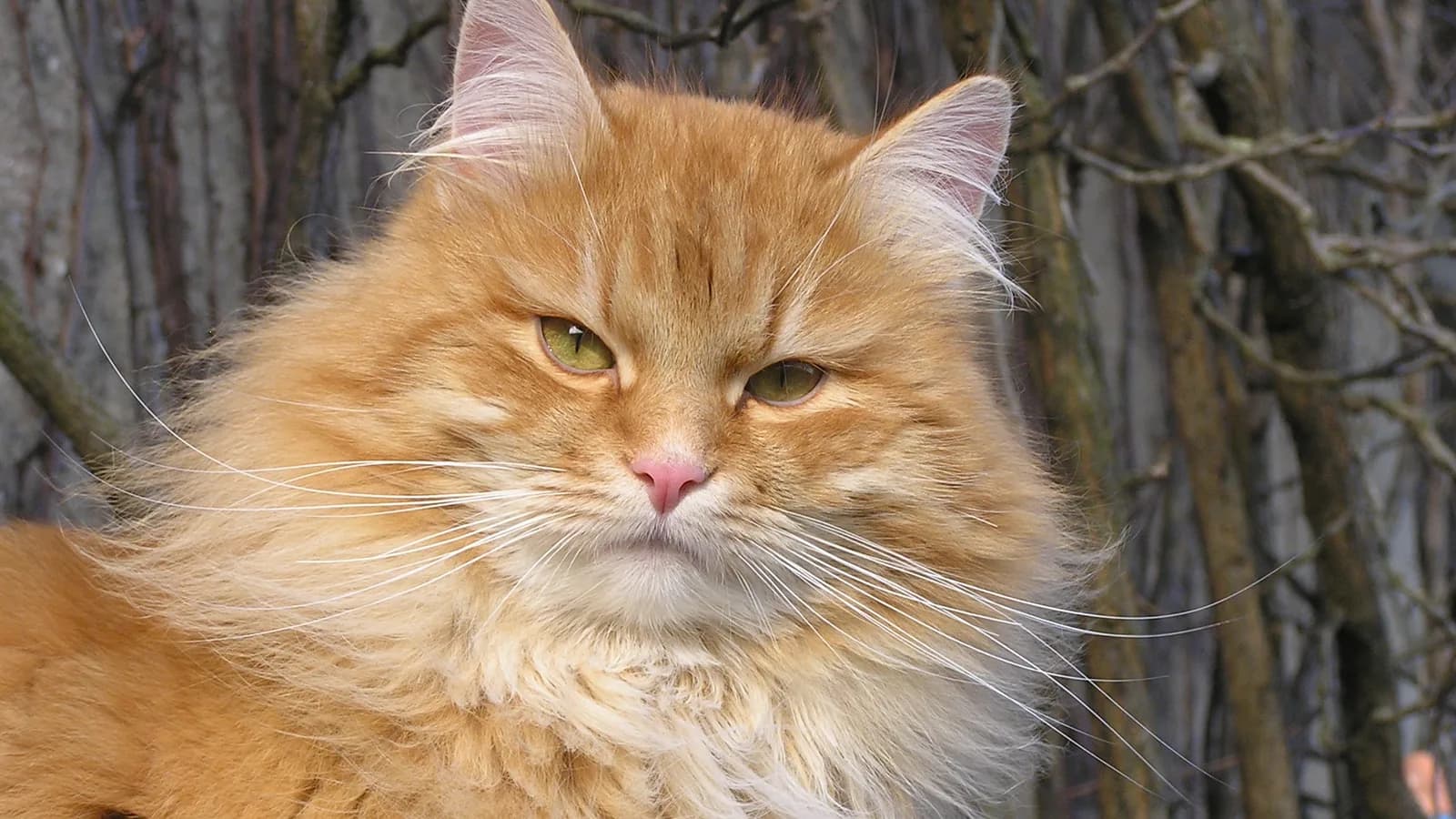
Siberian guide
Siberian vs Maine Coon: Two Forest Legends, One Real Difference at a Time
Two forest giants that are not related: coat layers, real weights, the sunshine gene only one of them has, and two very different heart-disease stories.
Read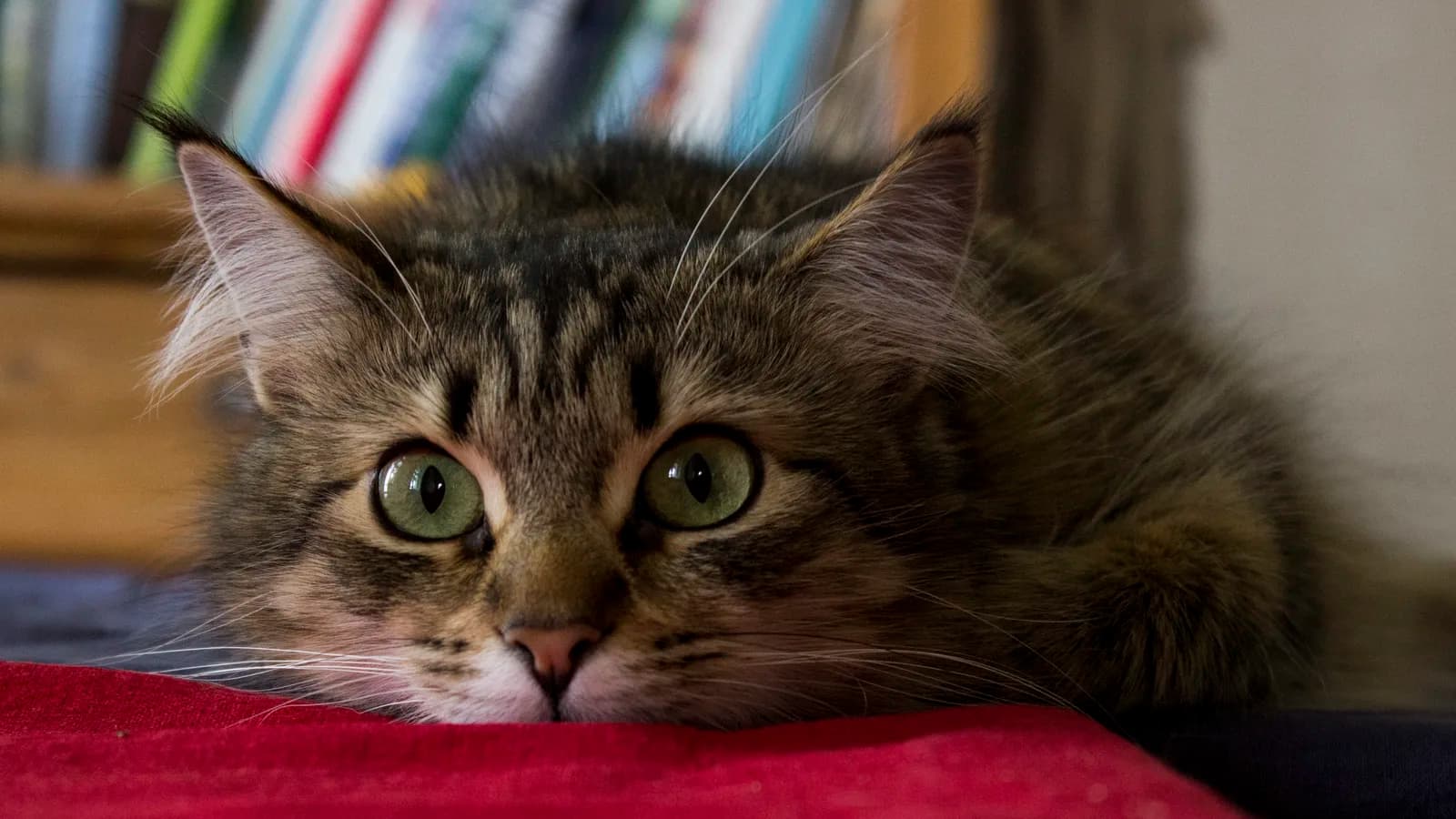
Siberian guide
Do Siberian Cats Shed? Yes, Twice a Year, and Here Is the Machinery
Yes, in two big seasonal waves. What the triple coat actually is in the registries' own words, why spring is worse, and the real brushing cadence.
Read
The floor belongs to our members. Keep it kind, links are not allowed, and images go through moderation before anyone else sees them.