

Do Siberian Cats Shed? Yes, Twice a Year, and Here Is the Machinery
Yes, in two big seasonal waves. What the triple coat actually is in the registries' own words, why spring is worse, and the real brushing cadence.

Published August 21, 2026 5 min read
Contents
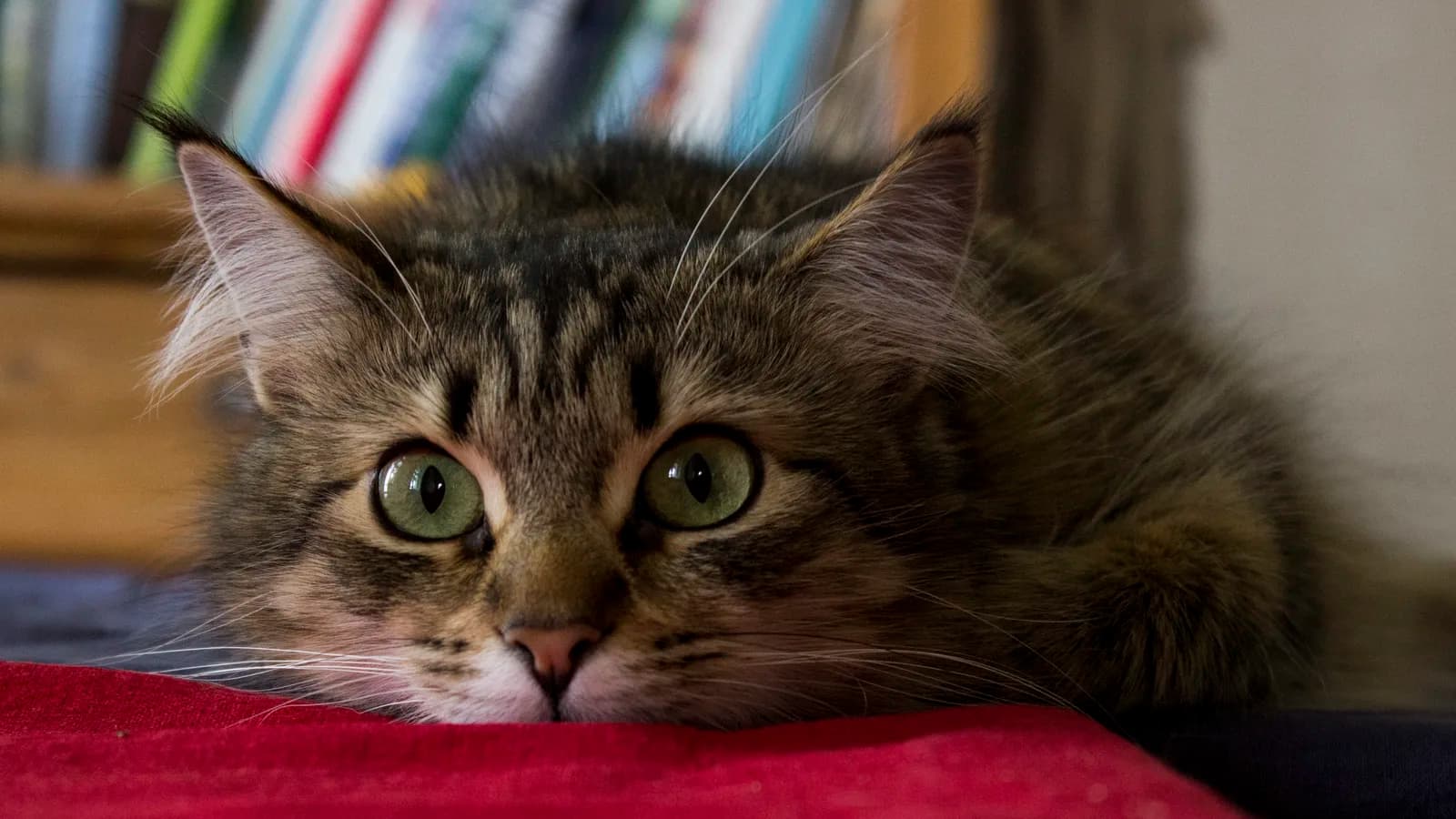
Short answer: a Siberian sheds, and twice a year it sheds hard. The long answer is more interesting, because this breed's coat is the single most documented thing about it. The registries call the coat the breed's defining feature. And their own texts explain exactly why the hair arrives on your sofa in two seasonal waves rather than a steady drizzle.
What a "triple coat" actually is
Every cat grows three hair types (down, awn and guard hairs, the standard feline coat biology iCatCare describes). What sets the Siberian apart is the density and length of all three layers at once, and three registries write the word into their standards. 's is the most explicit, calling the texture "the most important unique feature of the breed": a plentiful, springy undercoat, straight awn hairs "a layer of protective insulation," and coarser guard hairs adding "the topmost outer layer of water resistance." 's standard uses "TRIPLE coat" in capitals.
Canada's writes the identical sentence into both of its Siberian standards. Honesty note: not every registry uses the word. describes "a very dense undercoat... covered by a coarser, more substantial topcoat", and Australia's never says "triple" either. They are describing the same three-layer biology in two-layer words. A wording divergence, not a disagreement about the cat.
Why it sheds in two waves
The coat is seasonal equipment, and the standards treat it that way. instructs judges to allow for "seasonal variation in coat length and density." 's standard says plainly, "Allow for warm weather coats." 's page is the one registry text that names both seasons in order: the heavy winter coat drops in SPRING, and the lighter summer coat drops in AUTUMN to make room for new winter growth.
Every practitioner source we read converges on the same two-season pattern. Spring is consistently the heavier of the two, because the coat being lost is the denser one. One caveat worth knowing: an indoor, neutered cat under climate control may never read the seasonal light cues cleanly, and can shed more evenly year-round instead (a single-source claim, so hold it loosely).
The judging detail nobody quotes
's standard does not just permit the summer coat, it polices it: "The summer coat can be distinctly shorter and less dense, but triple texture must be present," and under PENALIZE, "lacking triple coat." A Siberian that sheds down to a single flat layer in July is, by the breed's own standard, faulted for it. That is a checkable, specific fact most shedding guides miss.
The real brushing cadence
Two registries give a number, and they agree. says the coat "should be combed or brushed a couple of times a week." says "a few times a week" with a steel comb, rising to DAILY during the two shed seasons.
declines to give one number, saying coats "vary enormously, with some needing weekly grooming sessions to prevent mats while others can go for weeks without one." Instead it contributes the one piece of technique no other registry states: handle the underside, tail and several times a week, feeling for mats, because that is where they form. Our published line, reconciling all three: two to three times a week baseline, daily through the spring and autumn molts, fingers on the mat-prone zones in between.
Bathing, matting, and the no-scissors rule
: "A bath is rarely necessary, which is a good thing because their coat is highly water-resistant." No registry states a bathing interval, so we will not invent one. Bathe on condition (something on the coat), not on a schedule. Matting is comparatively rare in this breed per a working cattery's own account, but not impossible. When you find a mat, tease it apart with your fingers.
Never scissors: iCatCare's warning is that in a matted coat you cannot see where skin ends and hair begins. A badly matted cat needs a professional, often sedated, shave rather than a home fix. A coat that suddenly mats, dulls or thins outside the two normal shed seasons is a reason to talk to your vet, not to buy a new comb: something wrong with your cat means call your vet, out of hours an emergency clinic.
The number we will not print
Several sites score Siberian shedding "6-7 out of 10." We looked for the source of that scale, and there is none. It traces to a single unsourced content page, alongside equally precise, equally unsourced figures for kitten-coat maturity and post-neuter shedding windows. No registry, veterinary body or study scores shedding on a 10-point scale for this breed.
What IS sourced: the coat takes years to finish. says "an average of three to five years to reach full structure and glorious coat," "as long as 5 years," "four to five years". Three registries converging on the same window. So a one-year-old's coat is not the coat you will live with.
The routine on one card
big molts a year: spring (heavy) and autumn (lighter)
2
combings a week between molts, daily during them
2-3x
for the coat to reach full structure, per three registries
3-5 yrs
- Steel or metal comb, two to three passes a week
- Daily combing through the spring and autumn sheds
- Fingers on underside, tail and weekly: the mat zones
- Bathe on condition, never on a schedule
- Mats: tease with fingers, never scissors; severe matting is a professional job
 The vet's take

Veterinary review
Are you a vet?
Your professional read belongs here: every verified practitioner can leave a note, published once our editors have reviewed it.
Sign in and get your license number verified. We check it in the public register, we never ask for or keep a copy of your diploma, and your number is never published.
Frequently asked questions
Do Siberian cats shed a lot?
Seasonally, yes: a heavy spring molt (the winter coat) and a lighter autumn one. Between molts, the coat is comparatively low-maintenance for its size, needing brushing two to three times a week.
When do Siberian cats shed the most?
Spring, per the registry texts and every practitioner source we read: the coat being dropped is the dense winter one. The autumn shed is real but lighter.
Do Siberian cats mat easily?
Less than most longhairs, per breeder practice, but the underside, tail and britches can mat: CFA recommends handling those zones several times a week. Tease mats apart with fingers, never scissors.
Does shedding make allergies worse?
Shedding and allergen production are different questions: the allergen is a protein, not the hair. The hypoallergenic page covers what is actually documented.
 Community questions
Got a question this page doesn't cover? Ask it: the best ones get published here with their answer.
This is information, not veterinary advice, and it cannot tell you what is wrong with your cat. Our rule is a simple one: if something is wrong with your cat, call your vet, and call an emergency clinic if it is out of hours. Nothing you read here is a reason to wait.
Medical information applies to every reader. Prices, legal duties and common practice do not: unless stated otherwise, they are given for the United States, and they differ in the UK, Canada and Australia, and often between states or provinces. Check with your own vet and your own local authority.
Our sources

Worth keeping a paw on
Pin this guide
So you can find it the day you need it, and share it with someone whose cat does the same thing. One click and it sits in your board.
Pin it on Pinterest
 Purr or Pass
The cat newsletter
Our verified guides, no spam. Unsubscribe in one click.
More Siberian guides
The Siberian profile →
Siberian guide
Are Siberian Cats Hypoallergenic? Read This Before You Believe Anyone
All cats make Fel d 1, Siberians included. What the one academic study found in 4 cats, what breeder testing claims in a thousand, and who never published what.
Read
Siberian guide
Siberian Cat Price: What Named Breeders Actually Charge
Real published prices from named catteries in the US, UK, Canada and Australia, including the breed's strangest pricing pattern: kittens priced by tested allergen level.
Read
Siberian guide
How Big Is a Siberian Cat? Start With the Scale, Not the Legend
What 7,341 weighed Siberians actually average, what each registry claims, and why the UK's official range towers above everything else on record.
Read
Siberian guide
Siberian Cat Colors: A Palette With Its Genes Named
Every Siberian color explained by its actual gene, including sunshine, the golden mechanism this breed owns, and the registry disagreements nobody else maps.
Read
Siberian guide
Siberian vs Maine Coon: Two Forest Legends, One Real Difference at a Time
Two forest giants that are not related: coat layers, real weights, the sunshine gene only one of them has, and two very different heart-disease stories.
Read
The floor belongs to our members. Keep it kind, links are not allowed, and images go through moderation before anyone else sees them.