

How Big Is a Siberian Cat? Start With the Scale, Not the Legend
What 7,341 weighed Siberians actually average, what each registry claims, and why the UK's official range towers above everything else on record.

Published August 21, 2026 5 min read
Contents
The Siberian's reputation says "giant forest cat." The measured data says something more interesting: a medium-large cat, unusually dense, wearing a coat that adds a full size class to its silhouette. Here is the evidence in the order it deserves. Measurements first, registry claims second, and one official range that deserves its own health warning.
What measured Siberians actually weigh
The largest dataset that has ever weighed this breed is a 2025 veterinary-cardiology screening study of 56,169 pure-bred cats. The Siberian/Neva Masquerade group is the THIRD LARGEST of all twelve breed groups: 7,341 cats. Their median body weight: 4.1 kg (9.0 lb), sexes pooled (screening populations skew young; the median age here was 1.5 years).
The one other measured cohort is a 2011 German study weighing show and clinic cats in ideal condition. It put Siberian males at a mean 5.3 kg (11.7 lb) and females at 4.1 kg (9.0 lb), and classed both sexes "Large" among the breeds it compared. The same paper's own abstract names "the Norwegian Forest and the Siberian Cat as a large breed." Two independent methods, the same female figure to the decimal.
What the registries claim
Every standard describes the breed in words, not numbers, and the words agree almost verbatim across four registries: "medium to medium large... with surprising heft for its size" (), "surprising weight for its size" (), "medium-large... hefty" (), "medium to large cat of robust build" (). The numbers, where they exist at all, come only from consumer pages. CFA's: males 12-18 lb (5.4-8.2 kg), females 8-12 lb (3.6-5.4 kg), ranges that comfortably contain both measured cohorts. TICA's own weight box is literally empty. Two placeholder dashes sit in the page's raw HTML where the male and female figures should be, a gap most guides never notice because they never look.
The UK outlier, labeled as such
's consumer page states males 17-26 lb (7.7-11.8 kg) and females 13-17 lb (5.9-7.7 kg). Treat that range with care. Its FLOOR sits above 's entire male range, and above every measured figure in both cohorts. We found no population, date or jurisdiction reason that would explain UK Siberians outweighing everyone else's by five pounds. And we verified it is not a copy-paste error from GCCF's own Maine Coon page (which carries a different figure).
We publish it here because it is 's own stated range and UK readers will meet it; we do not publish it as what a Siberian weighs. A completely normal Siberian female can weigh 9 lb. By GCCF's table she would read as four pounds underweight. That is precisely the kind of misreading that sends healthy cats onto diets. So the practical rule stays what it always is: unexplained weight change in either direction is a vet conversation, and something wrong with your cat means call your vet, out of hours an emergency clinic.
Four markets, one honest table
| Market | Source and stated range |
|---|---|
| US | consumer page: males 12-18 lb, females 8-12 lb |
| UK | 's own stated range: males 17-26 lb, females 13-17 lb (an outlier against every measured cohort; see above) |
| Canada | states no number: "medium to medium large with surprising weight for its size" |
| Australia | states no number: "medium to large cat of robust build" |
Measured reference, all markets: median 4.1 kg (9.0 lb) pooled across 7,341 screened cats; males mean 5.3 kg (11.7 lb) in the one sex-split cohort.
Why it looks bigger than it weighs
Two sourced reasons. The coat: a triple layer whose spring volume adds visual bulk no scale registers (the shedding page explains the machinery). And the build: 's standard warns judges that "weight alone is not an accurate indicator of size due to the breed's dense muscle mass." The barrel body carries real heft in a compact frame. That is what "surprising weight for its size" means in practice.
How long until full size
Slowly: three to five years, with most sources converging on closer to five. 's standard says maturity arrives "between the ages of three and five years old." 's own standard says "extremely slow to mature taking as long as 5 years," and says "full development can take four to five years." The one dissent is CFA's own consumer page saying "full size by three years": a box-versus-standard split inside one registry. Five of the six documents that state an age say four to five.
The measured picture
median weight (9 lb), 7,341 screened Siberians, sexes pooled
4.1 kg
male mean (11.7 lb) in the one sex-split cohort, classed Large
5.3 kg
top of 's stated male range (8.2 kg)
18 lb
to full size, most sources closer to five
3-5 yrs
 The vet's take

Veterinary review
Are you a vet?
Your professional read belongs here: every verified practitioner can leave a note, published once our editors have reviewed it.
Sign in and get your license number verified. We check it in the public register, we never ask for or keep a copy of your diploma, and your number is never published.
Frequently asked questions
How big do Siberian cats get?
Measured cohorts: median 4.1 kg (9 lb) pooled, males a mean 5.3 kg (11.7 lb) in ideal condition. CFA's stated range runs to 18 lb for a large male. The visual size is coat and muscle density as much as mass.
Are Siberian cats bigger than Maine Coons?
No: their CFA weight ranges nearly tie, and the Maine Coon reads larger mostly through its longer, rectangular build. See the full comparison.
Why does GCCF list Siberians at 17-26 pounds?
We do not know: that range's floor exceeds every measured figure and CFA's whole male range, and we could find no population reason for it. We report it as GCCF's own stated range, labeled as an outlier.
At what age is a Siberian fully grown?
Three to five years, closer to five per most registry documents: one of the slowest- maturing breeds, in body and coat alike.
 Community questions
Got a question this page doesn't cover? Ask it: the best ones get published here with their answer.
This is information, not veterinary advice, and it cannot tell you what is wrong with your cat. Our rule is a simple one: if something is wrong with your cat, call your vet, and call an emergency clinic if it is out of hours. Nothing you read here is a reason to wait.
Medical information applies to every reader. Prices, legal duties and common practice do not: unless stated otherwise, they are given for the United States, and they differ in the UK, Canada and Australia, and often between states or provinces. Check with your own vet and your own local authority.
Our sources
- Häggström et al. 2025, heart-screening body weights (PubMed)
- Kienzle and Moik 2011, pure-bred body weight pilot (PubMed)
- CFA Siberian breed page
- CFA Siberian standard (PDF)
- TICA Siberian breed page
- TICA Siberian standard (PDF)
- GCCF Siberian breed page
- CCA-AFC Siberian standard (PDF)
- ACF Siberian standard (PDF)

Worth keeping a paw on
Pin this guide
So you can find it the day you need it, and share it with someone whose cat does the same thing. One click and it sits in your board.
Pin it on Pinterest
 Purr or Pass
The cat newsletter
Our verified guides, no spam. Unsubscribe in one click.
More Siberian guides
The Siberian profile →
Siberian guide
Are Siberian Cats Hypoallergenic? Read This Before You Believe Anyone
All cats make Fel d 1, Siberians included. What the one academic study found in 4 cats, what breeder testing claims in a thousand, and who never published what.
Read
Siberian guide
Siberian Cat Price: What Named Breeders Actually Charge
Real published prices from named catteries in the US, UK, Canada and Australia, including the breed's strangest pricing pattern: kittens priced by tested allergen level.
Read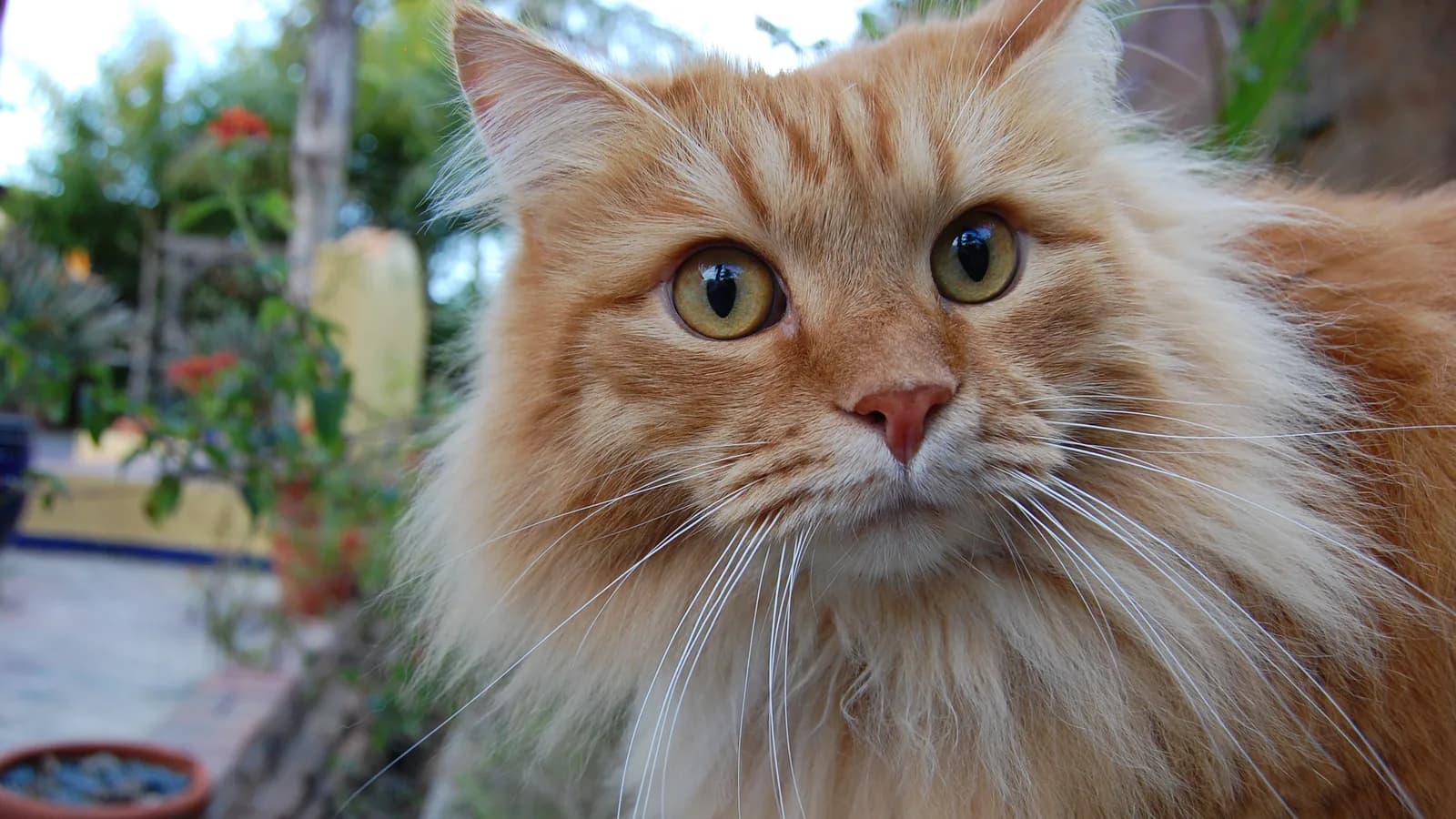
Siberian guide
Siberian Cat Colors: A Palette With Its Genes Named
Every Siberian color explained by its actual gene, including sunshine, the golden mechanism this breed owns, and the registry disagreements nobody else maps.
Read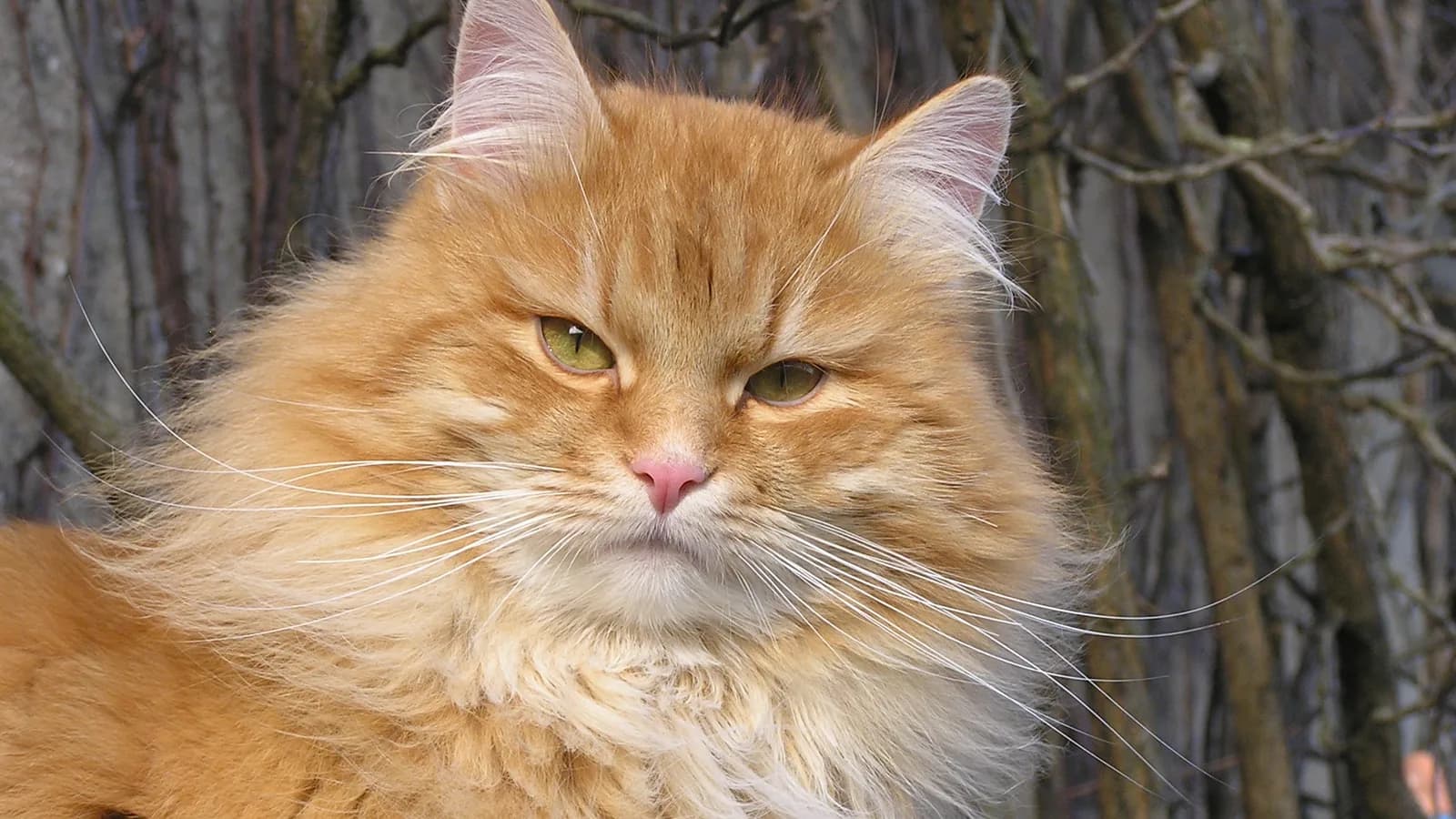
Siberian guide
Siberian vs Maine Coon: Two Forest Legends, One Real Difference at a Time
Two forest giants that are not related: coat layers, real weights, the sunshine gene only one of them has, and two very different heart-disease stories.
Read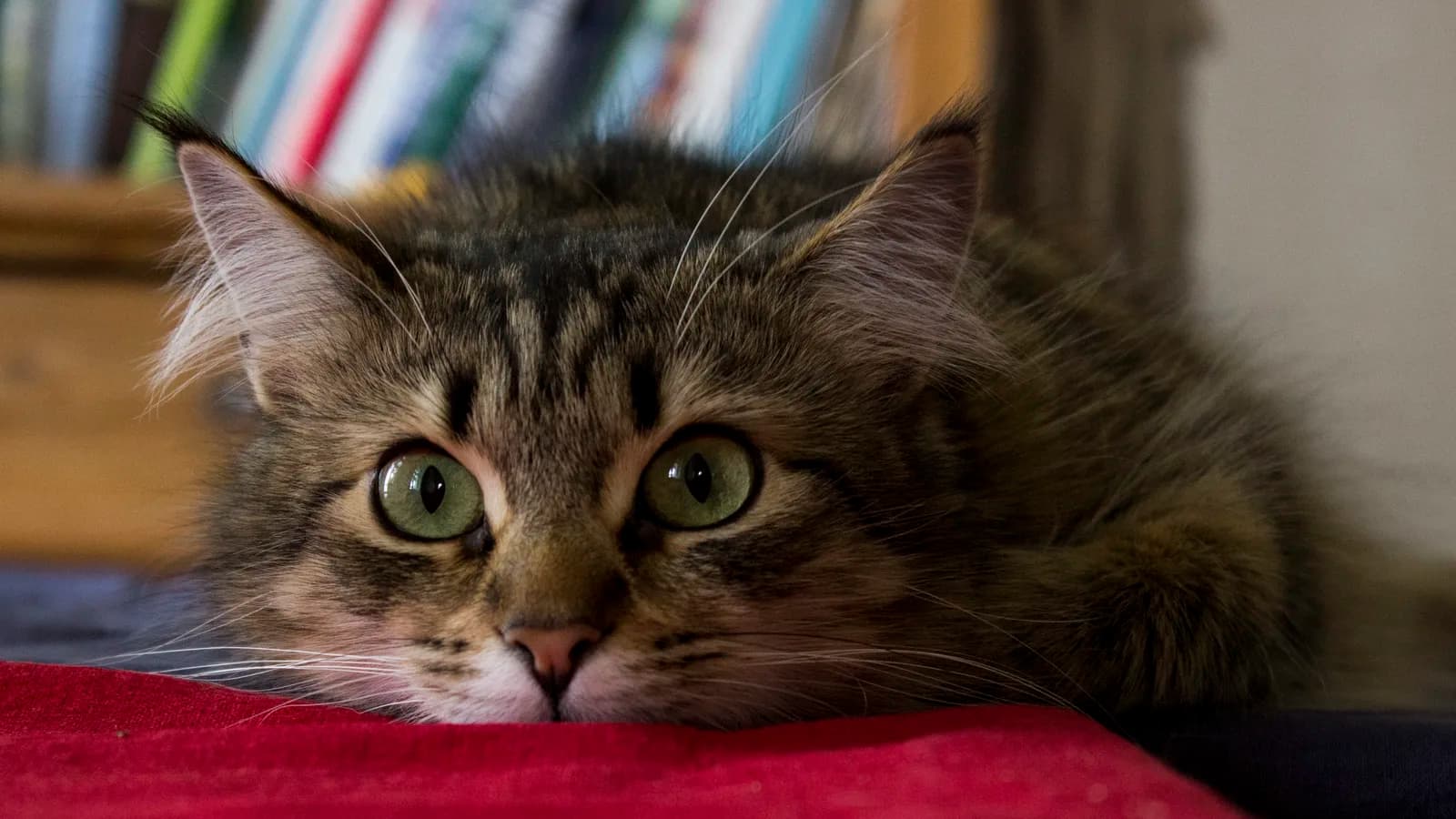
Siberian guide
Do Siberian Cats Shed? Yes, Twice a Year, and Here Is the Machinery
Yes, in two big seasonal waves. What the triple coat actually is in the registries' own words, why spring is worse, and the real brushing cadence.
Read
The floor belongs to our members. Keep it kind, links are not allowed, and images go through moderation before anyone else sees them.