

Neva Masquerade: The Siberian in a Mask, and What the Registries Call It
The Neva Masquerade explained: the same population as the Siberian with one colourpoint gene, the registry split mapped, real four-market prices, and the one documented premium.
Published August 21, 2026 6 min read
Contents
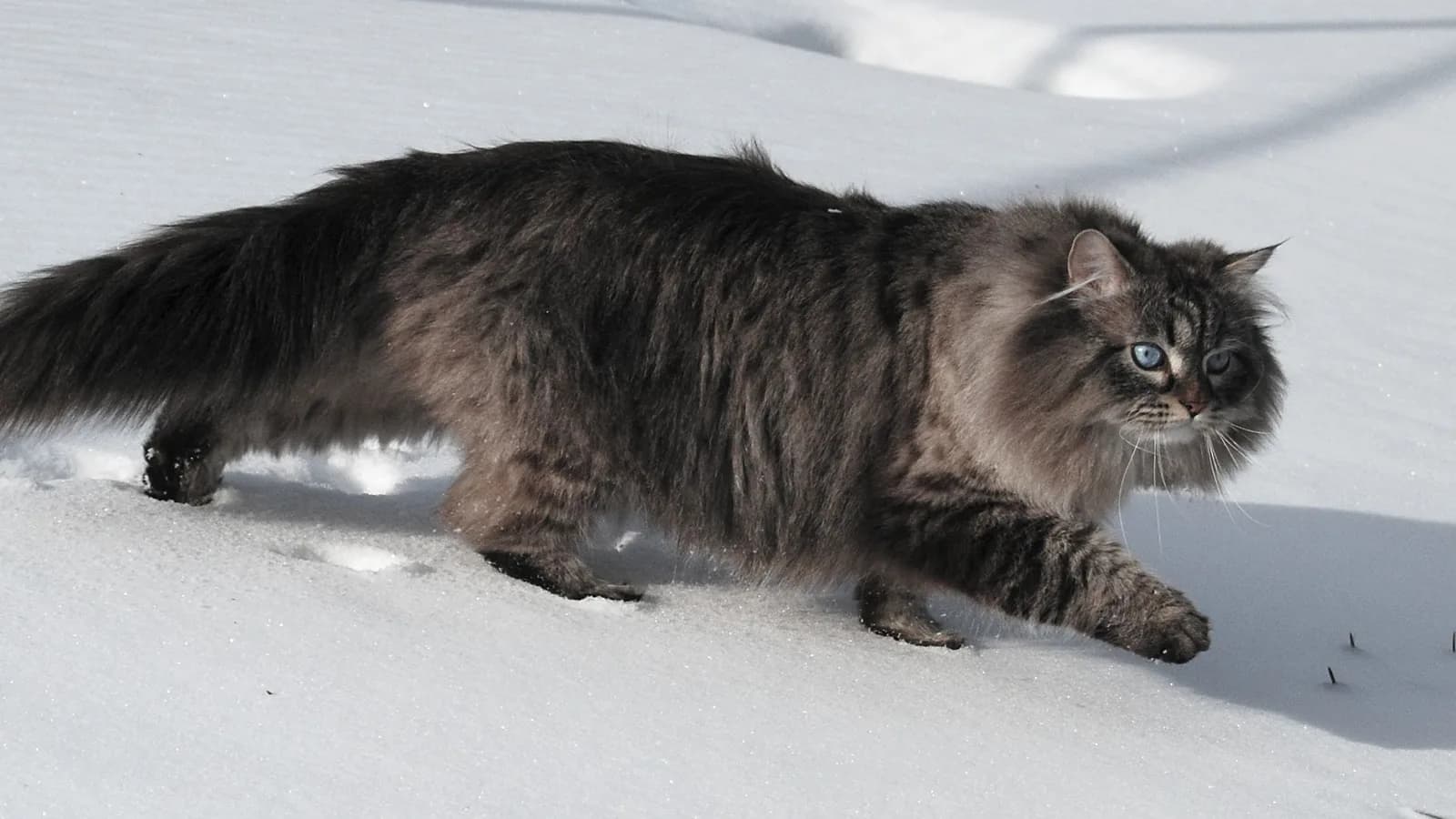
A Neva Masquerade is not a different breed from a Siberian the way a Persian differs from a Ragdoll. It is a Siberian carrying one recessive gene (cs, at the locus) that restricts color to the body's cool extremities. The same mechanism points a Siamese.
The genetics paper behind our Siberian research says it in one sentence: genetically, Siberian and Neva Masquerade cats are the same population, differing only in whether the cs allele is expressed. Kittens are born nearly white (the womb is warm everywhere). The points darken with age. The blue eyes are obligate: the same gene dilutes eye pigment, so every true colourpoint has them. What is NOT the same everywhere is the paperwork. That split is this page's real subject.
| Market / body | What the Neva Masquerade is there | Detail |
|---|---|---|
| US: & | A COLOUR of the Siberian | One breed, one standard, shown together |
| UK: | A color of the Siberian | A separate treatment was considered and abandoned, in 's own documents |
| Canada: | Both, in effect | Two standards, 'judged as two separate breeds', freely interbred, the name itself unused |
| (and AU: ) | A SEPARATE breed | code since 2011 (not the circulating '2009'), twelve years after the Siberian's own 1997 recognition |
The registry split, market by market
United States: and both treat the Neva Masquerade as a COLOUR division of the Siberian. One breed, one standard, colourpoints shown alongside their siblings.
United Kingdom: likewise registers colourpointed Siberians within the Siberian. The least-copied fact in this file is its own history: GCCF once considered treating the colourpoint separately, then abandoned the idea. Its own breeding-policy documents record that considered-and-rejected split. (One sentence in that PDF is visibly incomplete, an editing error we paraphrase rather than quote.)
Canada: sits precisely between. It keeps two standard documents, "judged as two separate breeds" for showing. Yet the name "Neva Masquerade" appears nowhere in its own text, and the two interbreed freely with no foundation requirement.
Australia and 's world: the full split. FIFe recognized the Neva Masquerade as a SEPARATE breed in 2011, with its own code. That came twelve years after the Siberian's own 1997 FIFe recognition (a "2009" date circulating on breeder sites is wrong at the primary source). Australia's follows the separate-breed model, in one of our four home markets. Same cat, two administrative truths. Neither framing is a controversy: it is six organizations classifying one animal, and we state it the way we state four prices in four currencies.
Colors, and one genuinely modern genetics note
The point palette runs the classic range per registry (seal, blue, red, , tabby points and their silver/smoke versions, lists varying by body). The modern note: the CORIN "sunshine" modifier documented in Siberians expresses in pointed cats too, producing golden-toned points. That finding comes from the same genetics literature our Siberian colors page covers in full. For everything deeper, that page is the reference: the genetics belong to the shared population.
Size, coat, temperament: the honest sentence, plus one real finding
The honest sentence: no colourpoint-specific weight, lifespan or temperament figure exists. The populations are one, so the Siberian's own figures (and their own caveats) apply, stated here rather than silently reused. The one genuinely new measured fact is a small 2020 acoustic study (Magiera, Penar & Klocek, a conference paper, 30 cats of which 10 were Neva Masquerades). It found measurable differences in the colourpoints' vocalisations during isolation, which its own authors gloss cautiously. Ten cats, one setting, one paper: a real finding at exactly that size, not a temperament rule.
Health, honestly scoped
Three things, each at its true size. First, allergies. The Siberian's own low-Fel-d-1 literature has never separately measured colourpoint cats. Our answer is the Siberian hypoallergenic page's answer, with that scope stated: no study has separately measured in Neva Masquerades. Second, the slightly crossed eyes some pointed kittens show. In Siamese and laboratory albino cats, the colourpoint pathway is tied to a documented rerouting at the optic chiasm that can show as strabismus.
The mechanism has never been measured in Siberians or Neva Masquerades specifically. And any NEW eye-alignment change in an adult cat is a same-day vet call, regardless of mechanism. Third, at the very bottom at its true weight: a single published case report describes polycystic kidney disease in one Neva Masquerade. One animal. Not a breed risk factor, not a screening recommendation, and not tied by any source to the Persian mutation or its test.
Price: four markets, and the only real premium figure anywhere
The named catteries, one per market: Royal Grace Siberians (US) at $2,500; CitroNeva Siberians (Cotswolds, UK, a Neva-only cattery) at £1,500; NEVAKAZ (Ontario, Neva-only) at CA$1,500; Snowgum Siberian Cats (Sydney) at A$5,000 plus GST. And here is the figure no guide article cites while they contradict each other by nearly 8x. Snowgum prices BOTH variants from the same litters, and its colourpoint premium is exactly A$500. That is the only real, same-cattery Neva-vs-Siberian price comparison found in four markets. Where a "Neva price" differs wildly from a Siberian price on some aggregator, that is the number to remember.
The name, with its documented half
The documented half: the breed name's first dual registration dates to 6 August 1990 (the Sadovnikova registration, preserved in ' records). "Neva" is the river through St Petersburg, the breed's founding city, an attribution Wikipedia's own footnote carries. The undocumented half we refuse to upgrade: the near-universal claim that "Masquerade" refers to masked balls traces to no primary source anywhere. We label it folklore rather than repeat it as history.
 The vet's take
Veterinary review
Are you a vet?
Your professional read belongs here: every verified practitioner can leave a note, published once our editors have reviewed it.
Sign in and get your license number verified. We check it in the public register, we never ask for or keep a copy of your diploma, and your number is never published.
Frequently asked questions
Is a Neva Masquerade a Siberian?
Yes, genetically: the same population carrying one recessive colourpoint gene. Administratively it depends where you stand: a color of the Siberian at TICA, CFA and GCCF; a separate breed at FIFe (since 2011) and Australia's ACF; and Canada's each-way answer (separate for judging, freely interbred, the name unused).
Why does my Neva Masquerade kitten look white?
Because points are heat-mapped: the womb is uniformly warm, so pointed kittens are born pale and darken at the cool extremities over their first months. The blue eyes stay: the same gene guarantees them.
Are Neva Masquerade cats hypoallergenic?
No cat is, and the honest scope: the Siberian family's low-allergen studies never separately measured colourpoint cats. Our Siberian hypoallergenic page carries the full evidence ladder; nothing colourpoint- specific exists to add.
Is a Neva Masquerade rarer or more expensive than a Siberian?
The only real same-source comparison anywhere says: slightly. One Australian cattery pricing both from the same litters charges exactly A$500 more for colourpoints. Aggregator figures disagreeing by 8x are unsourced, and we decline to average them.
Why are Neva Masquerades sometimes cross-eyed?
The colourpoint pathway is tied, in Siamese and albino laboratory cats, to a documented optic-chiasm rerouting that can show as mild strabismus; it has never been measured in this breed specifically. A stable, lifelong mild squint in a pointed cat is a known pattern; any NEW eye change is a same-day vet call.
 Community questions
Got a question this page doesn't cover? Ask it: the best ones get published here with their answer.
This is information, not veterinary advice, and it cannot tell you what is wrong with your cat. Our rule is a simple one: if something is wrong with your cat, call your vet, and call an emergency clinic if it is out of hours. Nothing you read here is a reason to wait.
Medical information applies to every reader. Prices, legal duties and common practice do not: unless stated otherwise, they are given for the United States, and they differ in the UK, Canada and Australia, and often between states or provinces. Check with your own vet and your own local authority.
Our sources
- TICA: Siberian breed page (the colourpoint-as-color position)
- FIFe: breed list (Neva Masquerade as its own breed, recognized 2011)
- GCCF: Siberian breeding-policy documents (the considered-and-abandoned split)
- Magiera, Penar & Klocek 2020, Forum Acusticum: the 10-cat acoustic study (doi 10.48465/fa.2020.0201)
- Royal Grace Siberians (US): pricing
- NEVAKAZ (ON, Neva-only cattery): pricing
- Snowgum Siberian Cats (Sydney): both variants priced from the same litters (the A$500 premium)

Worth keeping a paw on
Pin this guide
So you can find it the day you need it, and share it with someone whose cat does the same thing. One click and it sits in your board.
Pin it on Pinterest
 Purr or Pass
The cat newsletter
Our verified guides, no spam. Unsubscribe in one click.
The floor belongs to our members. Keep it kind, links are not allowed, and images go through moderation before anyone else sees them.