

Sick Cat Symptoms: How Cats Hide Illness, and How to See Through It
Why cats hide illness, the eight behaviors to watch, every sign routed to its full guide, and the emergency list that cannot wait.

Published August 26, 2026Updated September 8, 2026 5 min read
Contents
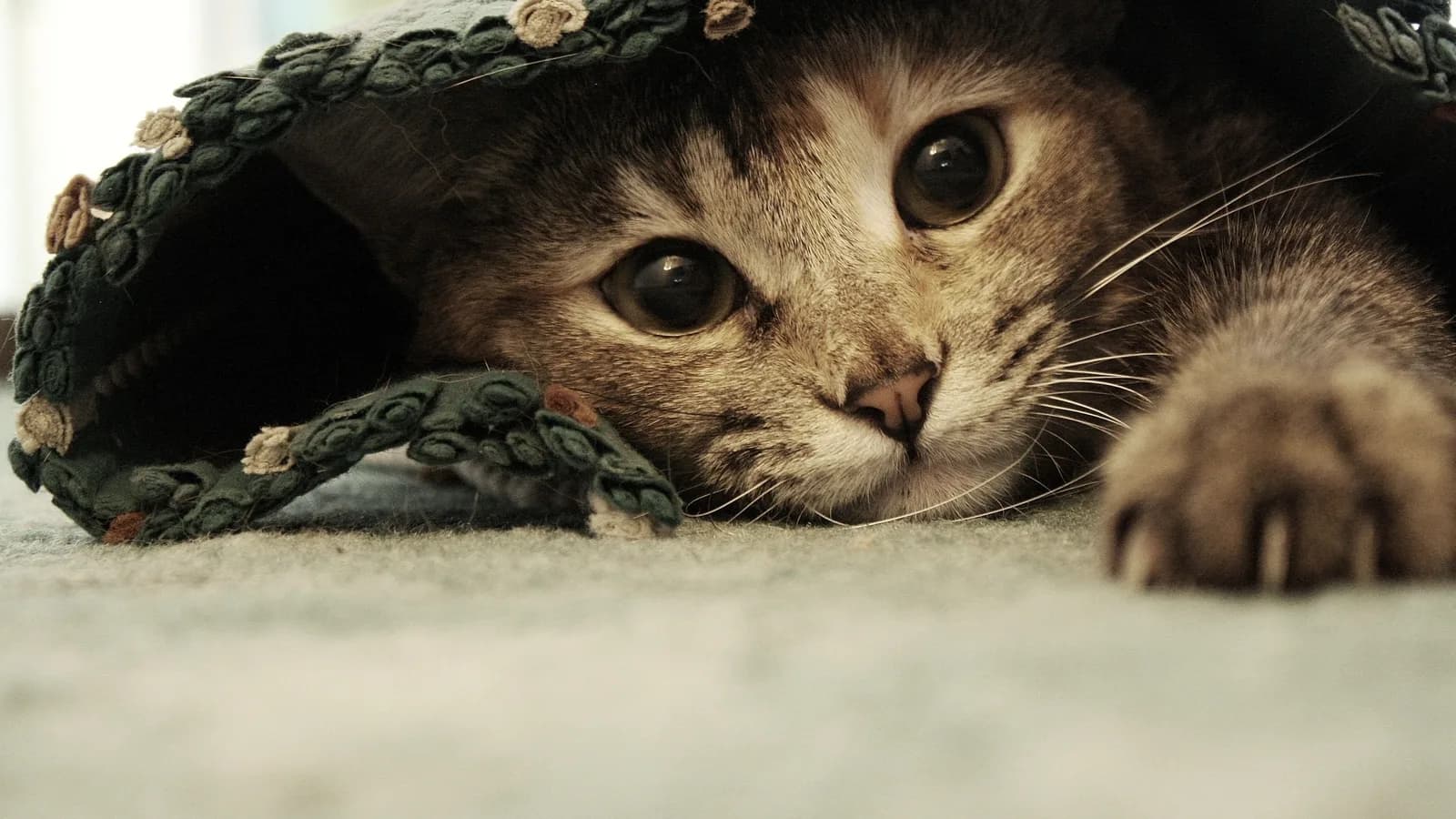
Cats are predators that are also prey, and that second fact runs this whole page: in the wild, visible weakness invites larger predators, so cats evolved to mask illness and pain. The practical consequence, in the words of the veterinary source that states it plainly: in the early stages, often the only visible change is that the cat has become quiet and withdrawn, which means a cat can be very sick before anyone realizes.
The numbers say we are losing this game: in the US, only 57.3% of cat owners visited a vet at all in the past year, against 74.2% of dog owners, and over a quarter of US cat owners spend nothing on veterinary care in a typical year, most often because the cat "did not need a checkup". This page is the counter-move: what normal looks like, which changes matter, and where each one leads.
Know your cat's normal: the eight behaviors
Ohio State's veterinary college gives owners a monitoring list worth taping to the fridge; the best sickness detector is a drift from YOUR cat's baseline on any of these:
- Activity: explores and uses the territory confidently, climbing and perching
- Interaction: initiates brief, frequent contact with the household
- Food and water: small meals and drinks spread across the day
- Litter box: most cats go 2 to 4 times a day
- Weight: a change of 10% in either direction matters
- Grooming: a gentle full-body groom 2 to 3 times a day
- Sleep: in view, in the favorite places
- Voice: whatever is normal for this cat, noticed when it changes
The signs, and where each one leads
This site carries a full, sourced guide behind every major sign; this table is the map.
| What you notice | What it can mean | The full guide |
|---|---|---|
| eating less, or nothing (24 hours adult, 12 for a kitten) | dozens of causes, all urgent on that clock | cat not eating |
| weight drifting down | thyroid, kidneys, diabetes, and more | cat losing weight |
| eating well but shrinking, in an older cat | the classic thyroid picture | hyperthyroidism |
| drinking and peeing more | kidneys, diabetes | kidney disease, diabetes |
| straining in the box, small or bloody urine; a MALE producing nothing | bladder trouble; the male blockage is an emergency, immediately | urinary guide |
| a young cat with a stubborn fever, a swelling belly, or simply fading | the classic FIP picture, and FIP is now treatable | FIP |
| coughing, or breathing over 30 a minute at rest | airway or heart, counted the same way | coughing, heart disease |
| sneezing and discharge | usually viral, with its own red flags | sneezing |
| vomiting beyond the odd hairball | its own sorting guide, incl. the vomit-vs-regurgitation split | throwing up |
| messy coat, bald patches, over-grooming | skin, pain or stress, in that diagnostic order | losing hair |
| drooling, bad breath, dropping food | dental disease, by age more likely than not | dental care, bad breath |
| hiding, clinginess, jumpiness, litter accidents | stress and illness share a wardrobe | anxiety |
| hunched posture, squinting, flattened ears | the pain vocabulary most people misread | body language |
Two eye-and-gum signs deserve naming outside the table because hours matter: an elevated , unequal pupils (anisocoria), or gums turning pale, yellow or bluish are same-day-to-emergency signals; the veterinary source's own words are that delaying treatment "even by a few hours, can be fatal".
Repeated head shaking with dark, crumbly discharge in one ear or both points at ear mites or an ear infection, and the two are told apart on a swab rather than by eye.
Three checks you can do at home, to report rather than diagnose
- Temperature: the textbook range is 100.0 to 102.5°F, but the one actual study, 200 healthy adult indoor cats, measured 98.1 to 102.1°F (36.7 to 38.9°C), lower and wider than the textbooks. Rectal, ideally a job for the clinic; the honest use of the number is knowing that "warm ears" is not a thermometer.
- The skin tent test: gently lift the skin near the shoulder blades and release. It should snap back at once; skin that stays tented suggests dehydration, which needs treatment now.
- Gum color: lift the lip in good light. Pink is normal; pale, yellow or blue-grey is a call on the spot.
The emergency list
The 's own list of animal emergencies requiring immediate care, condensed for cats and consistent with every deep page above: bleeding that does not stop within five minutes; choking or difficulty breathing; blood from nose, mouth or in urine; inability to urinate or defecate; eye injuries; suspected poisoning; seizures or staggering; fractures or inability to move a leg; obvious pain; heatstroke; severe or repeated vomiting or diarrhea; refusing water for 24 hours; unconsciousness. Cat-specific additions from our own pages: open-mouth breathing at rest, and sudden hind-leg paralysis. The AVMA's own closing line is the site's whole philosophy in one sentence: ANY concern warrants, at minimum, a call to your veterinarian. If something is wrong with your cat, call your vet; out of hours, an emergency clinic.
Two reproductive emergencies belong on this list too. A straining for 20 to 30 minutes without a kitten, or a greenish discharge before the first kitten, is its own emergency; the thresholds are on cat giving birth. And in an unspayed female who has been in heat in the past weeks, drinking and urinating more with lethargy is one of the presentations of pyometra, a uterus infection every source treats as an emergency.
How often a healthy cat should see a vet
The current joint and guidelines set the floor: an annual exam for every cat, moving to at least every six months for seniors, which the guidelines define as over 10 (kitten to 1, young adult 1 to 6, mature adult 7 to 10). Many practices recommend more often than that published minimum, which is a defensible preference rather than the guideline's own number. The reason the floor matters is the statistic this page opened with: the most common US reason for spending nothing on cat care was "did not need a checkup", a sentence this whole page respectfully disagrees with, because the cat who needs one rarely shows it.
What to take away
- Cats announce illness by subtraction: less activity, less appetite, less grooming, less company; the drift from baseline IS the symptom.
- The four emergencies owners most often underrate: a male cat straining without producing urine, open-mouth breathing, gums changing color, and sudden hind-leg weakness. All four are now, not tomorrow.
- The measured normal temperature in healthy adult cats is 98.1 to 102.1°F (36.7 to 38.9°C); fever is a vet finding, not a home diagnosis.
- Cats mask weakness by evolutionary habit, so hiding and withdrawal are often the first and only early signs.
- Baseline beats vigilance: know your cat's normal eating, drinking, grooming and sleeping, and take any multi-day drift to the vet.
- The current joint guidelines say a vet visit at least yearly, and every six months from age 10.
 The vet's take

Veterinary review
Are you a vet?
Your professional read belongs here: every verified practitioner can leave a note, published once our editors have reviewed it.
Sign in and get your license number verified. We check it in the public register, we never ask for or keep a copy of your diploma, and your number is never published.
Frequently asked questions
How can I tell if my cat is sick?
By drift from baseline: the eight behaviors above, watched loosely but regularly. Cats rarely announce illness; they subtract things, activity, appetite, grooming, company, and the subtraction is the symptom.
What are emergency symptoms in a cat?
The list above; the ones owners most often underrate are a male cat straining without producing urine, open-mouth breathing, gums changing color, and sudden hind-leg weakness. All four are now, not tomorrow.
What is a normal temperature for a cat?
The measured range in healthy adult cats is 98.1 to 102.1°F (36.7 to 38.9°C); textbooks traditionally say 100.0 to 102.5°F. Fever, or a low temperature, is a vet finding, not a home diagnosis.
Why do cats hide when they are sick?
Evolution: a visibly weak cat was an easy target, so cats mask vulnerability. Hiding, quietness and withdrawal are often the first and only early signs, which is why a "suddenly antisocial" cat deserves a closer look.
How often should I take my cat to the vet?
At minimum once a year, and every six months from senior age (over 10), per the current joint veterinary guidelines; more often whenever a chronic condition or your vet says so.
 Community questions
Got a question this page doesn't cover? Ask it: the best ones get published here with their answer.
This is information, not veterinary advice, and it cannot tell you what is wrong with your cat. Our rule is a simple one: if something is wrong with your cat, call your vet, and call an emergency clinic if it is out of hours. Nothing you read here is a reason to wait.
Medical information applies to every reader. Prices, legal duties and common practice do not: unless stated otherwise, they are given for the United States, and they differ in the UK, Canada and Australia, and often between states or provinces. Check with your own vet and your own local authority.
Our sources
- Ohio State University Indoor Pet Initiative, informed owners: the eight monitoring behaviors
- Ohio State University Indoor Pet Initiative, cats as predators and prey (why cats mask illness)
- Ohio State University Indoor Pet Initiative, the hiding instinct
- VCA Animal Hospitals, recognizing signs of illness in cats (the quiet-and-withdrawn early picture, eye and gum signs)
- VCA Animal Hospitals, taking your pet's temperature (the textbook range and method)
- EveryCat Health Foundation, rectal temperatures in healthy adult cats (the 200-cat measured range)
- AVMA, 13 animal emergencies that require immediate veterinary consultation and/or care
- AVMA chart of the month, relationships with regular veterinary visits (the 57.3% vs 74.2% figures)
- AVMA, pet population continues to increase while pet spending declines (the spent-nothing-on-care finding)
- 2021 AAHA/AAFP feline life stage guidelines (exam frequency floor and life-stage definitions), full PDF

Worth keeping a paw on
Pin this guide
So you can find it the day you need it, and share it with someone whose cat does the same thing. One click and it sits in your board.
Pin it on PinterestAlso worth reading
All health →
Article
Cat Dandruff: What Those Flakes Actually Are
Dandruff is not dry skin. It is dead skin cells leaving in clumps instead of one by one. Why it gathers at the tail base, and why black cats only look worse.
Read
Article
Cat Bad Breath: What That Smell Is Telling You
A cat's breath should not smell. When it does, the cause is usually the gum line, sometimes the kidneys. What each one smells like, and when to call the vet.
Read
Article
Cat Insurance: How It Actually Works, and When It Is Worth It
The four policy types, real premium figures per country with their sources, the exclusions that surprise people, and the honest arithmetic behind "worth it".
Read
The floor belongs to our members. Keep it kind, links are not allowed, and images go through moderation before anyone else sees them.