

Maine Coon Lifespan: Two Honest Numbers, Not One
How long Maine Coons really live: the measured UK figure, the 9 to 15 years everyone quotes, why the two differ, and what measurably shortens a life.

Published August 20, 2026Updated August 27, 2026 6 min read
Contents
Ask how long Maine Coons live and you will meet two kinds of numbers that seem to disagree: the "9 to 15 years" insurers and breed pages quote, 's "12.5 years and up", and a measured 9.71 years from the largest veterinary study ever to publish a figure for this breed. None of them is wrong. They answer different questions, and this page keeps them labeled instead of blending them, because a lifespan figure with no scope attached is closer to marketing than to information.
How long do Maine Coons live?
The commonly quoted range is 9 to 15 years, stated by the UK registry's breed page and echoed by Agria, Purina and the big UK marketplace; 's own page says 12.5 years and up. Those are claims about a cat that reaches adulthood in good care, and no source attaches a measurement to them. The measured figure is different in kind, and here are both, on one line:
The measured number: a 2024 UK veterinary-records study (, 7,936 confirmed deaths) put Maine Coon life expectancy at birth at 9.71 years (95% confidence interval 8.42 to 11.00, from 69 recorded deaths), against 11.74 years for all cats in the same study. An earlier English cohort measured a median age at death of 11.0 years, from just 14 cats. Measured from birth means every early loss counts: kittenhood illness, road accidents, every euthanasia. It is a photograph of a whole population, not a prediction for the cat asleep on your sofa.
Do Maine Coons have a shorter lifespan?
The honest answer needs three sentences, not a ranking. In the one study that measured breeds side by side, the Maine Coon sat in the lower half of twelve breed groups, below the all-cat average; that is a real, primary-sourced result and we will not hide it. But its confidence interval is wide (69 deaths is a small sample), the population is two-thirds outdoor-access Britain where trauma takes cats young, and the same study found purebred cats overall dying earlier than crossbreds.
And no equivalent measured figure exists AT ALL for the United States, Canada or Australia; the largest US dataset splits cats only into purebred versus mixed, so "Maine Coons live shorter lives in America" is a sentence no data can currently support. What the numbers support is narrower and more useful: from birth, across a whole UK population, this breed's average is pulled below the quoted range, and the reasons are as much husbandry as breed.
The survival curve is the good news
The Swedish insured population (a different measurement: cats under 13, followed through insurance records) is where the picture brightens. Of Maine Coons in the 2003 to 2006 period:
Alive at 5 years
90%
insured Swedish population, 2003 to 2006
Alive at 7.5 years
84%
Alive at 10 years
74%
Alive at 12.5 years
54%
where the insurance data stops
Because more than half were still alive when the insurance data stops at 12.5 years, the study could only say the median lies ABOVE that age. That floor, not a measured median, is the origin of the "12.5 years and up" figure quotes: true, sourced, and routinely misread as an average.
What measurably shortens a life
The same UK study measured its risk factors, and they are worth more to an owner than any breed average, because two of the three are choices:
Being unneutered
entire cats had 4.29 times the odds of death before age three.
Non-ideal body weight
linked to shorter lifespan in the same models; a big frame is not a license for a big belly (our size guide covers why frame and fat are different things).
Being male
males lived about 1.2 years less than females after adjustment; not a choice, but worth knowing.
The outdoors
in Sweden, traumatic deaths (mainly traffic) were most common in outdoor-access breeds including Maine Coons; in England, trauma led all causes of death in cats under five. A recent synthesis estimates outdoor cats live 2 to 3 years less, an estimate rather than a controlled measurement, but the direction is confirmed by every mortality table we read.
Screening matters too: the breed's registries require or recommend DNA and heart screening in breeding cats, and the right questions to ask a breeder are on our breeders guide. Nothing on this page is a prognosis for an individual cat: something wrong with your cat means call your vet, out of hours an emergency clinic.
The life stages, and why this breed bends them
US veterinary guidelines (/, 2021) define four feline life stages:
Kitten
birth to 1 year.
Young adult
1 to 6 years.
Mature adult
7 to 10 years.
Senior
10 years and older.
The Maine Coon quirk: it reaches full physical maturity at three to five years, so it spends half of "young adulthood" still growing. A three-year-old Maine Coon is an adult by the calendar and an adolescent by the skeleton, which is worth remembering when a food label or an insurance form asks for a life stage.
The oldest Maine Coons, honestly told
Rubble, a ginger and white Maine Coon from Exeter, England, was reported by his owner to have died in 2020 just short of his 32nd birthday; the family never submitted him to Guinness, so the age is a reported one, not a verified record, and we print it exactly that way. No Guinness-verified "oldest Maine Coon" record exists at all, which is itself worth knowing next time a listicle offers you one.
 The vet's take

Veterinary review
Are you a vet?
Your professional read belongs here: every verified practitioner can leave a note, published once our editors have reviewed it.
Sign in and get your license number verified. We check it in the public register, we never ask for or keep a copy of your diploma, and your number is never published.
Frequently asked questions
What is the average lifespan of a Maine Coon cat?
No single average is honest. The commonly quoted range is 9 to 15 years; the one measured life expectancy at birth is 9.71 years (UK, 2024, 69 deaths); and in an insured Swedish population more than half of Maine Coons were still alive at 12.5 years. Each figure describes a different population and question.
How long do Maine Coons live indoors?
No Maine-Coon-specific indoor figure exists. Across all cats, outdoor access is consistently linked to earlier traumatic death, and a recent synthesis estimates 2 to 3 years' difference; the direction is solid, the exact size is an estimate.
Do Maine Coons live shorter lives than other cats?
In the one UK study measuring breeds side by side, the Maine Coon sat below the all-cat average, on a small sample with wide uncertainty, in an outdoor-heavy population. No US, Canadian or Australian measured figure exists to confirm or contradict it.
When is a Maine Coon a senior?
At 10 years, per the US veterinary life-stage guidelines, like any cat; the breed's slow growth changes when adulthood starts, not when seniority does.
What is the oldest Maine Coon on record?
There is no Guinness-verified record for the breed. The oldest reported was Rubble of Exeter, England, whose owner reported an age of nearly 32 at his death in 2020, never submitted for verification.
 Community questions
Got a question this page doesn't cover? Ask it: the best ones get published here with their answer.
This is information, not veterinary advice, and it cannot tell you what is wrong with your cat. Our rule is a simple one: if something is wrong with your cat, call your vet, and call an emergency clinic if it is out of hours. Nothing you read here is a reason to wait.
Medical information applies to every reader. Prices, legal duties and common practice do not: unless stated otherwise, they are given for the United States, and they differ in the UK, Canada and Australia, and often between states or provinces. Check with your own vet and your own local authority.
Our sources

Worth keeping a paw on
Pin this guide
So you can find it the day you need it, and share it with someone whose cat does the same thing. One click and it sits in your board.
Pin it on Pinterest
 Purr or Pass
The cat newsletter
Our verified guides, no spam. Unsubscribe in one click.
More Maine Coon guides
The Maine Coon profile →
Maine Coon guide
Maine Coon Size: How Big They Really Get
How big Maine Coons really get: measured weights from five studies, TICA's two ranges explained, both Guinness length records, and the growth anchors with real sources.
Read
Maine Coon guide
Maine Coon Price: Four Countries, Real Numbers, No Averages
Real August 2026 Maine Coon prices from named catteries and live listings in four countries, what makes the price climb, the cheaper doors in, and what no registry will ever tell you.
Read
Maine Coon guide
Black Maine Coon: The Panther Look, Held to a Standard
What makes a true solid black Maine Coon, why the standards call it a hard coat to keep perfect, black and white bicolors, and real kitten prices.
Read
Maine Coon guide
Orange (Ginger) Maine Coon: Officially Red, Universally Adored
Why your orange Maine Coon is officially red, what ginger means in the UK, the cream dilute, why most gingers are boys, and two famous ones.
Read
Maine Coon guide
Maine Coon Breeders: How to Find One Worth Your Trust
What "registered" actually proves, the registries per country, the questions a good Maine Coon breeder answers without blinking, and what the law requires of breeders where you live.
Read
Maine Coon guide
Maine Coon Food: Feeding a Big Cat Without the Marketing
What a Maine Coon actually needs to eat: the real portion math, why no official large-breed formula exists, kitten-food timing, and the grain-free question untangled.
Read
Maine Coon guide
Blue Maine Coon: Yes, That Gray Cat Is Officially "Blue"
Why registries call a gray Maine Coon blue, how the dilute coat works, what blue smoke and blue silver mean, and what these cats actually sell for.
Read
Maine Coon guide
White Maine Coon: A Coat That Keeps a Secret
Why a white Maine Coon is genetically a masked cat, the four white eye-color classes, what the UK registry requires before breeding one, and prices.
Read
Maine Coon guide
Maine Coon Mix: How to Tell, Honestly
The honest guide to Maine Coon mixes: what the breed standard actually describes, which traits mean something, why size proves nothing, and the one method that settles it.
Read
Maine Coon guide
Calico Maine Coon: Three Colors, One Enormous Cat
What makes a calico Maine Coon, how the registries define the patches, dilute and smoke versions, why males are vanishingly rare, and what they cost.
Read
Maine Coon guide
Giant Maine Coons: The Records, and What "Giant" Really Means
The verified biggest Maine Coons, the records the breed does not hold, and what to check before paying a cattery with "giant" in its name.
Read
Maine Coon guide
Are Maine Coons Hypoallergenic? No, and Here Is the Honest Version
No cat breed is hypoallergenic, and the Maine Coon's long coat doesn't mean less allergen. What Fel d 1 is, why individual cats vary hugely, and what actually helps.
Read
Maine Coon guide
Maine Coon Colors: The Whole Palette, Straight from the Standards
Every Maine Coon color the five major registries actually recognize, the three they all exclude, eye-color rules, and what blue-eyed buyers should ask about.
Read
Maine Coon guide
Tortie Maine Coon: Black and Red, Woven Together
What a tortoiseshell Maine Coon actually is, how torties differ from calicos and torbies, the blue-cream dilute, and what breeders charge for them.
Read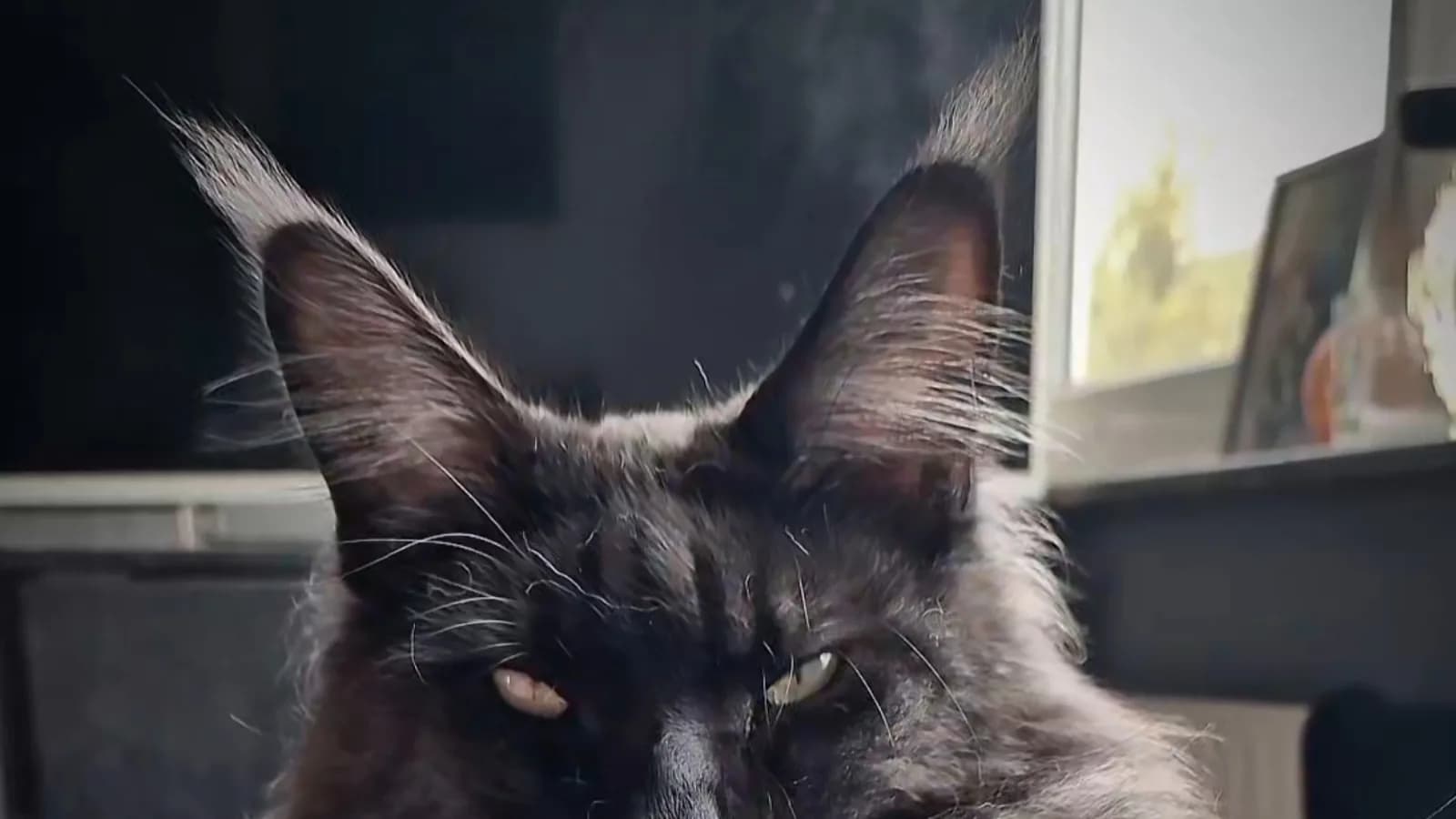
Maine Coon guide
Black Smoke Maine Coon: Midnight Over Silver
What makes a black smoke Maine Coon, how smoke differs from solid black and silver, why kittens declare themselves late, and what breeders charge.
Read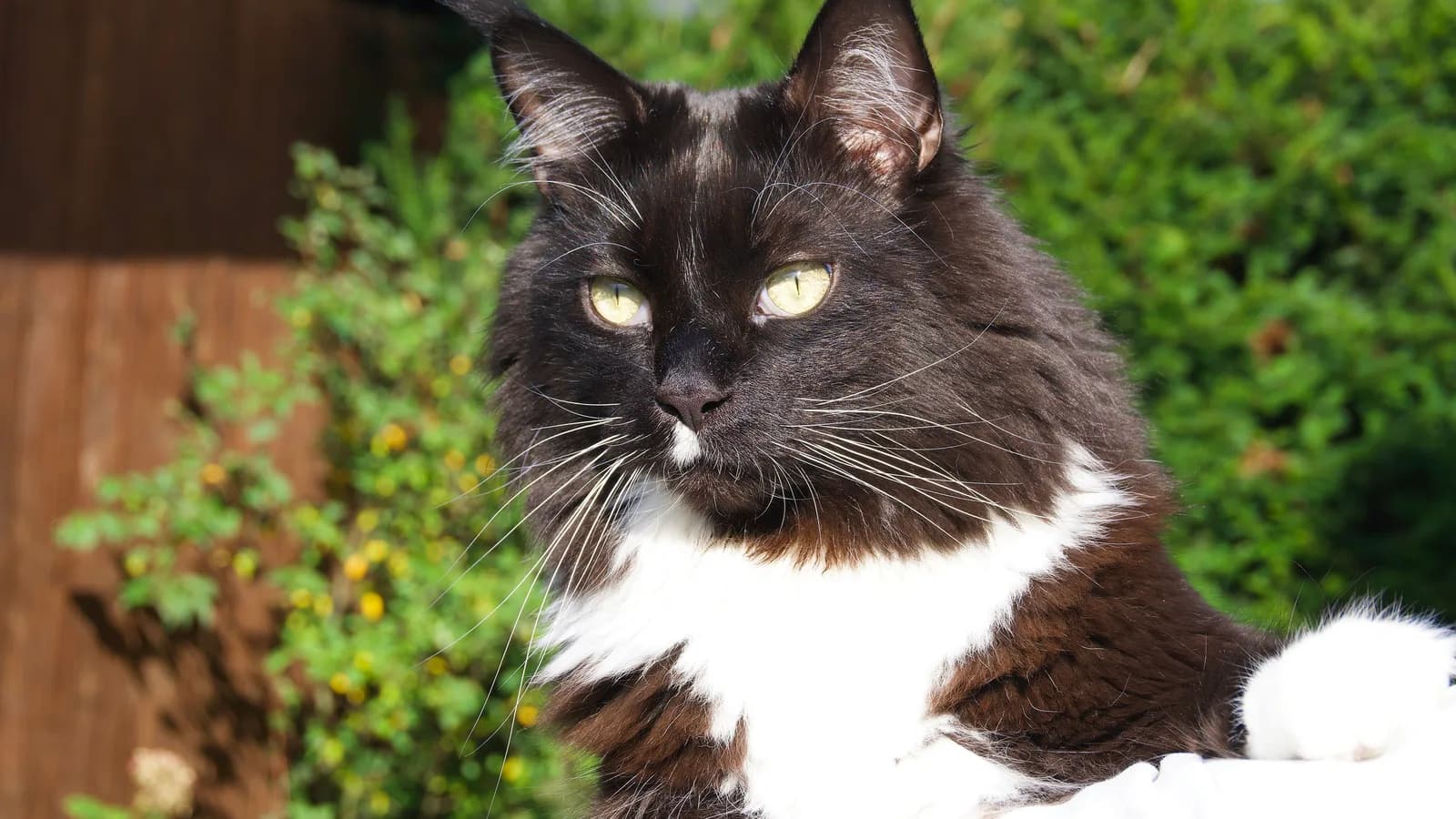
Maine Coon guide
Tuxedo Maine Coon: Black Tie, Twenty Toes of Fluff
Yes, tuxedo Maine Coons exist: what the registries call the pattern, the minimum-white rules that make it showable, and what the coat costs.
Read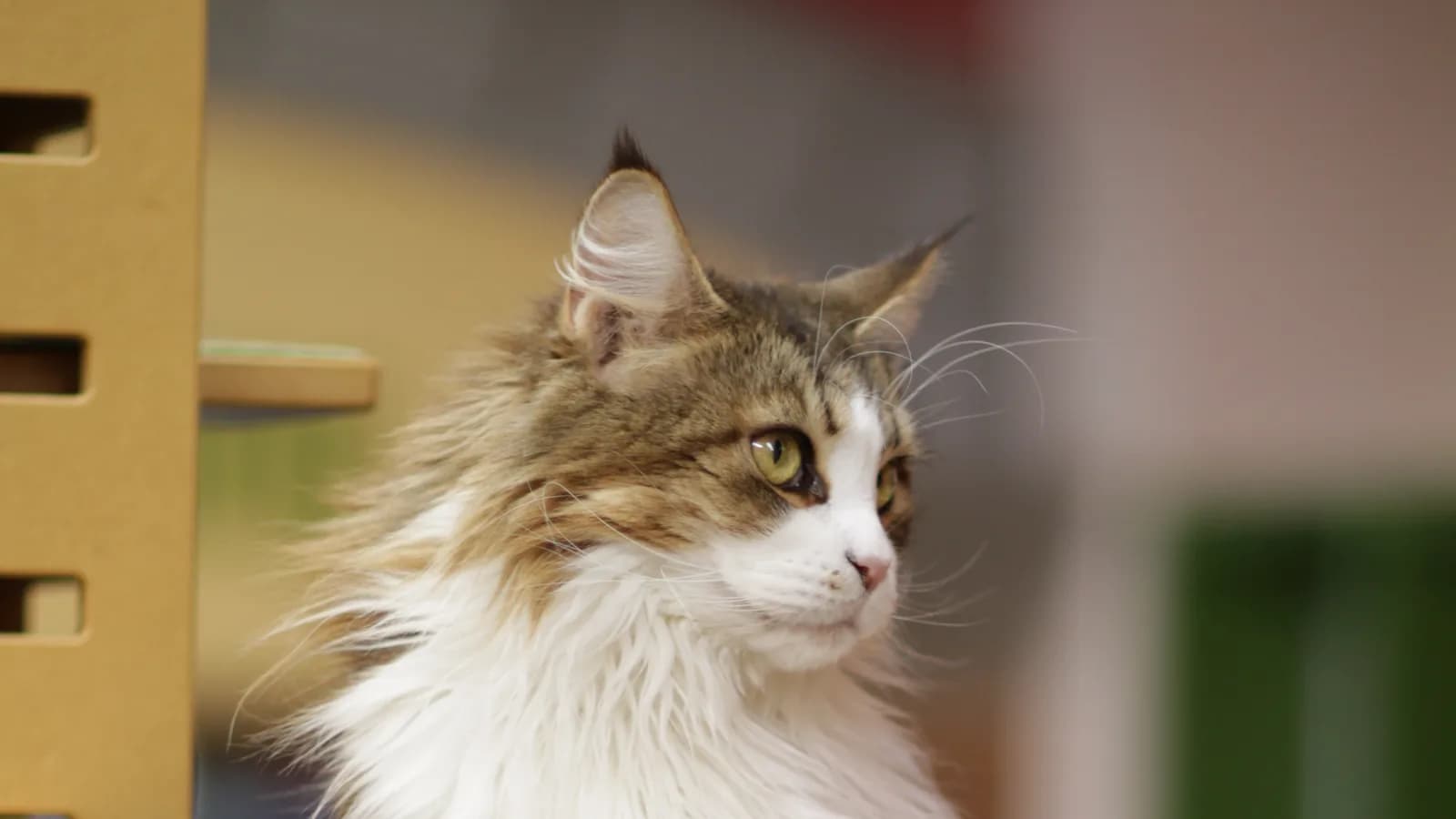
Maine Coon guide
Maine Coon Grooming: What That Coat Actually Asks of You
How much grooming a Maine Coon really needs: the honest brushing range straight from the registries, seasonal shedding, nails, ears, mats, and when a lion cut is the right call.
Read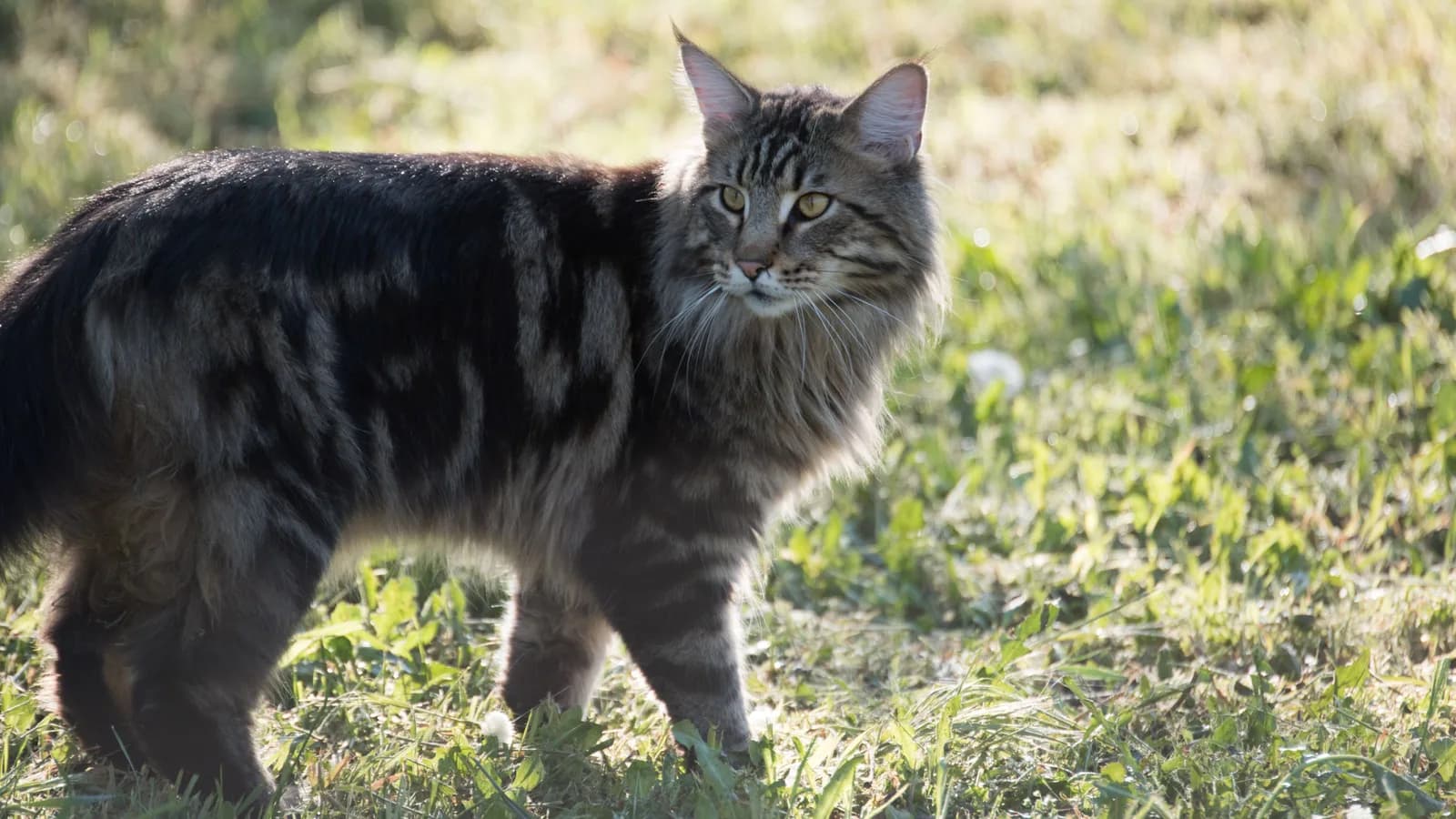
Maine Coon guide
Tabby Maine Coon: The Coat Everyone Pictures
Why the brown tabby IS the classic Maine Coon, classic versus mackerel patterns, the ticked-tabby registry dispute, and what tabbies cost.
Read
Maine Coon guide
European Maine Coon: A Look, a Label, and One Single Breed
"European Maine Coon" is a look and a marketing label, not a separate breed: what the European standards actually say, what sellers mean, and what to check.
Read
Maine Coon guide
Polydactyl Maine Coon: The Extra Toes That Split the Registries
What a polydactyl Maine Coon is, why TICA shows them and CFA does not, the snowshoe story told honestly, and what the extra toes change for the cat.
Read
Maine Coon guide
Silver Maine Coon: Frost Over the Tiger
What makes a silver Maine Coon, how silver differs from smoke, the tarnish fault that makes clean silvers rare on show benches, and real prices.
Read
Maine Coon guide
Maine Coon History: From Ship Cats to State Cat
Where Maine Coons really come from: the documented timeline from 1861 to CFA's number one breed, the myths told honestly, and the 1985 law that made it Maine's state cat.
Read
Maine Coon guide
Maine Coon Cat Names: What Owners Actually Chose, and Ideas Sized to Fit
The only measured Maine Coon name rankings (Lucy, Max and friends, 2015), why the breed is called a "coon" at all, and name ideas sized for a gentle giant.
Read
Maine Coon guide
Cream Maine Coon: Red, Whispered
What makes a cream Maine Coon, how cream relates to red and blue, why two orange parents can throw cream kittens, and what the coat costs.
Read
The floor belongs to our members. Keep it kind, links are not allowed, and images go through moderation before anyone else sees them.