

Maine Coon Grooming: What That Coat Actually Asks of You
How much grooming a Maine Coon really needs: the honest brushing range straight from the registries, seasonal shedding, nails, ears, mats, and when a lion cut is the right call.

Published August 20, 2026Updated August 27, 2026 6 min read
Contents
Here's the thing nobody selling you a Maine Coon kitten says plainly: there is no single magic brushing number for this breed, and anyone who gives you one is rounding. What there is, straight from the registries themselves, is a range, and once you know why the range exists, keeping this coat gorgeous is genuinely manageable. Five or ten minutes at a time, a decent metal comb, and a little honesty about which kind of coat your cat actually has.
Why this coat needs grooming at all
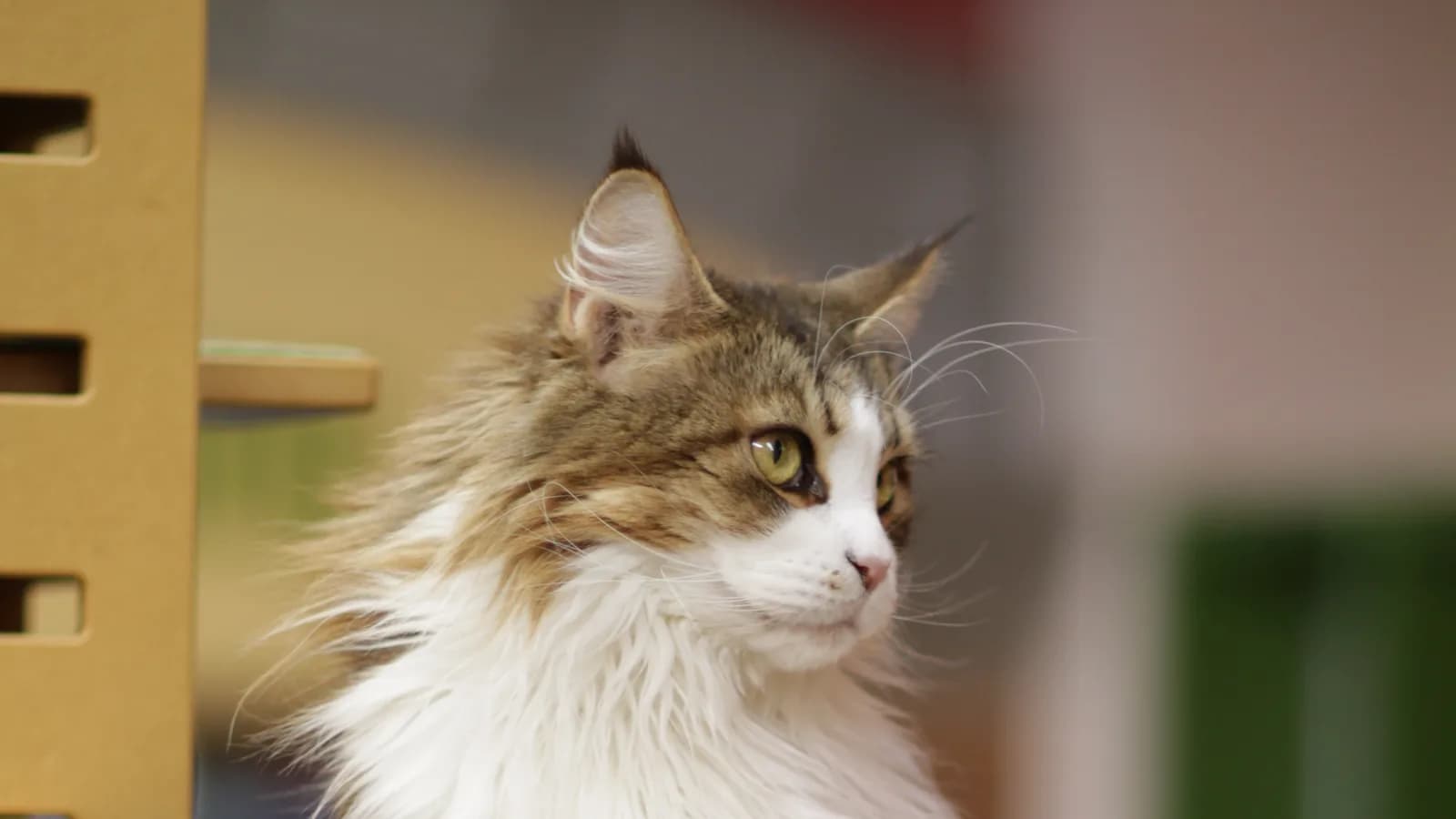
A Maine Coon wears a double coat built for a job: surviving a Northeast winter outdoors. Both and describe it as heavy and water-resistant, and it changes length as it travels down the cat. Short over the head, neck and shoulders, longer along the sides, stomach and back legs, with full , a plumed tail, and a frontal that runs heavier on males. That dense, insulating undercoat is exactly what makes the breed magnificent, and exactly what mats if you ignore it. The longest zones, the britches, ruff and belly, are also where the trouble starts.
How often should you brush a Maine Coon?
The three big registries each give a number, and they are three points on the same scale, not three opinions to pick from:
weekly grooming as the breed's floor
five-to-ten-minute combing sessions, to control shedding and stop mats before they start
almost maintenance-free on a weekly combing
genuinely needs daily attention; texture varies by color and bloodline
The honest answer
Weekly if you got lucky with a silky coat, daily if you got a cottony one, two or three short sessions a week for most cats in between, and more for everyone during the seasonal shed. If you're buying a kitten, ask the breeder which kind of coat the line carries: it's a five-second question that decides your next fifteen years of brushing.
Good to know
Whatever your cadence, start from kittenhood. 's advice, and every groomer's: a cat that learns the comb at eight weeks purrs through it at eight years.
Do Maine Coon cats shed?
Yes. Not catastrophically, but yes, and seasonally more than you'd expect. No registry publishes a shedding scale for the breed, so ignore any site that rates it "moderate" with a straight face. What does say is that spring brings a heavy shed, when the winter undercoat lets go and needs actively combing out. Groomers add a second, lighter wave in autumn as the winter coat grows in. During those weeks, move whatever your normal cadence is up a notch and your furniture will thank you.
One thing shedding is not: an allergy answer. If someone in the house sneezes around cats, that's a protein question, not a hair question, and we cover it separately in are Maine Coons hypoallergenic.
When shedding is a signal, not a season
Sudden, patchy or excessive hair loss, bald spots, or skin that looks irritated under the coat is not grooming territory. Something wrong with your cat means call your vet, out of hours an emergency clinic.
Ears, nails, teeth
Ears.
Those big tufted ears are part of the breed's look, and flags them for regular checking. Look, don't dig: if an ear looks dirty, red or smells off, that's a vet conversation, not a cotton-swab project.
Nails.
gives an age-graduated schedule most competitor pages miss: weekly trims while your Maine Coon is a kitten, stretching to every two to three weeks as an adult.
Teeth.
recommends regular brushing and points owners to their own vet for technique. That's the right order: your vet shows you once, then it's routine.
Matting: where it happens and the one rule
Mats form where long fur meets friction: behind the ears, in the armpits, between and behind the back legs, under the chin, on the belly, through the , in the chest and at the tail base. Work through those zones with the comb every session, one coat layer at a time from the skin outward, and mats mostly never get the chance.
The one rule that matters
The one rule that matters: never cut a tightened mat out with scissors at home. A mat that sits close to the skin comes off at the groomer's or the vet's, where someone can see exactly where fur ends and cat begins. Cat skin is thinner than it looks.
The lion cut: a real option, not a failure
If daily combing of a cottony coat is losing the war, there's a legitimate exit. 's own breed page says it plainly: some owners find it easier to keep a Maine Coon in a lion cut rather than keep up with daily grooming. Body clipped, head, tail tip and feet left full. Have it done by a vet or an experienced cat groomer, and know the trade-off: a clipped cat is more exposed to sun and temperature swings until the coat returns. It's not what the show ring wants. It might be what your actual life wants, and your cat would rather be clipped than matted, every single time.
Kitten fluff to senior care
The coat you adopt is not the coat you'll live with. Kitten fluff gives way to an adult-type coat over the first year, and breeder consensus puts the full mane, and at up to three to five years depending on bloodline, the same slow-maturity story as the breed's size. At the other end, older cats groom themselves less thoroughly, especially along the back and hindquarters, so your share of the work grows as your cat's flexibility shrinks. More combing, more checking, same gentleness.
Tools, without the shopping list
You don't need a drawer of gadgets. A wide-tooth metal comb does the real work, layer by layer; a slicker brush finishes; an undercoat rake helps on thick coats in shed season. No registry or veterinary body endorses any brand, so neither do we. Technique beats equipment: short sessions, skin outward, hot spots first.
 The vet's take

Veterinary review
Are you a vet?
Your professional read belongs here: every verified practitioner can leave a note, published once our editors have reviewed it.
Sign in and get your license number verified. We check it in the public register, we never ask for or keep a copy of your diploma, and your number is never published.
Frequently asked questions
How do you groom a Maine Coon at home?
Short sessions, five to ten minutes. Wide-tooth metal comb through the coat one layer at a time, from the skin outward, hitting the mat-prone zones (ears, armpits, groin, belly, britches, ruff, tail base). Finish with a slicker brush. Start in kittenhood if you can.
Do Maine Coons shed a lot?
They shed year-round like any double-coated cat, with a heavy spring shed named by GCCF and a lighter autumn wave. Daily combing during those weeks keeps it off the sofa.
Why is my Maine Coon suddenly shedding so much?
A seasonal shed is normal. Sudden patchy loss, bald spots or irritated skin is not a grooming question: call your vet.
Do Maine Coon kittens shed?
Lightly. The bigger event is the coat change, when kitten fluff gives way to the adult coat over the first year.
Can you stop a Maine Coon from shedding?
No, and nothing sold to you will. You manage it: regular combing, stepped up in season.
 Community questions
Got a question this page doesn't cover? Ask it: the best ones get published here with their answer.
This is information, not veterinary advice, and it cannot tell you what is wrong with your cat. Our rule is a simple one: if something is wrong with your cat, call your vet, and call an emergency clinic if it is out of hours. Nothing you read here is a reason to wait.
Medical information applies to every reader. Prices, legal duties and common practice do not: unless stated otherwise, they are given for the United States, and they differ in the UK, Canada and Australia, and often between states or provinces. Check with your own vet and your own local authority.
Our sources

Worth keeping a paw on
Pin this guide
So you can find it the day you need it, and share it with someone whose cat does the same thing. One click and it sits in your board.
Pin it on Pinterest
 Purr or Pass
The cat newsletter
Our verified guides, no spam. Unsubscribe in one click.
More Maine Coon guides
The Maine Coon profile →
Maine Coon guide
Maine Coon Size: How Big They Really Get
How big Maine Coons really get: measured weights from five studies, TICA's two ranges explained, both Guinness length records, and the growth anchors with real sources.
Read
Maine Coon guide
Maine Coon Price: Four Countries, Real Numbers, No Averages
Real August 2026 Maine Coon prices from named catteries and live listings in four countries, what makes the price climb, the cheaper doors in, and what no registry will ever tell you.
Read
Maine Coon guide
Black Maine Coon: The Panther Look, Held to a Standard
What makes a true solid black Maine Coon, why the standards call it a hard coat to keep perfect, black and white bicolors, and real kitten prices.
Read
Maine Coon guide
Orange (Ginger) Maine Coon: Officially Red, Universally Adored
Why your orange Maine Coon is officially red, what ginger means in the UK, the cream dilute, why most gingers are boys, and two famous ones.
Read
Maine Coon guide
Maine Coon Breeders: How to Find One Worth Your Trust
What "registered" actually proves, the registries per country, the questions a good Maine Coon breeder answers without blinking, and what the law requires of breeders where you live.
Read
Maine Coon guide
Maine Coon Lifespan: Two Honest Numbers, Not One
How long Maine Coons really live: the measured UK figure, the 9 to 15 years everyone quotes, why the two differ, and what measurably shortens a life.
Read
Maine Coon guide
Maine Coon Food: Feeding a Big Cat Without the Marketing
What a Maine Coon actually needs to eat: the real portion math, why no official large-breed formula exists, kitten-food timing, and the grain-free question untangled.
Read
Maine Coon guide
Blue Maine Coon: Yes, That Gray Cat Is Officially "Blue"
Why registries call a gray Maine Coon blue, how the dilute coat works, what blue smoke and blue silver mean, and what these cats actually sell for.
Read
Maine Coon guide
White Maine Coon: A Coat That Keeps a Secret
Why a white Maine Coon is genetically a masked cat, the four white eye-color classes, what the UK registry requires before breeding one, and prices.
Read
Maine Coon guide
Maine Coon Mix: How to Tell, Honestly
The honest guide to Maine Coon mixes: what the breed standard actually describes, which traits mean something, why size proves nothing, and the one method that settles it.
Read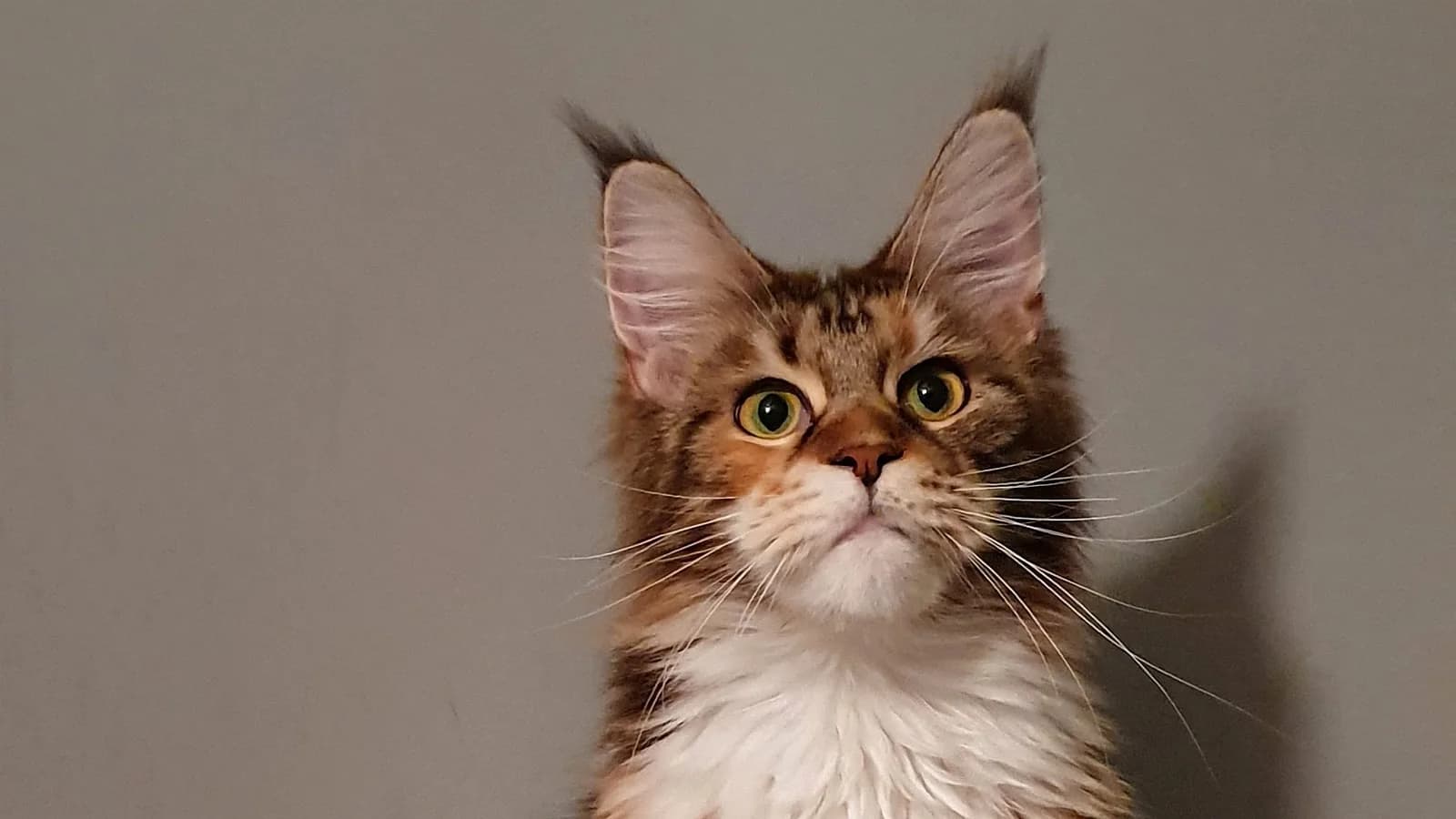
Maine Coon guide
Calico Maine Coon: Three Colors, One Enormous Cat
What makes a calico Maine Coon, how the registries define the patches, dilute and smoke versions, why males are vanishingly rare, and what they cost.
Read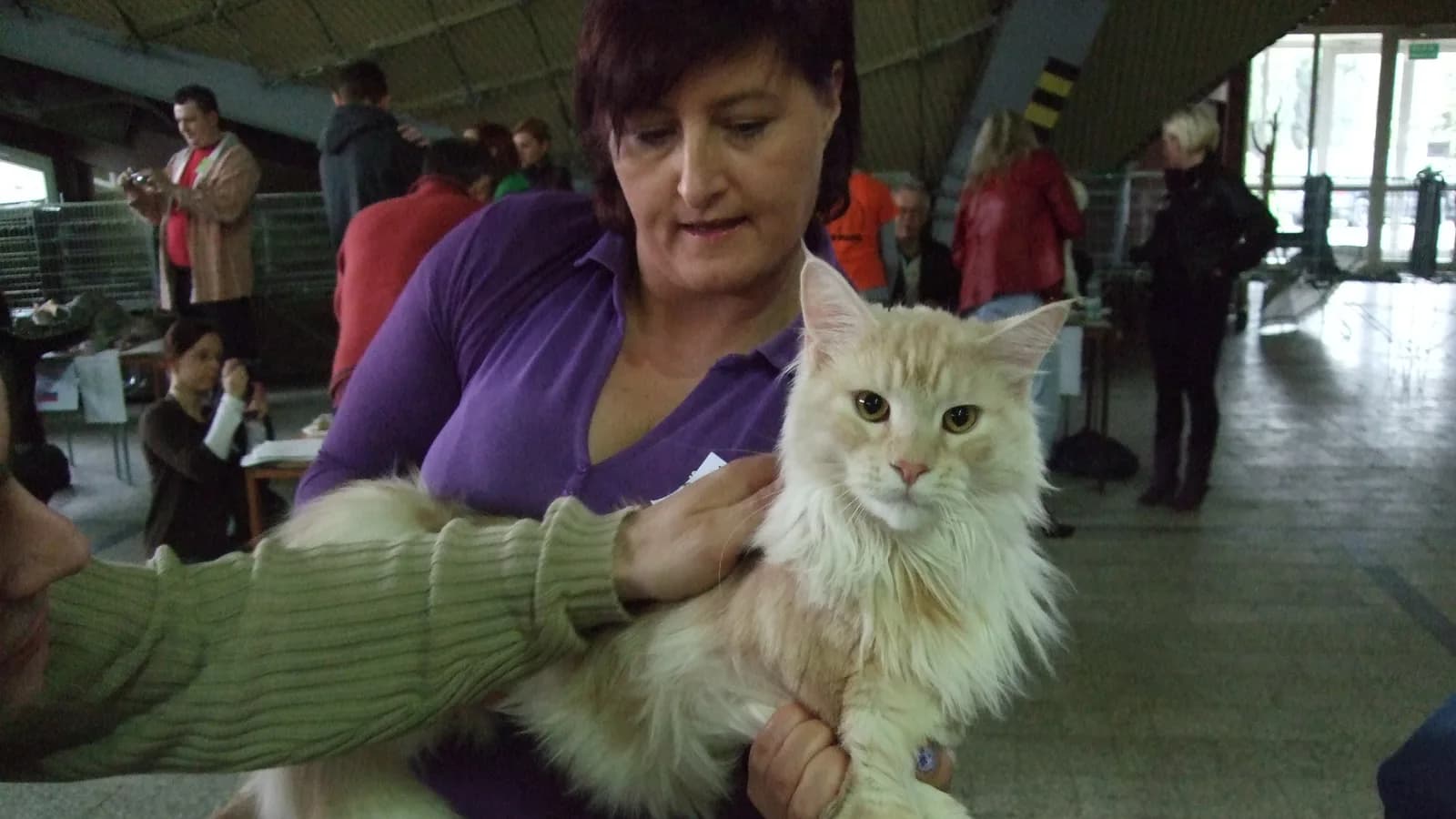
Maine Coon guide
Giant Maine Coons: The Records, and What "Giant" Really Means
The verified biggest Maine Coons, the records the breed does not hold, and what to check before paying a cattery with "giant" in its name.
Read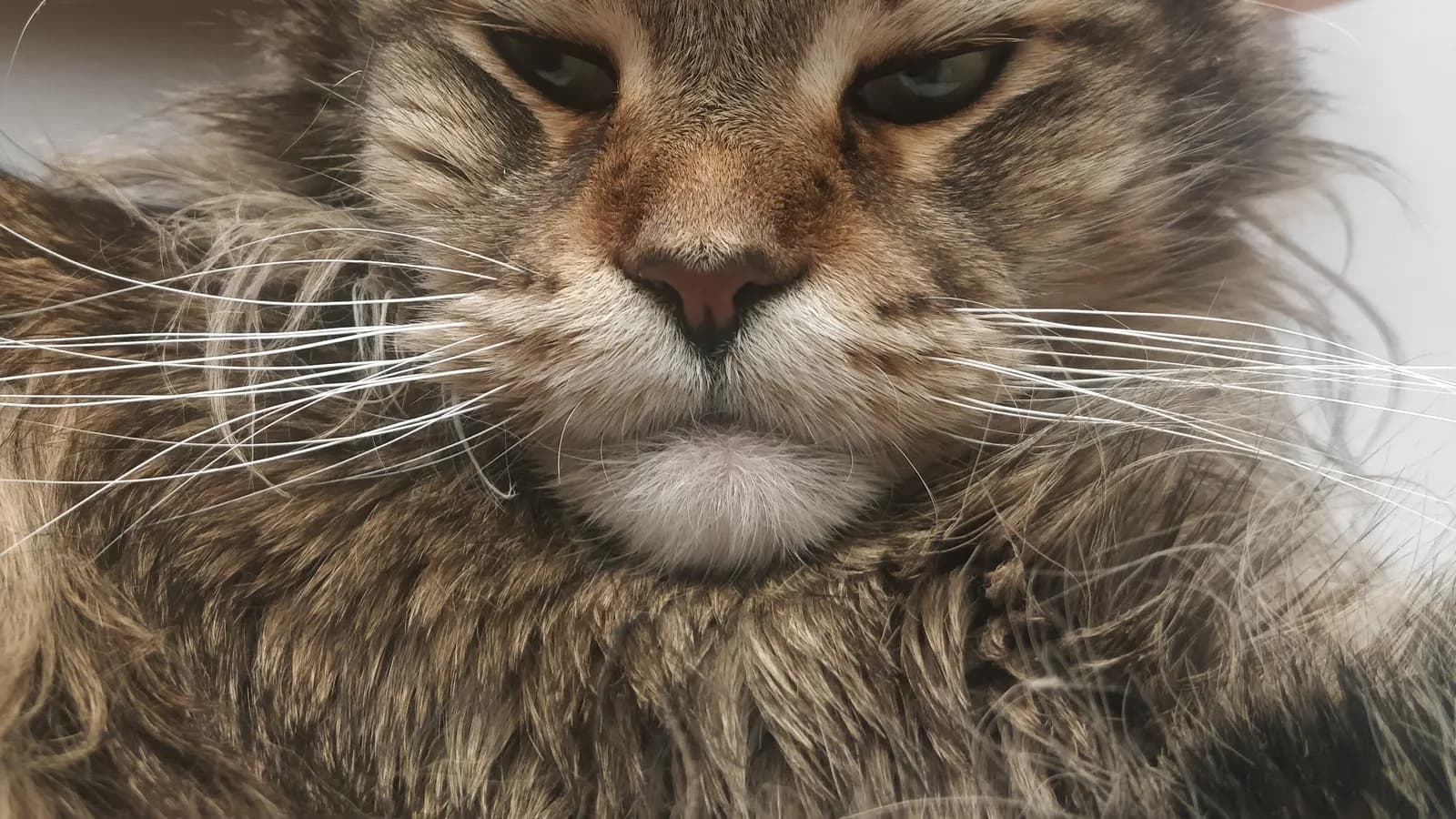
Maine Coon guide
Are Maine Coons Hypoallergenic? No, and Here Is the Honest Version
No cat breed is hypoallergenic, and the Maine Coon's long coat doesn't mean less allergen. What Fel d 1 is, why individual cats vary hugely, and what actually helps.
Read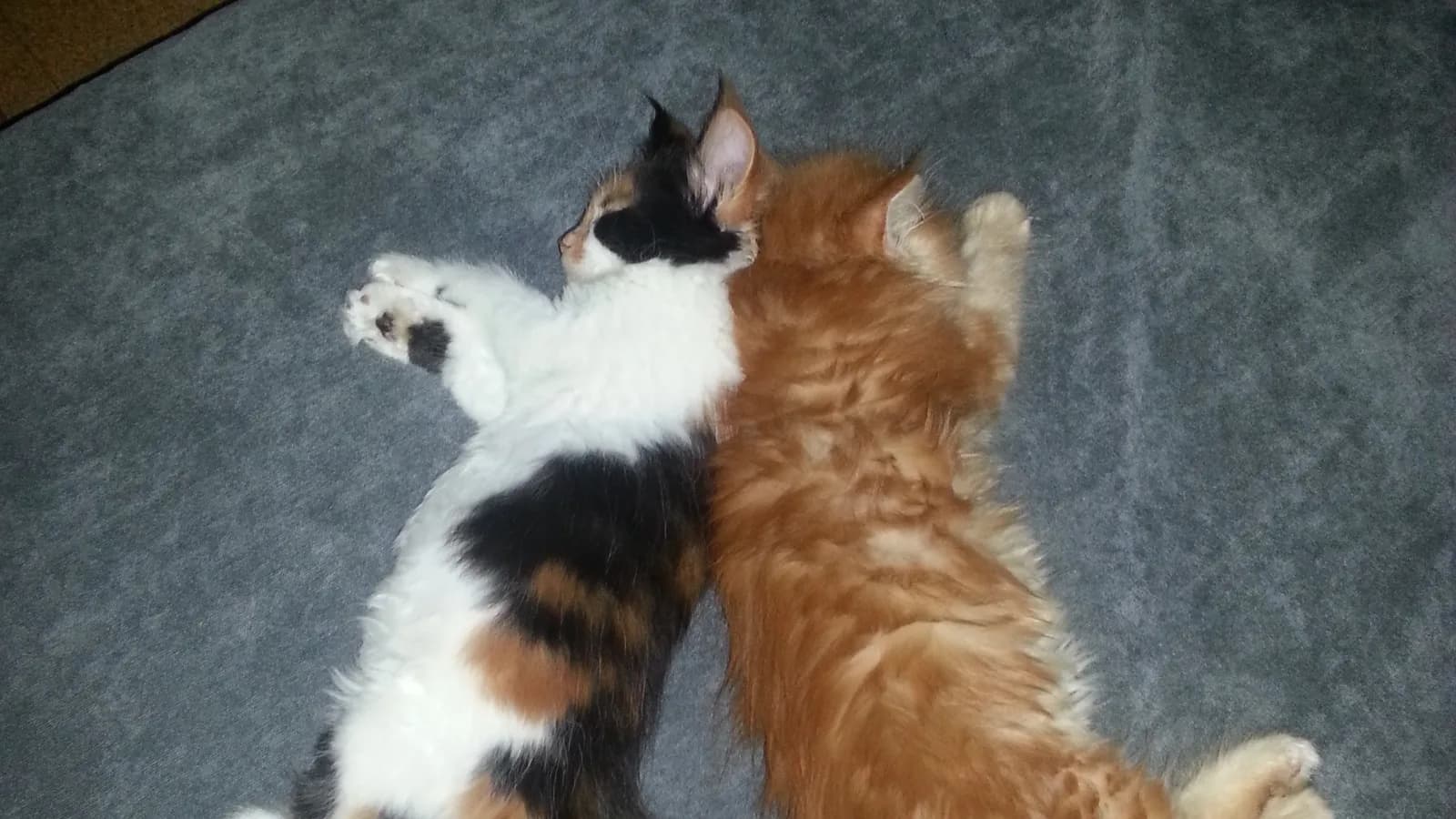
Maine Coon guide
Maine Coon Colors: The Whole Palette, Straight from the Standards
Every Maine Coon color the five major registries actually recognize, the three they all exclude, eye-color rules, and what blue-eyed buyers should ask about.
Read
Maine Coon guide
Tortie Maine Coon: Black and Red, Woven Together
What a tortoiseshell Maine Coon actually is, how torties differ from calicos and torbies, the blue-cream dilute, and what breeders charge for them.
Read
Maine Coon guide
Black Smoke Maine Coon: Midnight Over Silver
What makes a black smoke Maine Coon, how smoke differs from solid black and silver, why kittens declare themselves late, and what breeders charge.
Read
Maine Coon guide
Tuxedo Maine Coon: Black Tie, Twenty Toes of Fluff
Yes, tuxedo Maine Coons exist: what the registries call the pattern, the minimum-white rules that make it showable, and what the coat costs.
Read
Maine Coon guide
Tabby Maine Coon: The Coat Everyone Pictures
Why the brown tabby IS the classic Maine Coon, classic versus mackerel patterns, the ticked-tabby registry dispute, and what tabbies cost.
Read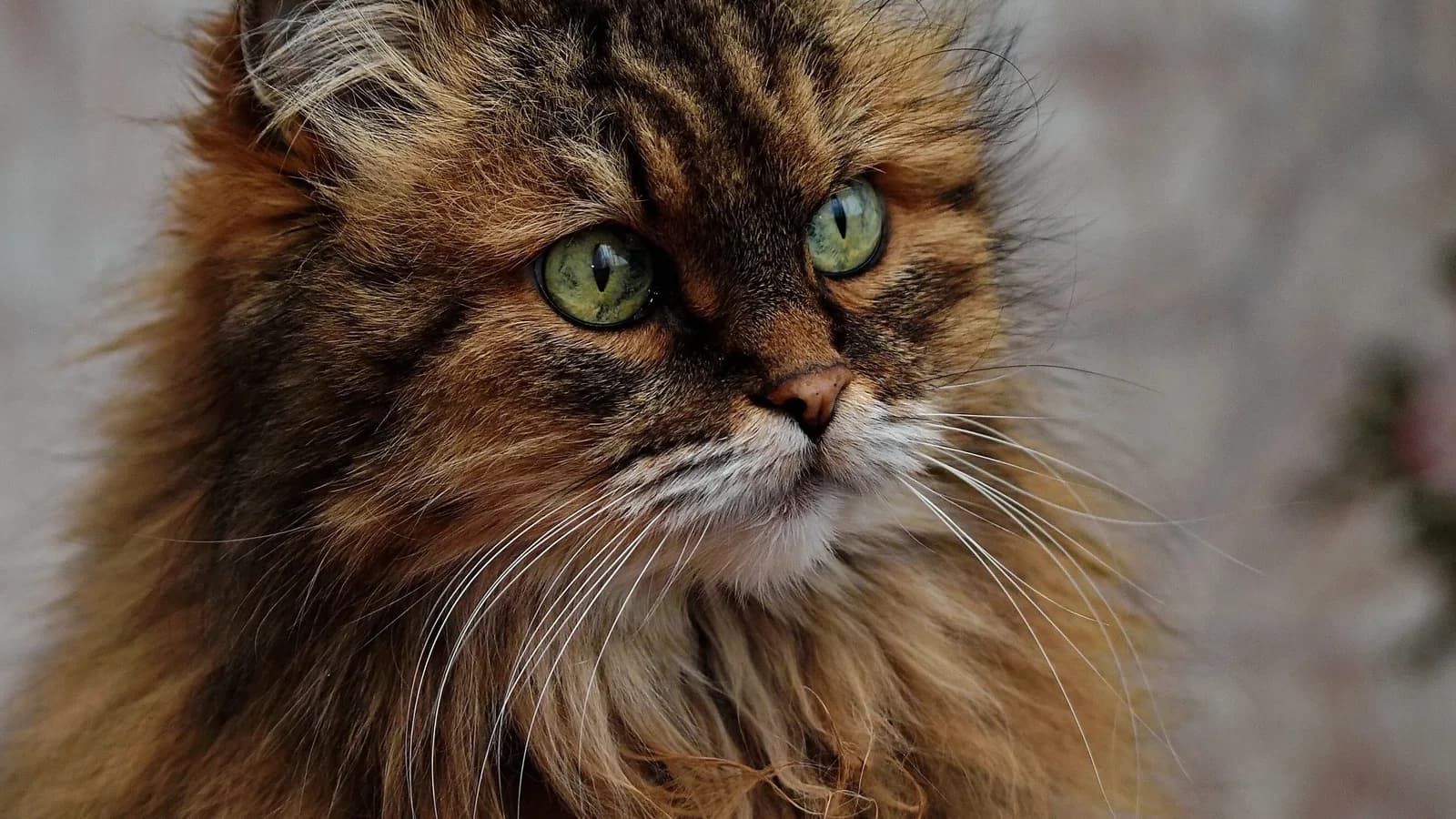
Maine Coon guide
European Maine Coon: A Look, a Label, and One Single Breed
"European Maine Coon" is a look and a marketing label, not a separate breed: what the European standards actually say, what sellers mean, and what to check.
Read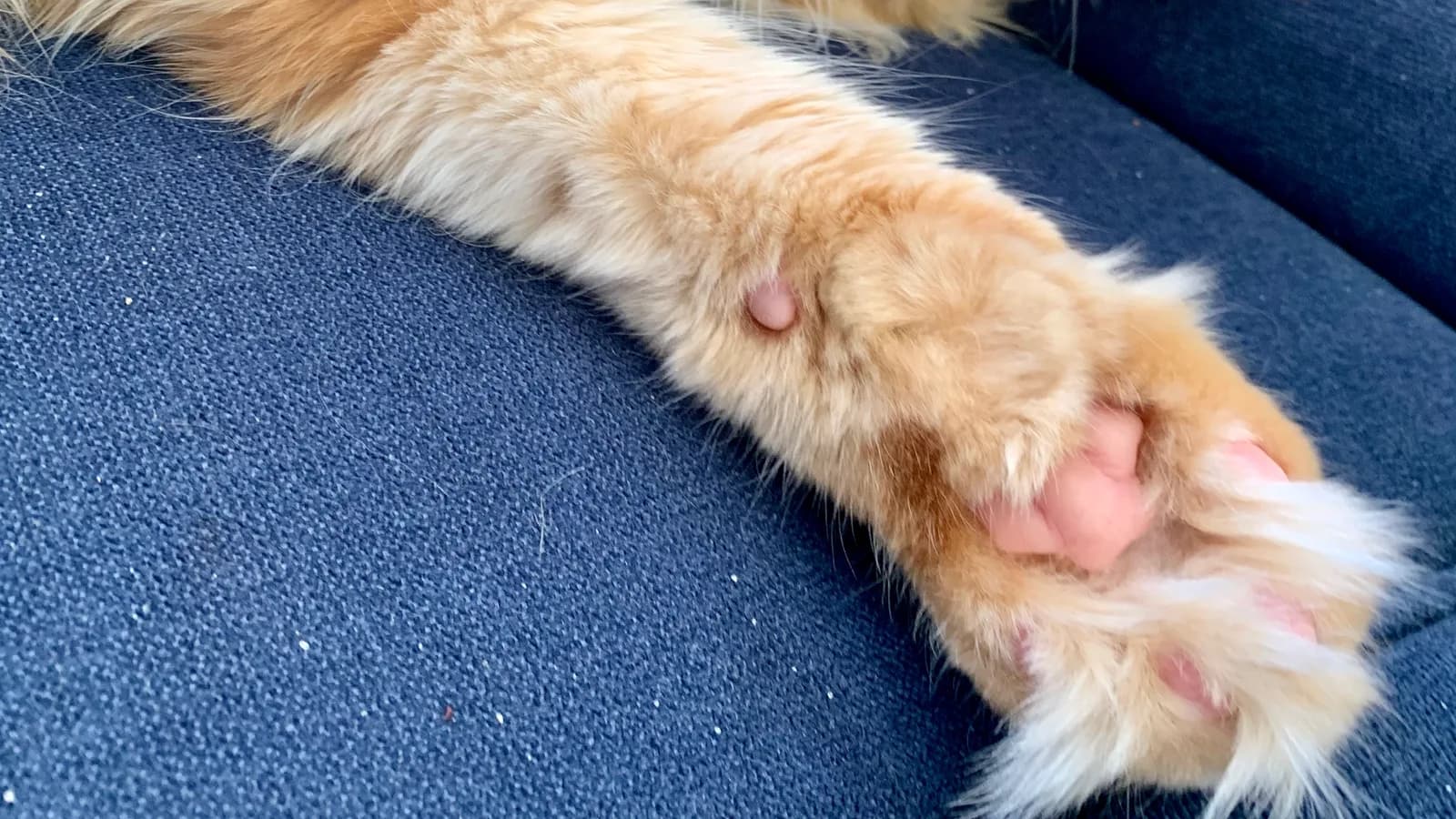
Maine Coon guide
Polydactyl Maine Coon: The Extra Toes That Split the Registries
What a polydactyl Maine Coon is, why TICA shows them and CFA does not, the snowshoe story told honestly, and what the extra toes change for the cat.
Read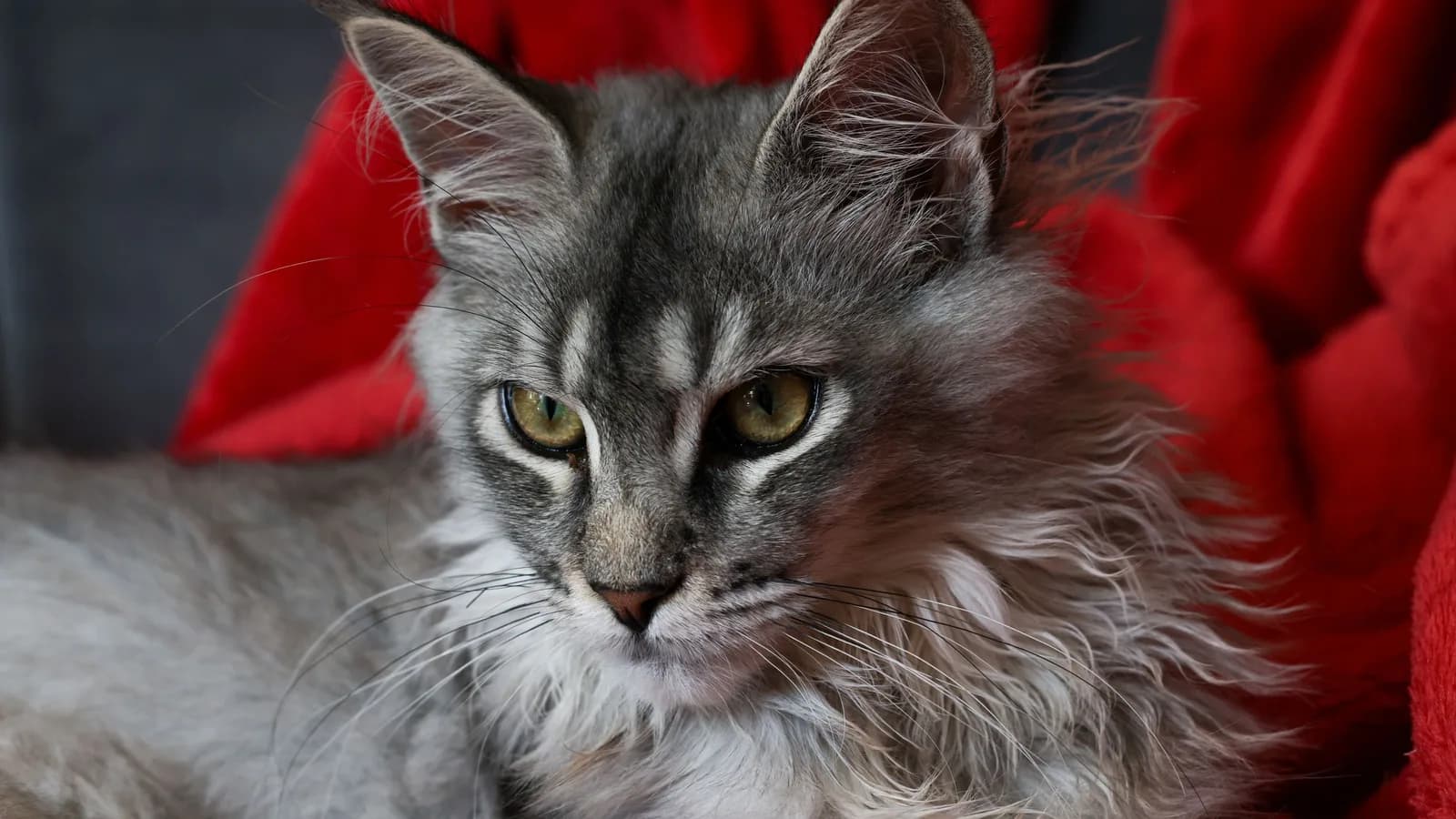
Maine Coon guide
Silver Maine Coon: Frost Over the Tiger
What makes a silver Maine Coon, how silver differs from smoke, the tarnish fault that makes clean silvers rare on show benches, and real prices.
Read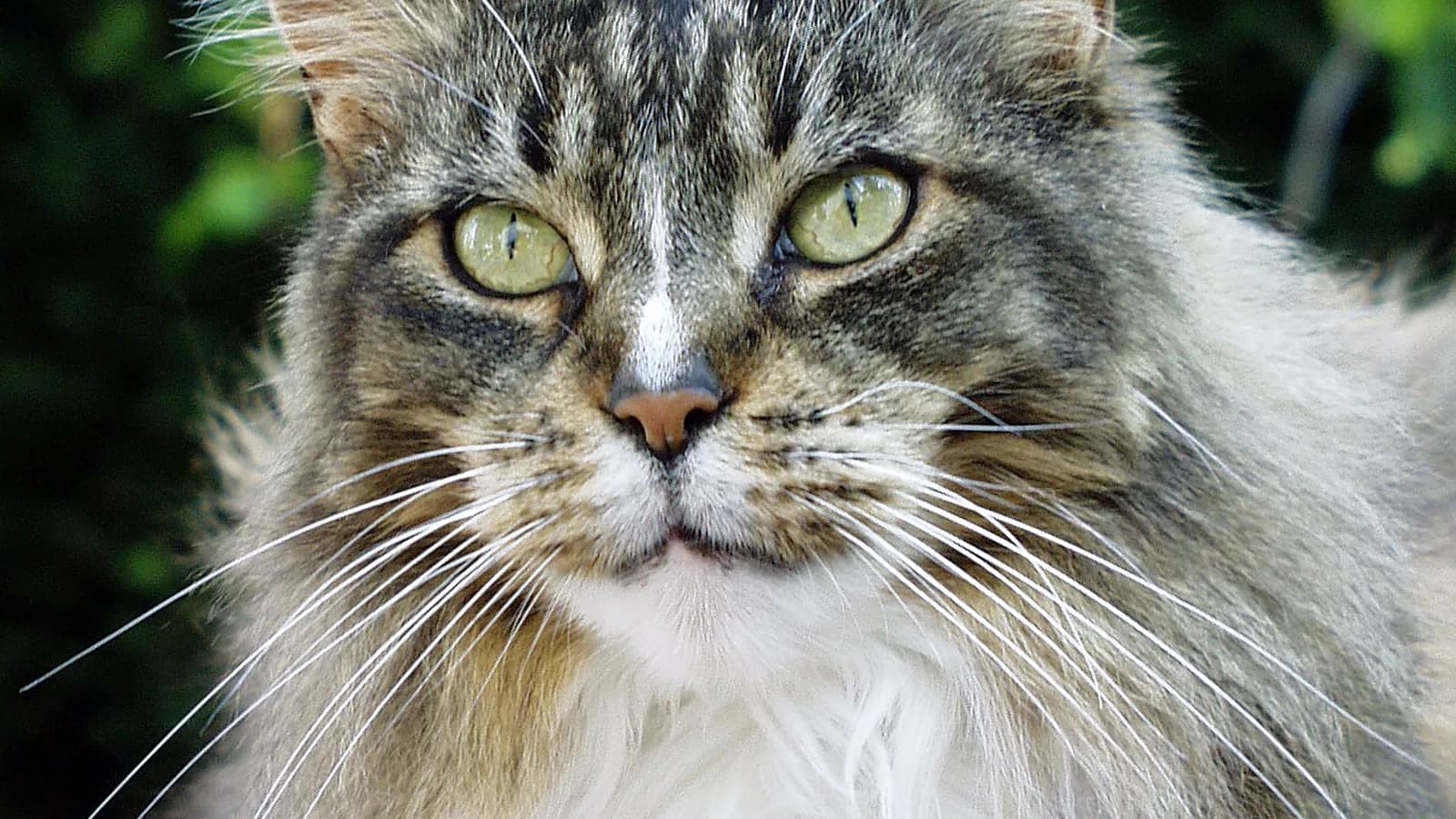
Maine Coon guide
Maine Coon History: From Ship Cats to State Cat
Where Maine Coons really come from: the documented timeline from 1861 to CFA's number one breed, the myths told honestly, and the 1985 law that made it Maine's state cat.
Read
Maine Coon guide
Maine Coon Cat Names: What Owners Actually Chose, and Ideas Sized to Fit
The only measured Maine Coon name rankings (Lucy, Max and friends, 2015), why the breed is called a "coon" at all, and name ideas sized for a gentle giant.
Read
Maine Coon guide
Cream Maine Coon: Red, Whispered
What makes a cream Maine Coon, how cream relates to red and blue, why two orange parents can throw cream kittens, and what the coat costs.
Read
The floor belongs to our members. Keep it kind, links are not allowed, and images go through moderation before anyone else sees them.