

Hairless Cat Breeds: The Family Tree Runs on Three Different Genes
Sphynx, Donskoy, Peterbald, Devon Rex and the designer crosses, sorted by what the genetics papers and the registries actually say, not by what the name suggests.

Published August 21, 2026 6 min read
Contents
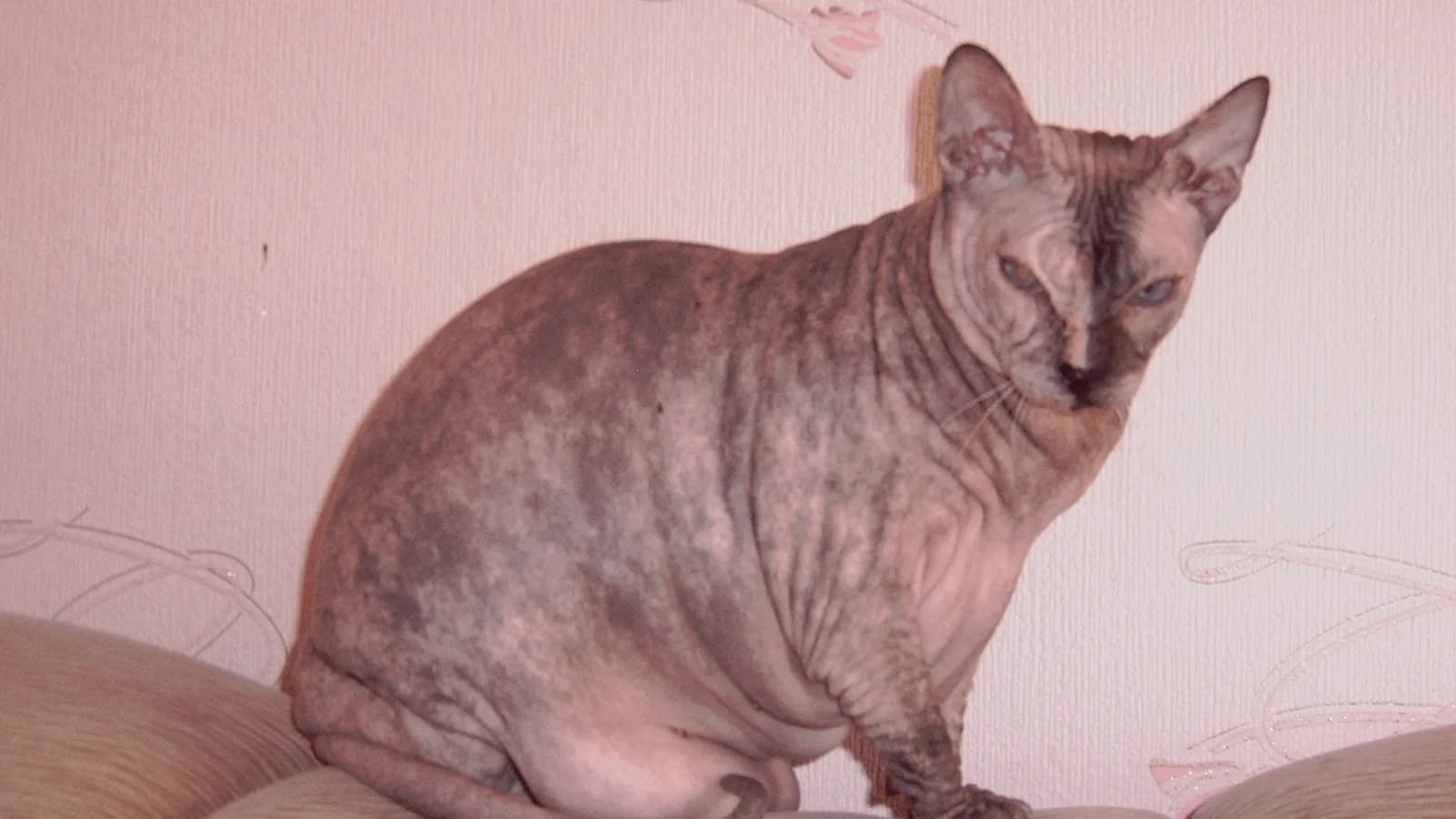
"Hairless cat" almost always means Sphynx, but the family is bigger and genuinely stranger than the roundups tell it: two unrelated hairless genes arose on different continents, a third mutation makes a curly cousin rather than a bald one, and the boutique names you see on price lists (Elf, Bambino, Dwelf) are crosses with no current registry standing of their own. Here is the family, sorted by genetics rather than by look.
Sphynx and Devon Rex: two mutations, one gene
The founding science is precise: the 2010 KRT71 paper sequenced the -71 gene and found the Sphynx's hairless allele and the Devon Rex's curl allele are DIFFERENT mutations in the SAME gene, with a dominance order (normal coat beats hairless, hairless beats curl). So the right sentence is never "they share the hairless gene": the Devon Rex is not hairless at all, it is sparse and curly, and its own registry pages carry two things worth repeating: the hypoallergenic correction ("they do produce allergens like every other cat", 's words), and a shared medical footnote below. dates the founding Devon kitten, Kirlee, to 1959 in Devon, England; TICA says 1960; each registry gets its own date here because neither cites a document.
The COLQ footnote both breeds share
Sphynx and Devon Rex share a rare congenital myasthenic syndrome (muscle weakness, fatigability) caused by the same COLQ mutation, identified independently by two research groups in 2015. The tested figures are carrier rates from specific study panels, not disease rates: roughly 4 percent of a 202-cat Devon Rex panel carried it (8 cats; the paper's own 2 percent figure is an allele frequency, which is why you will see both numbers quoted), and 3.7 percent of 81 European Sphynx. Unlike this breed's disputed heart-disease genetics, the COLQ test is a real, validated, commercially offered DNA test: a breeder can and should show results. Carriers are healthy; the syndrome needs two copies.
Donskoy: the name says Sphynx, the gene says otherwise
The Donskoy (founded from a kitten named Varvara, found in Rostov-on-Don, Russia, in 1987) was originally called the DON SPHYNX, and that founding name is the whole confusion: a 2013 study tested KRT71, the Sphynx's gene, and ELIMINATED it as the cause of Donskoy hairlessness. 's own standard states the Donskoy gene is DOMINANT, where the Sphynx's is recessive: a different gene with a different inheritance pattern, and which gene it actually is remains unidentified in the literature we reached. The Donskoy also comes in four registry-named coat types (rubber bald, flock, velour, brush), can grow a thin winter chest coat, and its care routine reads like the Sphynx grooming page: daily wipes, regular baths, vet-guided sun care.
Peterbald: the Donskoy gene on an Oriental frame
St Petersburg, 1993-94: a Donskoy bred to an Oriental Shorthair founded the Peterbald, so it carries the same dominant hairless gene on a slim Oriental body. 's own page states it plainly ("a dominant gene, unlike the (Canadian) Sphynx gene") and lists FIVE possible coats for the breed, from fully bald to a wiry brush coat to, rarely, a completely normal straight coat. Telling detail: TICA's own "similar breeds" field for the Peterbald names the Orientals, not the Sphynx. The registry classifies by ancestry; only the roundups classify by baldness. Its page also repeats the family correction: "Hairless Peterbalds are not all hypoallergenic."
Elf, Bambino, Dwelf: real cats, no registry standing
The boutique tier is real and NOT recognized: 's breed list and its current Registration Rules (December 2025, searched in full) contain no Bambino, Elf or Dwelf, and 's site 404s on all three. What they are: crosses of Sphynx with American Curl (Elf: curled ears), with Munchkin (Bambino: short legs), or with both (Dwelf). Two claims circulate that we publish only with their dates: a web-search claim that Elfs are currently shown under Sphynx in TICA's New Traits Class (the mechanism exists in TICA's rules; the Elf-specific application is unverified), and one pet site's claim of a 2005 "experimental" TICA designation for the Bambino, of which TICA's current materials show no trace.
What IS documented: the crosses price ABOVE plain Sphynx at every cattery selling both (the price page has the ladder), and "Dwelf" is a real enough label to appear as the breed of record in a 2025 peer-reviewed surgical case report describing bilateral limb deformity in a chondrodystrophic (short-legged) cat, a reminder that stacking mutations is not free.
Lykoi: in the club by look, not by lineage
The "werewolf cat" rounds out every hairless list, and belongs at the end precisely because it is unrelated: a natural partial-hairlessness mutation from 2011 sibling litters, no KRT71, no Donskoy gene, no Sphynx ancestry, with a roan coat that cycles between nearly bald and nearly coated. leaves its "similar breeds" field blank. One family resemblance survives: like every cat on this page, it is not hypoallergenic (the evidence file covers why).
The family on one card
| Breed | The gene | Registry standing |
|---|---|---|
| Sphynx | KRT71, recessive (hr allele) | Championship at , , , , |
| Devon Rex | KRT71, a DIFFERENT mutation (curl, not bald) | Championship; shares the COLQ myopathy test |
| Donskoy | Unidentified, DOMINANT; KRT71 eliminated 2013 | yes; no |
| Peterbald | The Donskoy gene on Oriental lines | championship 2005; no |
| Elf / Bambino / Dwelf | Sphynx crosses (Curl ears / short legs / both) | No current or recognition (checked in the rules) |
| Lykoi | Unrelated natural mutation (2011) | ; partial hairlessness, cycles with the hair cycle |
 The vet's take

Veterinary review
Are you a vet?
Your professional read belongs here: every verified practitioner can leave a note, published once our editors have reviewed it.
Sign in and get your license number verified. We check it in the public register, we never ask for or keep a copy of your diploma, and your number is never published.
Frequently asked questions
What are the hairless cat breeds?
Three with registry standing: Sphynx (recessive KRT71 mutation, Canada), Donskoy (different, dominant gene, Russia) and Peterbald (the Donskoy gene on Oriental lines). Elf, Bambino and Dwelf are Sphynx crosses with no current TICA or CFA recognition; Devon Rex and Lykoi are sparse-coated, not hairless.
Are Donskoy and Sphynx the same breed?
No, and the science checked: the Donskoy's founding name was "Don Sphynx", but a 2013 study eliminated the Sphynx's KRT71 gene as its cause, and its gene is dominant where the Sphynx's is recessive.
Is the Elf cat a recognized breed?
Not currently: TICA's breed list and registration rules contain no Elf, and CFA's site has no page for it. TICA's rules do provide a New Traits pathway a cross could someday clear; claims that the Elf is already in it are unverified.
Which hairless cat is hypoallergenic?
None: TICA's own pages for the Devon Rex and Peterbald state they produce allergens like every cat, and the Sphynx page itself admits no scientific studies back the low-allergen idea.
 Community questions
Got a question this page doesn't cover? Ask it: the best ones get published here with their answer.
This is information, not veterinary advice, and it cannot tell you what is wrong with your cat. Our rule is a simple one: if something is wrong with your cat, call your vet, and call an emergency clinic if it is out of hours. Nothing you read here is a reason to wait.
Medical information applies to every reader. Prices, legal duties and common practice do not: unless stated otherwise, they are given for the United States, and they differ in the UK, Canada and Australia, and often between states or provinces. Check with your own vet and your own local authority.
Our sources
- Gandolfi et al. 2010, KRT71 mutations in Sphynx and Devon Rex
- Dierks et al. 2013, KRT71 eliminated for Don Sphynx
- Gandolfi et al. 2015, COLQ variant
- Abitbol et al. 2015, COLQ missense mutation
- Lunde and Langley-Hobbs 2025, chondrodystrophic Dwelf case report
- TICA Donskoy breed page
- TICA Devon Rex breed page
- CFA Devon Rex breed page
- TICA Peterbald breed page
- TICA Lykoi breed page
- TICA Registration Rules (Version A, 2 Dec 2025)
- Omlet Bambino breed page

Worth keeping a paw on
Pin this guide
So you can find it the day you need it, and share it with someone whose cat does the same thing. One click and it sits in your board.
Pin it on Pinterest
 Purr or Pass
The cat newsletter
Our verified guides, no spam. Unsubscribe in one click.
More Sphynx guides
The Sphynx profile →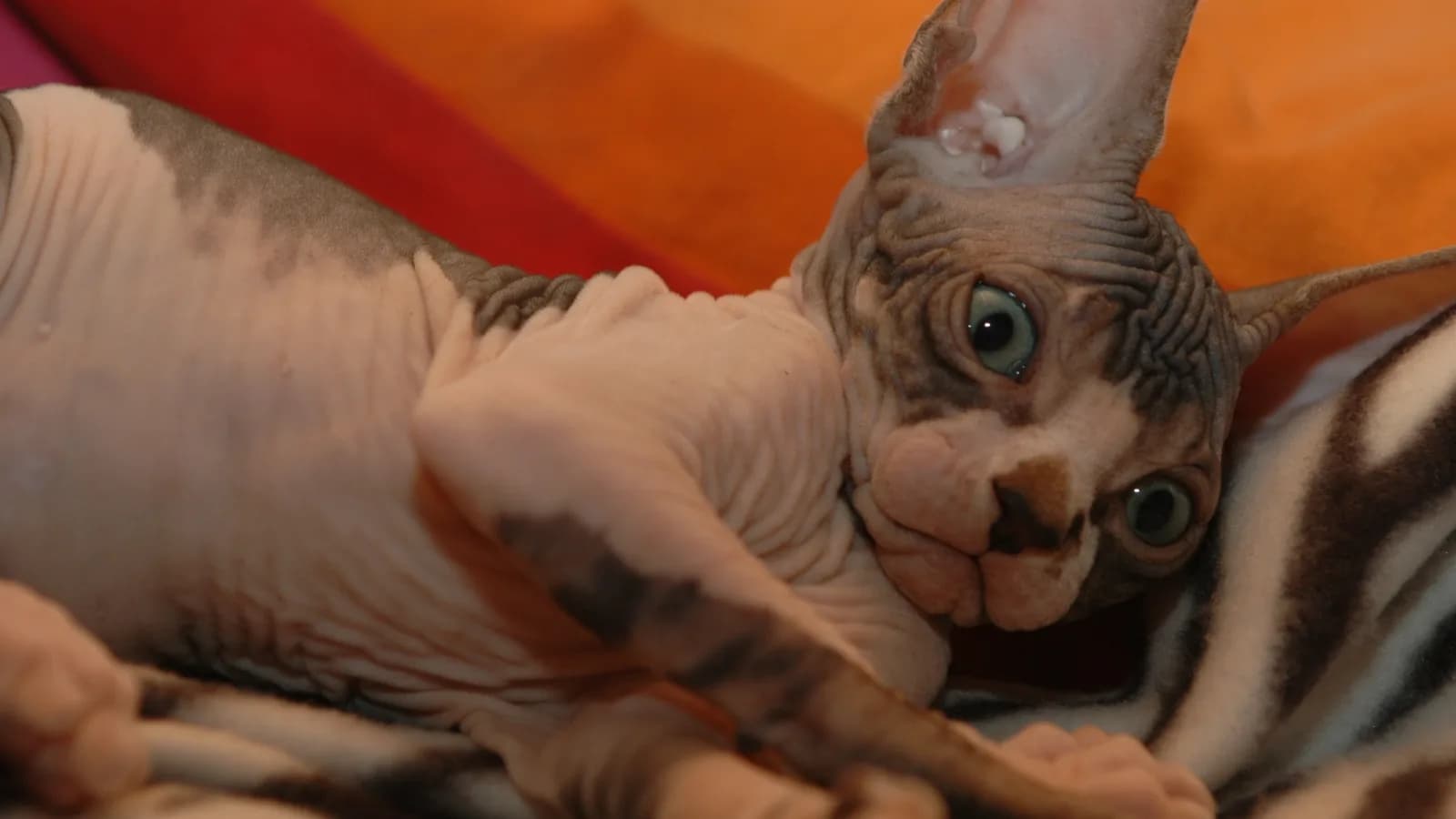
Sphynx guide
Sphynx Cat for Sale: What the Naked Cat Actually Costs
Named catteries in four countries, live marketplace samples, the eye-color premium, why an Elf costs more than a Sphynx, and what a cheap listing usually omits.
Read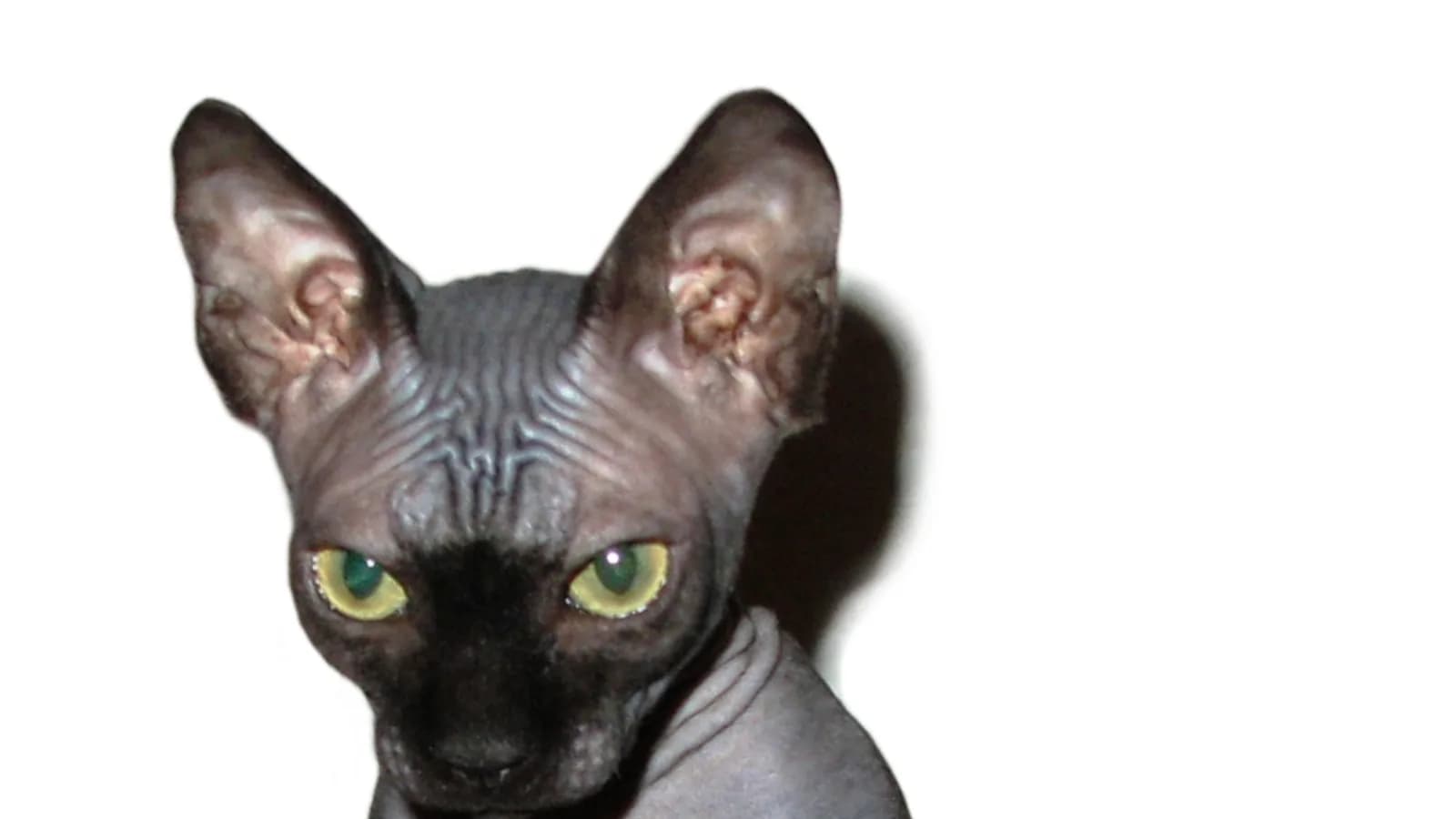
Sphynx guide
Black Sphynx Cat: What the Most-Searched Sphynx Color Actually Is
What a black Sphynx actually is: dark pigmented skin, a color no registry restricts or judges, a sun tan that is really a color shift, and the seal naming twist.
Read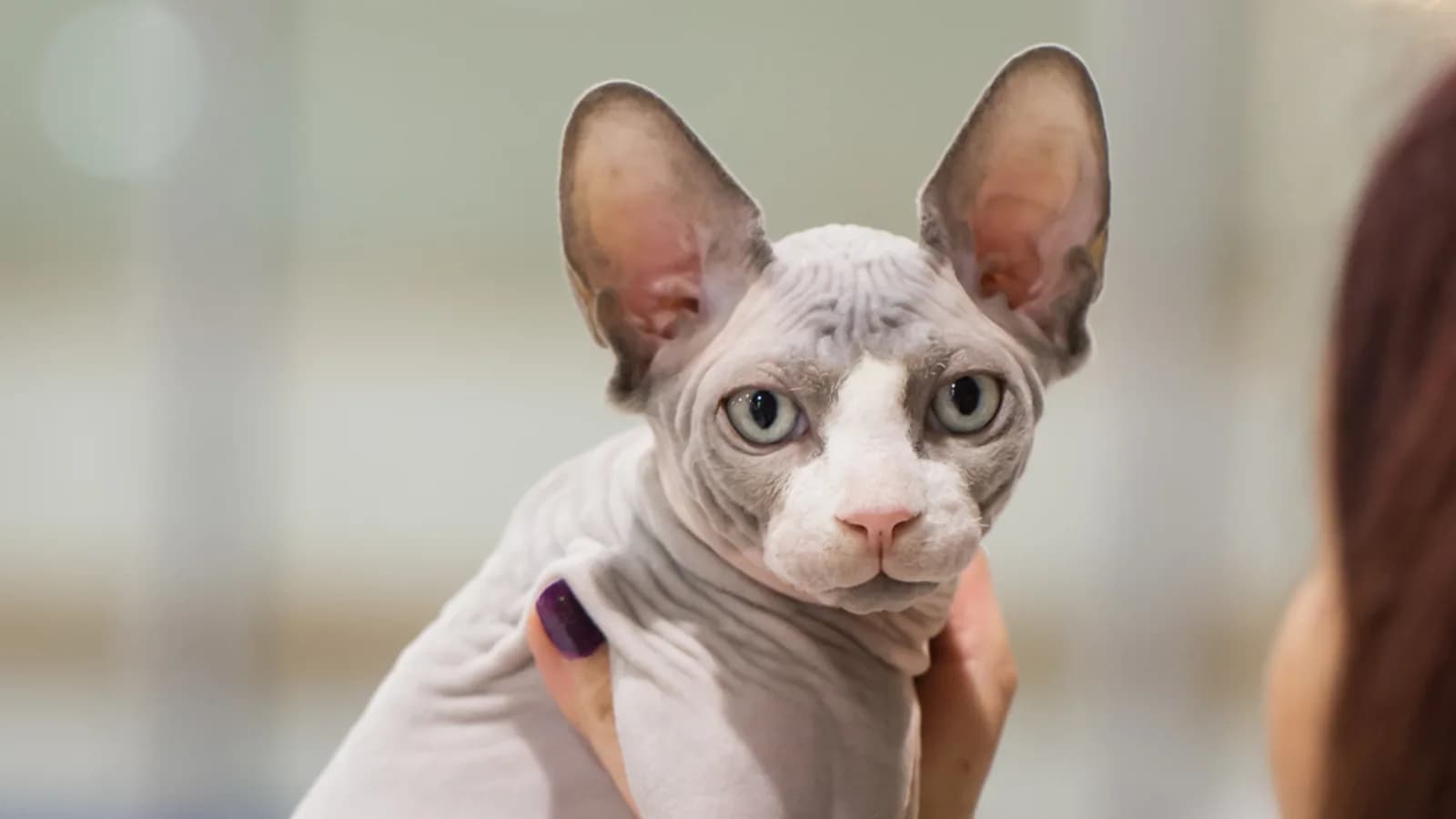
Sphynx guide
Are Sphynx Cats Hypoallergenic? Read the Registry's Own Hedge
No fur does not mean no allergen: Fel d 1 comes from skin and saliva. TICA's own hedge, the hairless cousins' own registry pages, and what actually helps.
Read
Sphynx guide
Sphynx Cat Grooming: You Traded the Brush for a Washcloth
No brush, no shedding: a skin-oil routine instead. What the yeast studies actually measured, the bathing-frequency fight, and the sunscreen ingredients that are genuinely dangerous.
Read
Sphynx guide
Sphynx Cat Colors: Every Color Allowed, None of Them Judged
Every color is allowed and none is judged: the registries' own words. How color reads on bare skin, why DNA testing beats eyeballing, and where black fits.
Read
The floor belongs to our members. Keep it kind, links are not allowed, and images go through moderation before anyone else sees them.