

Sphynx Cat Colors: Every Color Allowed, None of Them Judged
Every color is allowed and none is judged: the registries' own words. How color reads on bare skin, why DNA testing beats eyeballing, and where black fits.

Published August 21, 2026 5 min read
Contents
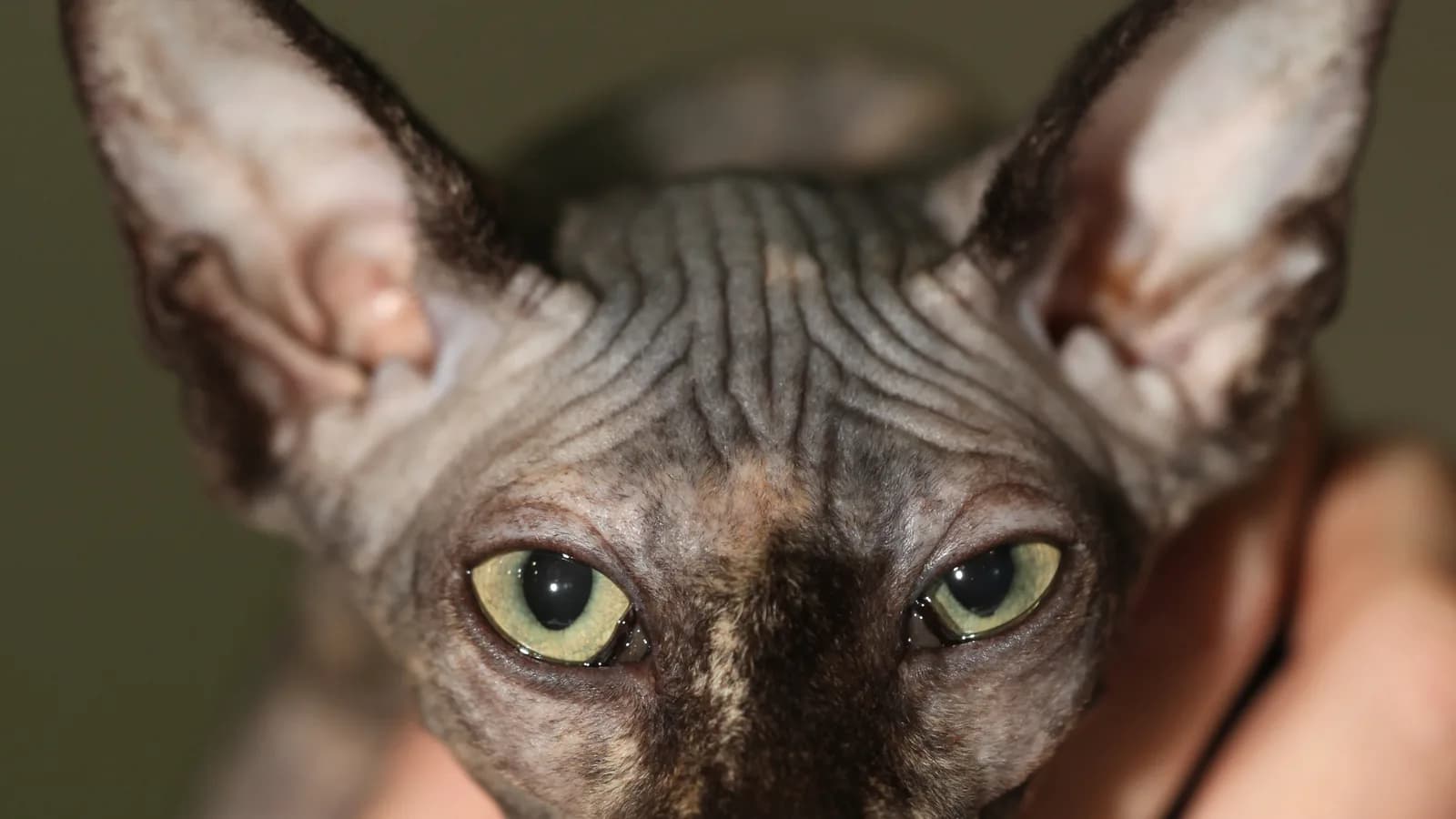
Most breed color pages are lists of what a registry permits. This breed makes that list trivial and the mechanism fascinating: 's standard reads "CATEGORY: All. DIVISION: All. COLOR: All", accepts "all colors and patterns, in any combination, found in felines", accepts "all colours (including eye colour) and patterns", and 's Standard of Points goes furthest of all: color and pattern are "irrelevant", worth zero points. The interesting question is not WHICH colors a Sphynx comes in. It is how you read color on a cat with no fur to carry it.
Color on skin: the mechanism every furred breed page skips
's own consumer page says it plainly: color "is viewed on the pigment of the skin and on the few hairs (down) they have." A black Sphynx is a cat with black-pigmented skin; a tabby Sphynx may show its pattern faintly or not at all. TICA's own judges' education material goes further than any standard: "Color on hairless cats can be hard to determine. Creams can look blue, reds and creams can be hard to differentiate. Tabby marking generally do not stay on the skin... DNA testing is recommended to assist in determining correct color."
The registry that runs the shows tells its own judges the breed is hard to read by eye, and that a Sphynx can be registered under the WRONG color without anyone noticing. No other breed on this site carries that sentence. Paw pads and nose leather are the practical tells the same document offers when no DNA test is at hand.
The palette, and where the volume actually is
's registration table names the full feline deck for this breed: white, black, blue, red, cream, chocolate, cinnamon and fawn solids, the tabby family with silver variants, tortoiseshell and calico with van and dilute forms, bicolor, pointed, mink, and three named sepia/mink shades (sable, champagne, platinum), closed by an explicit catch-all class for anything else. One color out-searches all the others combined: the black Sphynx has its own page, because it out-runs this page's own head term roughly nine times over in every one of our four markets. The rest of the palette lives here.
Sepia, mink, pointed: same genetics, different reading surface
The three "temperature" categories are not a hairless novelty: the albino-series locus works identically in every breed that carries it (sepia cb/cb, pointed cs/cs, and mink the cb/cs heterozygote, which is why a cat can never be two of the three at once, and why every standard bars pointed-plus-mink combinations). What changes on a Sphynx is the reading: those categories are normally judged by contrast between body coat and points, and this breed has no body coat. 's appendix describes it on skin instead: sepia skin "paler and warmer" than full color, mink skin lighter still, with color intensifying on ears, tail, feet and face.
And one naming rule worth knowing before a breeder's price list confuses you: the sepia/mink equivalent of black is called SEAL. It is not an extra color; it is what a genetically black cat is named once its temperature genotype shifts.
The fine print: sun, eyes, and one Australian footnote
Both documents carry the same warning as a judging note: "exposure to sun will intensify all colors." That is a statement about pigment, not a license to sunbathe; the grooming guide carries the actual sun-safety rules for this breed. Eye color is as open as coat color (CFA: "as no points are assigned to eye color, all eye colors are accepted"), which matters at the till more than at the show bench: eye color carries a real, named price premium at catteries in two of our markets (the price page has the figures). And the one genuine exclusion in the whole file: in Australia bars amber, the same single exclusion its Munchkin standard carries, which reads as an ACF house rule rather than anything about this breed.
The skin palette at a glance
 The vet's take

Veterinary review
Are you a vet?
Your professional read belongs here: every verified practitioner can leave a note, published once our editors have reviewed it.
Sign in and get your license number verified. We check it in the public register, we never ask for or keep a copy of your diploma, and your number is never published.
Frequently asked questions
What colors do Sphynx cats come in?
All of them: every registry that shows the breed (TICA, CFA, CCA-AFC, GCCF) states no color exclusion, and CFA's table runs from solid white to sepia platinum with an explicit "any other color" class. Only Australia's ACF bars one color, amber, an ACF-wide pattern.
Are Sphynx cats judged on color?
No, and three registries say so in writing: TICA's standard assigns color zero points, CFA states color "should not affect the judging", and GCCF calls it "irrelevant". The judging points go to skin texture and wrinkling instead.
Why is a Sphynx's color hard to identify?
Because it reads on skin pigment and sparse down instead of fur: TICA's own judging material says creams can look blue and tabby markings rarely persist on skin, and recommends DNA testing for correct registration.
What is a seal Sphynx?
A genetically black cat in the sepia or mink category: "Seal" is the sepia/mink NAME for black, per CCA-AFC's own appendix, not a separate color on the deck.
 Community questions
Got a question this page doesn't cover? Ask it: the best ones get published here with their answer.
This is information, not veterinary advice, and it cannot tell you what is wrong with your cat. Our rule is a simple one: if something is wrong with your cat, call your vet, and call an emergency clinic if it is out of hours. Nothing you read here is a reason to wait.
Medical information applies to every reader. Prices, legal duties and common practice do not: unless stated otherwise, they are given for the United States, and they differ in the UK, Canada and Australia, and often between states or provinces. Check with your own vet and your own local authority.
Our sources

Worth keeping a paw on
Pin this guide
So you can find it the day you need it, and share it with someone whose cat does the same thing. One click and it sits in your board.
Pin it on Pinterest
 Purr or Pass
The cat newsletter
Our verified guides, no spam. Unsubscribe in one click.
More Sphynx guides
The Sphynx profile →
Sphynx guide
Sphynx Cat for Sale: What the Naked Cat Actually Costs
Named catteries in four countries, live marketplace samples, the eye-color premium, why an Elf costs more than a Sphynx, and what a cheap listing usually omits.
Read
Sphynx guide
Black Sphynx Cat: What the Most-Searched Sphynx Color Actually Is
What a black Sphynx actually is: dark pigmented skin, a color no registry restricts or judges, a sun tan that is really a color shift, and the seal naming twist.
Read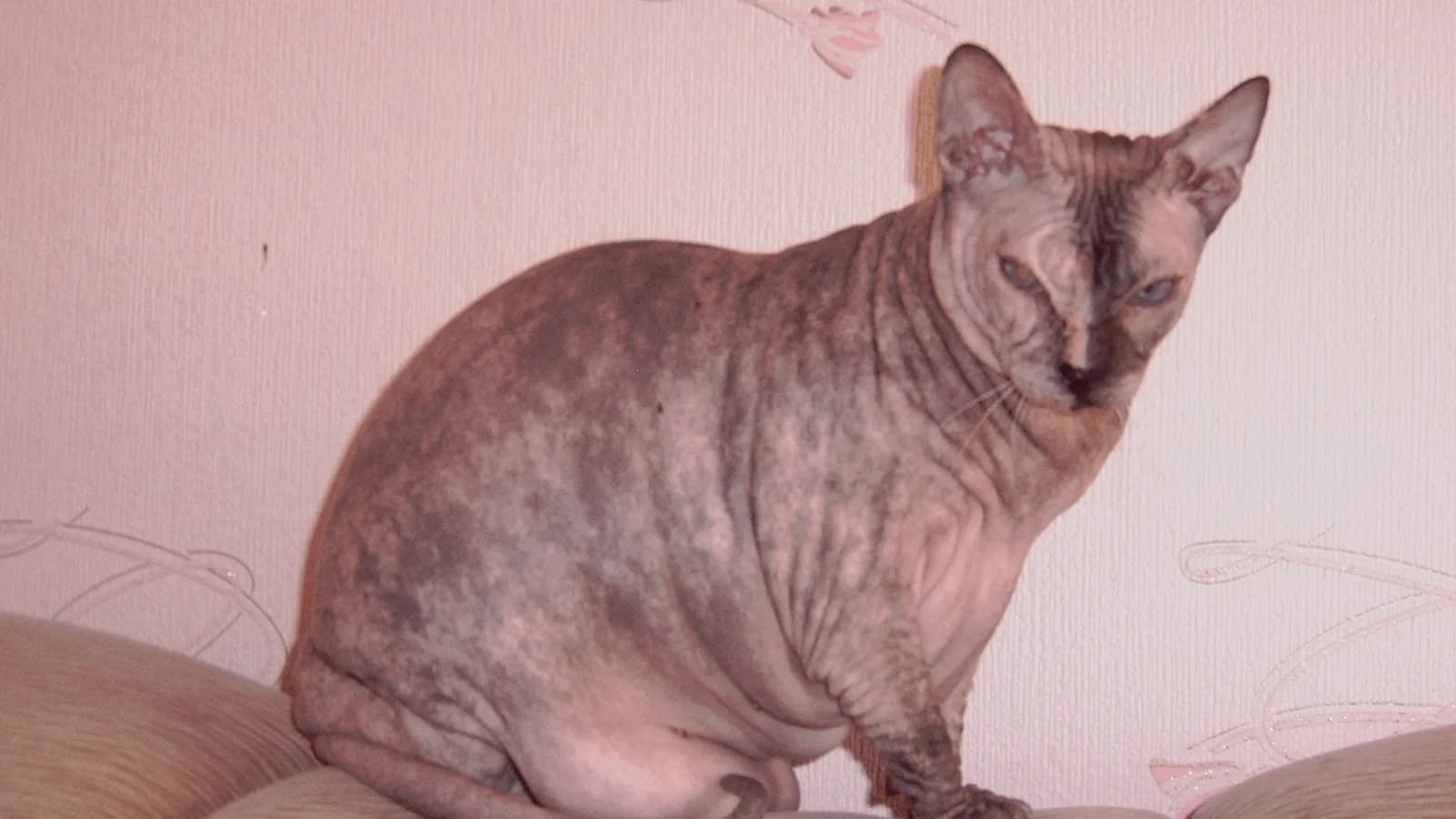
Sphynx guide
Hairless Cat Breeds: The Family Tree Runs on Three Different Genes
Sphynx, Donskoy, Peterbald, Devon Rex and the designer crosses, sorted by what the genetics papers and the registries actually say, not by what the name suggests.
Read
Sphynx guide
Are Sphynx Cats Hypoallergenic? Read the Registry's Own Hedge
No fur does not mean no allergen: Fel d 1 comes from skin and saliva. TICA's own hedge, the hairless cousins' own registry pages, and what actually helps.
Read
Sphynx guide
Sphynx Cat Grooming: You Traded the Brush for a Washcloth
No brush, no shedding: a skin-oil routine instead. What the yeast studies actually measured, the bathing-frequency fight, and the sunscreen ingredients that are genuinely dangerous.
Read
The floor belongs to our members. Keep it kind, links are not allowed, and images go through moderation before anyone else sees them.