

Sphynx Cat Grooming: You Traded the Brush for a Washcloth
No brush, no shedding: a skin-oil routine instead. What the yeast studies actually measured, the bathing-frequency fight, and the sunscreen ingredients that are genuinely dangerous.

Published August 21, 2026 6 min read
Contents
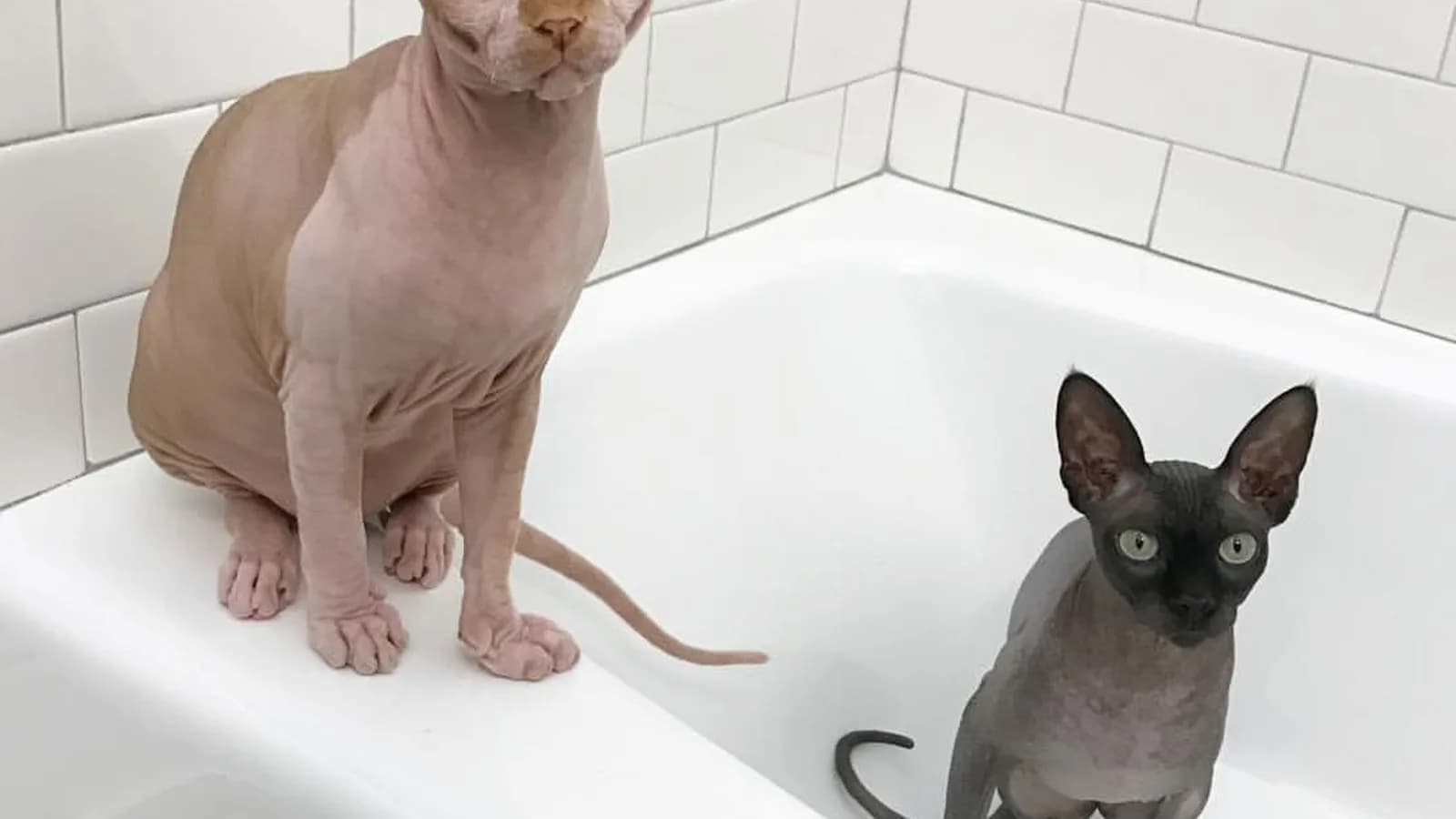
Nobody brushes a Sphynx. The entire routine that fur would demand is replaced by one mechanism: the oil (sebum) a coat would normally absorb and distribute sits on bare skin instead, collects in wrinkles, ear canals and claw folds, and needs wiping away on a schedule. That is not breeder folklore: two peer-reviewed culture studies, from different countries, found Malassezia yeast on Sphynx skin at rates and populations far above coated breeds (every one of 18 UK cats colonized versus half of shorthairs; 81 percent of 32 Swedish cats versus none of the controls), and a third study using DNA sequencing independently found Sphynx skin among the most microbially distinctive of six breeds tested. Oily skin is the breed's biology. The routine below manages it.
Bathing: the most argued-about number in the breed
Here is the honest state of it: there are FOUR published bathing cadences and no controlled study behind any of them. 's grooming guidance is the only source that gives a mechanism rather than a bare number, and it pushes against the common assumption: "one of the biggest misconceptions of the breed is that they need to be washed weekly. Over bathing can actually disrupt the natural PH balance of the skin, causing an over production of sebum to self-regulate. Bathing with a natural, gentle shampoo every few months... is sufficient."
Meanwhile the academic literature records owners commonly bathing every 7 to 14 days, breeder sites publish "4-6 weeks" and "1-2 weeks" (the same site, two pages, two answers), and one cattery names bathing frequency "the single most argued-about topic in the breed." One genuinely useful measured fact: the Swedish study found NO correlation between how recently a cat was bathed and how greasy its skin was.
So the honest routine is 's reasoning plus your own cat's evidence: bathe when oil visibly builds, with a gentle cat shampoo, and resist the urge to over-wash a cat whose skin looks fine. Between baths, a soft damp cloth over the skin and into the wrinkles (neck, armpits, groin, tail base) once a week does most of the work; those fold zones are the exact sites the yeast studies sampled.
Ears: the one number everyone agrees on
Big, hairless ears collect wax fast, and this is the single most consistent figure in the whole research file: check WEEKLY, clean only as needed, outer ear only, never anything into the canal. says wax "needs to be cleaned out gently each week"; three independent catteries in two countries give the same weekly check with as-needed cleaning.
On the yeast question underneath, honesty requires two numbers: a UK study found ear-canal yeast in 11 of 18 Sphynx cats, a Swedish study found it in 0 of 32, and the UK authors themselves attribute the gap to identification methods (their lab used DNA sequencing, the Swedish lab visual identification) rather than settling it. The weekly check does not depend on which study is right. Red, swollen or foul-smelling ears are a vet visit to rule out infection, not a home project.
Nails and nail beds: trim like any cat, clean like a Sphynx
No Sphynx-specific nail science exists (we ran the searches: zero results), and even the joint / veterinary guidelines give no numeric trimming interval for any cat, so treat "every 2-4 weeks" for what it is, breeder convention. The genuinely Sphynx-specific part is the nail BED: a dark, waxy build-up around the claw base is normal for this breed and wants a gentle wipe at trim time. That claim has a real mechanism behind it: the claw fold is one of the sites where the peer-reviewed studies measured significantly elevated yeast populations. Ask your vet for a one-time nail-trim lesson if you have never done it; that is Cornell's own advice for every cat.
Sun: real risk, and two ingredients that make it worse
Bare skin burns, and this breed sits in the highest-risk tier veterinary sources name. The vulnerable zones are the ears, nose, belly and groin; a window does NOT make an indoor cat safe (a UK veterinary practice states sunburn through glass plainly, and recommends shade during 10am-4pm sun).
The safety-critical part is sunscreen chemistry: a cat licks off what you apply, so ingredients safe on human skin become ingestion risks. A veterinary toxicologist at Pet Poison Helpline names the mechanism: human sunscreens often contain salicylates (aspirin-like compounds), and "cats are especially sensitive to aspirin and aspirin-like compounds." Zinc oxide is the second named hazard, flagged by two veterinary sources independently. And the market truth no product page tells you: NO sunscreen currently carries a cat-specific FDA safety approval (the single approved pet product is dogs-only).
So the routine is: manage exposure with shade and timing first; if a product is needed, check the label for salicylates and zinc oxide, apply only to the thin-skin zones, and ask your vet before first use. Red, thickened, sore or crusty skin after sun, or a cat that stops eating, goes lethargic or vomits after exposure, is an immediate vet call.
What this breed is NOT: 100 percent hairless, or wash-and-go
Two registries state that fine down on the nose, ears, tail and feet is normal and expected; the skin should feel like warm suede or a peach. The oil routine also feeds two neighbouring pages: bathing is 's own suggestion for managing allergen load (the hypoallergenic page explains why it manages rather than solves), and the near-identical wipe-down routine on the Donskoy is one of the family resemblances the hairless roundup covers.
The whole routine on one card
| Task | Cadence | Who says so |
|---|---|---|
| Skin-fold and wrinkle wipe | Weekly (neck, armpits, groin, tail base) | Breeder consensus; the folds are the yeast studies' own sampling sites |
| Bath | On oil build-up, not a calendar; over-bathing rebounds | 's own mechanism (sebum rebound); the dispute stated in-page |
| Ear check | Weekly; clean only as needed, outer ear only | plus three independent catteries |
| Nail trim + nail-bed wipe | Every 2-4 weeks (convention); wipe the waxy claw base | No science exists; the claw-fold yeast finding backs the wipe |
| Sun management | Every sunny day, windows included | Veterinary practice guidance; no cat-approved sunscreen exists |
 The vet's take

Veterinary review
Are you a vet?
Your professional read belongs here: every verified practitioner can leave a note, published once our editors have reviewed it.
Sign in and get your license number verified. We check it in the public register, we never ask for or keep a copy of your diploma, and your number is never published.
Frequently asked questions
How often should you bathe a Sphynx cat?
There is no settled number, and the breed's own community argues about it: TICA warns against over-bathing (sebum rebound) and suggests every few months, while owner practice runs weekly to monthly. Bathe on evidence of oil build-up, not on a calendar, and wipe folds weekly between baths.
Why do Sphynx cats get so oily?
No coat absorbs the skin's sebum, and peer-reviewed studies show Sphynx skin carries elevated Malassezia yeast populations versus coated breeds: the oil is biology, not poor hygiene.
Do Sphynx cats need sunscreen?
They need sun MANAGEMENT: shade, timing, and window awareness first. No sunscreen is FDA-approved for cats, and human products can contain salicylates and zinc oxide, both dangerous when licked off. Ask a vet before using any product.
How often do you clean Sphynx ears?
Check weekly, clean only when wax is visible, outer ear only, nothing into the canal. Red, swollen or smelly ears mean a vet visit, not more cleaning.
Do Sphynx cats shed?
No coat, no shedding: the trade is a skin-oil routine (wiping, bathing, ear and nail-bed care) that a furred cat never needs.
 Community questions
Got a question this page doesn't cover? Ask it: the best ones get published here with their answer.
This is information, not veterinary advice, and it cannot tell you what is wrong with your cat. Our rule is a simple one: if something is wrong with your cat, call your vet, and call an emergency clinic if it is out of hours. Nothing you read here is a reason to wait.
Medical information applies to every reader. Prices, legal duties and common practice do not: unless stated otherwise, they are given for the United States, and they differ in the UK, Canada and Australia, and often between states or provinces. Check with your own vet and your own local authority.
Our sources
- TICA Sphynx breed page
- CFA Sphynx breed page
- CFA Sphynx show standard
- Volk et al. 2010, Malassezia in Sphynx cats (UK)
- Ahman and Bergstrom 2009, Malassezia carriage in Sphynx cats (Sweden)
- Older et al. 2019, feline skin microbiota by breed
- Genovese et al. 2014, Sphynx skin histology
- Pet Poison Helpline, sunburn in companion animals (Kia Benson DVM)
- Pennard Vets, cats and sunburn
- PetMD, can cats get a sunburn
- AAHA/AAFP 2021 Feline Life Stage Guidelines
- Cornell Feline Health Center, choosing and caring for your new cat
- Catster, does a Sphynx need sunscreen

Worth keeping a paw on
Pin this guide
So you can find it the day you need it, and share it with someone whose cat does the same thing. One click and it sits in your board.
Pin it on Pinterest
 Purr or Pass
The cat newsletter
Our verified guides, no spam. Unsubscribe in one click.
More Sphynx guides
The Sphynx profile →
Sphynx guide
Sphynx Cat for Sale: What the Naked Cat Actually Costs
Named catteries in four countries, live marketplace samples, the eye-color premium, why an Elf costs more than a Sphynx, and what a cheap listing usually omits.
Read
Sphynx guide
Black Sphynx Cat: What the Most-Searched Sphynx Color Actually Is
What a black Sphynx actually is: dark pigmented skin, a color no registry restricts or judges, a sun tan that is really a color shift, and the seal naming twist.
Read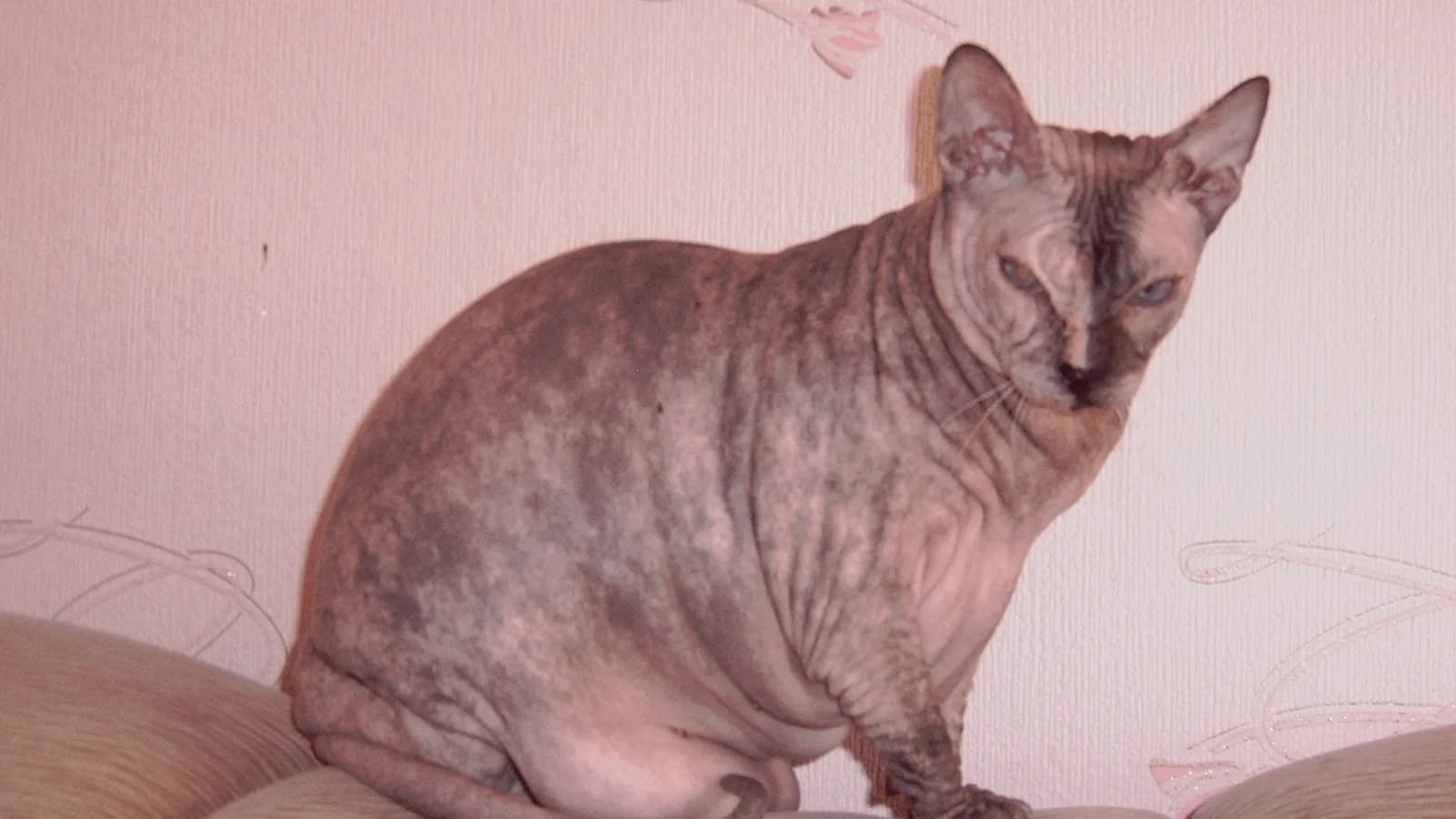
Sphynx guide
Hairless Cat Breeds: The Family Tree Runs on Three Different Genes
Sphynx, Donskoy, Peterbald, Devon Rex and the designer crosses, sorted by what the genetics papers and the registries actually say, not by what the name suggests.
Read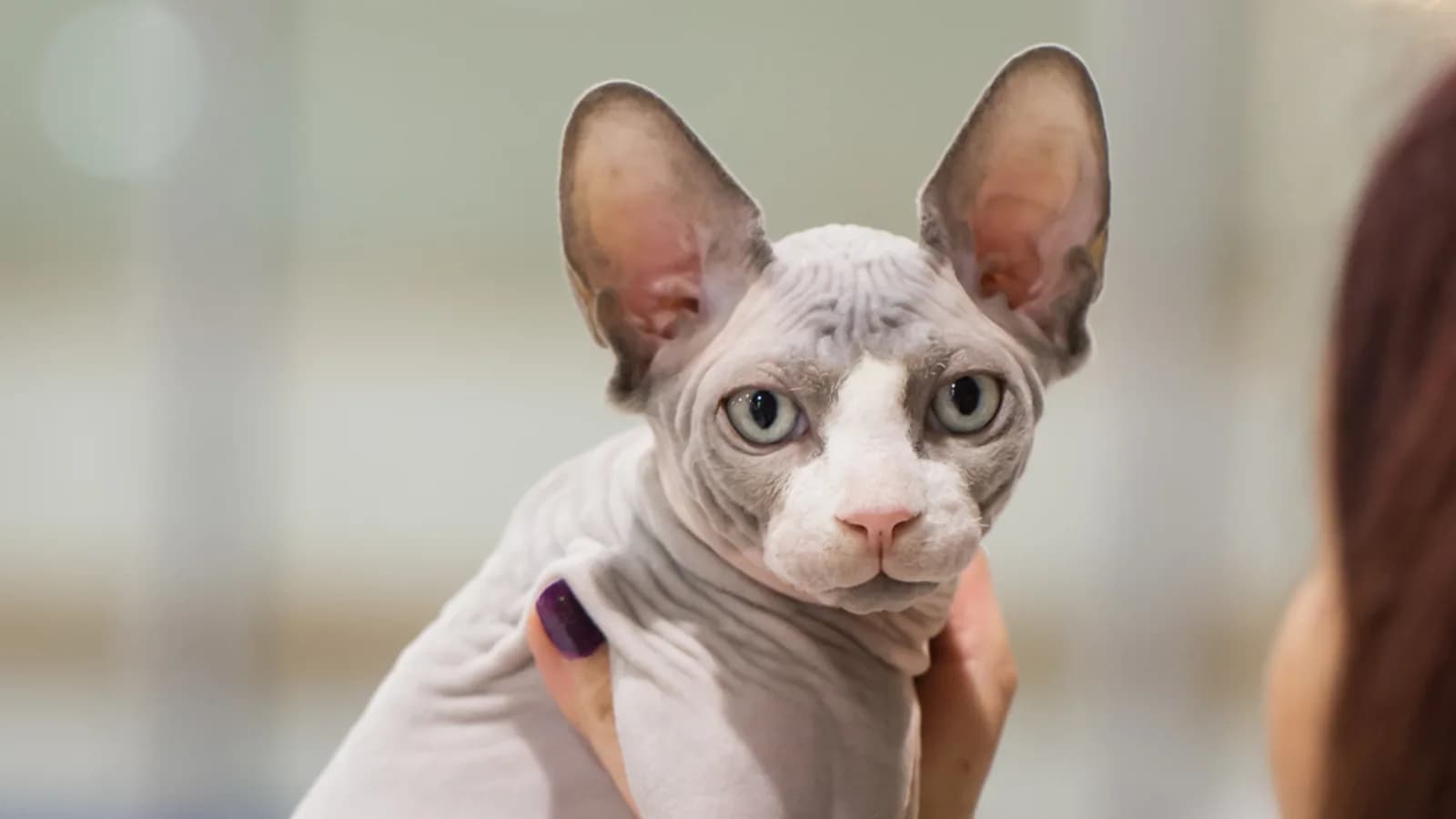
Sphynx guide
Are Sphynx Cats Hypoallergenic? Read the Registry's Own Hedge
No fur does not mean no allergen: Fel d 1 comes from skin and saliva. TICA's own hedge, the hairless cousins' own registry pages, and what actually helps.
Read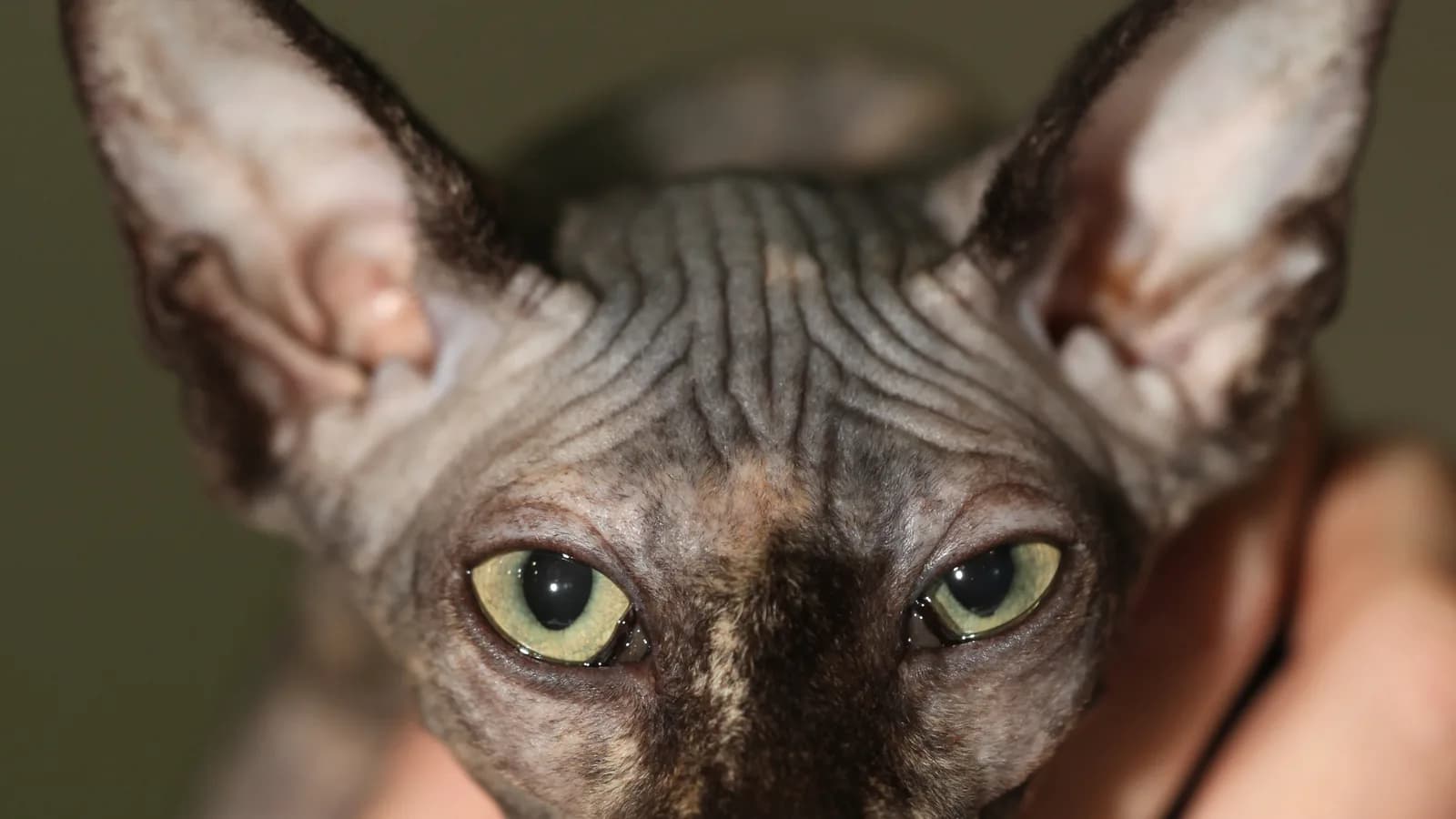
Sphynx guide
Sphynx Cat Colors: Every Color Allowed, None of Them Judged
Every color is allowed and none is judged: the registries' own words. How color reads on bare skin, why DNA testing beats eyeballing, and where black fits.
Read
The floor belongs to our members. Keep it kind, links are not allowed, and images go through moderation before anyone else sees them.