

Ocicat vs Bengal: Two Wild Looks, Only One Wild Pedigree
Both wear the jungle; only one carries it. The Ocicat has zero wild ancestry, the Bengal a real leopard-cat founder, and that difference decides the law, the spots and the history.

Published August 21, 2026 4 min read
Contents
The comparison in one sentence: both breeds wear the jungle, and only the Bengal actually carries it. The Ocicat is bred entirely from Abyssinian, Siamese and American Shorthair, a fact its registries state with three different flourishes ("not related to Ocelots," "anything BUT wild," "no wild genes"). The Bengal descends from a real Asian leopard cat. That single difference drives almost everything else worth knowing.
| Ocicat | Bengal | |
|---|---|---|
| Wild ancestry | None: three domestic breeds, per three registries' own words | Real: the Asian leopard cat founder |
| Spots | Solid, thumbprint-shaped, always | Rosettes and marbling allowed by its standard |
| Ownership law | None anywhere in our four markets | Early generations restricted in specific jurisdictions |
| Recognition path | Fast: no generation-removal rules needed | Slower: hybrid rules applied |
| Measured lifespan | No study exists (stated honestly) | 8.51 years, UK clinical cohort, on our profile |
The spots: the fastest visual tell
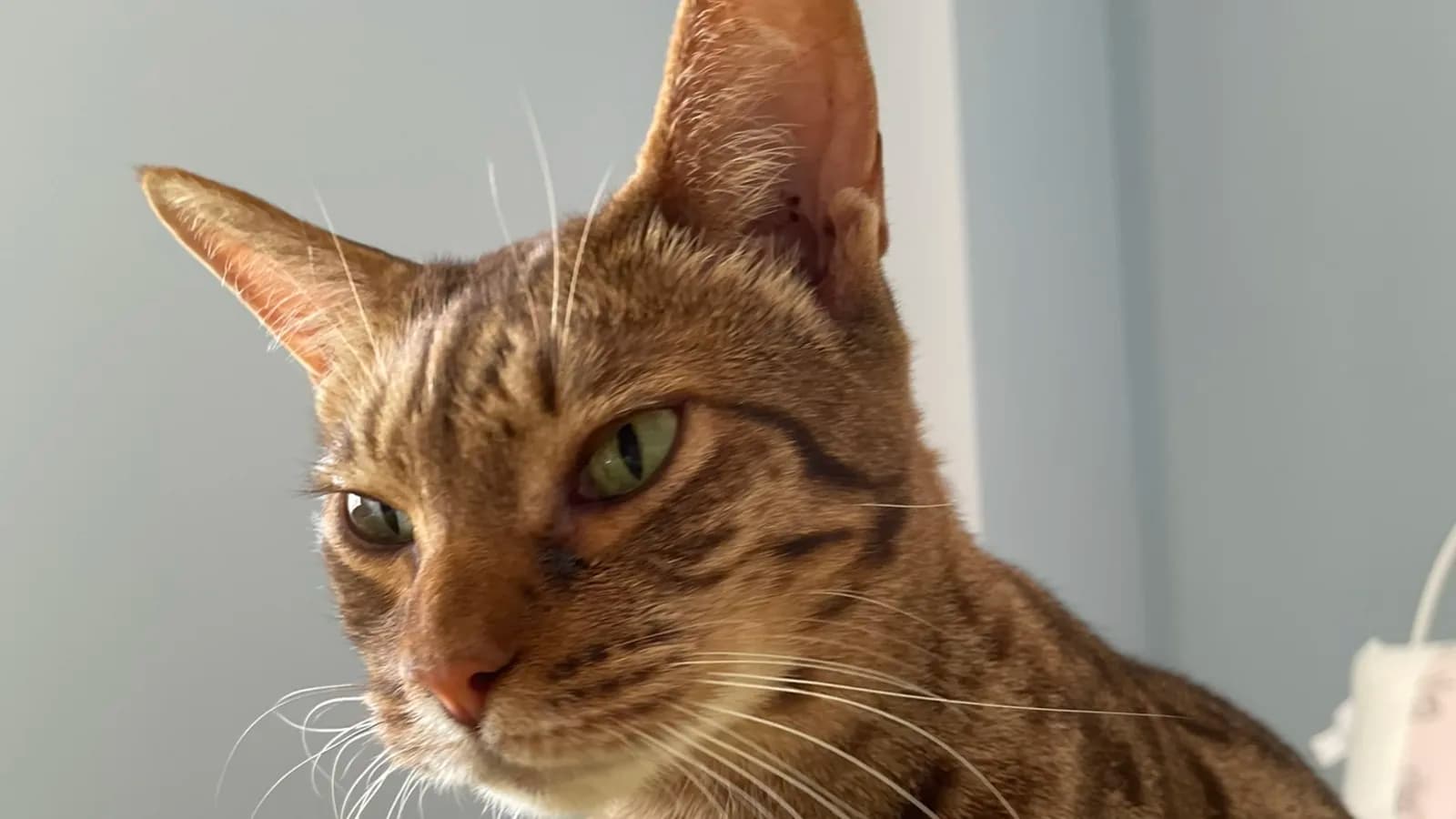
's own three-breed comparison article gives the cleanest field guide. The Ocicat wears solid, thumbprint-shaped spots. The Bengal's standard allows rosettes (spots with a lighter center) and full marbling, patterns the Ocicat's standard does not describe at all. See a two-tone rosette or a marbled swirl and you are looking at a Bengal. See even, solid thumbprints on an ground and the Ocicat is the better bet.
The history: an accident and a project
The Ocicat happened by accident in Michigan in 1964 and needed no wild blood. That is why its recognition path was decades shorter: with no wild ancestor, no registry required generation-removal rules before championship. The Bengal was a deliberate hybrid project, and its early generations still carry registration and, in some places, legal consequences. One carefully-stated historical crossover: 's own article records that Ocicats (and Egyptian Maus) were later used as DOMESTIC outcrosses to refine the Bengal's coat. A styling contribution to another breed, which puts no wild blood into the Ocicat, in either direction.
The law: one breed carries paperwork
Because the Bengal is a genuine hybrid, specific US jurisdictions regulate or restrict early-generation Bengal ownership, a legal file our Bengal pages document properly. The Ocicat has NO equivalent anywhere in our four markets: no wild ancestry, no hybrid law. If your city or building is strict about hybrids, that difference is the whole decision.
Size, energy, household fit
The two overlap more than their reputations suggest. Both are athletic, busy, climbing-inclined breeds in the same general size band (the Bengal's box runs 6-12/9-15 lb; the Ocicat's registries decline to publish a judged number and describe a cat "surprisingly heavy for its size"). Both are poor choices for an empty flat; both reward households that play. The Bengal's profile carries its measured UK lifespan figure (8.51 years, with its cohort). The Ocicat has no measured equivalent, an absence its own profile states honestly.
Choosing between them
Choose the Bengal for the rosettes, the glitter and the full hybrid story, with its paperwork where applicable. Choose the Ocicat for the same wild theatre with none of the legal file, a longer recognition , and the pleasure of a cat whose whole wildness is a well-documented costume. Either way, buy from testing breeders: each profile lists what to ask.
 The vet's take

Veterinary review
Are you a vet?
Your professional read belongs here: every verified practitioner can leave a note, published once our editors have reviewed it.
Sign in and get your license number verified. We check it in the public register, we never ask for or keep a copy of your diploma, and your number is never published.
Frequently asked questions
What is the difference between an Ocicat and a Bengal?
Ancestry first: the Bengal descends from a real Asian leopard cat; the Ocicat from three domestic breeds only. Then the spots: solid thumbprints on the Ocicat, rosettes or marbling allowed on the Bengal.
Is the Ocicat part Bengal or part wild?
Neither: Abyssinian, Siamese and American Shorthair are its whole ancestry. It later served as a domestic outcross used to refine the Bengal's coat, which moved no wild blood in either direction.
Which is bigger, Ocicat or Bengal?
They overlap: the Bengal's published box runs to 15 lb in males, while the Ocicat's registries publish no judged number and describe density ("surprisingly heavy for its size") instead. Neither is the giant its photos suggest.
Are Bengals or Ocicats illegal anywhere?
Early-generation Bengals face restrictions in specific jurisdictions, documented on our Bengal legal page. The Ocicat faces none anywhere in our four markets: no wild ancestry, no hybrid law.
Which breed is easier to buy?
In the US, both are findable breeder-direct; elsewhere the Ocicat is markedly scarcer (zero marketplace listings in three countries on our research date), which our price page documents honestly.
 Community questions
Got a question this page doesn't cover? Ask it: the best ones get published here with their answer.
This is information, not veterinary advice, and it cannot tell you what is wrong with your cat. Our rule is a simple one: if something is wrong with your cat, call your vet, and call an emergency clinic if it is out of hours. Nothing you read here is a reason to wait.
Medical information applies to every reader. Prices, legal duties and common practice do not: unless stated otherwise, they are given for the United States, and they differ in the UK, Canada and Australia, and often between states or provinces. Check with your own vet and your own local authority.
Our sources

Worth keeping a paw on
Pin this guide
So you can find it the day you need it, and share it with someone whose cat does the same thing. One click and it sits in your board.
Pin it on Pinterest
 Purr or Pass
The cat newsletter
Our verified guides, no spam. Unsubscribe in one click.
More Ocicat guides
The Ocicat profile →
Ocicat guide
Ocicat vs Ocelot: The Wild Lookalike With Zero Wild DNA
Yes, there is a domestic cat that looks like an ocelot: the Ocicat, with no wild ancestry at all. And the reason no ocelot hybrid has ever existed is a chromosome count.
Read
Ocicat guide
Ocicat Price and Breeders: What Four Markets Actually Charge
Ocicat prices from named catteries: $700 to $1,700 across four US states, Britain's waiting-list market, Canada's one cattery at CA$2,500, and Australia's two named breeders.
Read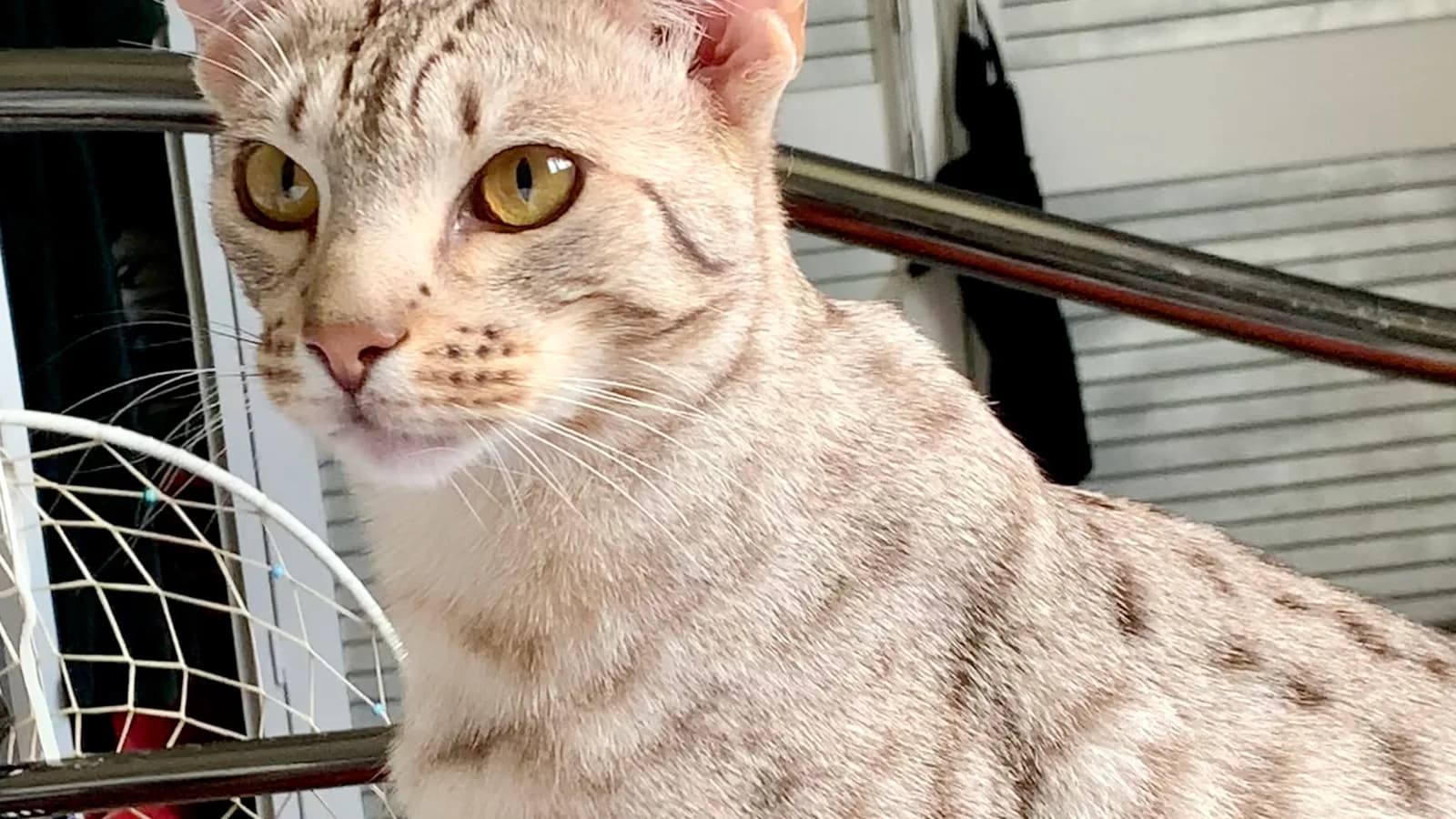
Ocicat guide
Ocicat Colors: Twelve Coats, One Spotted Rule, and a British Surprise
The Ocicat's twelve colors, the four-way naming split between registries, why red and cream are banned five ways, and the UK's surprise: the classic-tabby Ocicat is a separate breed.
Read
The floor belongs to our members. Keep it kind, links are not allowed, and images go through moderation before anyone else sees them.