

Selkirk Rex vs Devon Rex vs Cornish Rex: Three Curls, Three Genetic Stories
Three rex breeds, three genetic stories: the Selkirk's dominant KRT71 allele, the Devon's recessive one, the Cornish's different gene, and why the Selkirk is secretly a Persian-family cat.

Published August 21, 2026 4 min read
Contents
One sentence beats every generalist curly-cat roundup, and it is checkable: three rex breeds, three different genes or alleles, and calling any two of them "the same mutation" is wrong. Here is the precise version, from the four genetics papers our research read in full. Plus the population finding that explains why the Selkirk's health file belongs to a family you would not guess.
| Selkirk Rex | Devon Rex | Cornish Rex | |
|---|---|---|---|
| Gene | KRT71 (SADRE allele) | KRT71 (re allele, different splice site) | LPAR6 (a different gene; P2RY5 in older papers) |
| Inheritance | DOMINANT (incomplete): one copy curls | Recessive: two copies | Recessive: two copies |
| Litters | Curly and straight kittens mix | Breeds true curly-to-curly | Breeds true curly-to-curly |
| Build | Round, heavy-boned teddy bear | Pixie face, huge ears, light frame | Whippet arches, no guard hairs |
| Genetic family | The Persian group (Filler 2012) | Southwest England natural mutation | Southwest England natural mutation |
The three curls, precisely
The Selkirk Rex curls by a DOMINANT mutation (the SADRE allele) in KRT71, the hair- gene: one copy curls the cat. The Devon Rex curls by a RECESSIVE mutation (re) in the SAME gene at a different site: two copies required. The same gene also hosts the Sphynx's hairlessness allele, with a strict pecking order between them. The Cornish Rex is the outsider.
Its marcel wave comes from a mutation in a COMPLETELY different gene, LPAR6 (called P2RY5 in older papers: two names, one gene, worth saying once so older sources don't confuse you). Even within KRT71, the Selkirk's mutation sits at a different splice site than the Devon's (an acceptor rather than a donor site), producing a much smaller molecular change. Same gene, different break, different inheritance.
What dominance changes in practice
The Selkirk's dominant curl is why its litters mix curly and straight kittens, why straight Selkirks are real registrable members of the breed, and why heterozygous (one-copy) cats are the favored breeding cats per 's own Breeding Policy. Pairing choices genuinely differ by genotype, and one US cattery even prices kittens by it. The Devon and Cornish, both recessive, breed true curly-to-curly: no straight surprises, no genotype ladder.
The finding nobody expects: the Selkirk is a Persian-family cat
The population-genetics paper our research read in full (Filler et al. 2012) clusters the Selkirk Rex genetically with the British Shorthair, Scottish Fold, Persian and Exotic Shorthair: in its own words, part of the Persian breed family. Two registry documents point at the same family through a different mechanism.
's Breeding Policy and Canada's standard both route Selkirk breeders to the British Shorthair's own color-genetics documentation. The practical consequence is the breed's whole health frame. Selkirks are screened for PKD and not because the breed has been measured to carry them, but because its outcross family demonstrably does. The Devon and Cornish, whippet-built southwest-England natives, share none of that file.
Telling the three apart in a room
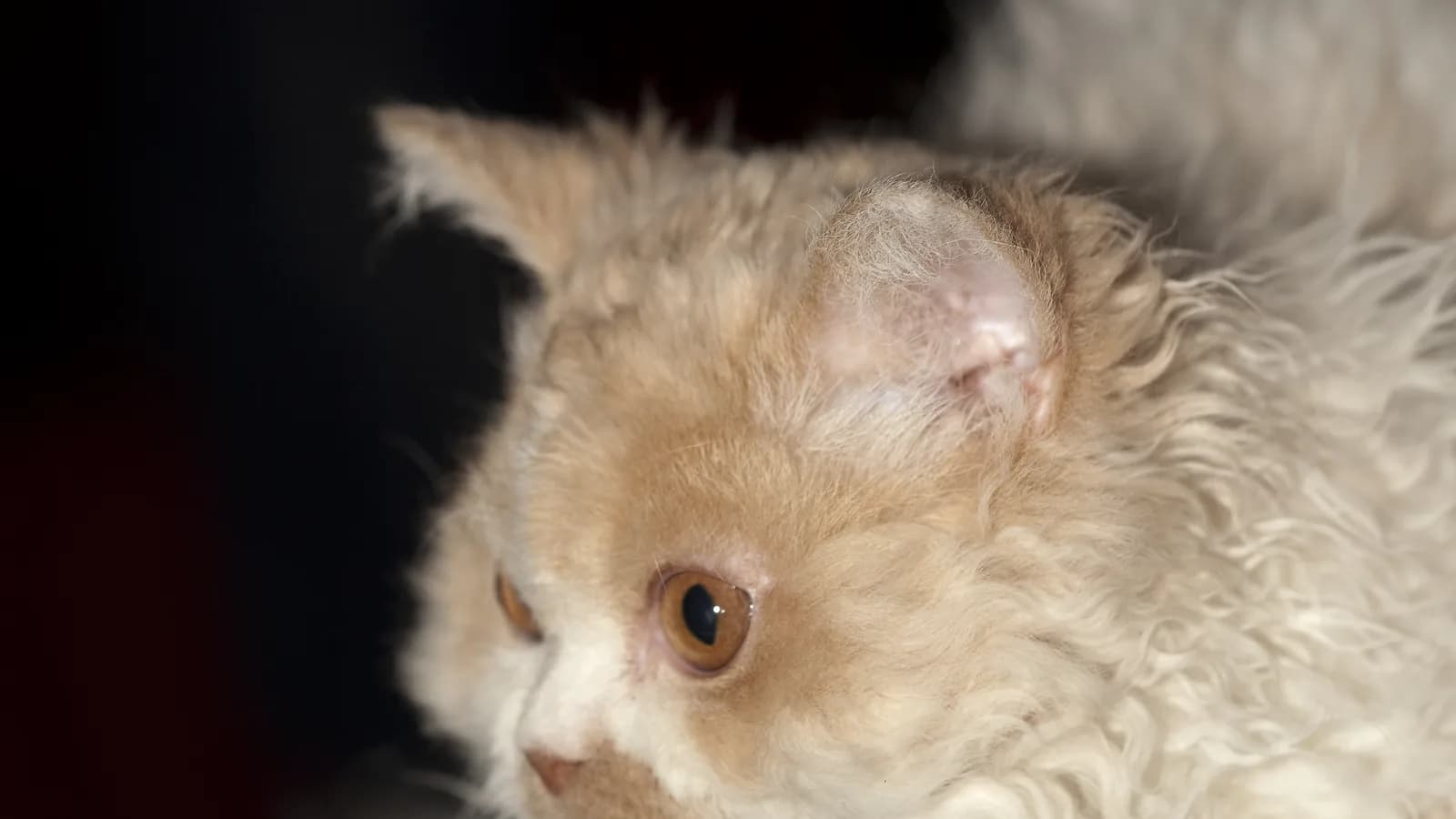
The Selkirk: a round, heavy-boned, teddy-bear cat (its Persian-family build) in loose, plush, tousled curls, long or short. The Devon: a pixie face, huge low-set ears, and a loose, delicate wave on a light frame. The Cornish: the greyhound of the three, all arches and marcel waves with no guard hairs at all. Round-and-plush, elfin-and-wavy, racy-and-rippled: once you hold the three frames, the curls stop confusing.
 The vet's take

Veterinary review
Are you a vet?
Your professional read belongs here: every verified practitioner can leave a note, published once our editors have reviewed it.
Sign in and get your license number verified. We check it in the public register, we never ask for or keep a copy of your diploma, and your number is never published.
Frequently asked questions
Are the Selkirk, Devon and Cornish Rex related?
Only as cats: their curls come from three different genetic events (a dominant KRT71 allele, a recessive KRT71 allele at a different site, and the LPAR6 gene respectively), and the Selkirk's closest genetic family is actually the Persian group.
Is the Selkirk Rex curl dominant?
Yes, incomplete-dominant: one copy curls the cat, litters mix curly and straight kittens, and heterozygous cats are the breeding favorites per GCCF's own policy. The Devon's and Cornish's curls are both recessive.
Why are Selkirk Rex screened for PKD and HCM?
Because of the family, not the curl: the breed clusters genetically with the Persian and British Shorthair group, and its outcross breeds carry those files. Screening is inherited prudence, and parents' results are the buyer's question.
Which rex breed sheds least?
The Cornish, structurally: no guard hairs at all. The Devon sheds lightly; the Selkirk sheds like an ordinary cat, visibly, whatever the curls suggest.
Can two straight-coated Selkirk Rex have curly kittens?
No: the curl is dominant, so a curly kitten needs at least one curly parent. Two curly Selkirks, by contrast, can produce straight kittens whenever both pass their straight allele.
 Community questions
Got a question this page doesn't cover? Ask it: the best ones get published here with their answer.
This is information, not veterinary advice, and it cannot tell you what is wrong with your cat. Our rule is a simple one: if something is wrong with your cat, call your vet, and call an emergency clinic if it is out of hours. Nothing you read here is a reason to wait.
Medical information applies to every reader. Prices, legal duties and common practice do not: unless stated otherwise, they are given for the United States, and they differ in the UK, Canada and Australia, and often between states or provinces. Check with your own vet and your own local authority.
Our sources
- Gandolfi et al. 2010, KRT71 mutations in Sphynx and Devon Rex (Mamm Genome)
- Filler et al. 2012, the Selkirk Rex SADRE allele and Persian-family clustering (J Hered)
- GCCF Selkirk Rex Breeding Policy (PDF: heterozygous cats favored)
- TICA: Selkirk Rex breed page
- TICA: Devon Rex breed page
- TICA: Cornish Rex breed page

Worth keeping a paw on
Pin this guide
So you can find it the day you need it, and share it with someone whose cat does the same thing. One click and it sits in your board.
Pin it on Pinterest
 Purr or Pass
The cat newsletter
Our verified guides, no spam. Unsubscribe in one click.
More Selkirk Rex guides
The Selkirk Rex profile →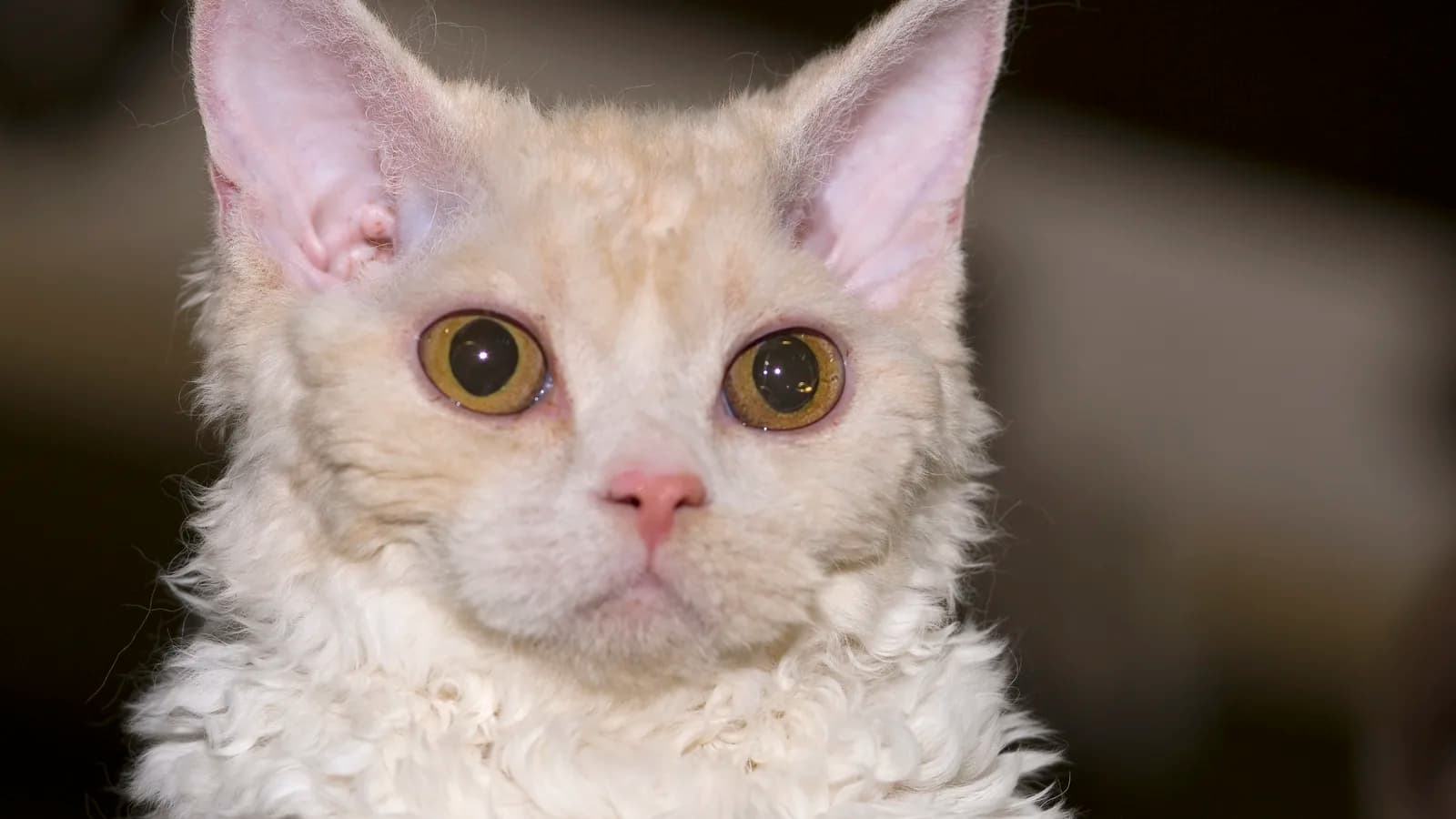
Selkirk Rex guide
Selkirk Rex for Sale: Prices, Breeders, and the Genotype Ladder
Real Selkirk Rex prices: the US cattery pricing by curl GENOTYPE, the UK club that publishes none by stated policy, Quebec's two catteries, and Australia's blocked market.
Read
Selkirk Rex guide
Are Selkirk Rex Cats Hypoallergenic? The Poodle-Cat Logic, Checked
The poodle-cat logic says curly means hypoallergenic. No registry or veterinary source supports it, the one rating that exists says no, and the coat sheds normally. The honest file.
Read
The floor belongs to our members. Keep it kind, links are not allowed, and images go through moderation before anyone else sees them.