

Balinese vs Siamese: One Family, and What Actually Differs
Same family, one honest comparison: the coat, the volume dial, the weight figures the registries disagree on, and a genuine health divergence no flattened comparison mentions.

Published August 21, 2026 6 min read
Contents
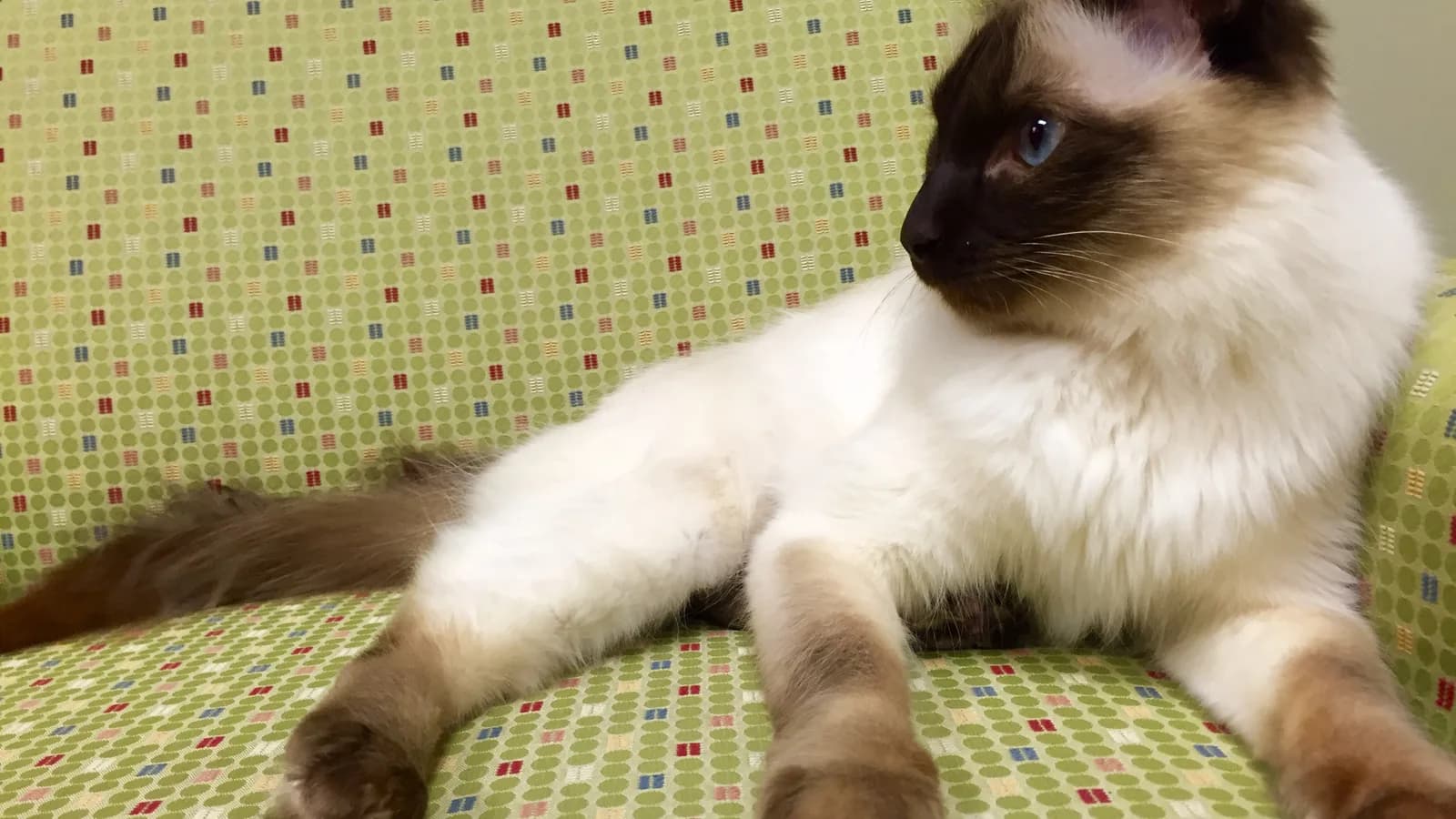
The lazy version of this comparison is "same cat, longer coat," and it is wrong in three specific, checkable places. The two breeds do share a family, a pointed pattern, blue eyes and most of a personality. 's shared standard describes one as a shorthair pointed cat and the other as a semi-longhair pointed cat, and that single axis genuinely is the headline. But the registries' own documents disagree between the breeds on weight, on stated lifespan and on one serious health question. An honest comparison shows those seams instead of ironing them.
| Trait | Siamese | Balinese |
|---|---|---|
| Coat | Fine, short, close-lying | Silky semi-long, single, no true undercoat |
| Tail | Whippy, tapering | A full plume |
| Voice | The fancy's great talker | The same voice, turned down, never off |
| Weight (better-corroborated) | M 8-12 lb / F 5-8 lb | M 6-8 lb / F 5-7 lb |
| Stated lifespan | 10-15; measured 11.69 y (UK) | 18-22; into the 20s; NO measured study |
| Activity | Fetching, busy, people-fixated | The same, by every registry's own words |
The coat, and the tail that comes with it
The Siamese wears a fine, close-lying short coat; the Balinese a silky semi-long single coat without a true undercoat, longest on the tail. The tails tell the two breeds apart at a glance: whippy and tapering on the Siamese, a full plume on the Balinese. Counterintuitively, the registries agree the Balinese is NOT the harder-grooming breed for its length. The single coat resists matting, and their own materials frame it as low-maintenance (one summary field reads the other way, against its own prose; we note it rather than resolve it).
The volume dial: the cleanest difference every registry states
Every registry frames the Siamese voice as a headline trait, and every registry frames the Balinese as the same voice turned down, never off. : "a bit quieter and softer... not quite as insistent." : "somewhat less talkative... possess softer voices," followed immediately by "Do not think for a minute, though, that this means they are quiet cats." : "less vocal and with a softer voice... not for those who think cats should be seen and not heard." Three registries, one consistent picture.
If the Siamese's commentary is the one thing giving you pause, the Balinese offers the conversation at lower volume. If you want silence, neither breed is your cat.
Weight: a three-way document split, stated rather than averaged
's consumer box gives both breeds the identical range, to the pound (females 5-8 lb, males 8-12 lb): that box is a shared breed-group template. TICA's own Balinese body text and 's figures (box and text agreeing) tell a different story: females 5-7 lb, males 6-8 lb, a cat running 2 to 4 lb lighter than the Siamese box.
The one measured Balinese data point in the literature (a single cat in the 2011 Kienzle and Moik weight study, 4 kg) sits with the lighter narrative figures. We lead with the narrative range, and we name the box for what 's own documents show it to be. No measured, breed-isolated weight study exists for either resolution to lean on.
Where they do NOT differ
Activity and play: both breeds' registry portraits use near-identical language, down to the retriever-style fetching both are famous for. People-focus: both are velcro breeds that resent an empty flat. And in the largest measured behaviour dataset that touches them (Mikkola 2021, which pools Siamese, Balinese and Seychellois as one group of 76 cats, never separating them), that pooled group scored highest of all 26 breed groups measured on sociability toward humans.
It also scored highest on excessive grooming, a finding the paper's own discussion notes holds for this pool but not for the separately measured Oriental group. Every figure in that sentence describes the pool, not either breed alone. No study measures the Balinese by itself.
Lifespan: two registries, two stories, zero measurements
's language is near-identical for the two breeds (both "can" or "tend to" live into their 20s). splits them dramatically: 18 to 22 years on its Balinese page against 10 to 15 on its own Siamese page. No measured, breed-isolated study exists for the Balinese at all, so we publish the disagreement itself. The one measured figure our Siamese profile carries (11.69 years, from UK clinical records) has no Balinese equivalent anywhere in the literature.
Health: one genuine divergence, reported both ways
Most of the two breeds' health files travel together, which our profiles cover. The genuine divergence is amyloidosis. 's Balinese page states the breed "can be susceptible" to it. 's own Balinese Breeding Policy, written by the breed's advisory committee, states Balinese "seem to be free of amyloidosis which has been found in some Siamese and Oriental lines." Two current primary sources, opposite directions, neither citing a study: we print both, attributed, and nothing here is a prediction about any individual cat.
One more asymmetry worth knowing when buying. states a DNA test exists for progressive retinal atrophy (the rdAc mutation) in the Balinese, a sentence its own Siamese page does not carry. UC Davis's veterinary genetics lab lists the Balinese among breeds appropriate for that test.
The paperwork footnote buyers actually meet
's genetics note explains a real-world oddity: the longhair gene is recessive, so a Siamese litter can throw a Balinese kitten, while a first-generation Balinese-to-Siamese cross produces only shorthairs. US catteries that breed both often price them from one shared list (TiaMaria's own FAQ says most of its litters are Balinese even when kittens are short-haired), which our price page documents market by market.
 The vet's take

Veterinary review
Are you a vet?
Your professional read belongs here: every verified practitioner can leave a note, published once our editors have reviewed it.
Sign in and get your license number verified. We check it in the public register, we never ask for or keep a copy of your diploma, and your number is never published.
Frequently asked questions
Is a Balinese just a long-haired Siamese?
In coat terms, close: one gene separates the lengths, and TICA's standard covers both as pointed cats. But the registries' own documents disagree between the breeds on weight and stated lifespan, and split on one health question, so "just" undersells the differences.
Are Balinese cats quieter than Siamese?
Quieter, not quiet: all three major registries describe the same voice at lower volume and softer tone, and CFA explicitly warns against expecting silence.
Are Balinese cats smaller than Siamese?
The better-corroborated figures say slightly lighter (females 5-7 lb, males 6-8 lb, against the Siamese's 8-12 lb males), though TICA's consumer box gives both breeds identical numbers. No measured study exists for the Balinese; we show both figures and their sources.
Do Balinese cats live longer than Siamese?
GCCF claims dramatically so (18-22 vs 10-15); TICA claims no real difference; no measured Balinese study exists to referee. We publish the disagreement rather than picking a side.
Can two Siamese parents have a Balinese kitten?
Yes: the longhair gene is recessive, so two carrier Siamese can produce a fully pedigreed longhaired kitten, which is how the breed began.
 Community questions
Got a question this page doesn't cover? Ask it: the best ones get published here with their answer.
This is information, not veterinary advice, and it cannot tell you what is wrong with your cat. Our rule is a simple one: if something is wrong with your cat, call your vet, and call an emergency clinic if it is out of hours. Nothing you read here is a reason to wait.
Medical information applies to every reader. Prices, legal duties and common practice do not: unless stated otherwise, they are given for the United States, and they differ in the UK, Canada and Australia, and often between states or provinces. Check with your own vet and your own local authority.
Our sources
- TICA: Balinese breed page
- TICA: Siamese breed page
- CFA: Balinese breed page (softer voices; the longhair-gene mechanics)
- GCCF: Balinese breed page (the 18-22 claim; the quieter-voice line)
- GCCF: Siamese breed page (10-15; outgoing, extrovert & noisy)
- GCCF Balinese Breeding Policy (PDF): the seem-to-be-free amyloidosis statement
- Mikkola et al. 2021, feline behaviour (the pooled Siamese/Balinese/Seychellois group)
- Kienzle & Moik 2011, measured body weights (the single Balinese data point)
- UC Davis VGL: PRA rdAc test page (Balinese listed among breeds appropriate for testing)

Worth keeping a paw on
Pin this guide
So you can find it the day you need it, and share it with someone whose cat does the same thing. One click and it sits in your board.
Pin it on Pinterest
 Purr or Pass
The cat newsletter
Our verified guides, no spam. Unsubscribe in one click.
More Balinese guides
The Balinese profile →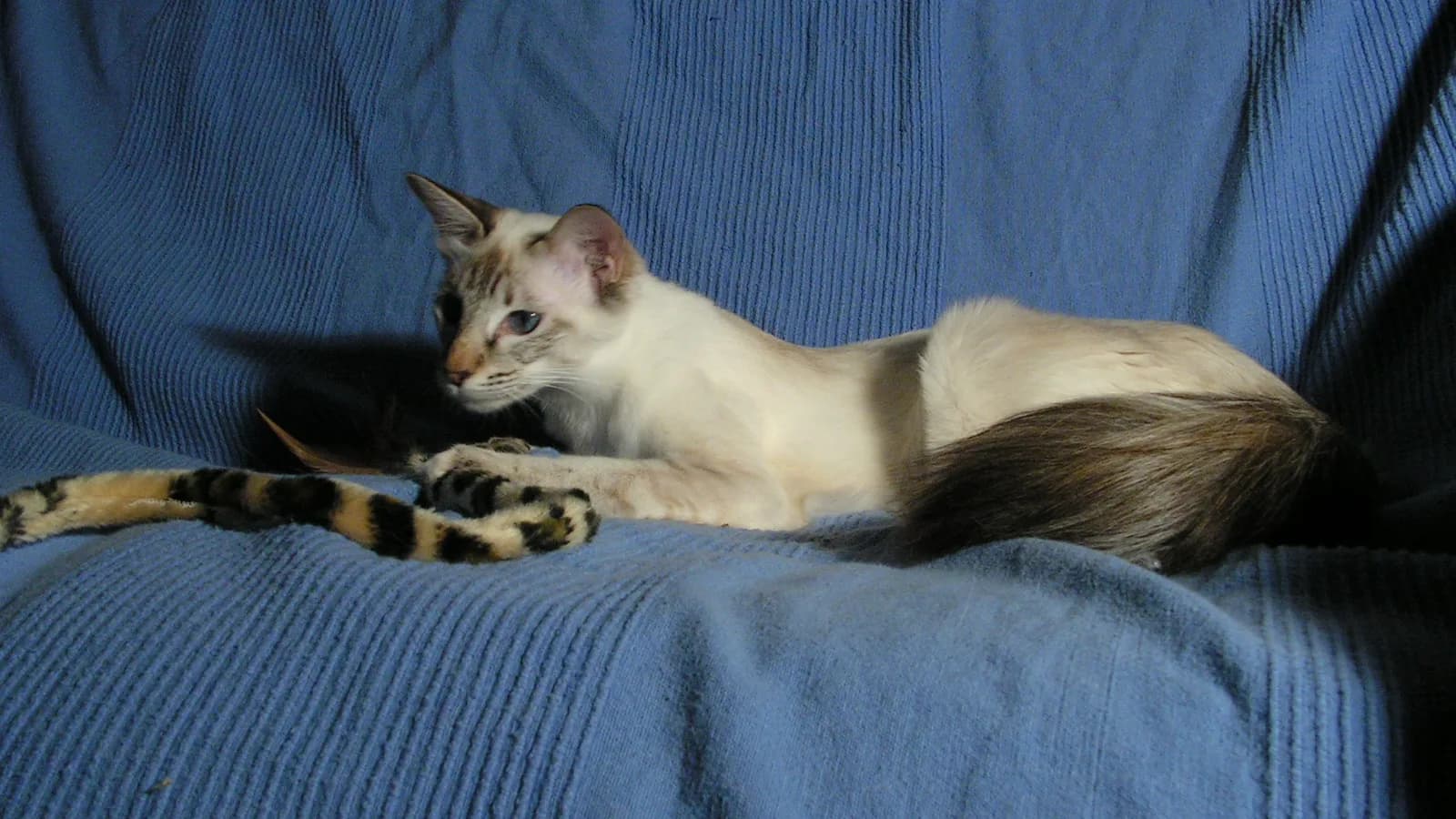
Balinese guide
The Javanese Cat: One Name, Two Entirely Different Cats
The Javanese is two different cats depending on the registry: CFA's extended-color Balinese division, or the Oriental Longhair under another name. Which is which, precisely.
Read
Balinese guide
Balinese Cat Price: What the Market Actually Charges, Market by Market
What a Balinese kitten actually costs: named US catteries from $400 to $2,500, the UK's one operator with three disagreeing figures, Canada's shared-list pattern, and Australia's honest gap.
Read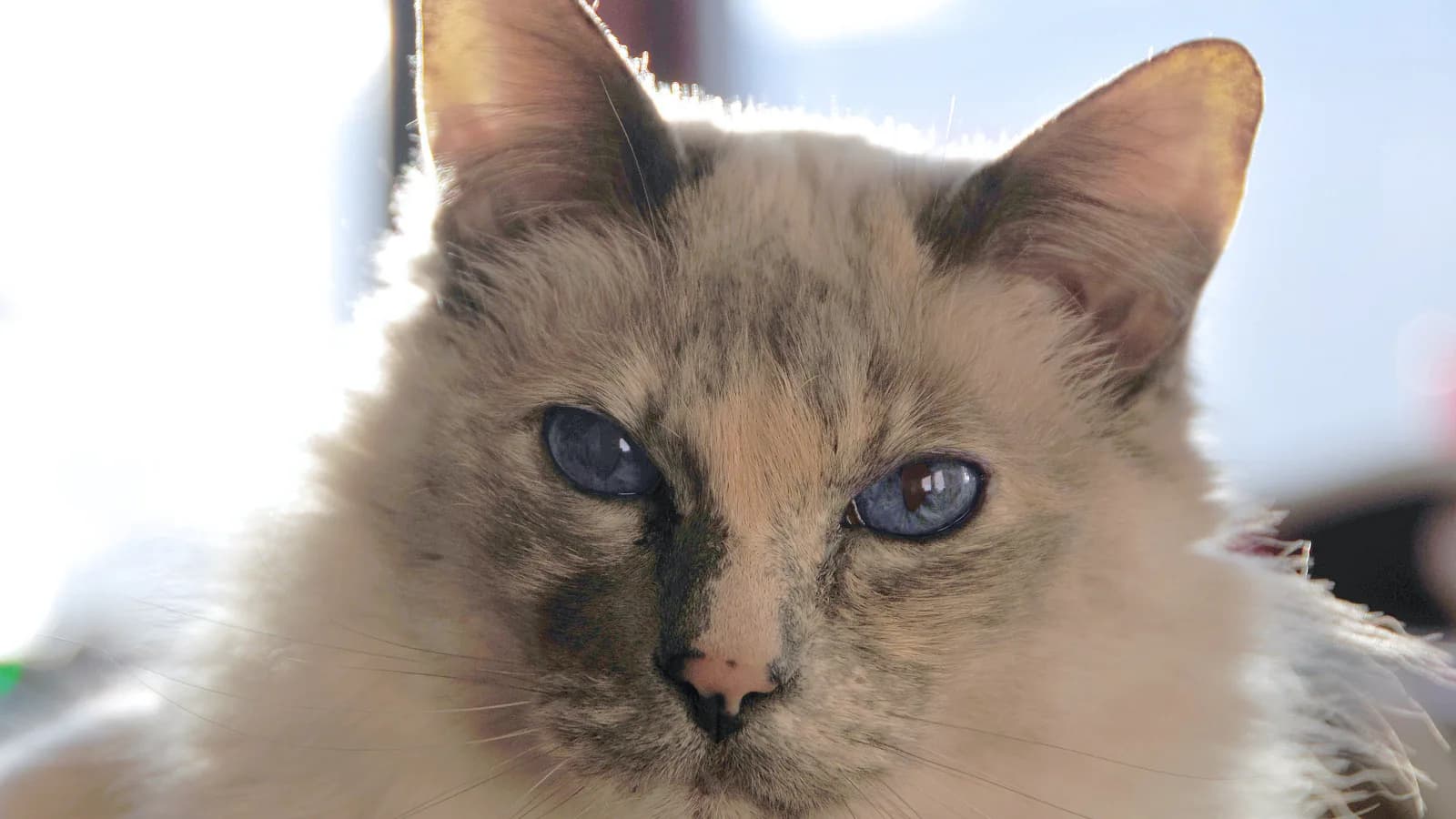
Balinese guide
Are Balinese Cats Hypoallergenic? The Claim Against the Evidence
No cat is allergen-free, and no study has ever measured Fel d 1 in the Balinese. What the single coat really does, what it does not do, and what to try before committing.
Read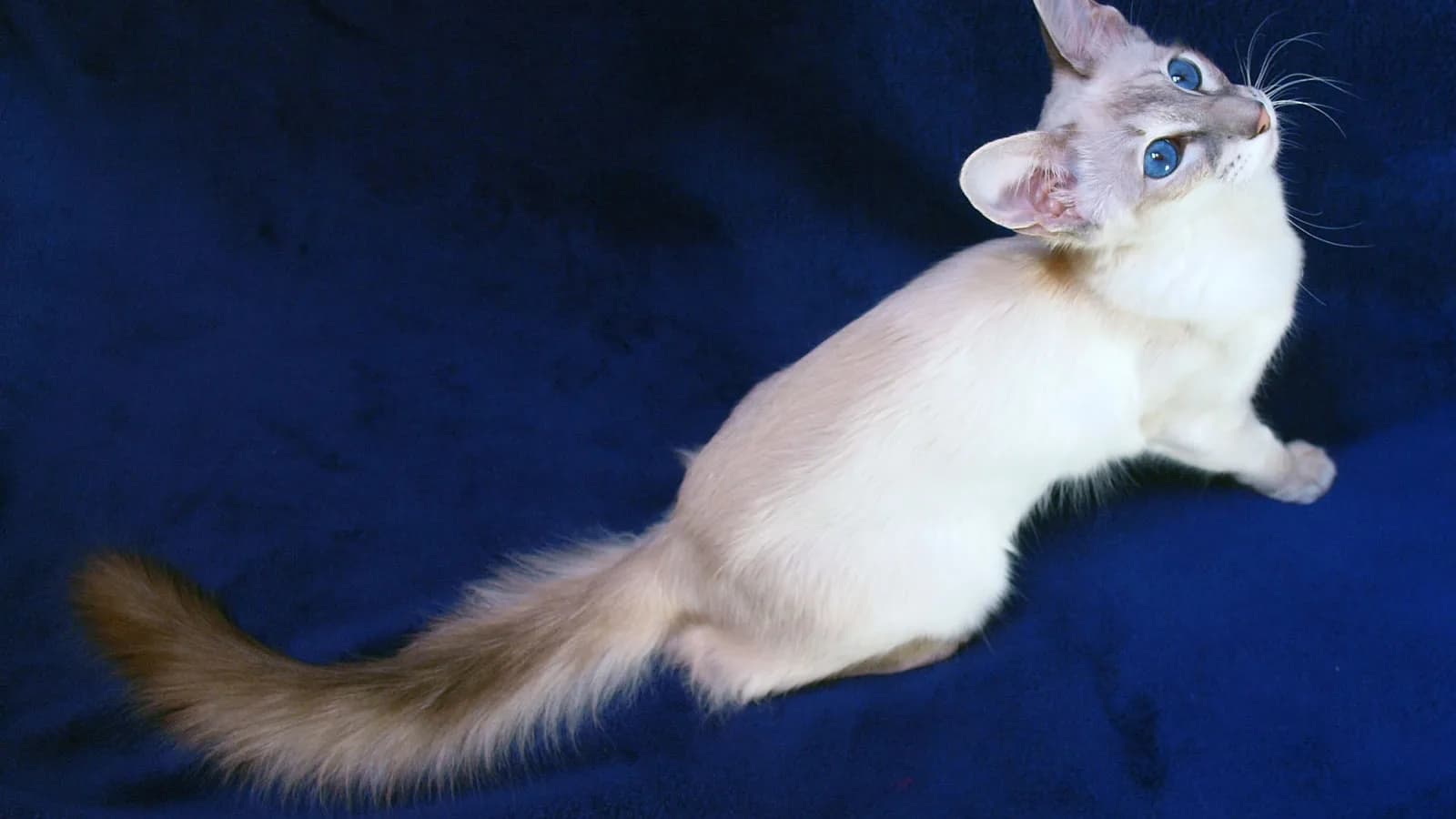
Balinese guide
Balinese Cat Colors: The Four Classics, and Five Registries That Count Differently
The Balinese color chart, honestly: the four classic points, the extended colors, and five registries giving three genuinely different answers to how many colors there are.
Read
The floor belongs to our members. Keep it kind, links are not allowed, and images go through moderation before anyone else sees them.