

Balinese Cat Colors: The Four Classics, and Five Registries That Count Differently
The Balinese color chart, honestly: the four classic points, the extended colors, and five registries giving three genuinely different answers to how many colors there are.

Published August 21, 2026 4 min read
Contents
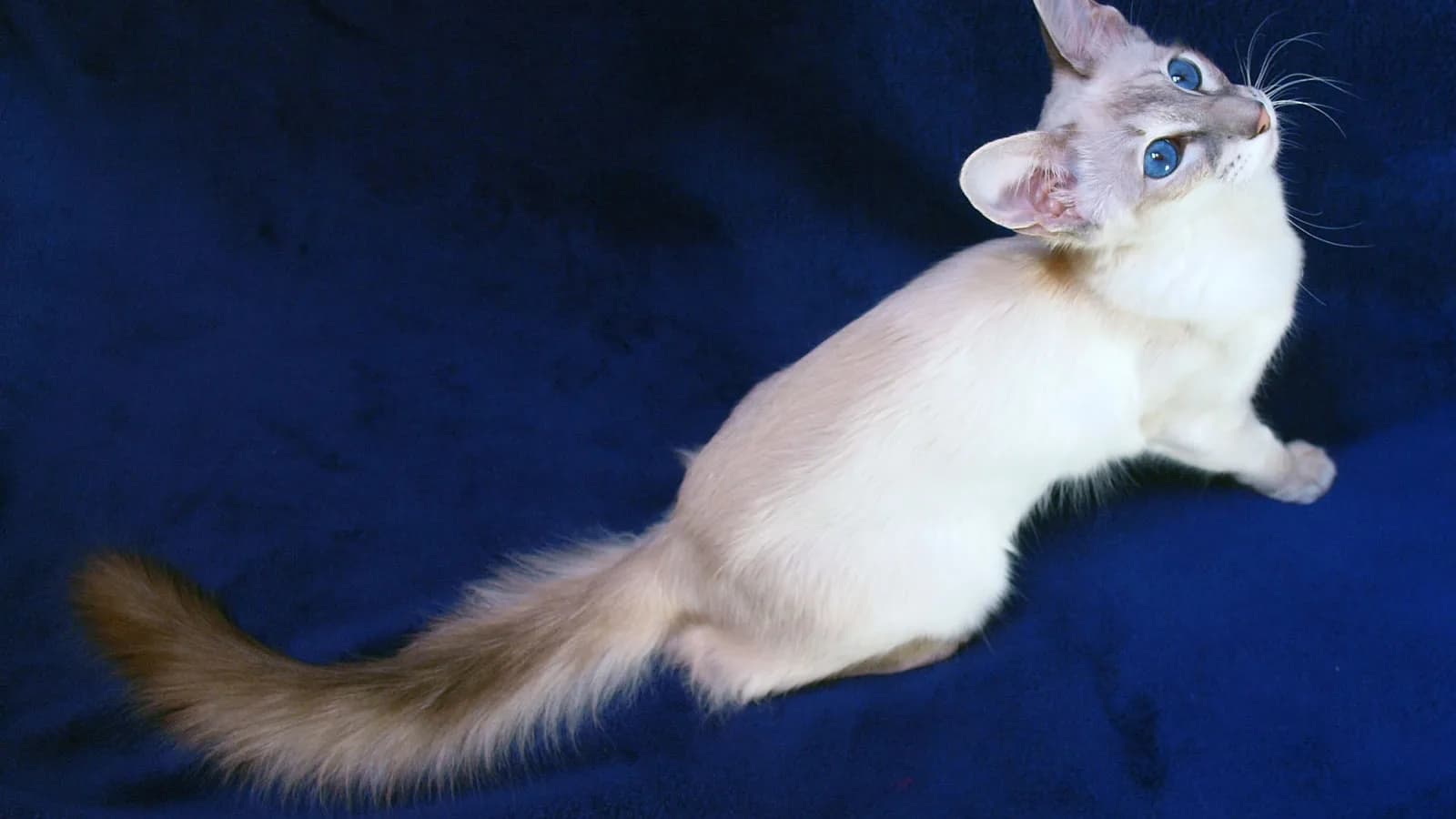
Every Balinese is a pointed cat: pale body, darker face, ears, legs and tail, blue eyes, the same temperature-sensitive pigment mechanism our Siamese color pages explain. What varies is the color of those points. And this is the rare breed where the honest answer to "how many colours are there" is: it depends which registry you ask, structurally, not just by a color or two. Here are the four classics every registry recognizes, then the map of who counts what.
Seal point
Deep seal-brown points, cream body: the founding color.
Blue point
Seal diluted to slate blue-grey on a glacial body.
Chocolate point
Warm milk-chocolate points on ivory: a lighter brown, not a dilute.
Lilac point
Chocolate plus dilution: the palest, frosty pinkish-grey classic.
Seal point
The founding color: deep seal-brown points on a cream-to-fawn body, the darkest and most traditional of the four. This is the color most people picture as "long-haired Siamese," and the one the earliest registered Balinese wore.
Blue point
The dilute of seal: slate blue-grey points on a glacial white body. Dilution is the same recessive mechanism our gray cat pages document, softening seal's dark brown to blue-grey.
Chocolate point
Warm milk-chocolate points on an ivory body, genetically a lighter brown variant rather than a diluted seal. Chocolate keeps its warmth where blue cools; the two routes are different genes.
Lilac point
The palest classic: chocolate plus dilution, frosty pinkish-grey points on a near-white body. Sometimes called frost point in older American writing. Of the four classics it carries the slightly higher search interest, which tells you something about how striking it is in person.
Cream point (and where the chart opens up)
Beyond the four classics sits the extended chart: cream point, red point, cinnamon, fawn, points, (tabby) points, smoke and silver variants. Whether these cats are called "Balinese" depends entirely on the registry, which is the next section's story. The full extended-color history has its own page.
How many colors? Five registries, three different answers
| Registry | Structure | Its own answer |
|---|---|---|
| One open list | Chocolate, blue, lilac, cinnamon, fawn, red, cream points; white, silver/smoke, , variants | |
| One standard, two divisions | Balinese Division: the four classics; Javanese Division: everything else | |
| One unified list | "34 different colors", incl. Apricot and Caramel found nowhere else | |
| One unified list | The largest list read, incl. Golden Shaded and Golden Lynx families | |
| Cross-reference | "Refer to Siamese Standard" |
This is the section no other color chart states plainly. 's breed materials name "chocolate, blue, lilac, cinnamon, fawn, red and cream points... with and without white, silver/smoke, point (tabby points) and /tortie points": one open list under one breed name. takes a structurally different route: ONE standard document, split into a "Balinese Division" holding only the four classic points, and a "Javanese Division" holding everything else. uses the single name "Balinese" for every color and states its own count, 34 different colors.
Two of them, Apricot and Caramel, appear in no other registry's Balinese list. Canada's also uses one name and carries the largest single list we read, including Golden Shaded and Golden Lynx families named nowhere else. And Australia's answers with a cross-reference: its Balinese standard simply says "Refer to Siamese Standard" for color. , Australia's other body, lists Balinese and Javanese as two separate breeds distinguished by eye color, blue against green. That split is ANCATS's own claim, and it describes a genuinely different cat, which the Javanese page untangles.
So: registering a cream, or point means your paperwork reads "Balinese" at and , "Javanese Division" at , and "Balinese" on 's open list. Same cat, three registration identities. No blended number honestly summarises that; the structure IS the answer.
 The vet's take

Veterinary review
Are you a vet?
Your professional read belongs here: every verified practitioner can leave a note, published once our editors have reviewed it.
Sign in and get your license number verified. We check it in the public register, we never ask for or keep a copy of your diploma, and your number is never published.
Frequently asked questions
What colors do Balinese cats come in?
The four classics every registry accepts: seal, blue, chocolate and lilac point. Beyond them, an extended chart (red, cream, cinnamon, fawn, tortie, lynx, smoke and silver points) whose breed name depends on the registry.
How many colors does the Balinese come in?
There is no single honest number: GCCF counts 34 under one name, CFA splits the same chart into two divisions inside one standard, TICA publishes an open list, and CCA-AFC's list is the largest of all. We publish the structure instead of inventing a total.
Do all Balinese cats have blue eyes?
Yes: the pointed pattern gene keeps every Balinese blue-eyed, the same guarantee our blue-eyed breeds page explains.
What is the rarest Balinese color?
No registry publishes registration counts by color for this breed, so any "rarest colour" ranking you read is invented. The extended colors are scarcer than the four classics in practice, since fewer breeders work them.
What is a lynx point Balinese?
A Balinese whose points carry tabby striping. At CFA that cat registers in the Javanese Division; at GCCF, CCA-AFC and TICA it is simply a Balinese in a tabby-point color.
 Community questions
Got a question this page doesn't cover? Ask it: the best ones get published here with their answer.
This is information, not veterinary advice, and it cannot tell you what is wrong with your cat. Our rule is a simple one: if something is wrong with your cat, call your vet, and call an emergency clinic if it is out of hours. Nothing you read here is a reason to wait.
Medical information applies to every reader. Prices, legal duties and common practice do not: unless stated otherwise, they are given for the United States, and they differ in the UK, Canada and Australia, and often between states or provinces. Check with your own vet and your own local authority.
Our sources
- TICA: Balinese breed page (the open color list)
- TICA Balinese Breed Introduction (PDF)
- CFA Balinese standard (one document, Balinese and Javanese divisions)
- GCCF: Balinese breed page (the 34-color count, Apricot and Caramel)
- CCA-AFC Balinese standard (PDF, the largest color list read)
- ACF Balinese standard (PDF): color scope by cross-reference to the Siamese standard
- UC Davis VGL: Dilution (the mechanism behind blue and lilac)

Worth keeping a paw on
Pin this guide
So you can find it the day you need it, and share it with someone whose cat does the same thing. One click and it sits in your board.
Pin it on Pinterest
 Purr or Pass
The cat newsletter
Our verified guides, no spam. Unsubscribe in one click.
More Balinese guides
The Balinese profile →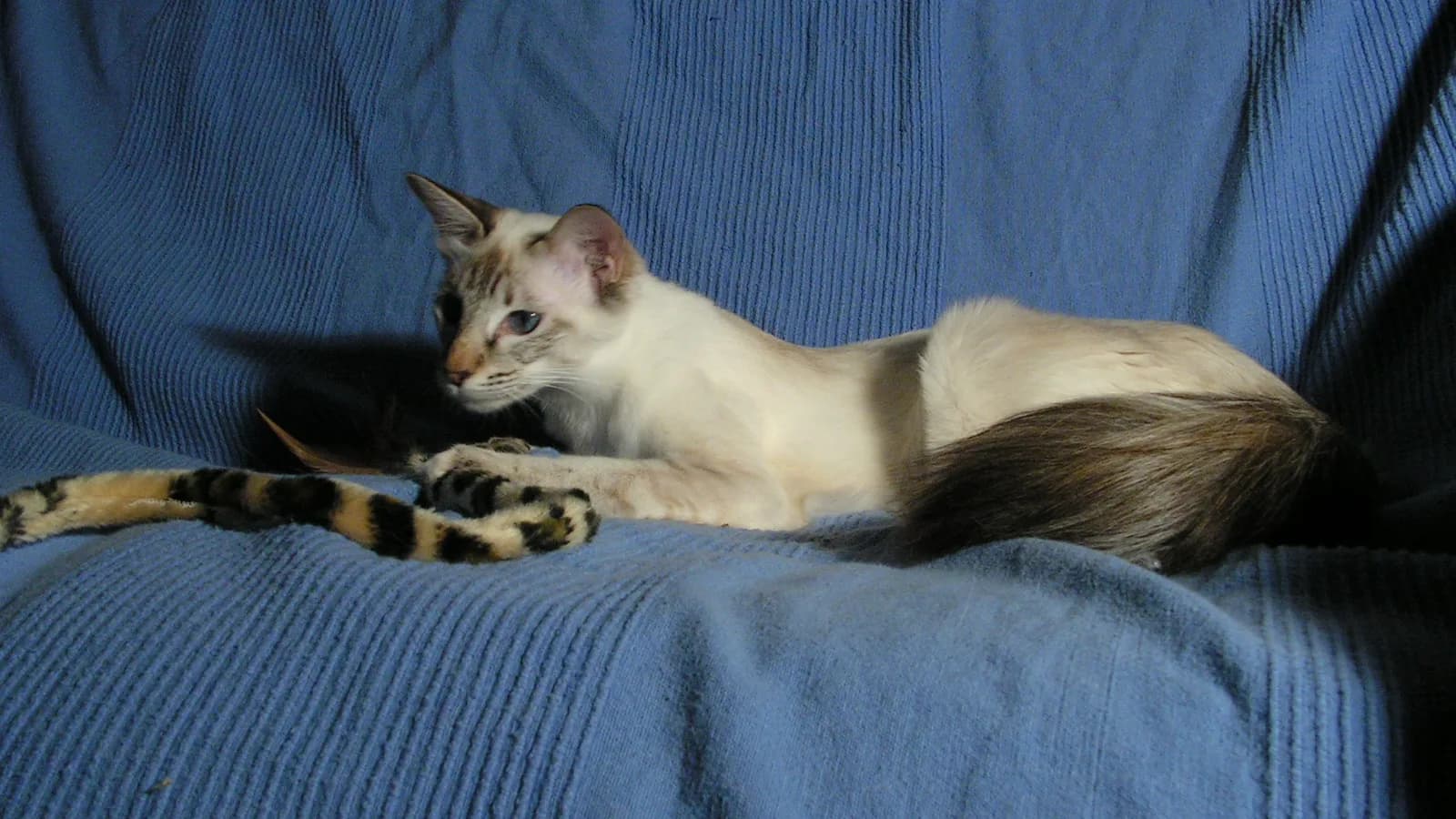
Balinese guide
The Javanese Cat: One Name, Two Entirely Different Cats
The Javanese is two different cats depending on the registry: CFA's extended-color Balinese division, or the Oriental Longhair under another name. Which is which, precisely.
Read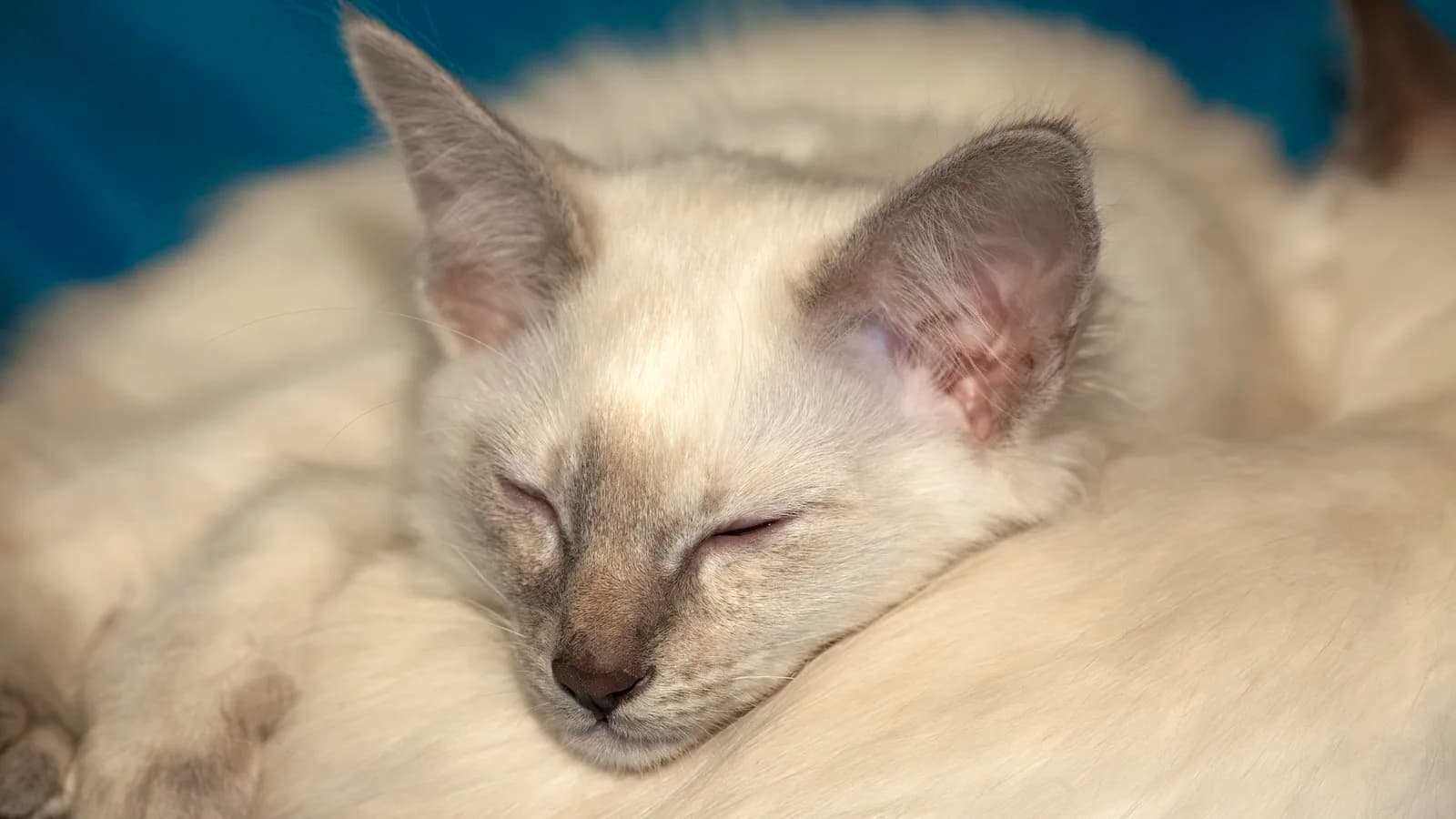
Balinese guide
Balinese Cat Price: What the Market Actually Charges, Market by Market
What a Balinese kitten actually costs: named US catteries from $400 to $2,500, the UK's one operator with three disagreeing figures, Canada's shared-list pattern, and Australia's honest gap.
Read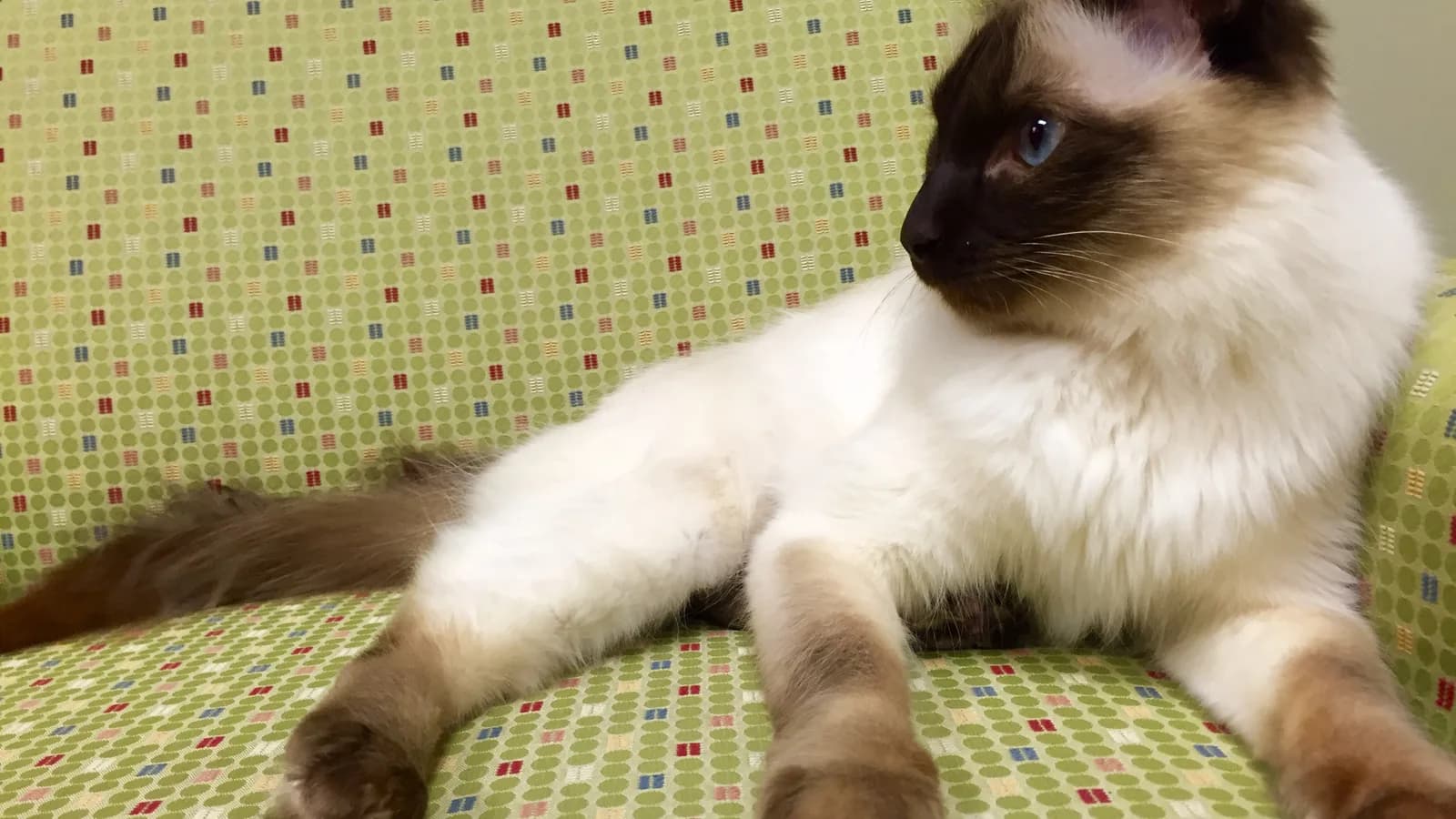
Balinese guide
Balinese vs Siamese: One Family, and What Actually Differs
Same family, one honest comparison: the coat, the volume dial, the weight figures the registries disagree on, and a genuine health divergence no flattened comparison mentions.
Read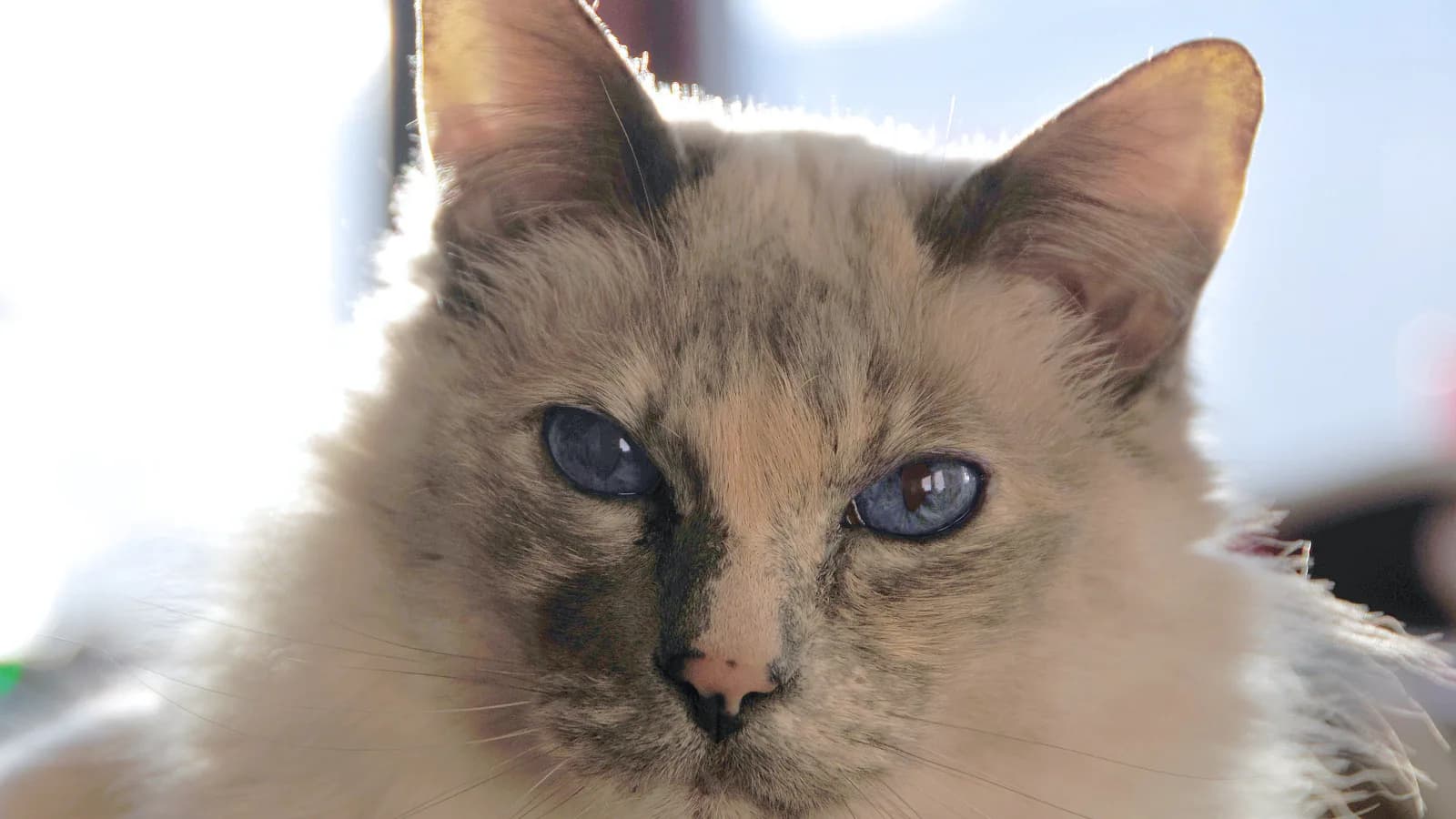
Balinese guide
Are Balinese Cats Hypoallergenic? The Claim Against the Evidence
No cat is allergen-free, and no study has ever measured Fel d 1 in the Balinese. What the single coat really does, what it does not do, and what to try before committing.
Read
The floor belongs to our members. Keep it kind, links are not allowed, and images go through moderation before anyone else sees them.