

Calico Cat Names, With the Stories Behind Them
Maryland's state cat, Japan's mi-ke and the maneki-neko, the tortitude study read properly, four real famous calicos, and names with their origins. Torties included.
Published August 28, 2026Updated September 8, 2026 11 min read
Contents
A calico is three coats on one cat: white, orange and black, laid out in patches no two cats share. Name lists for them tend to stop at "Patches" and a row of candy words. This page starts earlier, with where the word calico comes from, why a US state wrote the coat into law, what Japan's lucky cat has to do with it, and what a much-quoted aggression study actually concluded. Then the names, with origins where we could find them, and a big list at the end. (Different coat on your lap? We keep black, orange and tabby names on their own pages.)
One vocabulary note before anything else. In the US, a calico is white with orange and black patches, and a tortoiseshell is the same two colors mixed without the white. In Britain, "tortoiseshell" often covers both, "tortoiseshell-and-white" being the calico, and the pet word is "". The names below work for either, and the calico vs tortoiseshell page draws the line properly.
Where the word comes from
"Calico" started as cloth. The word comes from Calicut, the port on India's Malabar coast (today's Kozhikode) where European traders first bought plain cotton cloth in the 1530s. By 1807 English was using it for horse coloring, and the first recorded use for a cat's coat is 1882, according to the Online Etymology Dictionary. So the cat is named after the fabric, which was named after the town. It is also why Americans say calico and Britons rarely do: the printed-cotton sense stayed the main one in Britain.
"Tortoiseshell" is older and plainer: the mottled shell of the hawksbill turtle, used for combs and veneer, extended to any animal with the same brown-and-black mottle, cats included. Wiktionary's entry covers rabbits and butterflies under the same word.
Almost always female, and the number everyone gets wrong
The orange gene sits on the X chromosome. A coat that shows both orange and black patches needs two X chromosomes carrying different versions, which in practice means a female cat. That is the whole reason calicos and torties are nearly all girls, and our calico page explains the mechanism with its sources.
Every competitor page we opened repeats the same figure: only one male calico in 3,000. We looked for its source when we wrote the coat page and found none, not a study, not a university page, nothing. What the measured record does say, from a 1973 study in the Journal of Heredity, is that of 25 male tortoiseshell and calico cats examined, 16 carried an extra X chromosome and were typically sterile. Maryland's own state-symbol page gets this right without quoting a made-up ratio: a male calico "is a genetic anomaly and usually sterile." Name a male calico if you meet one; just do not tell people he is one in 3,000.
The state cat of Maryland
Since October 1, 2001, the calico has been Maryland's official state cat, under Chapter 194 of the Acts of 2001, now section 7-302 of the General Provisions Article of the state code. The Maryland State Archives explains the choice: orange, black and white are the colors of the state bird, the Baltimore oriole, and of the state insect, the Baltimore checkerspot butterfly, with the black-eyed Susan, the state flower, matching the orange. The archive page also says plainly that calico is not a breed but a coloring that turns up across many breeds, Domestic Shorthair, Persian and Manx among them.
That gives a Maryland cat a whole naming vein of her own: Oriole, Baltimore, Chesapeake, Susan, Checkerspot, Annapolis, Bay.
Mi-ke, the beckoning cat, and the money cat
Japan has its own word for the pattern: , written with the characters for "three" and "fur", so a mi-ke neko is a three-fur cat. The , the beckoning-cat figurine in shop windows across Japan and every Chinatown, is traditionally modeled on a mi-ke Japanese Bobtail. The most repeated origin story is set at Gotoku-ji temple in Tokyo's Setagaya ward in the 1620s: a temple cat beckons a feudal lord, Ii Naotaka, in from a thunderstorm, and his grateful family becomes the temple's patron. Four independent history and travel write-ups agree on the temple, the era and the lightning.
One honest caveat, because it matters on a page about names. That the beckoning cat is calico is convention repeated everywhere, including in a real museum's exhibition framing. The claim that is the luckiest color because male calicos are rare has no citable source we could reach; treat it as a nice story rather than a fact. The SFO Museum's exhibition gives the color symbolism that is documented: white for happiness, black for safety, gold for money.
The United States has its own luck tradition. In parts of the country, particularly Maine, a calico is called a money cat, on the belief that the unusual coloring brings good fortune. Our source for the term is a public-radio language show, A Way with Words, and we could not find a folklore archive to take it further back; the term is real and regionally placed, its history is thin. Fortune, Penny, Lucky, Dime and Nickel all come from that vein, and Tama, below, comes from Japan's.
Tortitude: what the study actually found
"Tortitude" is the belief that torties and calicos have more attitude than other cats. There is one real study behind the headlines, from UC Davis in 2016, published in the Journal of Applied Animal Welfare Science: an internet survey of 1,274 cat guardians, scored for aggression toward people in everyday handling and at the vet.
Guardians did report the orange-and-black females, along with black-and-white and gray-and-white cats, as more often aggressive in three settings. But the authors' own discussion says the differences were "relatively small and could potentially be explained by guardian differences in interpretation of the scoring criteria", and their conclusion, in full, is that coat colors "may be associated with aggressive behaviors in the cat but that the differences are relatively minor." The group's mean score was 2.5 against 2.0 for every other color combined, on a low-frequency scale. A real finding, a small one, from a convenience sample. If you name her Sassy, do it because she is, not because a survey said so.
Four real calicos and torties worth naming a cat after
- Tama (1999 to 2015), the calico stationmaster of Kishi Station on Japan's Wakayama Electric Railway. Appointed in 2007, later promoted to operating officer, and now enshrined on the platform as Tama Daimyojin, with successors Nitama and Yontama still on duty according to Japan's national tourism site. Her name is the character for "jewel" or "ball", and it is also one of Japan's most classic cat names.
- Sweet Tart McKee, elected honorary mayor of Omena, Michigan, in July 2018, after three years as vice mayor. The election was a fundraiser for the Omena Historical Society and raised over $7,500, the Detroit News reported. Her calico coat is described consistently across write-ups of the vote.
- Catterina, Edgar Allan Poe's tortoiseshell. By his own museum's account she sat on his shoulder while he wrote and slept on his dying wife Virginia's chest to keep her warm. The Poe Museum in Richmond named one of its resident kittens after her in 2012.
- Flossie, a tortoiseshell born feral near St Helens, Merseyside, on 29 December 1995 and confirmed by Guinness World Records in November 2022 as the oldest living cat, at 26 years and 316 days. Her record page describes her as "brown and black".
Two famous names we checked and dropped: "Molly, George W. Bush's calico" is wrong (the Bush cat was India, a black American Shorthair), and Marzipan, the Melbourne theatre cat, exists only on review sites and personal blogs.
Names with their origins
Patchwork and fabric, which is where the word itself lives:
- Calico, the cloth from Calicut; a cat named after a town in Kerala by way of a bolt of cotton.
- Harlequin, from Arlecchino, the particolored servant of Italian in the 1580s; his costume gave English "particolored" by 1779.
- Paisley, the Scottish town where the swirl-patterned cloth was woven from 1834; the town's own name comes from an old Irish word for church.
- Patchwork, which in the 1690s meant a clumsy job of ill-sorted parts and only settled into the sewing sense in the 1720s.
- Quilt, from the Latin culcita, a mattress; the stitched-cover sense dates to the 1590s, and "quilting bee" is recorded in New England by 1824.
- Mosaic, from the Medieval Latin musaicum, "work of the Muses"; first the technique, then the picture.
- Kaleidoscope, coined in 1817 by the Scottish scientist David Brewster from the Greek for "observer of beautiful forms".
- Brindle, a 1670s word for an animal streaked with a darker color, from an older word meaning burnt; literally "marked as if scorched", which suits a exactly.
Autumn and spice, the calico's own palette:
- Marigold, the fourteenth-century "Mary's gold", the Virgin plus the flower's color.
- Amber, from the Arabic word for ambergris, which the resin sense replaced; a color name since 1735.
- Saffron, from the Arabic az-za'faran by way of Old French, a color word for deep orange-yellow since the 1300s.
- Cinnamon, from the Greek kinnamomon and before that a Phoenician word; a color adjective since the 1680s.
- Nutmeg, from the Old French for "nut smelling like musk"; it gave Connecticut its nickname after an 1827 tale of wooden nutmegs sold as real.
- Ember and Cinder, the two words for what is left of a fire: one from Old English aemerge, the other from sinder, iron slag, which also gives us Cinderella.
Candy and the kitchen:
- Marmalade, from the Portuguese marmelada, quince jelly, from a Latin word meaning honey-apple; it meant only quince until the 1600s.
- Butterscotch, 1802, "butter" plus a "scotch" element nobody can fully explain; possibly Scottish, and the dictionary says so with a shrug.
- Confetti, Italian sweetmeats thrown at carnival, replaced by paper in England by 1846.
Japan, with the characters checked in a dictionary:
- Mike, pronounced mee-kay, the three-fur cat herself.
- Nishiki, brocade, a richly woven fabric of many colors.
- Kohaku, amber.
- Momiji, maple leaves turning red in autumn.
- Tama, jewel, the stationmaster's name.
And one for the sound of it: Calliope, the muse of epic poetry, "beautiful-voiced" in Greek, whose short form Callie has become the calico name by sheer echo. Behind the Name lists the muse; the nickname is usage, not etymology.
Tortoiseshell cat names
A is a calico without the white, the black and orange mingled rather than patched, and in Britain the word does most of the work calico does in America. The one genuine survey of coat-specific names we found is British too: Cats Protection asked 34,000 people in 2019 and the top name for a tortoiseshell was Poppy, which was also that year's most popular cat name overall, so her lead may simply be Poppy's lead. Fire and ash suit the pattern: Ember, Cinder, Smoky, Soot, Scorch, Spark, Flame, Charcoal, Wildfire, Lava. So do the mottled words: Brindle, Motley, Marbled, Mottle, Speckle, Dapple. And for the tortie who lives up to the survey: Sassy, Diva, Vixen, Tempest.
The big list
Patterns and patches: Patches, Patchwork, Stitch, Domino, Checkers, Checkerboard, Prism, Pixel, Collage, Tapestry, Dapple, Speckle, Freckles, Inkblot, Rorschach, Blotch, Splotch, Splatter, Fresco, Origami, Jigsaw, Puzzle, Motley, Medley, Melange, Mottled, Pied, Piebald, Particolor, Tricolor, Picasso, Marbles, Pebbles.
Fabric and cloth: Damask, Brocade, Tartan, Plaid, Gingham, Chintz, Batik, Chiffon, Velvet, Tweed, Houndstooth, Argyle, Herringbone, Madras, Cambric, Toile, Muslin, Damascene, Filigree, Trinket, Shibori, Ichimatsu.
Autumn: Autumn, Harvest, October, Rust, Russet, Umber, Persimmon, Cider, Goldenrod, Sunflower, Wheat, Hay, Squash, Cranberry, Foliage, Ochre, Copper, Cornucopia, Equinox, Gourd, Sepia, Terracotta, Bronze, Mahogany, Cognac, Maple, Acorn, Chestnut, Hazel, Pumpkin, Momiji, Koyo, Aki.
Spice rack: Cinnamon, Paprika, Cardamom, Clove, Curry, Turmeric, Cumin, Cayenne, Mace, Anise, Vanilla, Allspice, Coriander, Fennel, Sumac, Masala, Chai, Sansho, Yuzu, Matcha, Ginger, Pepper, Chili, Sage.
Candy and dessert: Butterscotch, Marmalade, Taffy, Praline, Nougat, Gumdrop, Licorice, Peppermint, Lollipop, Sherbet, Reese, Bonbon, Marzipan, Candy Cane, Sugarcane, Gumball, Bubblegum, Fondant, Jawbreaker, Sugarplum, Toasty, Espresso, Toffee, Caramel, Fudge, Skittles, Jellybean.
Festivals and luck: Carnival, Fiesta, Mardi Gras, Jubilee, Fortune, Penny, Lucky, Dime, Nickel, Fuku, Kin, Fukuneko, Beni, Kiku, Fuji, Momo, Wagasa.
Fire and ash, for torties: Ember, Cinder, Smoke, Smoky, Scorch, Spark, Flare, Flame, Soot, Charcoal, Ashes, Wildfire, Firefly, Vesuvius, Inferno, Kindle, Torch, Blazing, Firestorm, Molten, Lava, Pyra, Vulcan, Salamander, Cinderella, Blaze, Phoenix.
Goddesses and myth: Bastet, Hecate, Circe, Elara, Selene, Cleopatra, Midas, Pele, Sekhmet, Brigid, Vesta, Agni, Prometheus, Ifrit, Calliope, Callie, Freya, Nyx, Persephone.
Maryland: Oriole, Baltimore, Chesapeake, Susan, Checkerspot, Annapolis, Bay, Autumn Rose.
What to take away
- "Calico" is a cloth word from Calicut, India, first recorded for a cat's coat in 1882; Britain says tortoiseshell, or , for the same family of coats.
- Calicos are almost all female because the orange gene sits on the X chromosome; the "one male in 3,000" figure repeated on every list has no traceable source.
- The calico has been Maryland's state cat since October 1, 2001 (Chapter 194, Acts of 2001), chosen because its colors match the Baltimore oriole and the checkerspot butterfly.
- Japan's , the three-fur cat, is the traditional model for the beckoning cat; the temple legend is well attested, the "lucky because rare" explanation is not.
- The 2016 UC Davis tortitude study found a real but small difference (mean 2.5 against 2.0) and concluded the differences are "relatively minor".
- Four real cats to borrow from: Tama the stationmaster, Sweet Tart the mayor, Catterina the Poe cat, and Flossie, the oldest living cat on record.
 The vet's take
Veterinary review
Are you a vet?
Your professional read belongs here: every verified practitioner can leave a note, published once our editors have reviewed it.
Sign in and get your license number verified. We check it in the public register, we never ask for or keep a copy of your diploma, and your number is never published.
Frequently asked questions
What is a good name for a calico cat?
Start with what the coat is: patches (Patches, Harlequin, Mosaic), autumn (Marigold, Amber, Maple), spice (Cinnamon, Nutmeg, Saffron) or candy (Butterscotch, Marmalade). Callie, short for Calliope, is the most common echo of the word calico itself. The full list above runs to about 180 names.
Are calico cats always female?
Almost always. The pattern needs two X chromosomes carrying different versions of the orange gene, so males are rare and, in the measured record, usually carry an extra X chromosome and are sterile. Nobody has ever traced the "1 in 3,000" figure to a study.
What is the difference between a calico and a tortoiseshell?
A calico has white plus patches of orange and black; a tortoiseshell has the orange and black mingled with no white, or almost none. In Britain "tortoiseshell-and-white" is the calico, and "tortie" covers the family.
Is a calico cat lucky?
In Japan the mi-ke is the traditional model for the beckoning cat, and in parts of the United States, especially Maine, a calico is called a money cat. Both are traditions, not measurements; the temple legend behind the beckoning cat is well attested, the reasons given for the color are not.
Do calico cats really have attitude?
The one study on record, from UC Davis in 2016, found guardians reported slightly more aggression from tortoiseshell and calico cats, and its own authors called the difference "relatively minor" and possibly a scoring artifact. Name her Sassy if she earns it.
What state has the calico as its state cat?
Maryland, since October 1, 2001, because the orange, black and white match the state bird, the Baltimore oriole, and the state insect, the Baltimore checkerspot.
What are good Japanese names for a calico?
Mike (mee-kay) is the Japanese word for the coat itself, "three-fur". Tama means jewel and was the name of the famous calico stationmaster. Nishiki (brocade), Kohaku (amber) and Momiji (autumn maple) all fit the colors, and each was checked in a dictionary.
 Community questions
Got a question this page doesn't cover? Ask it: the best ones get published here with their answer.
Our sources
- Maryland State Archives, Maryland at a glance: state cat (calico), Chapter 194 Acts of 2001, General Provisions Article section 7-302
- Stelow, Bain and Kass 2016, the relationship between coat color and aggressive behaviors in the domestic cat, J Applied Animal Welfare Science 19(1) (full text, UC eScholarship)
- Centerwall and Benirschke 1973, male tortoiseshell and calico cats, Journal of Heredity 64(5) (the XXY finding, as cited on our calico page)
- Online Etymology Dictionary, calico (Calicut cloth; the cat sense from 1882)
- Stelow, Bain and Kass 2016, coat color and aggressive behaviors in the domestic cat, J Applied Animal Welfare Science 19(1) (full text, UC eScholarship)
- Wiktionary, tortoiseshell (the coat sense across cats, rabbits and butterflies)
- Jisho.org, mi-ke neko (three-fur cat), nishiki, kohaku, momiji, tama: kanji and meanings
- SFO Museum, Maneki Neko: Japan's beckoning cat (exhibition page, the documented color symbolism)
- Poe Museum, Richmond: Catterina, Poe's tortoiseshell cat
- Guinness World Records, world's oldest cat confirmed at almost 27 years old (Flossie, November 2022)
- Cats Protection, top cat names revealed in survey (2019, 34,000 responses; Poppy for tortoiseshells)
- Detroit News, 25 July 2018: Sweet Tart the cat elected mayor of Omena, Michigan
- Japan National Tourism Organization, the cat stationmaster of Kishi Station (Tama, Nitama, Yontama)
- Behind the Name, Calliope
- A Way with Words (public radio), money cat: the Maine term for a calico
- Wikipedia, Tama (cat) and Flossie (cat), the biographical dates cross-checked against the primary pages above
- Wikipedia, Maneki-neko (the Gotoku-ji legend and its 1620s dating, cross-checked against four independent history write-ups)

Worth keeping a paw on
Pin this guide
So you can find it the day you need it, and share it with someone whose cat does the same thing. One click and it sits in your board.
Pin it on PinterestAlso worth reading
All cat names →
Article
Tabby Cat Names, and the Word That Came Before the Cat
"Tabby" named a striped Baghdad silk sixty years before it named a cat. The four registry patterns, the M legends told honestly, and 180 names by stripe, tiger, cloth and camouflage.
Read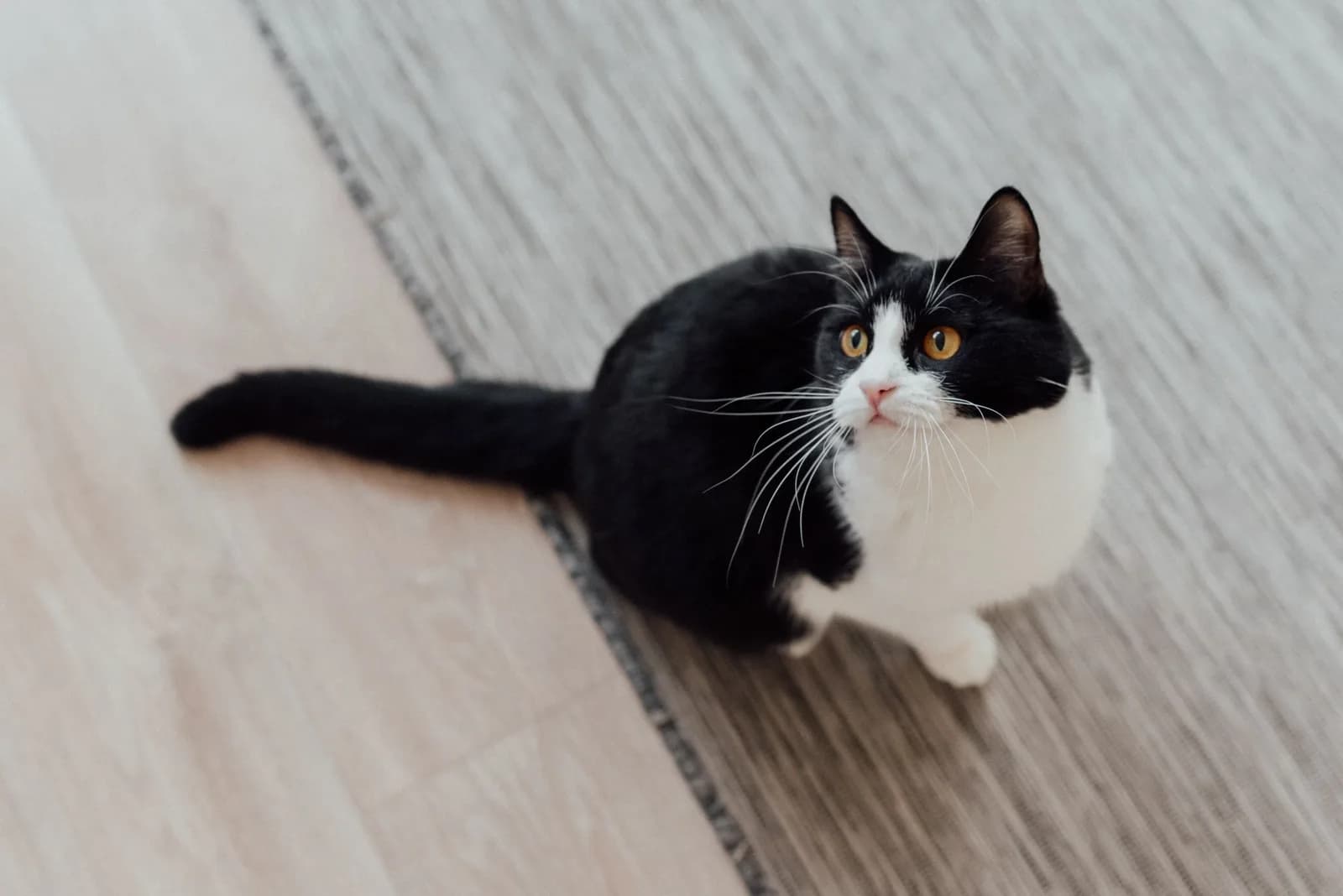
Article
Tuxedo Cat Names, With the Records Checked
Socks, Simon of HMS Amethyst, two Downing Street mousers, and the two famous "tuxedos" who were never tuxedos. The stories checked at source, then the list.
Read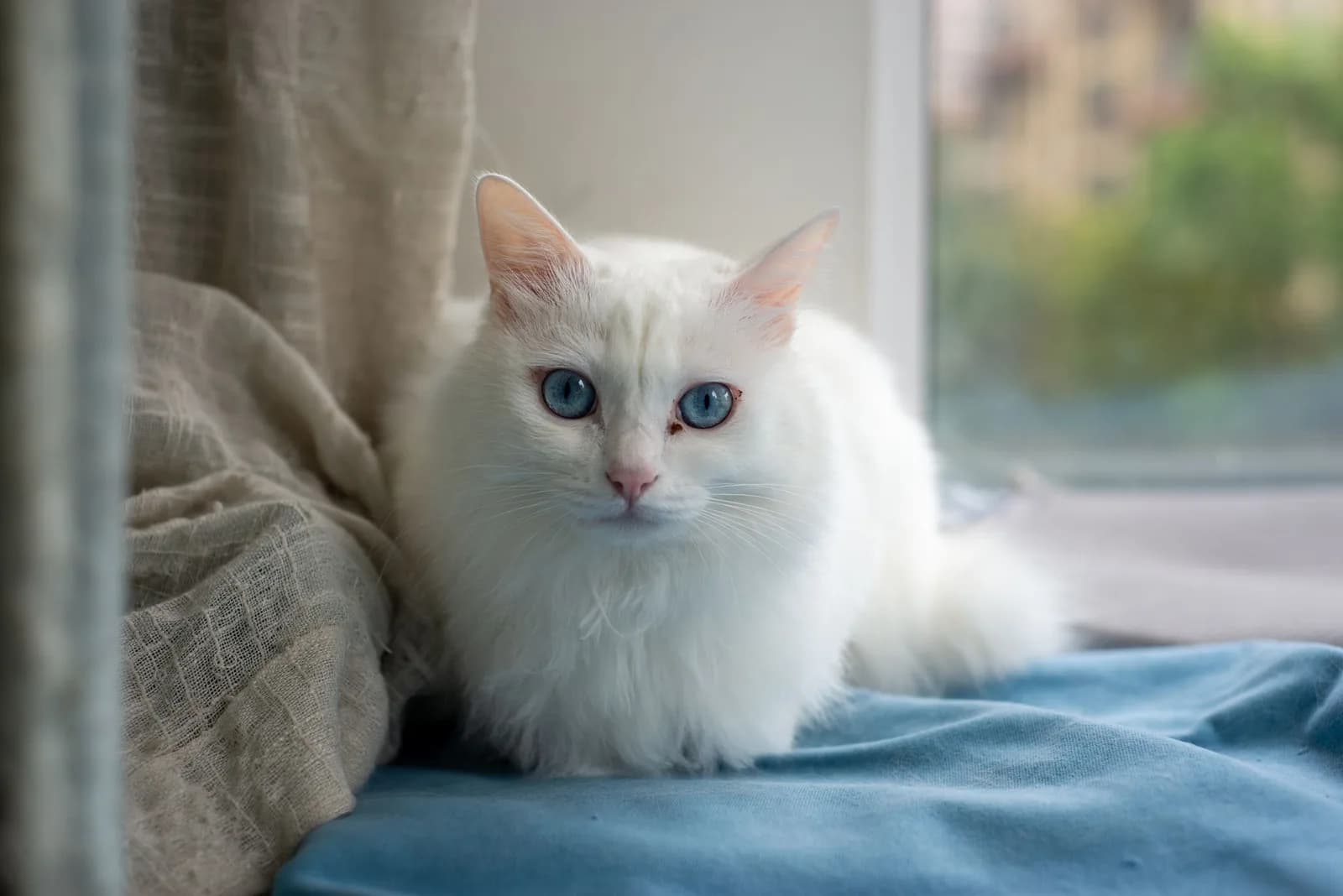
Article
White Cat Names, With the Stories Behind Them
Names for a white cat with their real origins, the only ranking that exists, the two breeds built on white, and what blue eyes actually mean for hearing.
Read
The floor belongs to our members. Keep it kind, links are not allowed, and images go through moderation before anyone else sees them.