

Tonkinese Cat Colors: Three Patterns, Five Vocabularies, One Gene Pair
The Tonkinese coat explained: three patterns (mink, pointed, solid) that five registries call five different things, the cb/cs genetics with a real $47 DNA test, and eyes graded by pattern.

Published August 21, 2026 4 min read
Contents
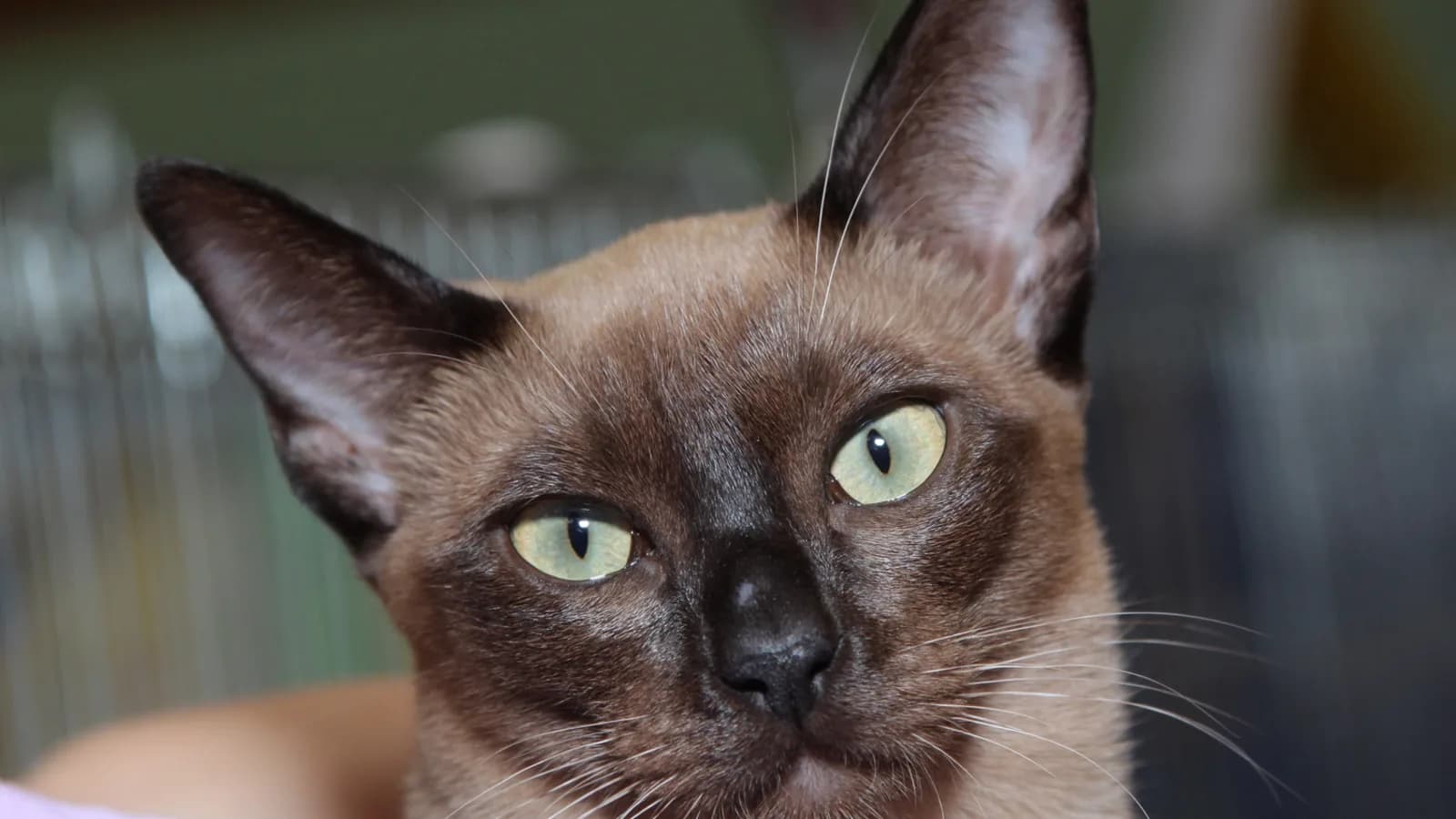
The Tonkinese coat is one clean genetic story wearing five registries' worth of conflicting vocabulary, and this page does the translation. The three patterns: MINK (the breed's signature, medium contrast, aqua eyes), POINTED (Siamese-style high contrast, blue eyes) and SOLID (Burmese-style low contrast, green-gold eyes). What each registry calls them is the mess we untangle below; what makes them is two alleles of one gene, and that part is beautifully simple.
| Pattern | Genetics | Contrast | Eyes | Who calls it what |
|---|---|---|---|---|
| Mink | cb + cs (one of each) | Medium: the signature | Aqua | Everyone: the one shared word |
| Pointed | cs + cs | High, Siamese-style | Blue | "Pointed" everywhere; files it as CPP |
| Solid | cb + cb | Low, Burmese-style | Green to gold | "Solid"; standard "Sepia" vs its own page "Solid"; / "Sepia"; BCR |
The genetics: cb, cs, and the coin flip
The Tonkinese exists at the meeting point of two albino-series alleles: cb (the Burmese sepia gene) and cs (the Siamese pointing gene). A cat with two cb copies is solid-patterned; two cs copies, pointed; one of each, MINK, the in-between the breed was built for.
The mechanism is confirmed at three independent primary points ('s own standard text, 's own Registration Policy, and UC Davis VGL's commercial test page), and it produces two genuinely useful breeding facts: a mink-to-mink mating throws all three patterns (roughly 2 mink to 1 solid to 1 pointed), and two SOLID parents can never produce a pointed kitten, because neither carries a cs to give. If a seller's story violates that arithmetic, the story is wrong. And this is not theory you must take on faith: VGL sells the exact test, $47, about 15 business days.
Five registries, five vocabularies
calls the low-contrast pattern "Solid." 's judged standard calls the same pattern "Sepia" while TICA's own consumer page says "Solid," a same-registry split we report rather than smooth. and both say "Sepia." And abandons pattern names entirely for an acronym system (BCR, TCR, CPP). Same cats, five dictionaries; our table below is the translation row a buyer actually needs.
One structural note per registry, honestly: 's own hosted article and its own breed page disagree with each other on whether solid and pointed patterns currently compete for full championship; the breed page and CFA's own class-number structure both read as SHOWN, which is what we state, while naming the contradiction because it is CFA's, not ours.
The base colors: four to ten, depending who counts
The count genuinely diverges by registry: recognizes 4 base colors (Natural, Champagne, Blue, Platinum), 6, 's consumer page effectively 8, 8 plus Caramel and Apricot sub-variants, and 10 across four pattern classes for a stated 78 combinations, including a Tabby class no other registry names at all. The American-versus-British vocabulary also splits on the colors themselves: Natural/Seal, Champagne/Chocolate, Platinum/Lilac are the same coats under two naming traditions.
Eyes: graded by pattern
Eye color follows the pattern, by mechanism: aqua for mink (the breed's famous signature), blue for pointed, green-to-gold for solid. The registries' exact wordings differ ('s ranges genuinely overlap where others draw hard lines), but the direction is consistent everywhere, and it is the fastest field guess for which pattern you are looking at.
Color develops late
Tonkinese color keeps developing to 16-18 months, so kittens run paler than their adult selves. 's own reader-facing trick for reading contrast: compare the tail (the darkest point) against the body; the size of that gap is the pattern speaking.
 The vet's take

Veterinary review
Are you a vet?
Your professional read belongs here: every verified practitioner can leave a note, published once our editors have reviewed it.
Sign in and get your license number verified. We check it in the public register, we never ask for or keep a copy of your diploma, and your number is never published.
Frequently asked questions
What colors do Tonkinese cats come in?
Three patterns (mink, pointed, solid) across base colors counted differently by registry: CFA's four (Natural, Champagne, Blue, Platinum) up to GCCF's ten across four pattern classes. Every combination rides the same two-allele mechanism.
What is a mink Tonkinese?
The breed's signature pattern: one cb and one cs allele, medium contrast, aqua eyes. Mink-to-mink matings throw all three patterns, which is genetics working exactly as written.
Do all Tonkinese have aqua eyes?
Only the minks: pointed cats run blue, solids green-to-gold. Eye color follows the coat pattern's genetics.
Can two solid Tonkinese have a pointed kitten?
No: neither parent carries the cs allele a pointed coat requires. It is one of the cleanest sourced breeding facts in the fancy, and a $47 DNA test can read any cat's pair.
Why do registries disagree about Tonkinese colors?
Vocabulary, not biology: the same three patterns are called Solid, Sepia or an acronym depending on the registry, and the base color counts run four to ten. Our table translates; the genetics never change.
 Community questions
Got a question this page doesn't cover? Ask it: the best ones get published here with their answer.
This is information, not veterinary advice, and it cannot tell you what is wrong with your cat. Our rule is a simple one: if something is wrong with your cat, call your vet, and call an emergency clinic if it is out of hours. Nothing you read here is a reason to wait.
Medical information applies to every reader. Prices, legal duties and common practice do not: unless stated otherwise, they are given for the United States, and they differ in the UK, Canada and Australia, and often between states or provinces. Check with your own vet and your own local authority.
Our sources
- TICA: Tonkinese breed page
- TICA Tonkinese standard (PDF)
- CFA: Tonkinese breed page
- CFA Tonkinese standard (PDF)
- CFA: Burmese and Tonkinese (the albino-series genetics article)
- GCCF: Tonkinese breed page (the acronym classes)
- ACF Tonkinese standard (PDF, 2024: the cb/cs text)
- UC Davis VGL: the cb/cs colourpoint test ($47)

Worth keeping a paw on
Pin this guide
So you can find it the day you need it, and share it with someone whose cat does the same thing. One click and it sits in your board.
Pin it on Pinterest
 Purr or Pass
The cat newsletter
Our verified guides, no spam. Unsubscribe in one click.
More Tonkinese guides
The Tonkinese profile →
Tonkinese guide
Tonkinese Kittens for Sale: Prices, Breeders, and One Marketplace Warning
Tonkinese prices with names and dates: the US $2,200 flat cattery, the UK's Tonkdoll warning, Australia's two figures, and Canada's nine-doors-checked zero. Plus the paperwork.
Read
Tonkinese guide
Tonkinese vs Siamese vs Burmese: The Honest Triangle
The Tonkinese IS the deliberate Siamese-Burmese cross, recognized everywhere. The triangle compared honestly, including the in-between claim its registries' own weights contradict.
Read
The floor belongs to our members. Keep it kind, links are not allowed, and images go through moderation before anyone else sees them.