

Black Devon Rex: The "Rare" Color That Keeps Winning Shows
The internet sells black-and-white Devon Rex as rare. CFA's own show results say otherwise, eight seasons running: the receipts, and the breed's dark-coated founder.

Published August 21, 2026 3 min read
Contents
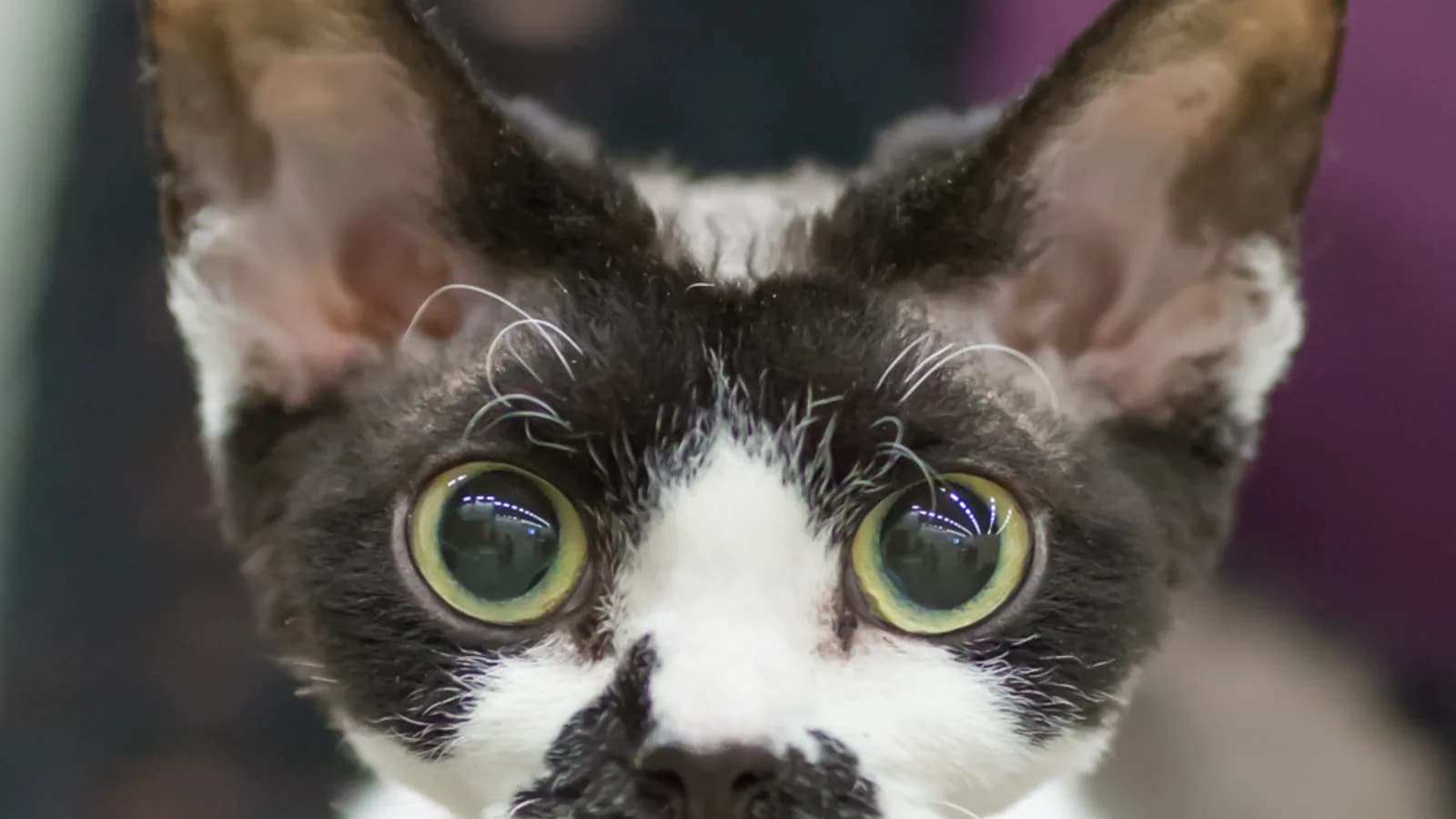
Search for a black-and-white Devon Rex and the listings whisper "rare." Here is what the documents say instead. 's own breed page carries a gallery of recent titled cats, and black and black-and-white Devon Rex appear among the winners across at least eight consecutive show seasons, 2017-18 through 2024-25.
A color that titles at the biggest US registry season after season is not a rarity; it is a staple. The one consumer color article we found that publishes any rarity scale at all ranks solid black in its MOST common tier, "Very common". It does not rank black-and-white as rare either. No registry publishes a rarity ranking of any Devon Rex color: we checked all five documents directly.
Why the "rare" label survives anyway
Because it sells. This breed's registries are completely color-open (the colors hub has the five quotes). No color is restricted, no color needs special breeding, and no color has a registry-recognized scarcity. A listing that leans on "rare" to justify a premium is leaning on air. No named cattery we read in any of four markets charges by color at all, and the flat-price policies are stated in the breeders' own words.
Reading a black Devon Rex
Black on this breed comes with an asterisk the solid-coat breeds do not carry. The rexed coat is short, wavy and thin in places. So a black Devon Rex often reads charcoal-to-brown where the coat is sparsest, and the loose curl catches light differently from a flat coat. Black-and-white (bicolour) adds the tuxedo geometry to the elf face. Both are ordinary, always-available classes at every registry that names classes at all.
The founder was a dark cat
The breed's own history runs through a dark coat. Kirlee, the single foundation tomcat behind every Devon Rex (born 15 July 1959 near Buckfastleigh, Devon), is described as "brownish-black" in 's, 's and 's current accounts, and as "a black smoke" by the UK Devon Rex Owners Club's own history. Two descriptions from two source families, both dark; we print both rather than picking. Every black Devon Rex on a sofa today is wearing something close to the founder's own coat. That is a better story than an invented rarity.
The rarity claim vs the record
consecutive show seasons (2017-18 to 2024-25) with black or black-and-white Devon Rex among the titled cats
8
registries that publish any color rarity ranking: we checked all five documents
0
color premium at any named cattery with a stated policy, in any of our four markets
$0
 The vet's take

Veterinary review
Are you a vet?
Your professional read belongs here: every verified practitioner can leave a note, published once our editors have reviewed it.
Sign in and get your license number verified. We check it in the public register, we never ask for or keep a copy of your diploma, and your number is never published.
Frequently asked questions
Are black and white Devon Rex cats rare?
No source supports it: CFA's own titled-cats gallery shows black and black-and-white Devon Rex winning across eight straight show seasons, the one published rarity scale ranks solid black "Very common," and no registry ranks color rarity at all.
Do black Devon Rex cats cost more?
Not at any named cattery we read: US and Australian catteries with stated color policies price FLAT, one explicitly refusing color premiums. Treat a "rare colour" surcharge as a red flag.
What color was the first Devon Rex?
Dark: Kirlee, the 1959 founder, is "brownish-black" per TICA, CFA and GCCF, "a black smoke" per the UK Owners Club. The sources disagree on the exact term and we print both.
Why does my black Devon Rex look brownish?
The rexed coat is short, wavy and sparse in places, so black reads warmer where coverage thins: coat texture, not a color fault at home.
 Community questions
Got a question this page doesn't cover? Ask it: the best ones get published here with their answer.
This is information, not veterinary advice, and it cannot tell you what is wrong with your cat. Our rule is a simple one: if something is wrong with your cat, call your vet, and call an emergency clinic if it is out of hours. Nothing you read here is a reason to wait.
Medical information applies to every reader. Prices, legal duties and common practice do not: unless stated otherwise, they are given for the United States, and they differ in the UK, Canada and Australia, and often between states or provinces. Check with your own vet and your own local authority.
Our sources

Worth keeping a paw on
Pin this guide
So you can find it the day you need it, and share it with someone whose cat does the same thing. One click and it sits in your board.
Pin it on Pinterest
 Purr or Pass
The cat newsletter
Our verified guides, no spam. Unsubscribe in one click.
More Devon Rex guides
The Devon Rex profile →
Devon Rex guide
Devon Rex Price: What the Sellers Actually Publish
US named catteries cluster $2,700-3,700 flat, the UK's live listings beat the guide figures, Canada publishes deposits but never totals, and Australia splits $1,450 against $2,800.
Read
Devon Rex guide
Devon Rex Breeders: One Breed, Five Rulebooks
Five registries, five different outcross policies, one reasoned ban, and the two questions that sort Devon Rex breeders: the COLQ test and blood typing.
Read
Devon Rex guide
Are Devon Rex Cats Hypoallergenic? No, Say the People Who Register Them
TICA, GCCF and CFA all deny it in their own words. What the low-shedding coat actually changes, what nobody has measured, and the 24-hour test the registries themselves recommend.
Read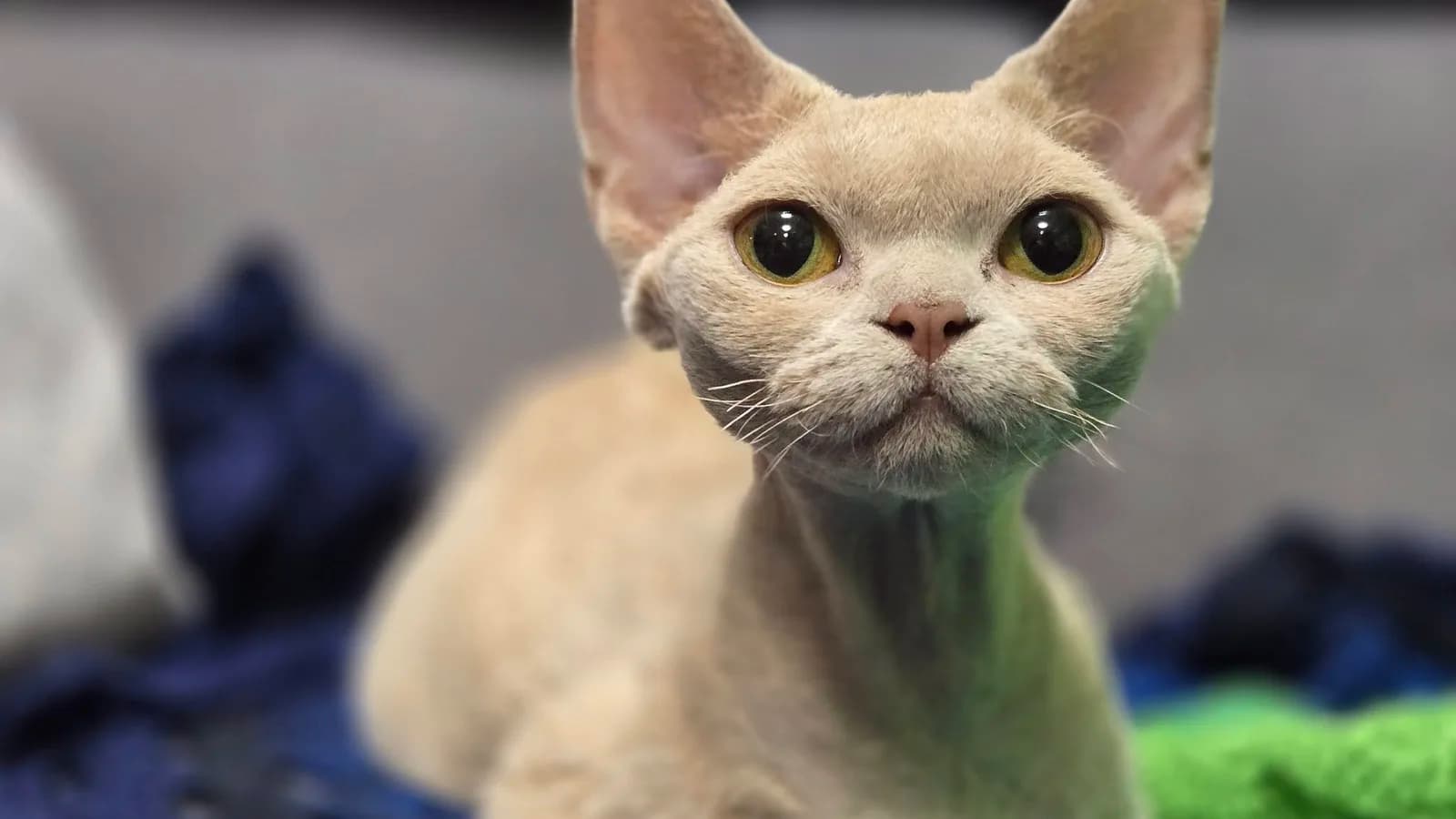
Devon Rex guide
Devon Rex Colors: The Registries Wrote a Blank Cheque
TICA says all, CFA says any genetically possible color, GCCF scores color at zero points. Why the Devon Rex palette is wide open, and what is actually judged instead.
Read
The floor belongs to our members. Keep it kind, links are not allowed, and images go through moderation before anyone else sees them.