

Cornish Rex vs Devon Rex: Two Curls That Are Not Related
The two curly Rex breeds are not genetic siblings: different genes, different mechanisms, proven twice since 1961. What the standards themselves prioritize, and which cat fits which home.

Published August 21, 2026 6 min read

Contents
One county apart, nine years apart, two curly-coated cats appeared in England's West Country: Kallibunker in Cornwall in 1950, Kirlee in Devon in 1959-60. Every eye that saw them assumed one mutation. Every test since has said two. If you are choosing between these breeds, the science is the story: they are look-alikes, not relatives, and the differences that matter to an owner follow from exactly that.
Different genes, proven twice
The Cornish Rex curl comes from a broken signalling receptor: a four-base deletion in the LPAR6 gene that truncates the receptor early (Gandolfi et al. 2013, who found all 39 unrelated Cornish Rex tested homozygous for it). The Devon Rex curl comes from a broken structural protein: an 81-base deletion plus insertions in KRT71, a hair-shaft gene (Gandolfi et al. 2010, homozygous in all 185 Devon Rex screened). A signalling receptor and a structural protein are two different kinds of biological failure that happen to wave a coat the same way. Never let a page tell you these breeds "share the rex gene."
And the fancy knew it before the labs did: in 1961, Kirlee was mated to Cornish Rex queens, including the full Cornish Broughton Purly Queen, and every kitten came out straight-coated, which cannot happen if two recessive mutations are the same. Breeders called them Gene 1 and Gene 2 from then on, terminology 's own pages still use. DNA sequencing confirmed the split half a century later.
What the judges look at first: coat versus head
The two standards want different cats, and the point tables say so plainly. All five registries we read give the Cornish Rex's COAT its largest score: 32 of 100 (texture alone 26), 40 of 100 (wave alone 20), 35, 40, 35. The Devon Rex is judged HEAD first: 40 of 100 at both TICA and CFA, the big eyes and huge low-set ears carrying the breed's elf-and-alien look. In practice: a Cornish Rex is an arched, fine-boned, washboard-waved cat; a Devon Rex is a pixie face on a looser, less uniform coat that can even carry sparse patches.
The registries police the boundary
's outcross lists never cross the two breeds, and Britain goes much further. 's Cornish Rex Breeding Policy states flatly: "Cornish Rex are not compatible with Devon Rex. Such matings are therefore highly undesirable," with the offspring banished from both breeding programs. Historical footnote from the same document: some Cornish Rex do carry Devon ancestry from the pre-1961 period when everyone still assumed one gene. And GCCF's Registration Policy adds the strongest single rule in this whole comparison: any cat with Sphynx ancestry is permanently barred from Cornish Rex registration, its progeny never registrable. The Devon Rex sits on the other side of that door too: at TICA and , the SPHYNX outcrosses with Devon Rex lines (the two breeds share the KRT71 gene), a genetic kinship the Cornish Rex simply is not part of.
Size and lifespan: honestly close
Do not choose on size: the registries' own prose puts both breeds at roughly 5 to 10 lb (2.3 to 4.5 kg), and the one measured cohort that weighs both (Häggström et al. 2025) has them statistically inseparable, medians of 3.1 kg (Cornish) and 3.0 kg (Devon). Lifespan claims for both breeds are unmeasured registry-and-pet-content ranges; each profile carries its own honest version. The measured health files differ more than the vital stats: the Devon Rex carries the COLQ myopathy DNA test conversation, the Cornish Rex file is thinner and led by rarer findings, each covered on its own profile.
German Rex, in one sentence
The German Rex, a rare European breed, carries the identical LPAR6 mutation as the Cornish Rex (tested directly in the 2013 paper), so it is molecularly a member of the Cornish curl family, not the Devon one; the registries treat it as its own separate breed, and none of our four main registries currently lists it.
Which one fits your home?
Both are active, people-glued, warm-seeking indoor cats, and neither is hypoallergenic (no cat is). Choose the Cornish Rex if the coat is the point: the tight, even washboard wave in a fine-boned greyhound frame, judged on exactly that. Choose the Devon Rex if the face is the point, and read up on its COLQ test and its shedding small print first. Either way you get a low-guard-hair curl and a cat that treats your shoulders as furniture; you just get it from two entirely different genes.
The whole comparison on one card
| Cornish Rex | Devon Rex | |
|---|---|---|
| Curl gene | LPAR6 (signalling receptor), found 2013 | KRT71 (structural ), found 2010 |
| Judged first on | The COAT: 32-40 of 100 points across registries | The HEAD: 40 of 100 at and |
| The look | Even marcel waves, arched greyhound frame | Pixie face, huge low-set ears, looser coat |
| Measured weight | 3.1 kg median (n=1,430) | 3.0 kg median: statistically the same group |
| Sphynx kinship | None: permanently bans Sphynx ancestry | Real: shares KRT71; / outcross with Sphynx |
| Cross the two? | Forbidden: says not compatible | Same rule, same reason: all kittens straight-coated |
 The vet's take

Veterinary review
Are you a vet?
Your professional read belongs here: every verified practitioner can leave a note, published once our editors have reviewed it.
Sign in and get your license number verified. We check it in the public register, we never ask for or keep a copy of your diploma, and your number is never published.
Frequently asked questions
What is the difference between a Cornish Rex and a Devon Rex?
Different curl genes entirely: LPAR6 (a signalling receptor) in the Cornish, KRT71 (a structural keratin) in the Devon. Visibly, the Cornish is judged on its even, marcel-waved coat and arched build; the Devon on its huge-eared pixie head with a looser, sometimes patchy coat.
Are Cornish Rex and Devon Rex related?
No. The 1961 test-crosses produced only straight-coated kittens, proving the two mutations are not the same gene, and DNA sequencing confirmed it decades later. Some old Cornish lines carry Devon ancestry from the brief era when breeders assumed one gene, and GCCF now explicitly forbids crossing them.
Which is bigger?
Neither, meaningfully: registry prose puts both at roughly 5 to 10 lb, and the one study that weighed both breeds found medians of 3.1 kg and 3.0 kg, statistically in the same group.
Can you breed a Cornish Rex to a Devon Rex?
The registries say no: the kittens would all be straight-coated carriers, and GCCF's breeding policy states plainly the two breeds are "not compatible" and excludes such kittens from both programs.
Is a German Rex the same as a Cornish Rex?
Same mutation, different breed: German Rex carries the identical LPAR6 deletion but is maintained as its own (rare) breed, unrecognized by the four main registries we track.
Which sheds less, Cornish or Devon?
Both are low-guard-hair, low-shedding coats by structure; neither is shed-free nor hypoallergenic. The honest difference is coat coverage: the Devon standard tolerates sparser patches, the Cornish wave is expected even and complete.
 Community questions
Got a question this page doesn't cover? Ask it: the best ones get published here with their answer.
This is information, not veterinary advice, and it cannot tell you what is wrong with your cat. Our rule is a simple one: if something is wrong with your cat, call your vet, and call an emergency clinic if it is out of hours. Nothing you read here is a reason to wait.
Medical information applies to every reader. Prices, legal duties and common practice do not: unless stated otherwise, they are given for the United States, and they differ in the UK, Canada and Australia, and often between states or provinces. Check with your own vet and your own local authority.
Our sources
- Gandolfi et al. 2013, the Cornish Rex LPAR6 discovery (PLoS One)
- Gandolfi et al. 2010, the Devon Rex/Sphynx KRT71 paper (Mamm Genome)
- Zorc et al. 2024, Cornish Rex selection signatures (Genes)
- TICA Cornish Rex standard (coat 32/100; outcross list)
- TICA Devon Rex standard (head 40/100)
- CFA Cornish Rex show standard (coat 40/100)
- GCCF Cornish Rex Breeding Policy (not compatible with Devon Rex; the Sphynx-ancestry ban)
- GCCF Cornish Rex Registration Policy (the permanent Sphynx rule)
- Häggström et al. 2025, the measured weight cohort (JVIM)

Worth keeping a paw on
Pin this guide
So you can find it the day you need it, and share it with someone whose cat does the same thing. One click and it sits in your board.
Pin it on Pinterest
 Purr or Pass
The cat newsletter
Our verified guides, no spam. Unsubscribe in one click.
More Cornish Rex guides
The Cornish Rex profile →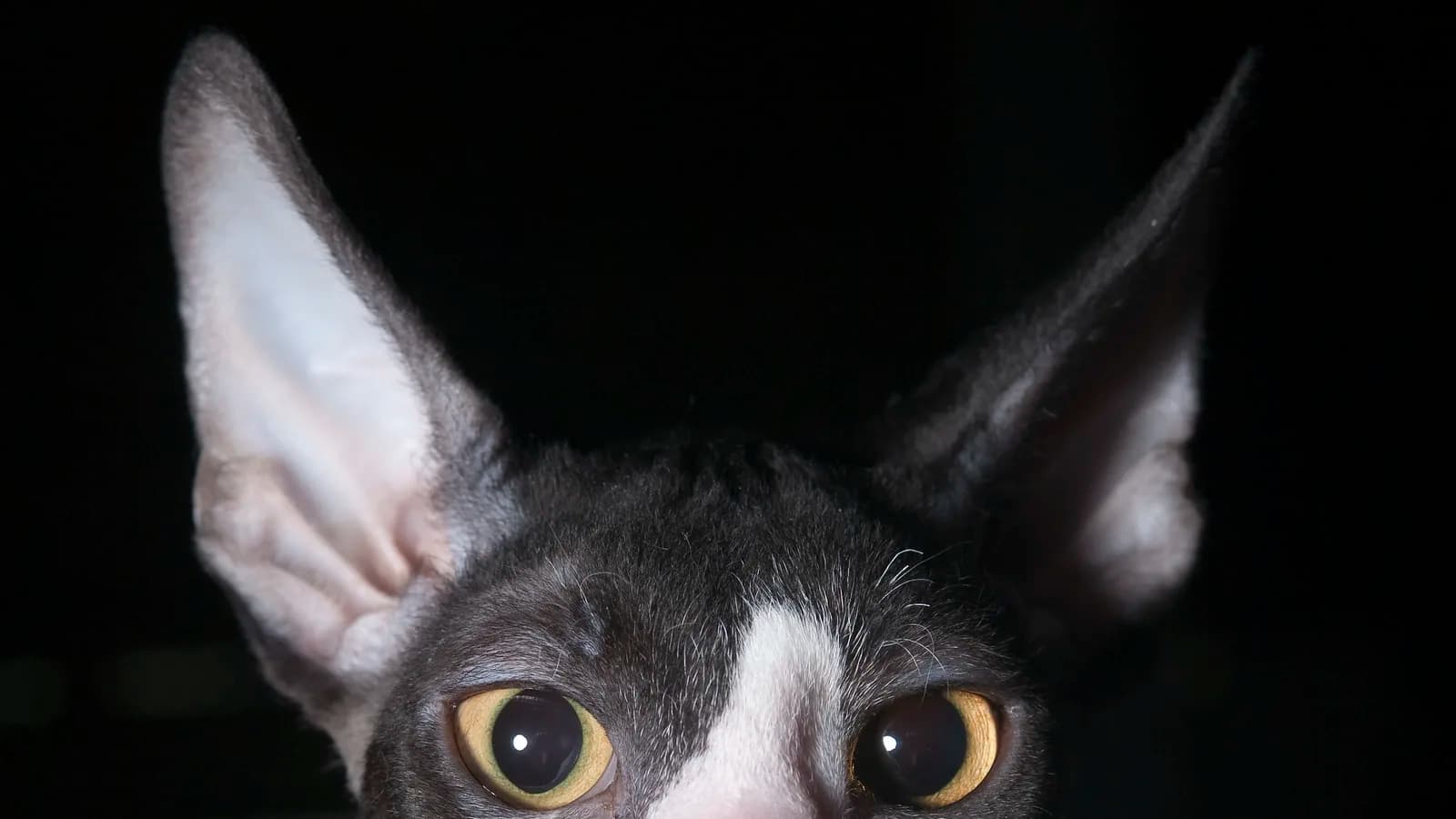
Cornish Rex guide
Cornish Rex Kittens for Sale: What They Cost in Four Markets
What a Cornish Rex actually costs in the US, UK, Canada and Australia, from named catteries and live listings: flat prices, tiered prices, and one market that publishes none at all.
Read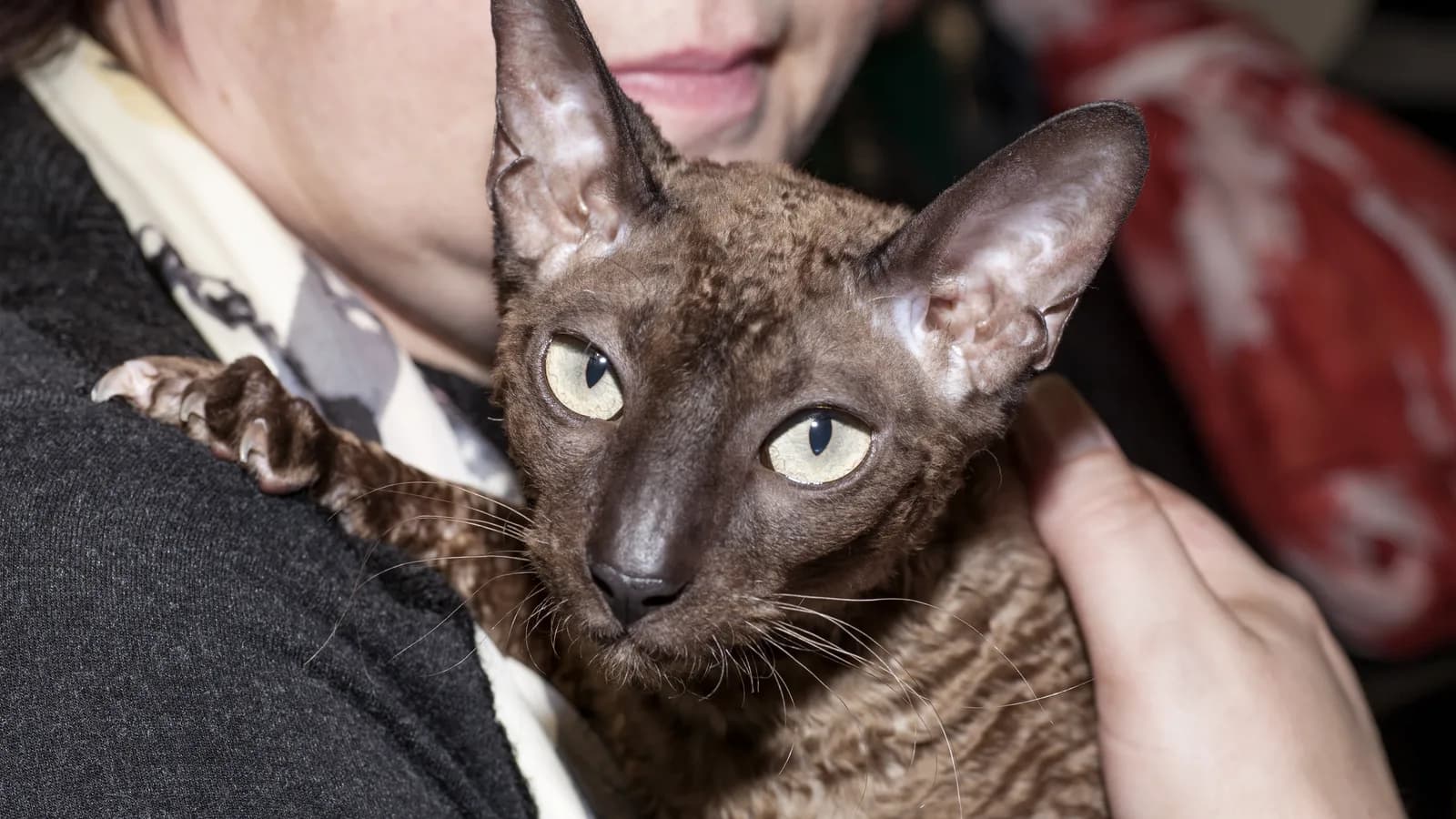
Cornish Rex guide
Are Cornish Rex Cats Hypoallergenic? The Honest Answer
No cat is hypoallergenic, and no study has measured the Cornish Rex's allergen levels. What the curly coat actually changes, and the yeast myth the science reverses.
Read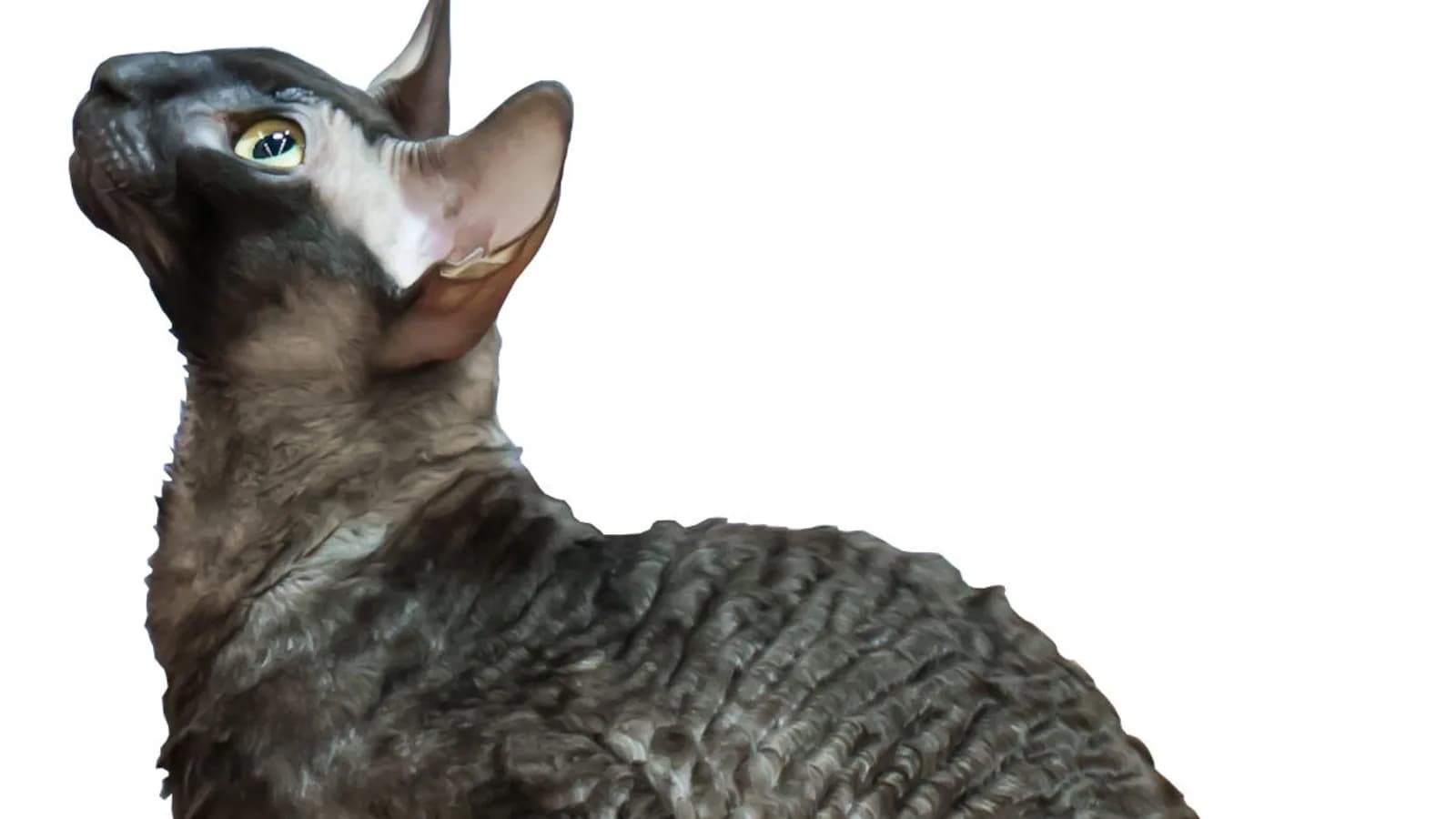
Cornish Rex guide
Cornish Rex Colors: All of Them (and the Black Rarity Myth, Counted)
Every registry accepts every Cornish Rex color (one odd exception aside). We counted CFA's own show record to test the "black is rare" claim, and it fell over.
Read
The floor belongs to our members. Keep it kind, links are not allowed, and images go through moderation before anyone else sees them.