

Birman vs Ragdoll: Two Lookalikes, One Real Genetic Difference
Both are blue-eyed, pointed, semi-longhaired and gentle. The real difference is the Birman's gloving gene, not white spotting at all, plus a size gap narrower than the reputations suggest.

Published August 21, 2026 4 min read
Contents
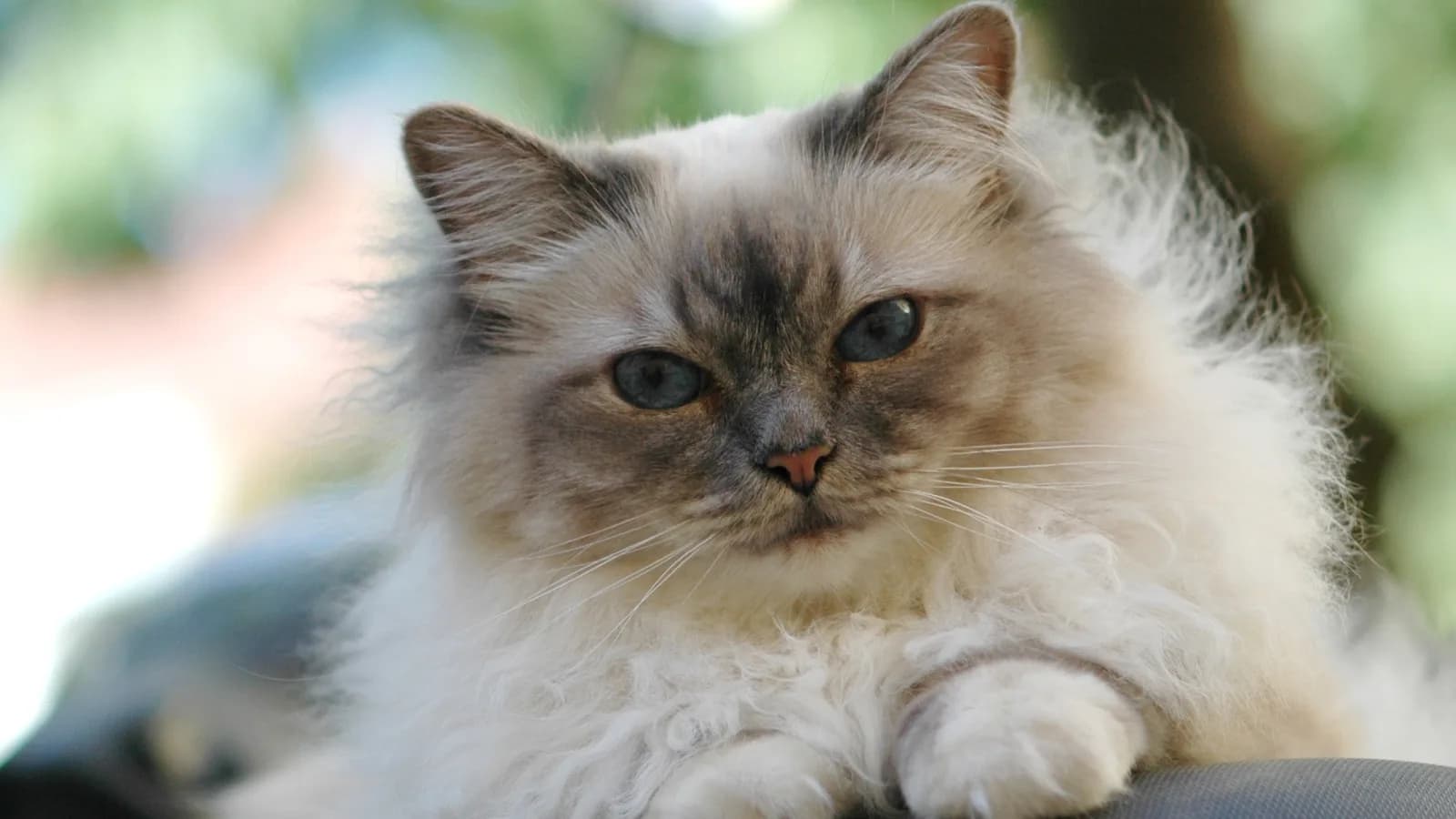
On sight, the confusion is fair: both breeds are blue-eyed by requirement, pointed, semi-longhaired and famously gentle. The honest comparison finds ONE trait that genuinely, genetically separates them. It also finds a size gap narrower than the reputations suggest, and several supposed differences that are actually similarities. Here is the axis-by-axis version, from both breeds' own primary documents.
| Birman | Ragdoll | |
|---|---|---|
| The white feet | A gloving gene unique to the breed, fixed in it | Ordinary white spotting (the Mitted pattern) |
| Size | box up to 15 lb; measured cohorts lighter still | box from 10 lb; males to 20 lb: the real gap |
| Eyes | Blue, required | Blue, required: separates nothing |
| Coat | Silky semi-long, little-to-no undercoat | The same, per : a similarity, not a difference |
| Seniority | Recognized 24-27 years earlier at and | The younger breed |
The real difference: gloves versus white spotting
The Birman's four white gloves come from a gloving gene unique to the breed, effectively fixed in it, and, in 's own words, "not related to the white spotting gene which causes bi-colour cats in other breeds." A Mitted Ragdoll's white comes from exactly that ordinary white-spotting. The show paperwork reflects the difference in precision. judges the Birman's gloves in five labeled anatomical paragraphs worth 20 of 100 points, while the Ragdoll's white patterns get one paragraph each. Same white feet from across the room; different genes, different rulebooks, up close. Our Birman colors page carries the full gloving file.
Size: a narrower gap than advertised
The Ragdoll is the larger breed on every registry's own numbers, but the gap is a margin, not a chasm. On 's own boxes, the Birman tops out at 15 lb where the Ragdoll starts at 10, overlapping through the middle. Worth adding from our own research: the Birman's measured cohorts run well below its registry boxes (details on the pillar). So the real-world gap you meet at home is mostly the Ragdoll's genuinely heavier male ceiling.
The similarities most comparisons sell as differences
Eye color separates nothing: BOTH breeds require blue eyes and disqualify otherwise. Coat texture is a genuine similarity too. Both wear silky, low-to-no-undercoat semi-long coats by 's own descriptions, which is why both groom more easily than they look. And temperament runs mostly parallel (quiet, people-attached, per 's own portraits), with activity the one modest divergence: the Birman keeps slightly more of its playfulness, the Ragdoll commits harder to the floor.
Paperwork trivia with real content
The Birman is the senior breed by a generation: recognized 24-27 years earlier than the Ragdoll at both registries they share ( and ). And 's own "Similar Breeds" field names the Ragdoll on the Birman's page but not the reverse. That is the same one-directional quirk our research has now documented four times across this family of lookalikes: registry cross-references are hints, not symmetric facts.
Choosing between them
Choose by scale and by story. The Ragdoll for the bigger frame, the famous flop and its measured 12.85-year UK figure. The Birman for the gloves, the temple legend told honestly, and a size closer to an ordinary cat's. Both are indoor-suited, gentle, blue-eyed companions, and neither is a wrong answer, which is the rarest sentence a comparison page gets to write.
 The vet's take

Veterinary review
Are you a vet?
Your professional read belongs here: every verified practitioner can leave a note, published once our editors have reviewed it.
Sign in and get your license number verified. We check it in the public register, we never ask for or keep a copy of your diploma, and your number is never published.
Frequently asked questions
What is the difference between a Birman and a Ragdoll?
Genetically, the gloves: the Birman's white feet come from its own gloving gene, not the white-spotting behind a Ragdoll's mitts. Practically, the Ragdoll runs larger, with the size overlap narrower than the reputations suggest.
Which is bigger, Birman or Ragdoll?
The Ragdoll, on every registry's own figures, with GCCF's boxes overlapping only at the margin (Birman up to 15 lb, Ragdoll from 10 lb). The Ragdoll's male ceiling (up to 20 lb) is where the real gap lives.
Do both Birmans and Ragdolls have blue eyes?
Yes, mandatorily: both standards require blue and disqualify otherwise. Eye color tells you nothing between these two.
Which sheds less, Birman or Ragdoll?
Neither wins: both wear silky semi-long coats with little to no undercoat by CFA's own descriptions, and both groom more easily than their photos suggest.
Which breed is older?
The Birman, by 24-27 years at both shared registries: it reached recognition a full generation before the Ragdoll existed.
 Community questions
Got a question this page doesn't cover? Ask it: the best ones get published here with their answer.
This is information, not veterinary advice, and it cannot tell you what is wrong with your cat. Our rule is a simple one: if something is wrong with your cat, call your vet, and call an emergency clinic if it is out of hours. Nothing you read here is a reason to wait.
Medical information applies to every reader. Prices, legal duties and common practice do not: unless stated otherwise, they are given for the United States, and they differ in the UK, Canada and Australia, and often between states or provinces. Check with your own vet and your own local authority.
Our sources

Worth keeping a paw on
Pin this guide
So you can find it the day you need it, and share it with someone whose cat does the same thing. One click and it sits in your board.
Pin it on Pinterest
 Purr or Pass
The cat newsletter
Our verified guides, no spam. Unsubscribe in one click.
More Birman guides
The Birman profile →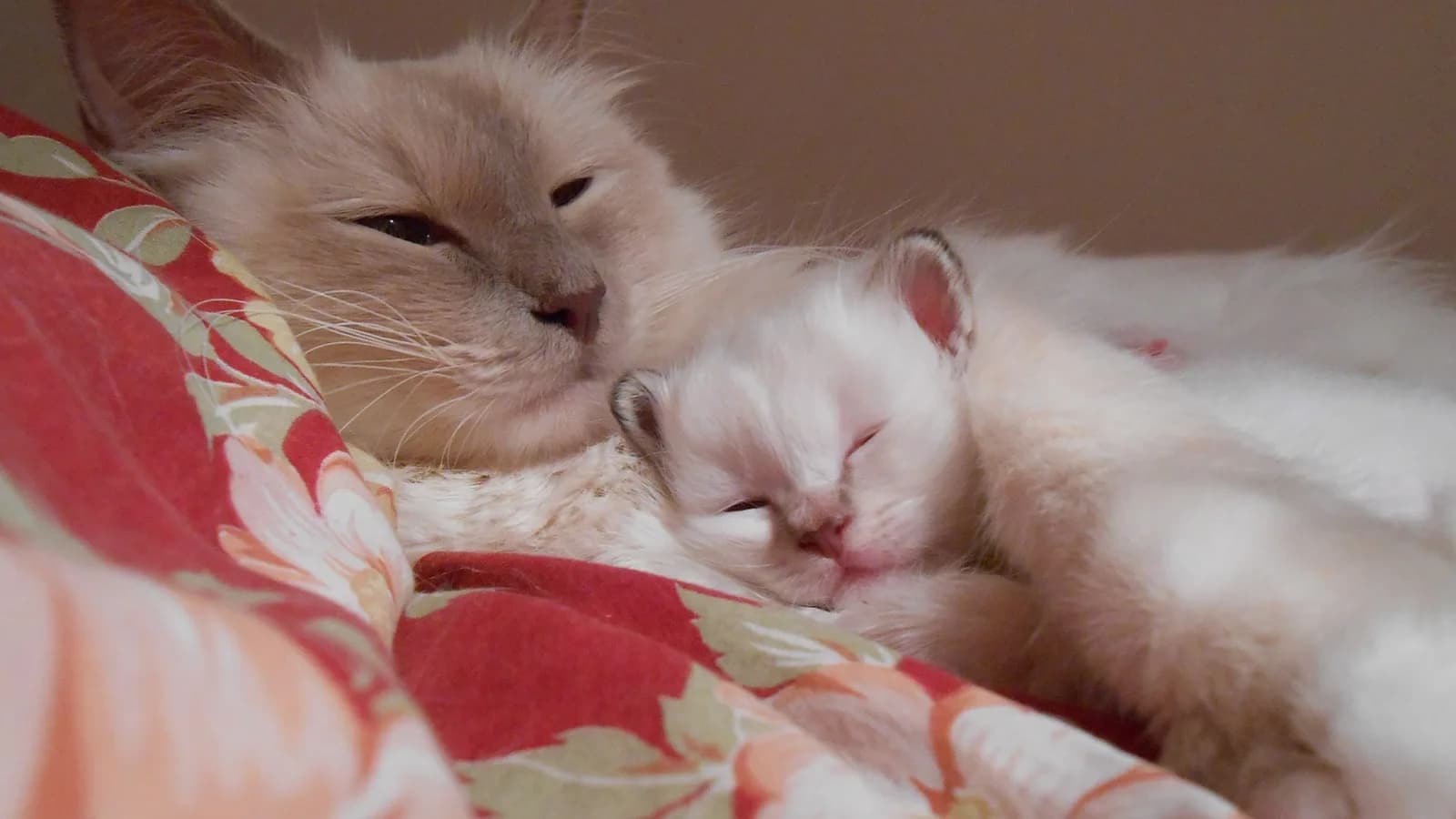
Birman guide
Birman Kittens for Sale: Prices, Breeders, and the Honest Gaps
Real Birman prices: US catteries clustering $2,200-2,500 above the guides' bands, the UK's rich-clubs-zero-prices pattern, Australia's one-of-eleven listings, and Canada's checked absence.
Read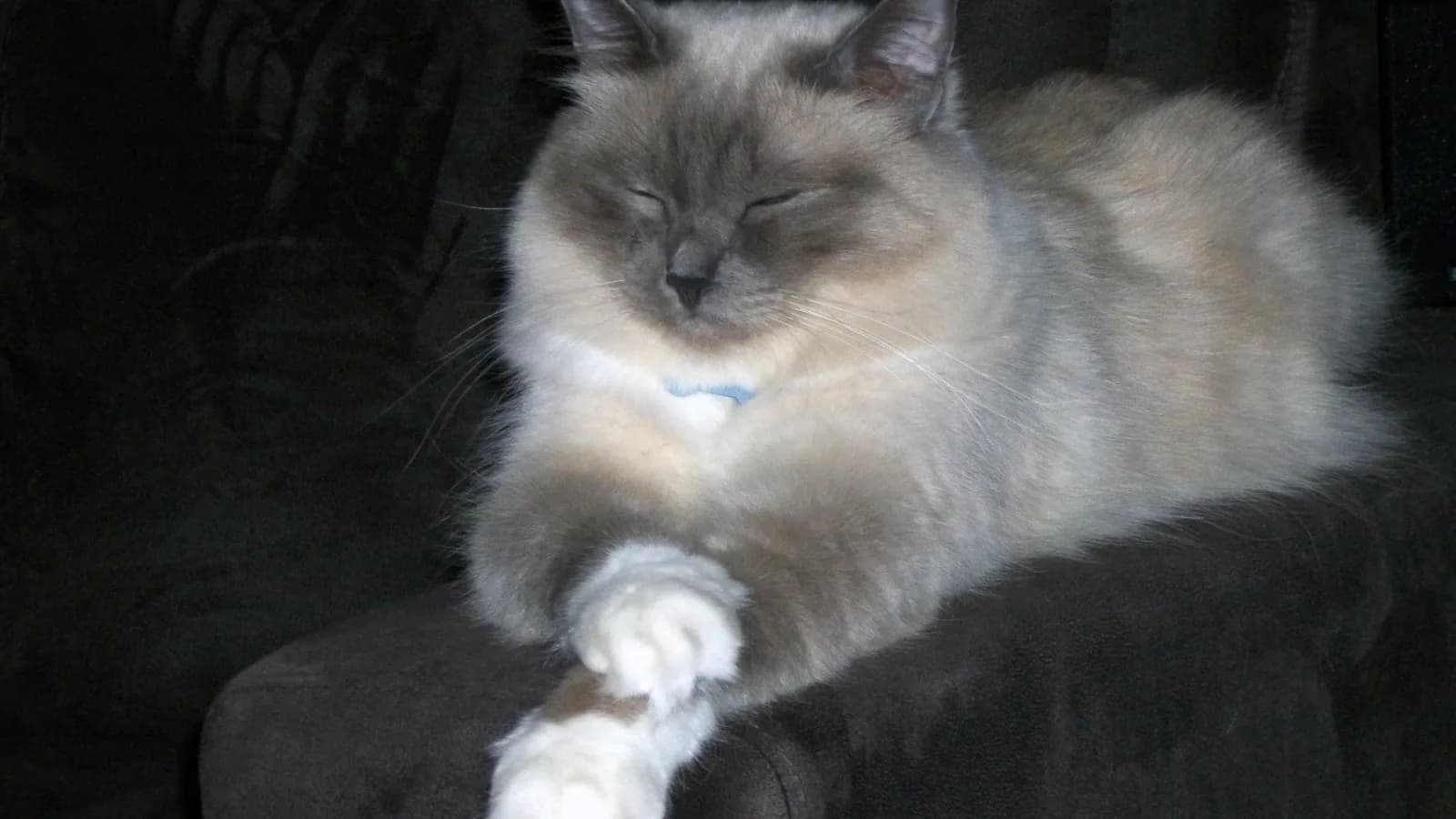
Birman guide
Birman Cat Colors: The Gloves Come First, Then the Twenty Points
The Birman's white gloves are a judged, gene-specific trait scored differently by five registries (20 of 100 points at two of them). The gloves' own genetics, then the twenty point colors.
Read
The floor belongs to our members. Keep it kind, links are not allowed, and images go through moderation before anyone else sees them.