

Himalayan Cat Colors: The Same Cat, Counted Four Ways
Every registry names the same core eight points, then CFA counts 16, GCCF 20 and Canada's registry about 66. The palette, the blue-eye rule, and why the counts differ.

Published August 21, 2026 5 min read
Contents
Every registry we read agrees on the core: Seal, Blue, Chocolate, Lilac, Flame (Red) and Cream Point, with Tortie and Blue-Cream as the near-universal seventh and eighth. Past that core, the lists diverge wildly. The divergence is the page's most useful fact. names 16 point colors, 20, Australia's about 28, and Canada's roughly 66. The cat does not change at the border; the paperwork does. The mechanism is simple. The registry that gave the Himalayan its own full breed standard (CCA-AFC) had room to subdivide that a color division nested inside the Persian standard never gets (the registry story is its own page).
Seal point: the founding color
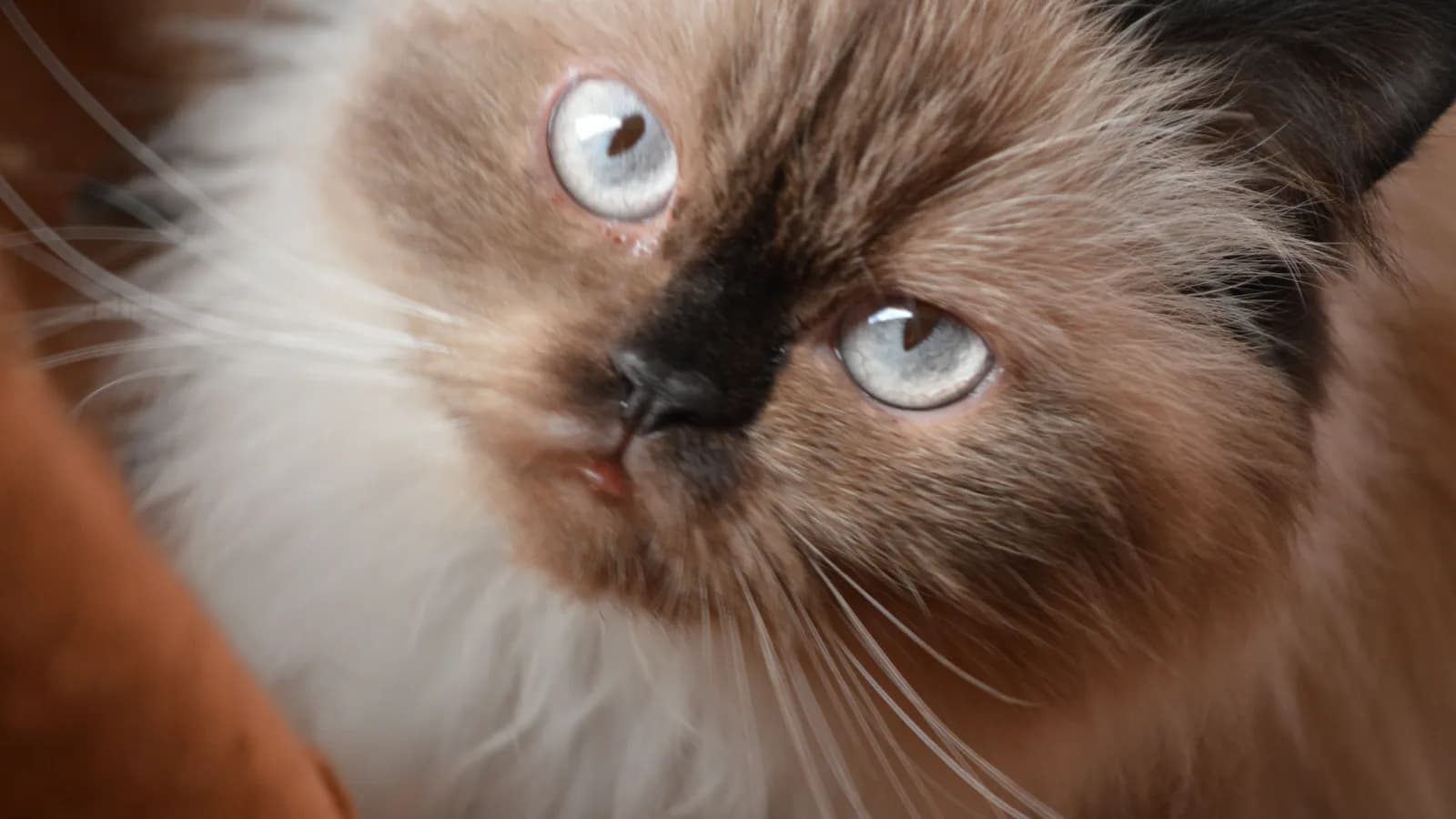
The darkest points: deep seal brown against a pale fawn-to-cream body, and the historical starting line. Seal was among the four colors recognized at the breed's 1957 founding, and every registry document we read names it first. Nose leather and paw pads run seal brown to match. If you hold a mental image of "a Himalayan," it is almost certainly a seal point.
Blue point, and the nose-leather trick
The dilute of seal: slate blue-grey points on a glacial white-to-bluish body. The identification question buyers actually ask is blue point or lilac point. One working cattery's guide states the practical cue our registry reading confirms: check the nose leather and paw pads. Slate blue-grey means blue point; lavender-pink means lilac point. Nose leather is the honest label the coat sometimes blurs.
The rest of the core, quickly
Chocolate point (warm cinnamon-toned points, ivory body) and its dilute lilac point (frosty pinkish-grey). Flame point (red-gold points, the sex-linked red gene at work) and its dilute cream point. Then the mosaics: point and point, where red or cream breaks across the base color. Those patterns present overwhelmingly in females ('s own class-number table gives tortie and blue-cream points a class only in the female column).
Lynx (tabby) point adds the striped overlay: 's standard describes the "M" on the forehead, spectacle markings and ringed tail in detail. Beyond these, 's page uniquely names bicolor and tricolor point patterns. And adds Shaded, Silver Lynx, Smoke and Golden Lynx Point categories no other registry names for this breed.
The one universal rule: blue eyes
Checked directly against all five registries' own color texts: eye color is the single non-negotiable, identical everywhere, for every point color. : "deep vivid blue," disqualify anything else. repeats "Clear brilliant blue. Deep blue preferred" verbatim under every color entry we read. withholds certificates for any trace of another color. No registry anywhere gives a point-specific eye-color exception. What genuinely varies by color is nose leather and paw pads. That is why nose leather is the cue worth learning.
Born white: the color arrives later
Every Himalayan kitten is born creamy white. The pointing gene is temperature-sensitive, and the womb is uniformly warm. Pigment then develops on the cool extremities. Breeders commonly report seal and blue points showing within about 10 days, chocolate and lilac taking up to 3 months, and full color arriving toward the first birthday. That is practical breeder experience, not a laboratory timeline, and the reason a very young kitten's final shade involves some educated guessing. The gene itself (the "Himalayan gene", tyrosinase's cs allele) is the pillar's genetics story, shared with the Siamese and, more surprisingly, the Ragdoll.
Is any point color rarer or dearer?
No registry document states a rarity ranking across points, and no seller in our four-market price research states a color premium in money. One breeder site reports blue and chocolate points as less common, for straightforward recessive-gene reasons. We pass that on as a breeder observation, not an established fact. Color is the wrong lever for price questions; registration and health testing are the right ones.
The core points at a glance
 The vet's take

Veterinary review
Are you a vet?
Your professional read belongs here: every verified practitioner can leave a note, published once our editors have reviewed it.
Sign in and get your license number verified. We check it in the public register, we never ask for or keep a copy of your diploma, and your number is never published.
Frequently asked questions
What colors do Himalayan cats come in?
A shared core of eight: seal, blue, chocolate, lilac, flame (red), cream, tortie and blue-cream point, plus lynx (tabby) versions. How far beyond that the list goes depends on the registry: CFA names 16, GCCF 20, ACF about 28, and Canada's CCA-AFC roughly 66 across six pattern categories.
Do all Himalayan cats have blue eyes?
Yes, by every standard we read: deep blue is required for every point color, and anything else is a disqualification. It is the breed's one universal color rule.
How do I tell a blue point from a lilac point?
Nose leather and paw pads: slate blue-grey for a blue point, lavender-pink for a lilac point. The body coat can blur; the leather does not.
Do Himalayan kittens change color?
Yes: all are born creamy white, and the temperature-sensitive gene darkens the cool extremities over weeks to months. Breeders report seal and blue showing within about ten days, chocolate and lilac taking up to three months.
 Community questions
Got a question this page doesn't cover? Ask it: the best ones get published here with their answer.
This is information, not veterinary advice, and it cannot tell you what is wrong with your cat. Our rule is a simple one: if something is wrong with your cat, call your vet, and call an emergency clinic if it is out of hours. Nothing you read here is a reason to wait.
Medical information applies to every reader. Prices, legal duties and common practice do not: unless stated otherwise, they are given for the United States, and they differ in the UK, Canada and Australia, and often between states or provinces. Check with your own vet and your own local authority.
Our sources
- CFA Persian breed standard (Himalayan Division)
- TICA Himalayan breed page
- GCCF Persian Standard of Points (Colourpoint section)
- CCA-AFC Himalayan breed standard
- ACF Persian standard (Colourpoint Persians section)
- Lyons et al. 2005, tyrosinase mutations
- GCCF Persian Breeding Policy
- Posh Persians (natura.org.uk), color points guide

Worth keeping a paw on
Pin this guide
So you can find it the day you need it, and share it with someone whose cat does the same thing. One click and it sits in your board.
Pin it on Pinterest
 Purr or Pass
The cat newsletter
Our verified guides, no spam. Unsubscribe in one click.
More Himalayan guides
The Himalayan profile →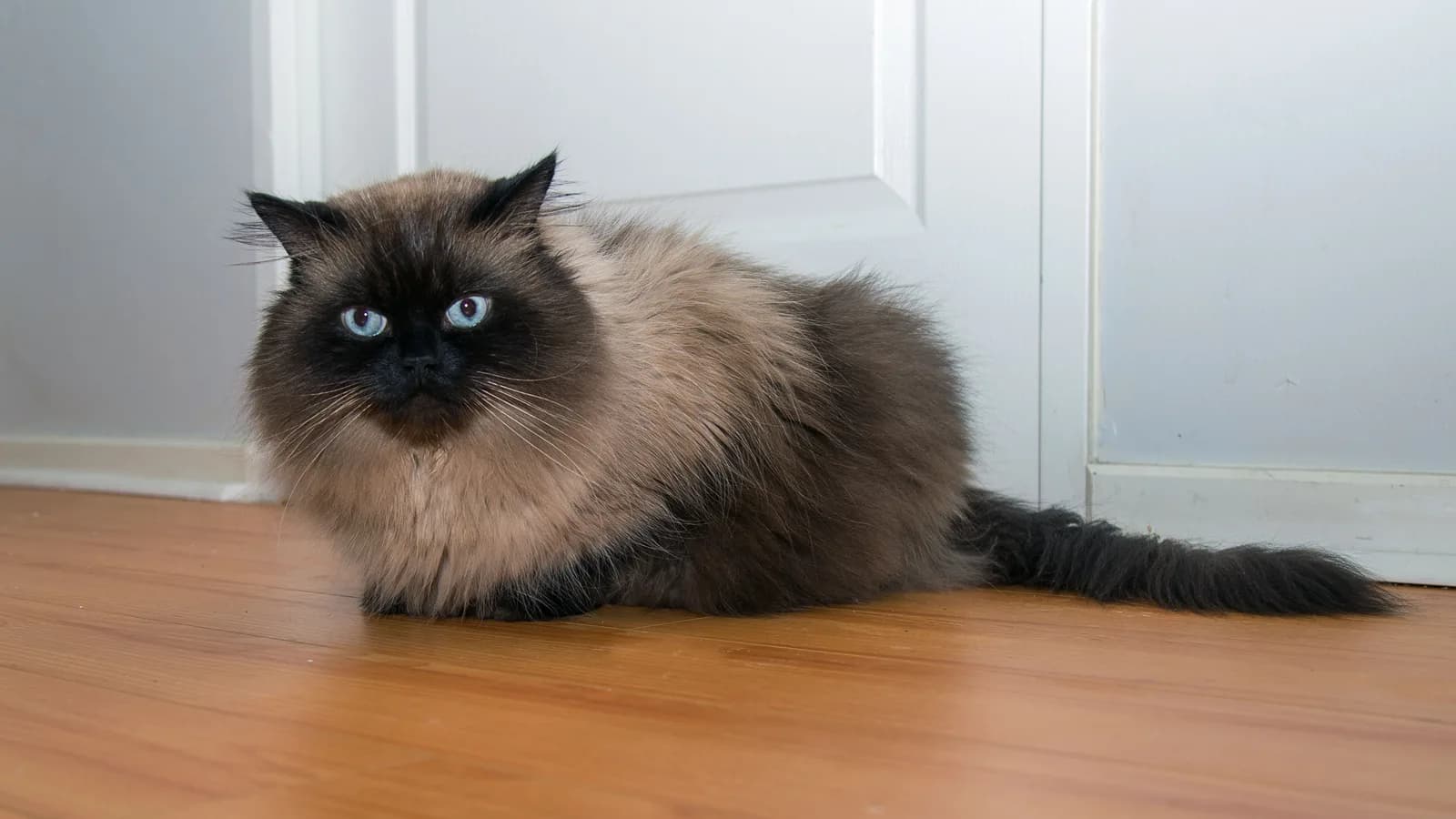
Himalayan guide
Himalayan Cat: The Persian in Evening Dress
Blue eyes, a pointed coat and four registries that cannot agree what to call it. The Himalayan's real history, measured temperament, health file and daily-comb contract.
Read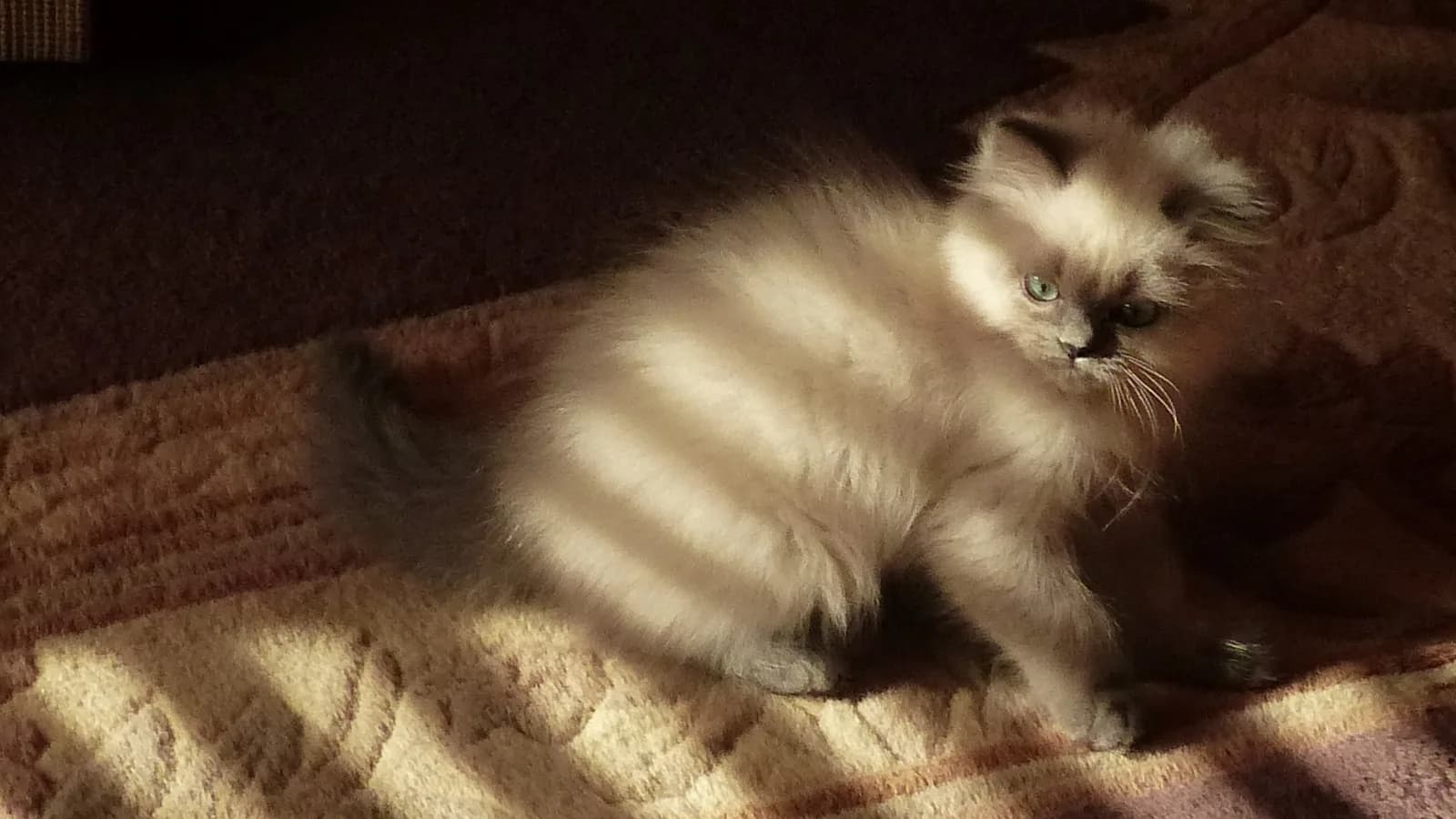
Himalayan guide
Himalayan Kittens for Sale: What the Listings Actually Say
Live marketplace samples and named catteries, read August 2026: US $1,000-4,500, UK £250-1,800 (mostly crosses), Canada's same-litter split, and Australia's documented absence.
Read
The floor belongs to our members. Keep it kind, links are not allowed, and images go through moderation before anyone else sees them.