

British Longhair: One Breed, Seven Registries, Seven Different Answers
The British Longhair, fact-checked: seven registries, seven different answers to whether it's a breed, the coat that is the only documented difference, and real four-market prices.

Published August 21, 2026 8 min read
Contents
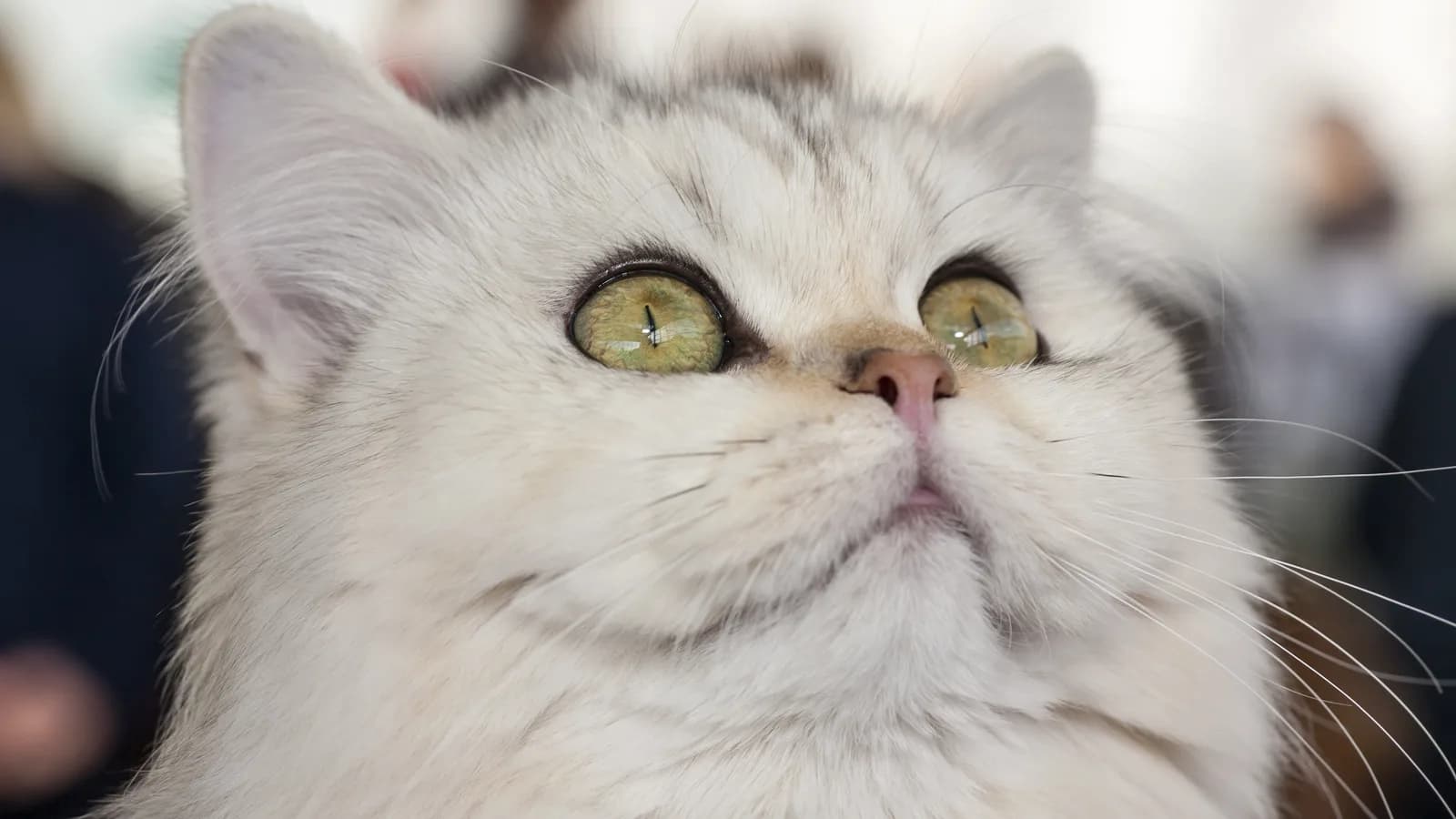
The British Longhair is a British Shorthair in a semi-long coat. That sentence is the last simple thing anyone can say about it. Ask "is it really its own breed?" and you get seven different answers from seven registries. They run from a fully independent standard to a flat refusal to register the cat under any British name at all. That spectrum is this page's spine, for two reasons. No other page assembles it from the registries' own documents. And which answer applies to YOU depends entirely on which country you are standing in.
| Registry | Its answer | The document |
|---|---|---|
| Its own breed | Championship effective May 2009 | |
| (UK) | Its own breed, twice dated | Name recognized 15 Feb 2017; championship Nov 2021 |
| WCF | Its own breed | A fully independent standard |
| Its own breed code | 'BLH', separate from 'BSH' in the EMS system | |
| (Australia) | Separate in name, fused in paper | One combined standard, 'freely intermated'; mixed-mating shorthairs carry a 'var' suffix, 'not considered a separate breed' |
| (Canada) | Two breeds on paper, matings shared | 'Judged as two separate breeds' in its own heading, yet 'Allowed matings: British Shorthair & Longhair' in the same document |
| (US) | Neither breed nor variety | 'Longhair' under DO NOT ACCEPT; registrable only as outcross stock (codes 0014/0015) |
The seven answers, from the registries' own documents
: its own breed, championship status effective May 2009, confirmed at two of TICA's own pages. : its own breed, in two dated steps GCCF's own page distinguishes. The name was recognized at the Council meeting of 15 February 2017; full championship status came in November 2021. WCF: its own fully independent standard, the strongest separate-breed position of the seven.
: its own breed code ("BLH", textually separate from "BSH" in FIFe's own EMS system). (Australia): one combined standard that lets the two be "freely intermated". It puts a "var" suffix on the shorthaired kittens of a mixed mating, explicitly stating those cats "are not considered a separate breed". Separate in name, fused in administration.
(Canada): a combined document whose own heading says the two "ARE JUDGED AS TWO SEPARATE BREEDS", while the same document lists "ALLOWED MATINGS: British Shorthair & Longhair". : the sharpest outlier, and stricter than the internet says. Every secondary source we checked claims CFA treats the Longhair as "a variant". CFA's own Registration Rules (revised 2/2026, read in full) actually list "Longhair" under "DO NOT ACCEPT" for the British Shorthair breed.
One narrow footnote exception exists (registration codes 0014/0015, effective 2/23): longhaired cats may be registered ONLY as outcross stock for other breeds' programs. has never named this population "British Longhair" anywhere in that document. Its British Shorthair breed page does not contain the word "longhair" in any form (we checked every spelling).
Even the encyclopedias disagree. English Wikipedia treats this cat as a section of the British Shorthair article, while Simple English Wikipedia gives it a standalone article. The disagreement is not a flaw in the sources; it IS the subject.
History: two Persian-cross waves, both true
's account starts the story in 1914-1918, 's after the Second World War, and both are right. They describe two different waves of Persian crossing into the British type: non-overlapping windows rather than competing claims. GCCF's own pre-2017 term for the resulting longhaired cats was "British Shorthair Variant". That is exactly the bureaucratic history the 2017 name recognition ended. One naming aside, scoped precisely. , Australia's cat federation, also calls the breed "Highland cat" and, in some organizations, "the Britannica" in its own current rules. Neither is used as a name anywhere on this site: the first collides head-on with two entirely different cats (TICA's Highlander, and the Highland Fold).
What the cat actually is
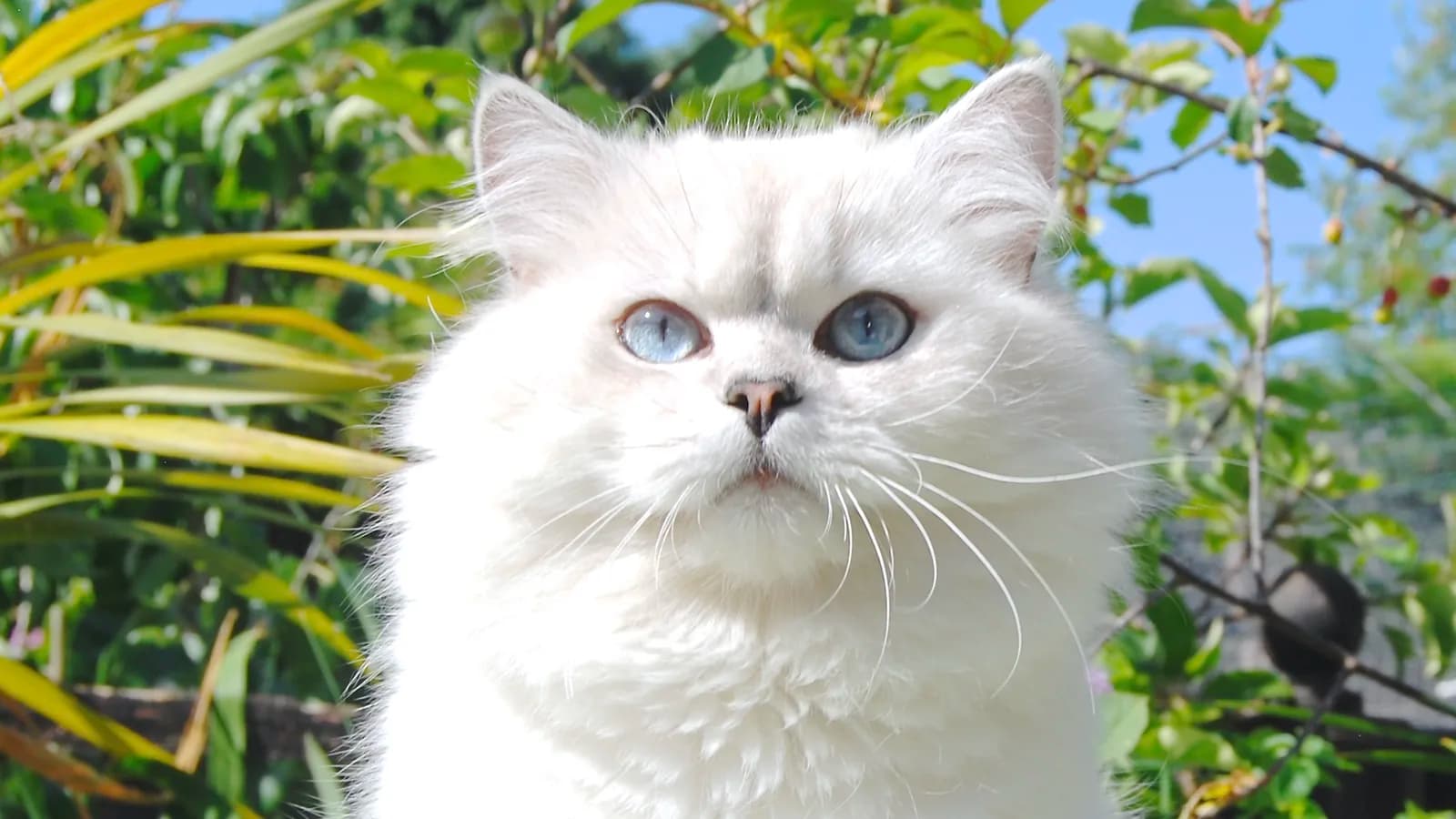
The coat is the only documented difference from the British Shorthair, and every registry that describes both breeds says so in its own way. Semi-long, with a and , standing off the body in what breeders call a "fluff-plush" texture rather than silky. 's standard carries an explicit fault clause against a cat that looks like a Persian. The body is the shared British type: cobby, broad-chested, round-faced. Our colors page carries 's own six-family taxonomy in full.
On size, the honest version has two layers. No registry standard anywhere gives a numeric weight. Six full standards were read (, , , , , WCF), and none carries a figure a judge scores against. TICA's consumer page offers a sex-split box (females 8-11 lb / 3.6-5 kg, males 10-16 lb / 4.5-7.3 kg).
We show it with its caveat attached: that box is verbatim identical to 's own British Shorthair page. It is part of a copy-paste pattern six of our own collectors and our verifier each confirmed independently, across TICA's weight, lifespan, grooming and nutrition text for this breed. No measured weight study exists for the breed at all.
Temperament: what the registries actually differentiate (nothing)
No registry document we read differentiates British Longhair temperament from British Shorthair temperament. The consumer-site debate ("calmer than" versus "identical to") resolves against that fact: closely similar, per every registry. Expect the British package. Tolerant of children and dogs, affectionate on its own terms, and famously "four feet on the floor" rather than a lap cat, per and alike. The one measured behaviour note exists only for the merged "British" group, and is published at exactly that scope.
Health: the pooled evidence, and the one real difference
Almost everything measured about this breed's health pools it with the British Shorthair, and we say so per finding rather than silently borrowing. first. No causal mutation has been confirmed in the British breeds: a 2024 five-breed multicenter study genotyped British Short- and Longhairs combined at 0% for both known mutations. That does not mean no HCM disease. 's own material recommends echocardiographic screening, and both facts are true together. PKD next. 's own current British Longhair registration policy makes a clear test an individual-cat requirement for active registration (with a whole--line alternative). That is a real, live testing gate a buyer can ask about by name.
And one place the two British breeds have ever been measured as genuinely different: a German urolith-registry study (3,629 feline stone samples, 2016-2020). It found the Shorthair's dominant stone type is calcium oxalate (85.2%) while the Longhair's is struvite (41.7%). We publish that finding with its full caveats attached (abstract-only access, no breed-specific sample size given) and without any diet advice, because the source gives none.
Lifespan last. The only measured figure confirmed to include this breed at all is 's pooled "British Blue and British Longhair combined" estimate of 9.58 years (CI 8.73-10.43, 194 deaths). It is published here exactly as the source scopes it, never rounded to "the British Longhair's lifespan". 's 14-20 figure names the Shorthair specifically, so it does not appear here as a Longhair claim.
One import note, scoped per BL4. 's ALPS blood-test rule for imports states "British Shorthair cats" specifically. Neither version of the British Longhair registration policy contains an ALPS clause. Do not extend it by analogy; ask GCCF directly if you are importing.
Buying one
The market genuinely prices the longhair as its own cat, and usually above the shorthair. Our price page has the four-market figures, the named catteries, and the one broker pattern to watch for. One travel-relevant fact IS breed-specific: as a brachycephalic-adjacent breed, some airlines' snub-nosed cargo policies can apply. Check before booking.
Culture, kept honest
The breed's internet face is Smoothie, an extravagantly photogenic cat multiple press outlets independently identify as a British Longhair. That is the culture section, complete. A widely circulated claim attaching a Guinness loudest-purr record to this breed dissolved on checking: the record page makes no such attribution, so it does not appear here in any direction.
 The vet's take
Veterinary review
Are you a vet?
Your professional read belongs here: every verified practitioner can leave a note, published once our editors have reviewed it.
Sign in and get your license number verified. We check it in the public register, we never ask for or keep a copy of your diploma, and your number is never published.
Frequently asked questions
Is the British Longhair its own breed?
Depends who you ask, literally: TICA (2009), GCCF (2017/2021), WCF and FIFe say yes with their own standards or codes; ACF and CCA-AFC register it fused with the Shorthair; CFA will not register it under any British name at all, only as anonymous outcross stock. This page's registry section has each position from the registries' own documents.
What is the difference between a British Longhair and a British Shorthair?
The coat, and per the registries' own documents, only the coat: semi-long with ruff and britches versus short and dense. No registry differentiates their temperament, and no study has measured the two separately on weight or lifespan.
How long do British Longhairs live?
No study measures this breed alone. The one measured figure that includes it is pooled: 9.58 years median (British Blue and British Longhair combined, VetCompass 2024). Registry ranges circulate but the widest one is copy-pasted from the Shorthair's page, a caveat we keep attached.
Are British Longhairs healthy?
The evidence mostly pools them with Shorthairs: no confirmed causal HCM mutation (screening still recommended), a live GCCF PKD1 testing gate to ask breeders about, and one German study suggesting a different dominant urolith type (struvite) than the Shorthair's, published with its caveats. Health questions about your own cat belong to your vet.
How much does a British Longhair cost?
US roughly $2,200-3,500 at named catteries; UK live listings mostly under £1,000 (ceiling £3,000 for rare colors); Canada CA$2,800-5,000 pet tier; Australia A$3,500-6,500 depending on color. The longhair usually prices ABOVE the shorthair, a pattern three catteries state explicitly: full figures on our price page.
 Community questions
Got a question this page doesn't cover? Ask it: the best ones get published here with their answer.
This is information, not veterinary advice, and it cannot tell you what is wrong with your cat. Our rule is a simple one: if something is wrong with your cat, call your vet, and call an emergency clinic if it is out of hours. Nothing you read here is a reason to wait.
Medical information applies to every reader. Prices, legal duties and common practice do not: unless stated otherwise, they are given for the United States, and they differ in the UK, Canada and Australia, and often between states or provinces. Check with your own vet and your own local authority.
Our sources
- TICA: British Longhair breed page (championship effective May 2009; the shared-text pattern flagged in our reading)
- GCCF: British Longhair page (name recognized 15 February 2017; championship November 2021)
- CFA Registration Rules (rev. 2/2026): 'Longhair' under DO NOT ACCEPT for British Shorthair, with the narrow 0014/0015 outcross-only exception
- ACF: combined British Shorthair/Longhair standard (June 2024: 'JUDGED AS TWO SEPARATE BREEDS' with shared matings)
- FIFe EMS system: the separate BLH breed code
- Teng et al. 2024, VetCompass: the pooled 'British Blue and British Longhair combined' 9.58-year figure, scoped exactly
- Boeykens et al. 2024, Front Vet Sci: 0% for both known HCM mutations in the combined British group (PMID 38371598)
- The German urolith-registry study: calcium oxalate vs struvite, the one measured BSH/BLH difference (PMID 35523164)

Worth keeping a paw on
Pin this guide
So you can find it the day you need it, and share it with someone whose cat does the same thing. One click and it sits in your board.
Pin it on Pinterest
 Purr or Pass
The cat newsletter
Our verified guides, no spam. Unsubscribe in one click.
More British Longhair guides
British Longhair guide
British Longhair Price: What the Longhair Actually Costs, Market by Market
British Longhair prices from named catteries: the US $2,200-3,500 envelope, the UK's under-£1,000 reality, Canada's CA$2,800-5,000, and the longhair premium three breeders state themselves.
Read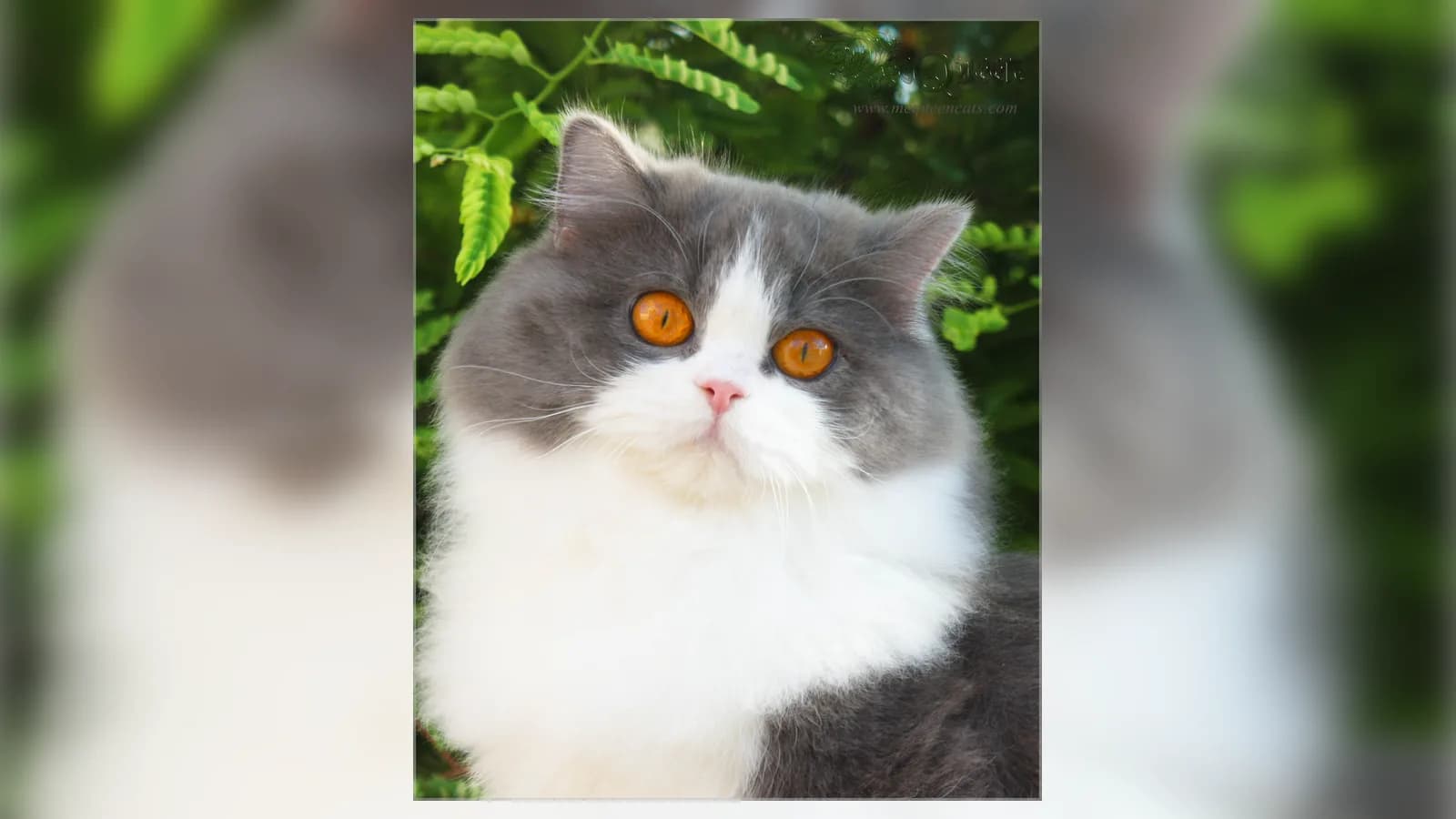
British Longhair guide
British Longhair Colors: The Six Families, As the Registry Actually Files Them
Every British Longhair color, organized the way the registry actually files them: six GCCF families, eleven named Self varieties, the golden and silver tipped split, and the smokes.
Read
The floor belongs to our members. Keep it kind, links are not allowed, and images go through moderation before anyone else sees them.