

Kitten Insurance: The Weeks That Decide Everything
When cover can start, why an empty medical file is the whole value, what the free-weeks gift policies really are, and the waiting periods to plan around.

Published August 26, 2026Updated September 8, 2026 4 min read
Contents
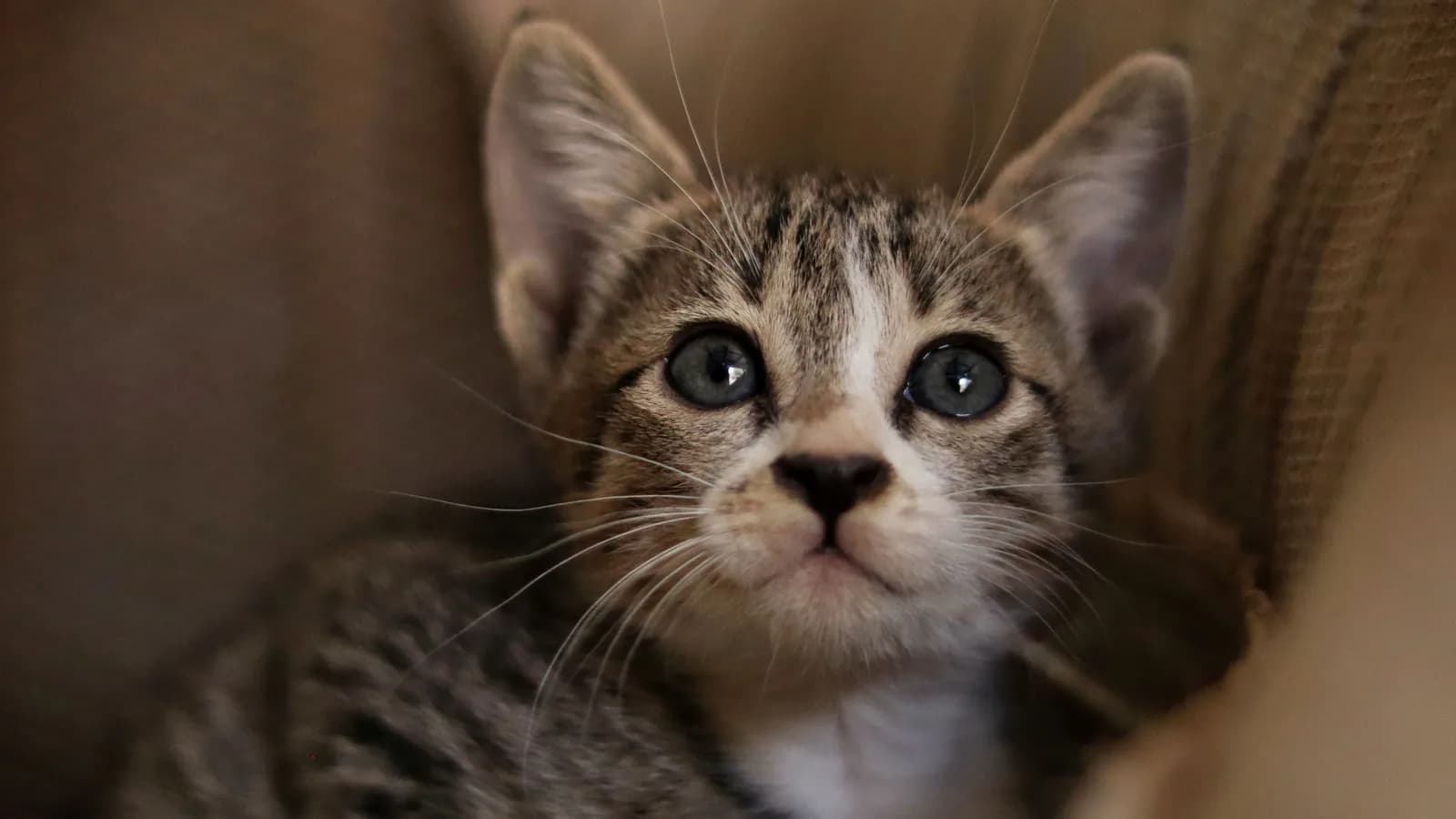
Insurance is at its cheapest, and its logic at its cleanest, in the one stretch of a cat's life when nothing has gone wrong yet. A kitten's medical file is empty, and an empty file is the whole product: everything that happens after the policy starts is coverable, nothing can be called pre-existing. This page covers the kitten-specific part; the full machinery, policy types, real prices per country, the honest worth-it arithmetic, lives in our cat insurance guide.
When cover can start
Enrollment typically opens at 6 to 8 weeks, 8 weeks for 's UK policies, "6 to 8 weeks of age" in the US regulator's consumer guidance, which is to say: at almost exactly the age a kitten comes home. That timing is not a coincidence, and it is the point of the whole page: the earlier the start date, the shorter the list of things that ever existed before it.
Why insure an animal this healthy?
Because this is the only moment you can buy cover on everything. The UK's three big cat charities give the same advice in near-identical words: Cats Protection, "the best time to take out pet insurance is when they are young and healthy"; , "take out pet insurance as soon as possible"; Blue Cross, enroll "when they are young and have no pre-existing conditions". The US regulators' model rules explain the mechanism from the other side: enrollment-age rules exist to guard against insuring an animal only once it is already sick.
And kittens do claim. In PetSure's Australian claims data, gastrointestinal trouble skews young: swallowed string, elastic, toy parts, the classic kitten emergency, with ingestion claims averaging around AU$3,000 and single cases far higher. A kitten's talent for eating the wrong thing is precisely the risk profile accident-and-illness cover was built for. So is the illness side: FIP, the disease that mostly strikes cats under a year and a half, is now treatable, on a weeks-long course whose bill is exactly what a policy exists to absorb.
What it costs
The youngest band is the cheapest the policy will ever be. In MoneySuperMarket's July 2026 UK sample, kitten cover averaged £5.39 a month, from £3.17, against £11.77 for a cat over seven. In the US there is no published kitten-specific industry average, so we will not invent one; the industry-wide accident-and-illness average, $435 a year across all ages in 2025, works as a ceiling, with young cats quoting below it. Two structural notes from the pillar apply doubly here: the premium will rise with age whatever you do, and the cheap kitten quote is the entry price of a lifetime relationship, not the lifetime price.
The free-weeks policies: nice gift, real deadline
Many kittens arrive with insurance already on them. Blue Cross rehomes its cats with four weeks of free Petplan cover; UK breeders commonly send kittens home with a few free weeks arranged through the registries' schemes; shelters in several markets do the same.
Take the gift, and treat its end date as a real deadline: the useful move is to have the follow-on policy start the day the free cover ends, with no gap. Which? notes some UK insurers will waive the illness for a switcher arriving without a gap in cover, which makes continuity worth more than any single week of free premium. And one Australian oddity worth knowing: under the add-on insurance rules, a seller cannot sell you pet insurance in the four days after selling you the pet, a cooling-off gap designed so the insurance decision is made calmly, not at the till.
Waiting periods: the clock that starts at enrollment
Every new policy has a stretch during which newly appearing conditions are not yet covered, and it is the second argument for enrolling early, while the kitten is demonstrably healthy. Whose rule is whose:
| Rule | Illness | Accident | Whose rule it is |
|---|---|---|---|
| UK market convention | commonly 10 to 14 days | often shorter or none | Which?'s market description |
| US model act states | capped at 30 days | waiting periods prohibited | the NAIC model act, law in a minority of states |
| Trupanion (North America) | 30 days | 5 days | that insurer's product; waivable via its exam-day offers |
| Lemonade (US) | 14 days | orthopedic 30 days | that insurer's product |
What no policy covers, at any age: the routine layer. Vaccinations, spay/neuter, parasite prevention are excluded as routine care or sold as wellness add-ons, which US model rules forbid marketing as insurance. Our vaccination guide covers that first-year schedule and its real costs; budget it as its own line, because the policy will not.
What to take away
- Most insurers take kittens from 6 to 8 weeks, about the age a kitten sensibly comes home.
- The young-cat risk profile is real: gastrointestinal claims (string, elastic, toy parts) skew young, and FIP, the disease that mostly strikes cats under a year and a half, is now treatable at exactly the kind of bill insurance exists for.
- Vaccinations, spaying and routine care are not covered anywhere; wellness add-ons sell them back separately.
- Free breeder or shelter insurance has one job: note its end date and continue with zero gap, because an unbroken history keeps conditions coverable and can waive a new .
- The UK's July 2026 kitten average was £5.39 a month (from £3.17); young cats everywhere quote below the all-ages averages, and the premium curve only ever climbs.
 The vet's take

Veterinary review
Are you a vet?
Your professional read belongs here: every verified practitioner can leave a note, published once our editors have reviewed it.
Sign in and get your license number verified. We check it in the public register, we never ask for or keep a copy of your diploma, and your number is never published.
Frequently asked questions
How early can I insure a kitten?
From 6 to 8 weeks with most insurers, which is around the age a kitten legally and sensibly comes home. Earlier weeks are the breeder's or shelter's to cover, and often are, through free-weeks schemes.
Is kitten insurance worth it for an indoor kitten?
Indoor walls stop cars, not swallowed string or illness, and gastrointestinal claims skew young; FIP, the disease that mostly strikes cats under a year and a half, now has a treatment whose bill is exactly what insurance exists for. The fuller indoor answer, with the claims data behind it, is in our cat insurance guide.
Does kitten insurance cover vaccinations and spaying?
No. Those are routine care, excluded from insurance proper everywhere we looked; wellness add-ons sell them back separately. The first-year veterinary calendar is its own budget line.
My kitten came with free insurance. What should I do?
Note the exact end date, decide before it, and if you continue with any insurer, aim for a start date with zero gap: an unbroken insurance history is what keeps conditions coverable and can even waive the new waiting period with some UK insurers.
How much is kitten insurance a month?
£5.39 on average in a July 2026 UK comparison sample, from £3.17. No US kitten-specific average is published; young cats quote below the $435-a-year all-ages US average. The number to watch is not this year's premium but the curve it sits on, which only ever climbs.
 Community questions
Got a question this page doesn't cover? Ask it: the best ones get published here with their answer.
This is information, not veterinary advice, and it cannot tell you what is wrong with your cat. Our rule is a simple one: if something is wrong with your cat, call your vet, and call an emergency clinic if it is out of hours. Nothing you read here is a reason to wait.
Medical information applies to every reader. Prices, legal duties and common practice do not: unless stated otherwise, they are given for the United States, and they differ in the UK, Canada and Australia, and often between states or provinces. Check with your own vet and your own local authority.
Our sources
- PDSA, pet insurance for older dogs and cats (insurable from 8 weeks on its policies)
- South Carolina Department of Insurance, is pet insurance worth it (typical enrollment from 6 to 8 weeks)
- Cats Protection, choosing cat insurance (insure young and healthy)
- PDSA, pet insurance guide (take out insurance as soon as possible)
- Blue Cross, pet insurance advice (enroll young; four weeks of free Petplan cover on adoption)
- NAIC, a regulator's guide to pet insurance (enrollment-age rules guard against adverse selection)
- NAIC Pet Insurance Model Act (the 30-day illness cap and the accident waiting-period prohibition, in adopting states)
- PetSure, Pet Health Monitor (gastrointestinal claims skew toward kittens, Australian claims data)
- PetSure, most expensive pet health conditions (ingestion of toxins and foreign bodies, average claims)
- MoneySuperMarket, how much does pet insurance cost, July 2026 (the kitten premium sample)
- NAPHIA State of the Industry Report 2026, highlights (the US all-ages premium averages)
- Which?, pet insurance explained (waiting periods, and waivers for switchers with no gap in cover)
- Trupanion, how pet insurance works (its 5 and 30 day waiting periods and exam-day waivers, its own product)
- Lemonade, pet insurance (its 14 and 30 day waiting periods, its own product)
- ASIC Moneysmart, pet insurance (the four-day deferred-sales rule for insurance sold with a pet; page as archived July 2026)
- GCCF, kitten insurance for breeders (the free-weeks schemes on pedigree kittens)

Worth keeping a paw on
Pin this guide
So you can find it the day you need it, and share it with someone whose cat does the same thing. One click and it sits in your board.
Pin it on PinterestAlso worth reading
All health →
Article
Hyperthyroidism in Cats: The Overactive Thyroid, Explained With Real Numbers
The overactive thyroid is the most common hormone disease of older cats. The signs, the four treatments with their real numbers, and the kidney question.
Read
Article
Kidney Disease in Cats: The Stages, the Signs, and the Numbers Behind Them
What CKD is, the IRIS stages with their actual boundaries, the measured survival numbers behind renal diets, and where the famous 30-40% figure comes from.
Read
Article
HCM in Cats: The Silent Heart Disease, Staged and Explained
The most common heart disease of cats is usually silent. The ACVIM stages in plain words, the breathing rate to count at home, and what the studies measured.
Read
The floor belongs to our members. Keep it kind, links are not allowed, and images go through moderation before anyone else sees them.