

Can Cats Eat Peanut Butter? What the Evidence Actually Says
The xylitol answer for cats is not the dog answer, and the difference is one small study. What is actually known, what is not, and why the texture is the real risk.
Published August 25, 2026Updated September 8, 2026 5 min read
Contents
Short answer: a small lick of plain, unsalted, xylitol-free peanut butter is very unlikely to harm a cat, and there is still no good reason to give it any.
The long answer is more useful, because the reasons people worry about peanut butter and the reasons it is actually a bad idea are not the same reasons.
Xylitol: the cat answer is not the dog answer
This is the part everyone gets from a dog page, and it deserves care.
In dogs, xylitol is well documented and genuinely dangerous. It triggers a surge of insulin, the blood sugar crashes, and liver damage can follow. That is not in doubt.
In cats, the picture is different, and thinner. One published dosing study exists. Six healthy middle-aged cats were given xylitol by mouth at 100, 500 and 1,000 mg per kg of body weight, doses that are lethal in dogs. The researchers measured blood counts, biochemistry, liver enzymes and blood glucose before and at 6, 24 and 72 hours. They found no significant changes, and concluded xylitol did not induce toxic effects in cats.
Read that as what it is. It is six cats. They were healthy adults. They got a single dose and were watched for three days. It says nothing about a cat eating xylitol repeatedly, nothing about kittens, and nothing about a cat with diabetes or liver disease. And no study has explained why dogs and cats differ, which means nobody can tell you the mechanism that would make the finding generalise.
The two poison authorities have not landed in the same place either. The 's position is that cats are not negatively affected. Pet Poison Helpline remains more cautious. That is not a contradiction to be arbitrated here: it is a small evidence base, read conservatively by one body and less so by another.
So the practical answer does not change. Do not give a cat a xylitol-sweetened product, and if one eats some, call your vet or a poison line rather than reading a page. Not because we know it is dangerous to cats, but because nobody has shown that it is not, in any cat that is not a healthy adult on a single dose.
The label word to look for, market by market
This matters because sugar-free, keto and "natural" peanut butters are exactly where xylitol turns up, and it does not always say xylitol.
| Market | What appears on the label |
|---|---|
| United States | May be listed as birch sugar or wood sugar |
| United Kingdom and EU | Must appear as xylitol or E967, with a laxative warning above 10 percent |
| Canada | Must be named, though no laxative-threshold rule was confirmed |
| Australia | Appears as additive number 967 |
If you cannot read the ingredients, treat the jar as if it contains xylitol.
The risks that are real, and the ones that are not
Not established: fat and pancreatitis. In dogs, a fatty meal is a recognized trigger for pancreatitis. In cats it is not the same story. More than 95 percent of feline pancreatitis has no identified cause at all, and dietary fat is a much weaker factor in cats than in dogs. No source we found ties a single fatty treat to pancreatitis in a cat.
Overstated: salt. A tablespoon of salted peanut butter contains a meaningful slice of a cat's whole daily sodium allowance, so it is not nothing if it becomes a habit. It is roughly fifty times below the amount associated with salt toxicosis. Worth avoiding, not worth panicking about.
Real, and the actual reason to say no: the texture. Peanut butter is dense and sticky, and a cat has a small mouth, teeth built for shearing rather than grinding, and comparatively little saliva. A spoonful is a genuine choking and gagging hazard, and that risk does not depend on any ingredient at all.
Real but managed: aflatoxin. Peanuts can carry a mould toxin, which is regulated in all four markets and controlled by manufacturers. It is a background risk, not something a single spoonful triggers.
Not documented: peanut allergy in cats. We looked. It does not appear in the veterinary literature we could reach.
The thing they cannot even taste
Cats have no working sweet-taste receptor. The gene is broken, and the same break is found in tigers and cheetahs, so it predates domestication entirely.
Whatever your cat finds interesting about peanut butter, it is the fat and the salt. It is not the flavor you are enjoying. There is more on this in what a cat's tongue can actually taste.
The real reason people ask: hiding a pill
This is the practical question underneath the search, and it deserves a straight answer.
Peanut butter works for hiding a pill in a dog. A cat is the wrong animal for it: the texture is a hazard, cats are unimpressed by the taste, and a cat that detects a pill in something once will refuse that thing forever afterwards.
What is actually used instead:
- A small amount of a strongly smelling wet food the cat is not otherwise fed, so a refusal does not poison its opinion of dinner.
- A purpose-made pill treat that wraps the tablet.
- Your vet's own technique, which is worth asking for and takes two minutes to be shown.
⚠️ Two things not to do. Do not crush a pill without asking, because some are coated to release slowly and crushing changes the dose. And do not assume every medicine can be given with food at all: some cannot.
What to take away
- The xylitol evidence in cats is one study of six healthy adults on a single dose. It found no toxic effect. It does not make xylitol safe for cats, and we are not going to say it does.
- Keep xylitol-sweetened products away from your cat regardless, and call a vet if one is eaten.
- Look for birch sugar in the US, E967 in the UK and EU, additive 967 in Australia.
- Fat and pancreatitis is a dog story transferred to cats without evidence.
- The texture is the real hazard, and it applies to every jar.
- Cats cannot taste sweetness at all.
- For hiding a pill, use wet food or a pill treat, and ask your vet to show you.
 The vet's take
Veterinary review
Are you a vet?
Your professional read belongs here: every verified practitioner can leave a note, published once our editors have reviewed it.
Sign in and get your license number verified. We check it in the public register, we never ask for or keep a copy of your diploma, and your number is never published.
Frequently asked questions
Is peanut butter toxic to cats?
Plain, unsalted, xylitol-free peanut butter is not toxic, but it is a poor idea: the sticky texture is a choking hazard for an animal with a small mouth, and a cat gets nothing nutritionally from it.
Is xylitol dangerous for cats like it is for dogs?
The evidence is different and much thinner. The one published dosing study gave six healthy cats xylitol at levels that are lethal to dogs and found no toxic effect. That is six cats, healthy adults, a single dose, watched for 72 hours. It tells you nothing about repeated exposure, kittens, or a cat with diabetes or liver disease, and no one has explained why dogs and cats would differ. Keep xylitol products away from your cat, and call your vet if one is eaten.
Can I use peanut butter to give my cat a pill?
No. It works for dogs, not cats: the texture is a hazard, cats do not find it rewarding, and a cat that catches you once will refuse it forever. Use a small amount of a strong-smelling wet food it is not usually given, or a purpose-made pill treat, and ask your vet to show you their method.
How much peanut butter is too much for a cat?
Any amount given deliberately and regularly is too much, because there is no benefit to weigh against the choking risk and the calories. A single stolen lick is very unlikely to cause harm.
Can peanut butter cause pancreatitis in cats?
That link is transferred from dogs, where a fatty meal is a recognized trigger. In cats, more than 95 percent of pancreatitis has no identified cause, and no source we found ties a single fatty treat to it.
Do cats even like peanut butter?
Not for the reason you do. Cats have no working sweet-taste receptor, a break in the gene shared with tigers and cheetahs. Any interest is in the fat and the salt.
 Community questions
Got a question this page doesn't cover? Ask it: the best ones get published here with their answer.
This is information, not veterinary advice, and it cannot tell you what is wrong with your cat. Our rule is a simple one: if something is wrong with your cat, call your vet, and call an emergency clinic if it is out of hours. Nothing you read here is a reason to wait.
Medical information applies to every reader. Prices, legal duties and common practice do not: unless stated otherwise, they are given for the United States, and they differ in the UK, Canada and Australia, and often between states or provinces. Check with your own vet and your own local authority.
Our sources
- Jerzsele et al 2018, effects of p.o. administered xylitol in cats (six cats at 100, 500 and 1,000 mg/kg), J Vet Pharmacol Ther 41(3)
- ASPCA Animal Poison Control, xylitol and pets
- Pet Poison Helpline, xylitol
- Merck Veterinary Manual, pancreatitis in cats (more than 95 percent idiopathic)
- USDA FoodData Central, peanut butter, smooth style, with salt (fat, sodium and calorie figures)
- FSANZ, food standards code schedule of permitted additives (xylitol as additive 967 in Australia)
- Guilford, Jones 2010, food allergy in the cat: a diagnosis by elimination (no documented peanut reaction)

Worth keeping a paw on
Pin this guide
So you can find it the day you need it, and share it with someone whose cat does the same thing. One click and it sits in your board.
Pin it on PinterestAlso worth reading
All cat food →
Article
Can Cats Eat Chocolate? No, and the Honest Version Has Numbers
No amount is a treat, and the dose science is mostly dog-derived: we say which numbers are solid, work the math for a 10 lb cat, and list who to call.
Read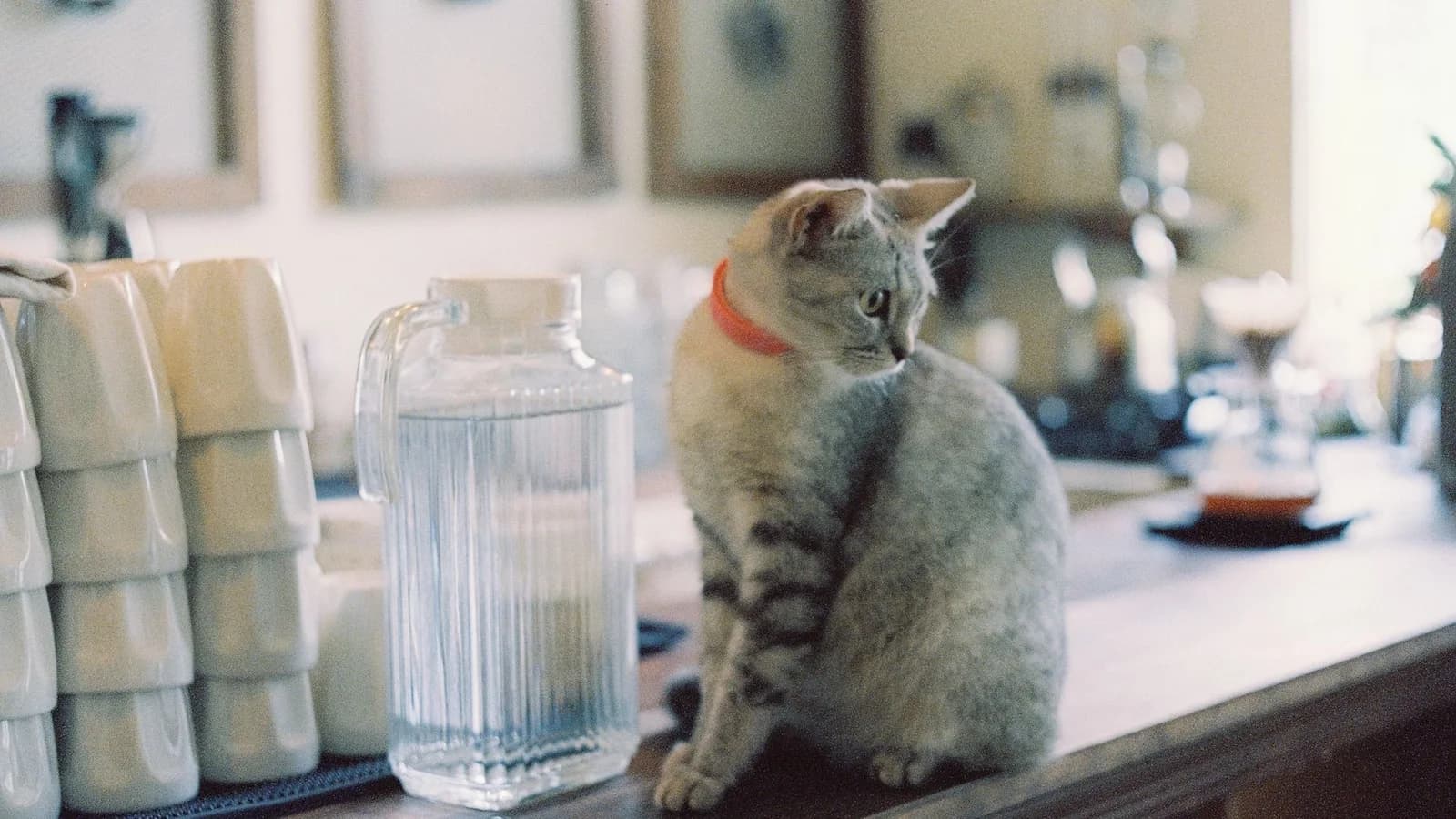
Article
Can Cats Eat Eggs? Yes, and Here Is Exactly How Much
Plain cooked egg is a safe treat for most healthy cats. The portion nobody publishes: about a tablespoon for a 10 lb cat, and here is the arithmetic behind it.
Read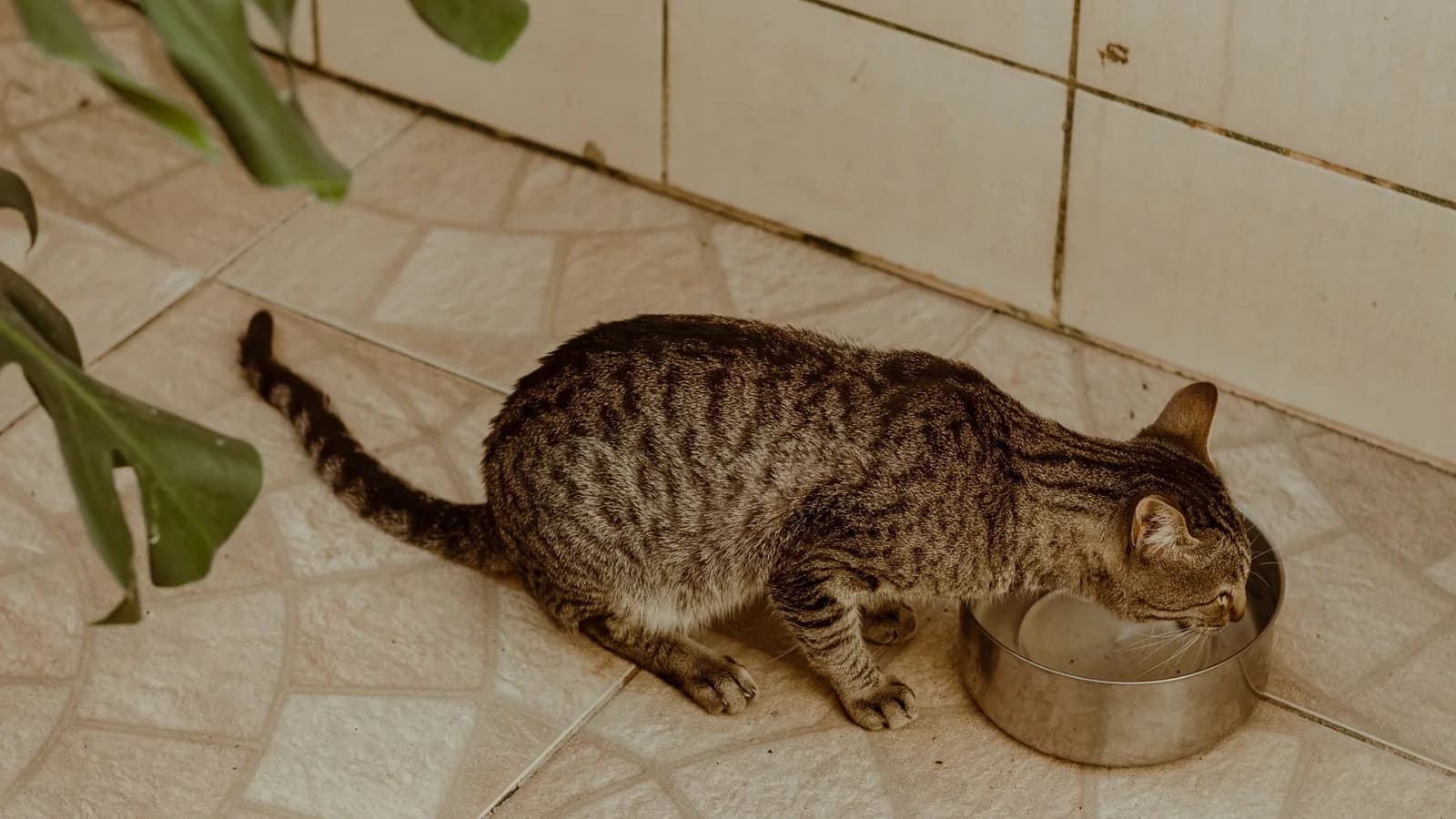
Article
Can Cats Drink Milk? The Honest Answer
Kittens are not lactose intolerant, adults mostly become so, and nobody can tell you what proportion. What is actually measured, and what everyone invents.
Read
The floor belongs to our members. Keep it kind, links are not allowed, and images go through moderation before anyone else sees them.