

Can Cats Drink Milk? The Honest Answer
Kittens are not lactose intolerant, adults mostly become so, and nobody can tell you what proportion. What is actually measured, and what everyone invents.
Published August 25, 2026Updated September 8, 2026 5 min read
Contents
The saucer of milk is the oldest image in cat ownership, and it is mostly wrong. But not for the reason you have been told, and the correction is more interesting than the myth.
Kittens are not lactose intolerant
Start here, because almost every page gets it backwards.
A nursing kitten produces plenty of lactase, the enzyme that splits milk sugar into pieces the gut can absorb. It has to: its mother's milk carries a real lactose load, roughly 4 grams per 100 mL. Cat milk is not lactose-free.
What changes is that lactase production switches off as solid food arrives. It tracks weaning, not a birthday. Supplementary feeding starts at around two and a half to four weeks and full weaning lands around eight to ten weeks, and the enzyme falls away across that window.
After that, milk sugar arrives in the colon undigested. Resident bacteria ferment it, the fermentation pulls water into the gut and produces gas, and the result, typically within 8 to 12 hours, is loose stool, wind, and sometimes vomiting.
How many cats? Nobody knows, and that is the finding
Every page you read will give you a percentage. Ours will not, and here is why.
Every institution we checked says "most" cats develop some degree of lactose intolerance. Not one of them publishes a number. Cats Protection states outright that there are conflicting estimates. A figure of 65 percent circulates widely, attributed to Cornell, and Cornell's own current page says only that many cats are lactose intolerant, with no percentage anywhere on it. Numbers from 30 to over 70 percent appear across the web with no consistent study behind any of them.
So the honest sentence is that most adult cats lose the ability to digest milk sugar to some degree, that the degree varies a lot between individuals, and that anyone quoting you a percentage is quoting a number with nothing behind it.
It depends enormously on which dairy
This is where a blanket yes or no stops being useful, because the lactose load is not the same across the shelf.
| Product | Lactose |
|---|---|
| Whole cow's milk | About 5 g per 100 g |
| Cheddar | About 0.09 percent |
| Parmesan | About 0.05 percent |
| Mozzarella, Swiss | None detected |
| Lactose-free milk | Lactose already split |
Which explains something owners notice: a cat that gets an upset stomach from a saucer of milk often handles a scrap of hard cheese without trouble. That is not the cat being inconsistent. Hard cheeses lose almost all their lactose in the making.
None of which makes cheese a good idea, because the fat and salt arrive instead. It just means the lactose objection does not apply to it.
The cat milk sold in shops
Those small cartons are, generally, lactose-reduced cow's milk. They work as advertised on the lactose problem.
What they do not do is stop being calories. A cat that gets one daily is getting a meaningful share of its day's energy in liquid form, on top of its food, and that is how cats gain weight without anyone noticing.
⚠️ The part where being wrong kills a kitten
If you are hand-rearing an orphaned kitten, or have found one:
Cow's milk is not adequate and can be dangerous. It has the wrong balance of protein, fat and sugar for a kitten, and feeding it instead of a proper kitten milk replacer is a documented way to harm an animal that had a chance.
What is needed is a kitten milk replacer, sold by vets and pet shops. And two rules that come with it:
- A cold kitten must never be fed. Warm it first, against your body, slowly. Feeding a chilled kitten can kill it.
- A kitten too young to eat solid food needs a vet or a rescue, not a home remedy and not a page on the internet. Call one today, not tomorrow.
Anything that worries you about a kitten is a reason to call your vet, and out of hours, an emergency clinic. Nothing here is ever a reason to wait.
Plant milks
Almond, oat, soy and coconut all remove the lactose problem and add their own.
They bring sugar and fat a cat has no use for, and sweetened versions can carry sweeteners you do not want anywhere near a pet bowl. On xylitol specifically, the evidence in cats is thin and sits on a single small study, which is covered properly on our peanut butter page.
There is no nutritional case for any of them. A cat is an obligate carnivore, and plant milk is sugar water with the fibre removed.
The question underneath: your cat is not drinking enough
People do not offer milk because they think cats need dairy. They offer it because the cat drinks it, and does not seem to drink water.
That instinct is right about the problem and wrong about the fix.
Cats descend from desert animals and have a low thirst drive: they are built to take most of their water from prey. A cat on dry food alone is running a water deficit that it does not correct by drinking, which matters over a lifetime for the kidneys and the bladder.
What actually helps:
- Wet food. This is the big one, and it is not marketing: a wet diet genuinely raises total water intake, confirmed in a controlled crossover study and a 2025 review of 32 studies.
- More water bowls, in more places, away from the food and away from the litter tray.
- Wide, shallow bowls, if your cat prefers them. A measured preference exists, though the "whisker fatigue" story sold alongside them does not hold up: we covered that on the whiskers page.
- Fountains, maybe. Cats often like them. The evidence that they increase actual water intake is weak, and we are not going to tell you otherwise.
What to take away
- Kittens digest milk fine. Adults mostly lose the enzyme as they wean.
- Nobody has a defensible figure for how many. Anyone quoting one is quoting nothing.
- Hard cheese is nearly lactose-free; whole milk is not. The lactose objection is product-specific.
- Shop-bought cat milk solves lactose and adds calories.
- Cow's milk for an orphaned kitten is dangerous. Use a kitten milk replacer, never feed a cold kitten, and call a vet or a rescue.
- The real problem is usually water intake, and the real fix is wet food.
 The vet's take
Veterinary review
Are you a vet?
Your professional read belongs here: every verified practitioner can leave a note, published once our editors have reviewed it.
Sign in and get your license number verified. We check it in the public register, we never ask for or keep a copy of your diploma, and your number is never published.
Frequently asked questions
Can cats drink cow's milk?
Most adult cats should not. Lactase production switches off around weaning, so milk sugar reaches the colon undigested, ferments, and produces loose stool, gas and sometimes vomiting, typically within 8 to 12 hours. Kittens still nursing digest milk perfectly well.
What percentage of cats are lactose intolerant?
Nobody knows. Every institution says "most" and none publishes a number. The widely repeated 65 percent is attributed to Cornell, whose own current page gives no percentage at all. Treat any figure you see as unsourced.
Can cats eat cheese?
The lactose objection largely does not apply: cheddar is about 0.09 percent lactose, parmesan about 0.05, and none was detected in mozzarella or Swiss. What arrives instead is fat and salt, so a scrap occasionally is not a lactose problem but is still not a good habit.
Is cat milk from the supermarket safe?
Generally yes, it is lactose-reduced cow's milk and it does solve the lactose problem. It is still calories on top of a complete diet, and a daily carton is a common and invisible route to a fat cat.
What do I feed an orphaned kitten?
A kitten milk replacer from a vet or pet shop, never cow's milk, which has the wrong balance of protein, fat and sugar. Warm a cold kitten before feeding it, because feeding a chilled kitten can kill it, and contact a vet or a rescue the same day.
Can cats drink almond or oat milk?
There is no reason to give them any. They remove the lactose problem and add sugar and fat a carnivore has no use for, and sweetened versions can contain sweeteners you would not choose for a pet.
How do I get my cat to drink more water?
Wet food is the intervention with the best evidence behind it. Beyond that: more bowls, in more places, away from food and the litter tray. Fountains are often popular with cats and the evidence that they raise actual intake is weak.
 Community questions
Got a question this page doesn't cover? Ask it: the best ones get published here with their answer.
This is information, not veterinary advice, and it cannot tell you what is wrong with your cat. Our rule is a simple one: if something is wrong with your cat, call your vet, and call an emergency clinic if it is out of hours. Nothing you read here is a reason to wait.
Medical information applies to every reader. Prices, legal duties and common practice do not: unless stated otherwise, they are given for the United States, and they differ in the UK, Canada and Australia, and often between states or provinces. Check with your own vet and your own local authority.
Our sources
- Zottmann et al 1998, investigations on milk composition and milk yield in queens (the lactose load of cat milk), J Nutr 128(12)
- Ahmed et al 2023, measurement of carbohydrates and organic acids in varieties of cheese by HPLC (the per-cheese lactose figures), Food Sci Nutr 11(5)
- Robbins et al 2019, quantified water intake in laboratory cats from still, free-falling and circulating water bowls, J Feline Med Surg 21(8)
- Cornell Feline Health Center, feeding your cat (states only that many cats are lactose intolerant, with no percentage)
- Cats Protection, can cats drink milk? (states outright that estimates conflict)
- USDA FoodData Central, milk, whole (the 5 g per 100 g lactose figure)
- Alley Cat Allies, caring for orphaned kittens (kitten milk replacer, and never feed a cold kitten)

Worth keeping a paw on
Pin this guide
So you can find it the day you need it, and share it with someone whose cat does the same thing. One click and it sits in your board.
Pin it on PinterestAlso worth reading
All cat food →
Article
How Much to Feed a Cat: The Actual Math, Not the Bag's Guess
The two veterinary formulas with a worked example, the body condition check you can do by feel, and why the bag's feeding guide overfeeds most indoor cats.
Read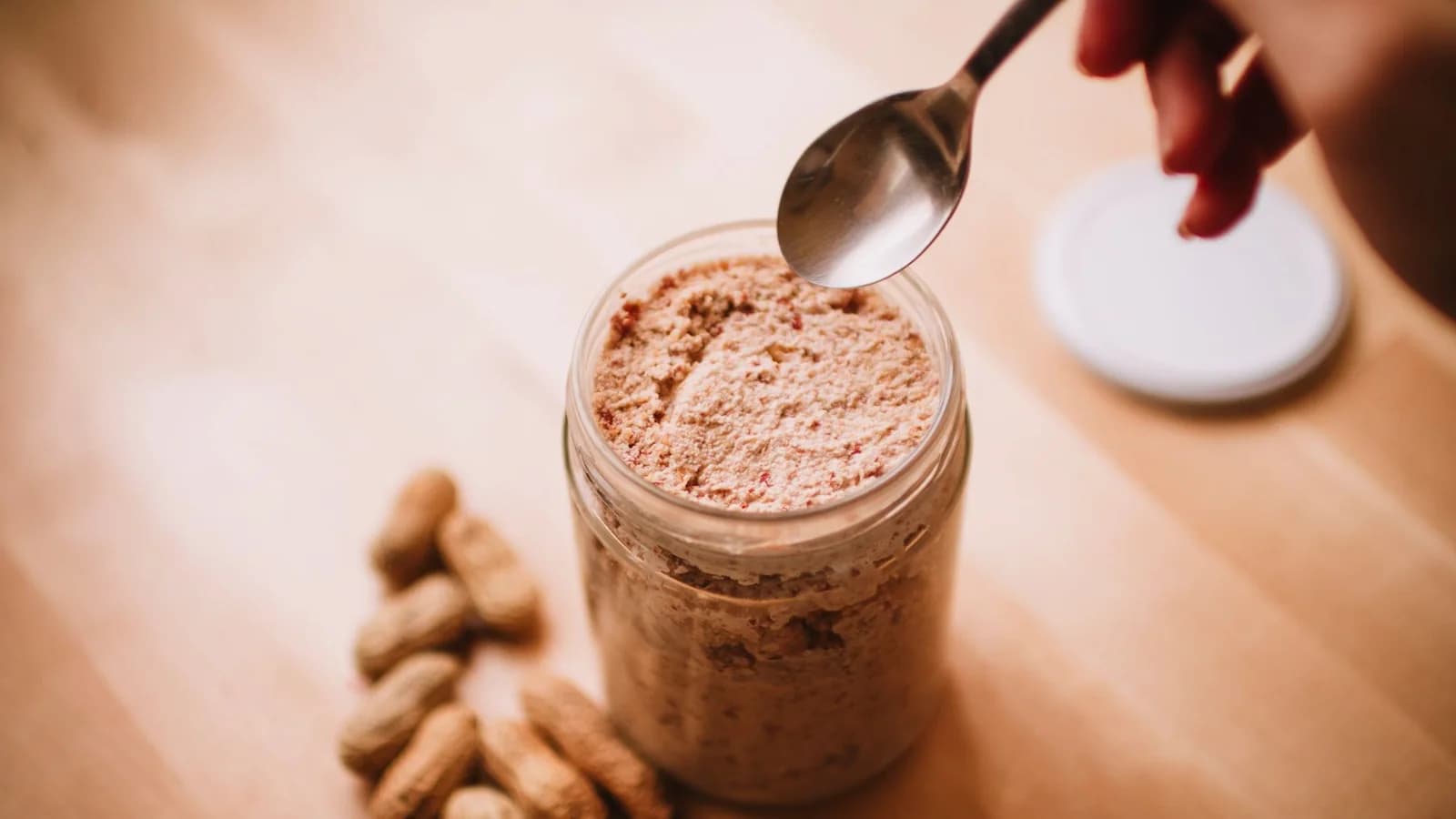
Article
Can Cats Eat Peanut Butter? What the Evidence Actually Says
The xylitol answer for cats is not the dog answer, and the difference is one small study. What is actually known, what is not, and why the texture is the real risk.
Read
Article
Can Cats Eat Chocolate? No, and the Honest Version Has Numbers
No amount is a treat, and the dose science is mostly dog-derived: we say which numbers are solid, work the math for a 10 lb cat, and list who to call.
Read
The floor belongs to our members. Keep it kind, links are not allowed, and images go through moderation before anyone else sees them.