

Norwegian Forest Cat Colors: The Breed That Owns a Color
The only breed on earth with amber, a gene that turns brown kittens honey-gold. Plus the black and orange classics, and what each registry actually excludes.
Published August 21, 2026 3 min read
Contents
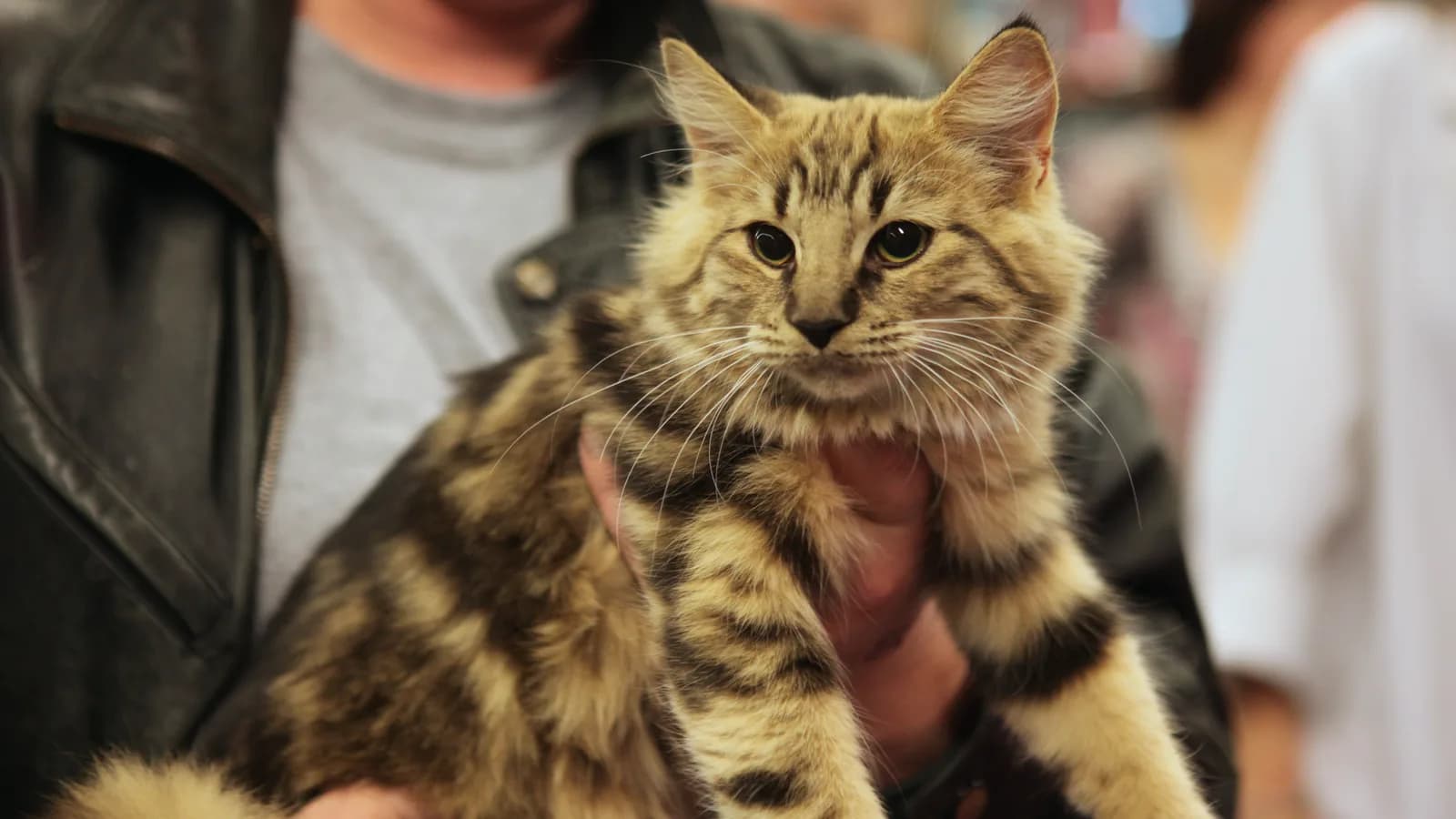
Most breeds share their palette with the whole cat fancy. The Norwegian Forest Cat owns one outright: AMBER, a single identified gene mutation (in MC1R, the same gene family behind red hair in humans) found in no other cat breed on earth. An amber kitten is born looking like an ordinary brown or blue tabby.
It "turns" over its first one to two years, the black pigment retreating into warm honey-gold, keeping only the tail tip and sometimes a dusting along the back. The discovery paper dates to 2009, and Australia's standard gives the richest description of the birth-to-adult change. One near-namesake to keep separate: the Siberian's "sunshine" gold is a DIFFERENT gene (CORIN, confirmed by a 2021 paper). A cousin look with unrelated machinery.
Black and orange: the volume classics
The two most-searched colors are the least complicated. BLACK is admitted everywhere, solid or with white. A black NFC in full winter coat with a white bib is the breed's storybook look. ORANGE (red, in registry language) runs the tabby spectrum from deep rust to cream dilute, usually with white. Neither carries any premium or rarity claim in our research. Neither is restricted by any registry that admits the breed.
What each registry actually excludes
The honest version is registry-by-registry, because they do not agree. 's standard text names no excluded colors at all. admits amber and light amber as named classes with a dozen sub-variants, the richest US list. 's current documents exclude chocolate, lilac, apricot, caramel, cinnamon, fawn and the Siamese pattern (and, our research settled against an older claim, do NOT exclude amber).
Canada's has the narrowest exclusion list (pointed, self-chocolate, self-lilac) and the largest amber taxonomy anywhere. And in Australia is the one registry that explicitly ALLOWS sepia and mink for this breed, the exact patterns a Maine Coon's standard shuts out. The family resemblance across all five: the "impossible" colors are the ones that would signal crossbreeding (chocolate, lilac, pointed). Everything the forest gave the breed is in.
The palette at a glance
 The vet's take
Veterinary review
Are you a vet?
Your professional read belongs here: every verified practitioner can leave a note, published once our editors have reviewed it.
Sign in and get your license number verified. We check it in the public register, we never ask for or keep a copy of your diploma, and your number is never published.
Frequently asked questions
What colors do Norwegian Forest Cats come in?
Nearly everything except the crossbreeding tells: black, white, red, blue, cream, every tabby, tortie and white-marked combination, plus AMBER, the breed's exclusive. Chocolate, lilac and pointed patterns are the common exclusions (exact lists vary by registry).
What is an amber Norwegian Forest Cat?
The breed's own color, found nowhere else: an MC1R gene mutation identified in 2009 that turns a brown-tabby-looking kitten honey-gold over its first one to two years. The Siberian's "sunshine" gold is a different gene entirely.
Can Norwegian Forest Cats be black?
Yes, everywhere: solid black or black with white are classic, unrestricted, and carry no price premium in any market source we read.
Are orange Norwegian Forest Cats rare?
No: red tabby, with or without white, is a staple of the breed, unrestricted at every registry and priced like every other color.
 Community questions
Got a question this page doesn't cover? Ask it: the best ones get published here with their answer.
This is information, not veterinary advice, and it cannot tell you what is wrong with your cat. Our rule is a simple one: if something is wrong with your cat, call your vet, and call an emergency clinic if it is out of hours. Nothing you read here is a reason to wait.
Medical information applies to every reader. Prices, legal duties and common practice do not: unless stated otherwise, they are given for the United States, and they differ in the UK, Canada and Australia, and often between states or provinces. Check with your own vet and your own local authority.
Our sources
- Peterschmitt et al. 2009, the amber MC1R mutation
- TICA Norwegian Forest breed standard
- CFA Norwegian Forest Cat breed standard
- GCCF Norwegian Forest Cat breed page
- CCA-AFC Norwegian Forest Cat standard
- ACF Norwegian Forest Cat standard
- The Little Carnivore on the amber color
- Messybeast, the extension gene and amber

Worth keeping a paw on
Pin this guide
So you can find it the day you need it, and share it with someone whose cat does the same thing. One click and it sits in your board.
Pin it on Pinterest
 Purr or Pass
The cat newsletter
Our verified guides, no spam. Unsubscribe in one click.
More Norwegian Forest Cat guides
The Norwegian Forest Cat profile →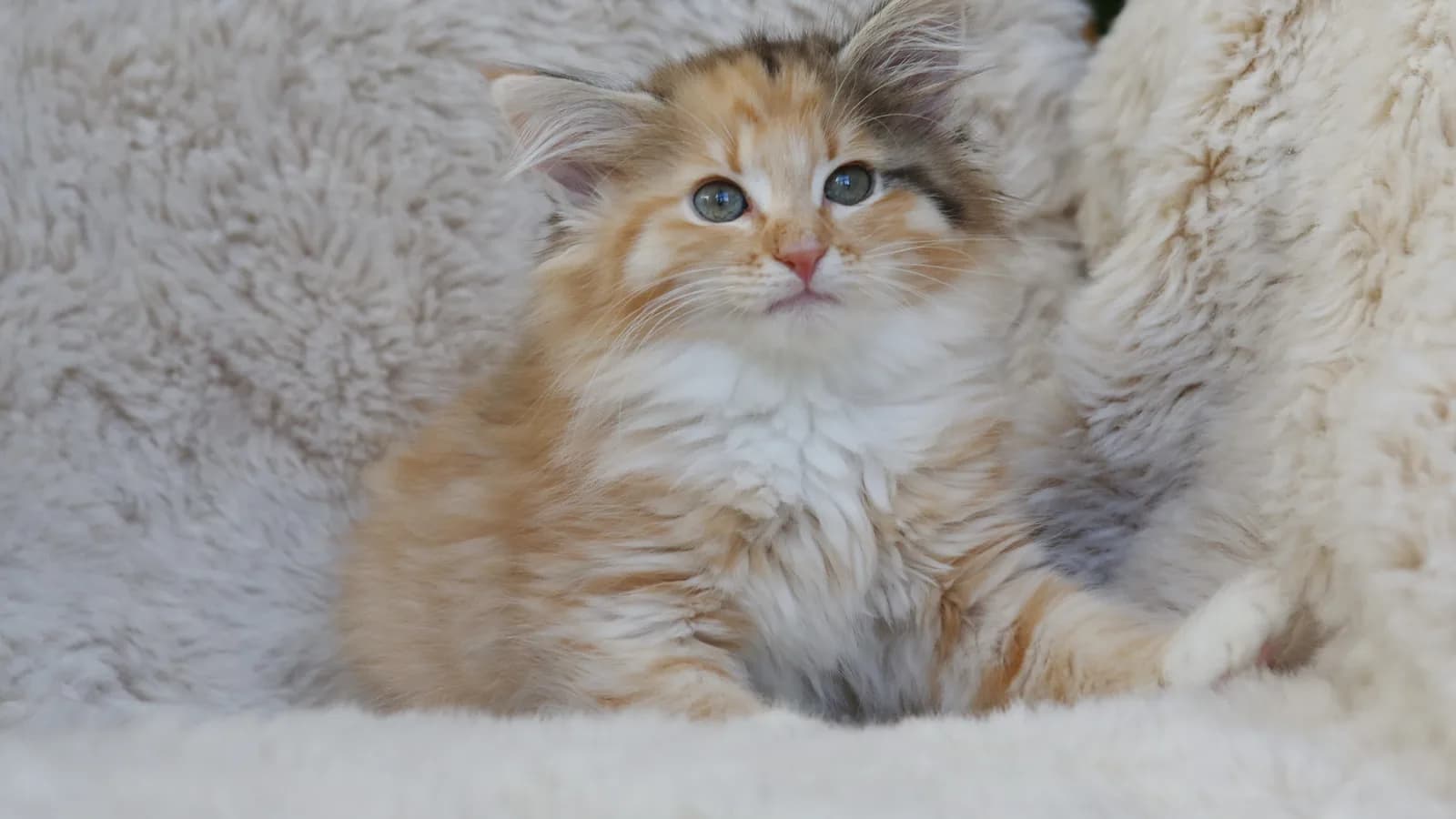
Norwegian Forest Cat guide
Norwegian Forest Cat for Sale: What the Market Actually Publishes
$1,400-2,500 from named US catteries, a UK marketplace where purebred and cross are hard to tell apart, and the single-source truth in Canada and Australia.
Read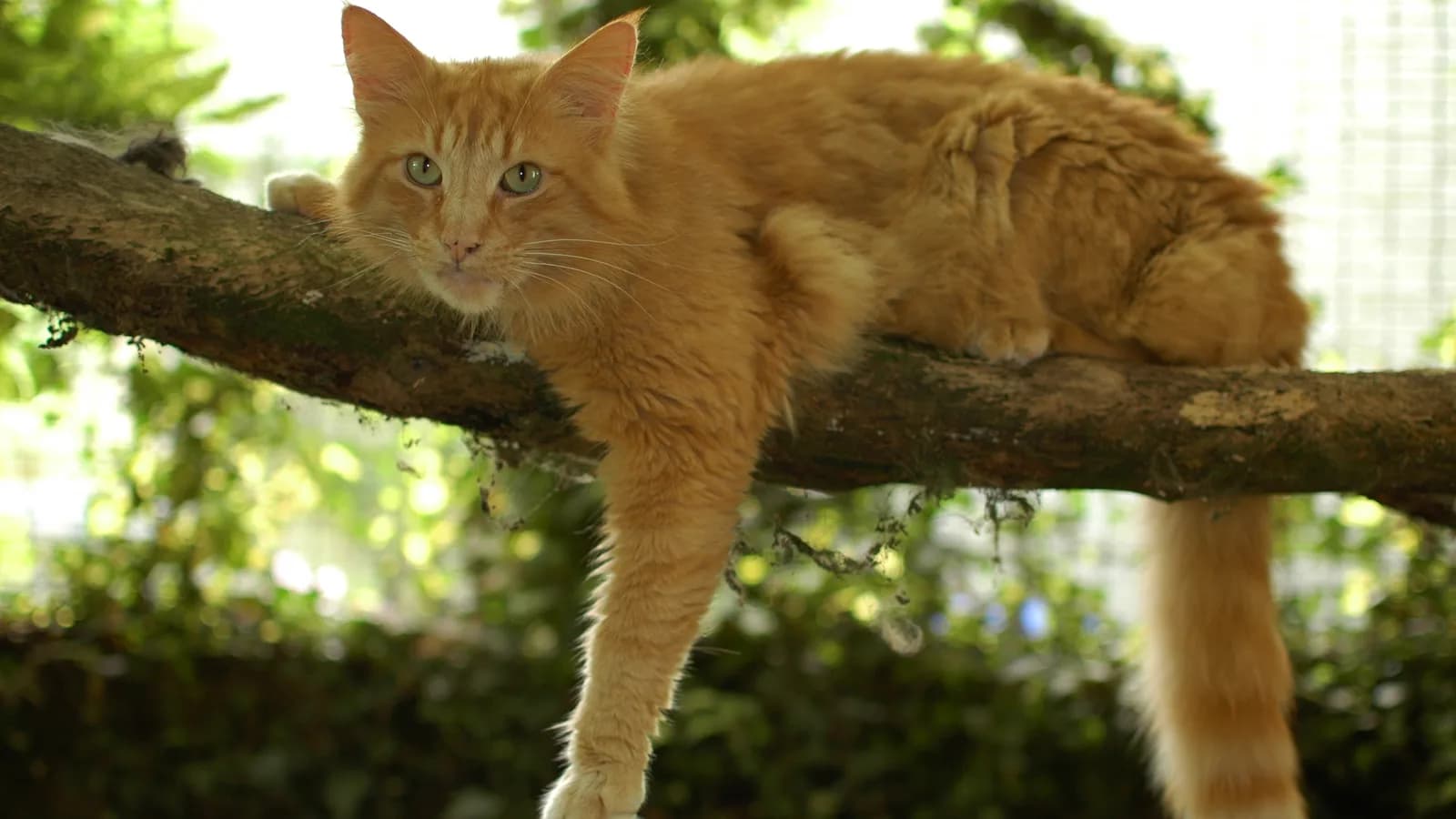
Norwegian Forest Cat guide
Norwegian Forest Cat Size: What the Scale Says When Someone Finally Uses One
One registry, three different weight ranges, none of them a measurement. The two studies that actually weighed the breed tell a leaner story, five years in the making.
Read
Norwegian Forest Cat guide
Norwegian Forest Cat vs Maine Coon: Settled by One Nose
One nose line separates them by their own standards: straight is required here, banned there. The shape mnemonic, the honest weights, and who matures when.
Read
Norwegian Forest Cat guide
Siberian vs Norwegian Forest Cat: The Forest Cats That Divide Europe
Triple coat against double coat, a pointed pattern one standard bans and the other celebrates, and the allergy claim only one registry dares to make.
Read
Norwegian Forest Cat guide
Norwegian Forest Cat Mix: The Honest Checklist
The registry-stated tells (triangle head, almond eyes, double coat, the tail), why most fluffy tabbies are not part Forest Cat, and what a DNA test can honestly say.
Read
Norwegian Forest Cat guide
Are Norwegian Forest Cats Hypoallergenic? No, and We Traced the Myth
No, and the famous "35-40 percent lower Fel d 1" figure has no study behind it: we traced it. The real mechanism, the real consensus, and the only test that counts.
Read
The floor belongs to our members. Keep it kind, links are not allowed, and images go through moderation before anyone else sees them.