

Is My Cat a Khao Manee, or Just a White Cat? The Honest Identification Guide
How to identify a Khao Manee: the three-registry eye-color classes, the 18-month headcap rule most owners never hear about, the deafness facts with honest hedges, and the paperwork truth.

Published August 21, 2026 5 min read
Contents
The internet answers this question with vibes; the registries answer it with two concrete rules almost nobody quotes. Here they are, from three standards we read separately. Plus the deafness facts every white-cat owner actually wants, hedged exactly as hard as the sources hedge them. And the ending is honest: for a cat with no papers, there is a limit to what any checklist can prove.
- Pure white coat: no other color is accepted by any registry
- Eyes in one of FOUR classes: blue, gold, green, or (the signature, not a requirement)
- Under 18 months old? A small color headcap is ALLOWED: all three standards tolerate it until exactly 18 months
- Over 18 months with color anywhere: disqualified from showing as a Khao Manee
- The only definitive identification: registry paperwork tracing to Thai foundation lines
The two rules that actually identify the breed
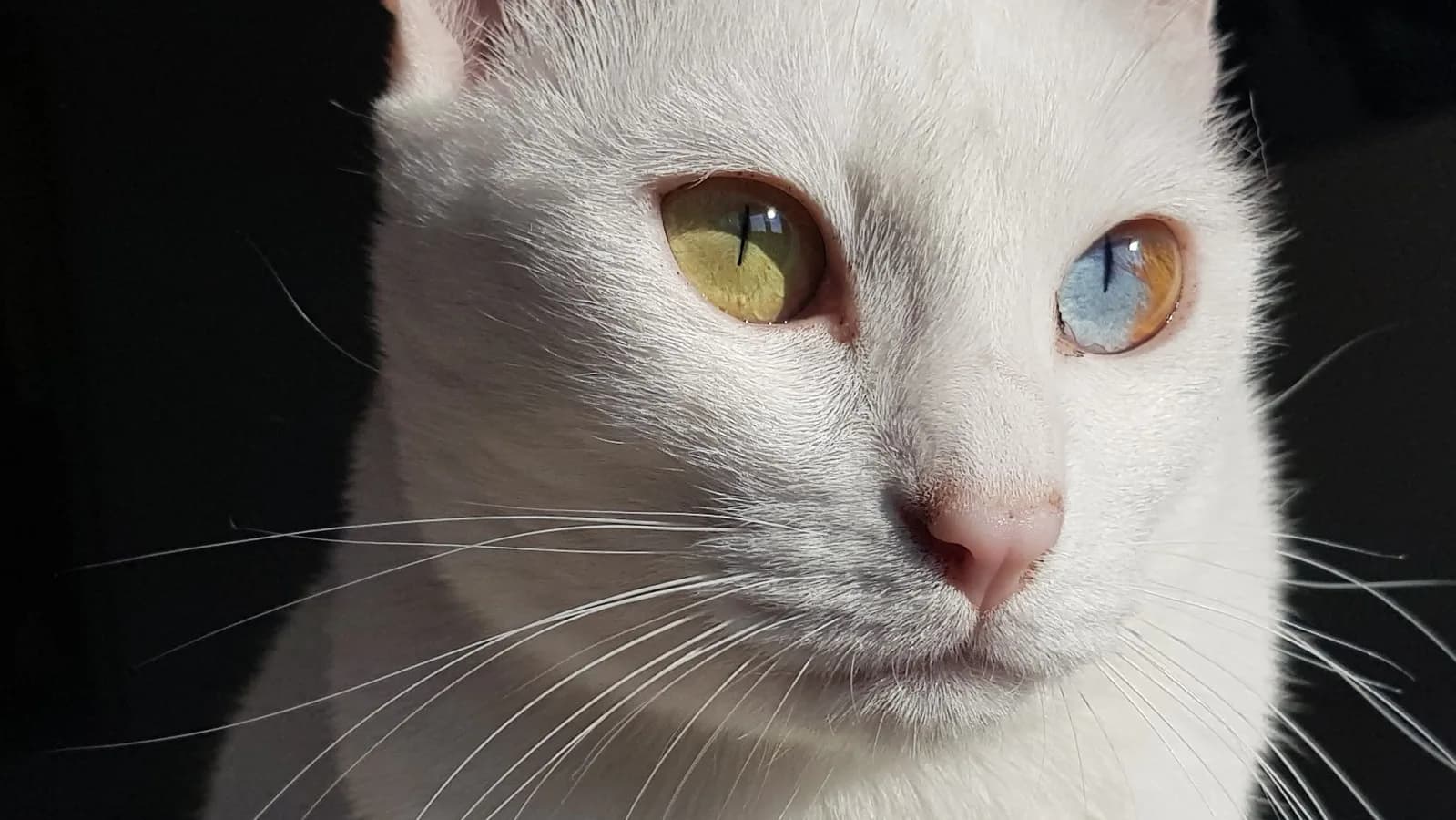
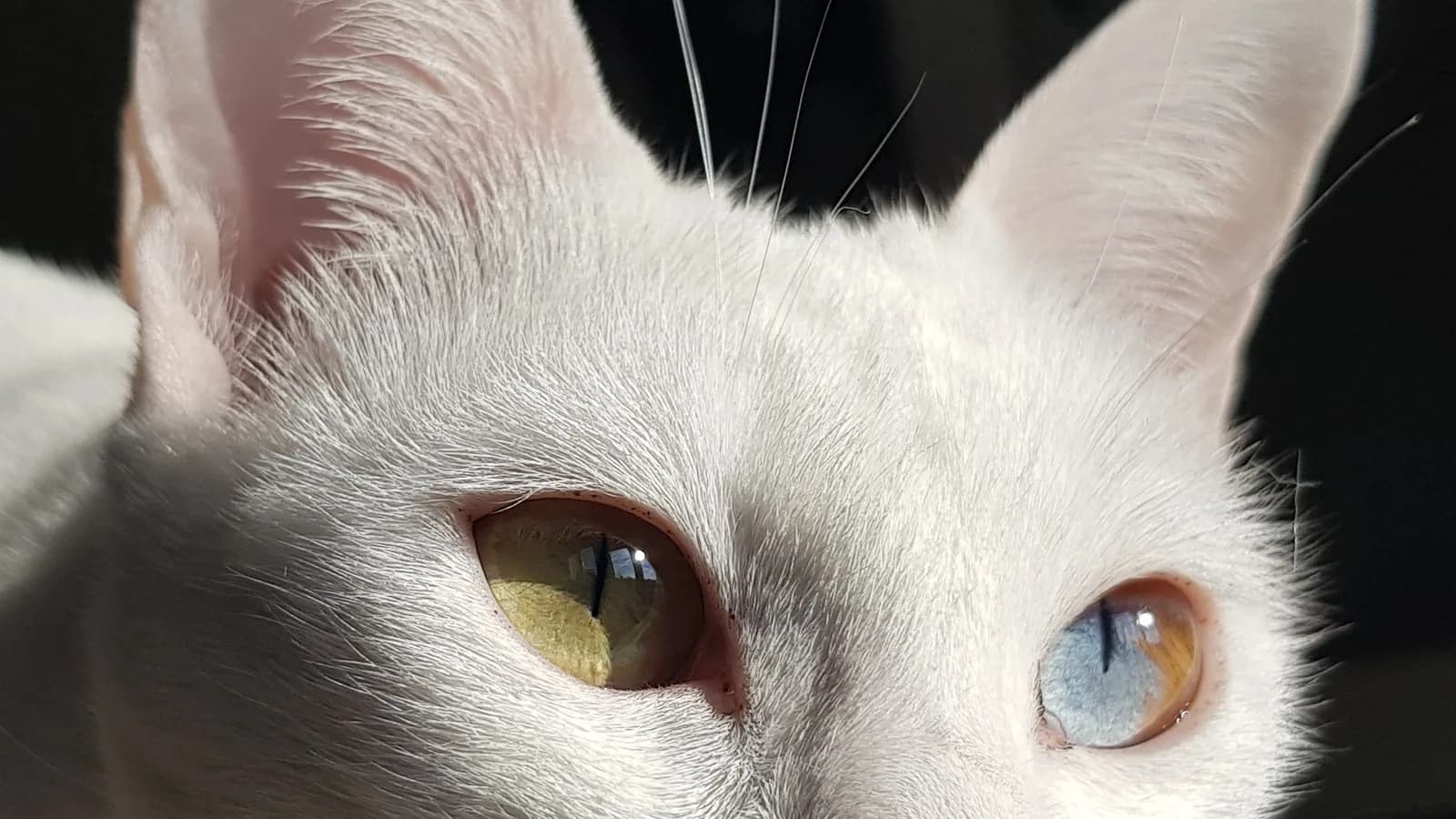
Rule one: the eye classes. , and converge on the identical list. A Khao Manee is pure white, with eyes in any of four classes: blue, gold (yellow), green, or (two different colors). The famous odd eyes are prized, not required. No other coat color is accepted in any registry.
Rule two: the 18-month headcap allowance, the single most useful fact on this page. All three standards, independently, tolerate a small patch of color on a YOUNG cat's head, with the same exact threshold: it must be gone by 18 months. disqualifies "spots of hair on cats over 18 months of age".
states "a headcap of color indicating the underlying genotype may persist until 18 months". allows "small areas of colour pigment in kittens and young adults until 18 months." So the kitten with a smudge of color on its head, the exact case the Reddit threads argue about, is not automatically a non-Khao-Manee. It is a documented, named, three-registry allowance with a deadline.
The deafness question, with every hedge kept
The mechanism is general and real. In white cats, the cells that pigment the coat share stem-cell origins with a cell layer of the inner ear. So epistatic white with blue eyes carries a deafness risk: blue-eyed cats most, cats a partial, usually blue-eye-side risk. The breed's own club states the gradient for this breed directly, and adds candour rare in breed advocacy. Its most favourable claim, that deafness "is not occurring at the same frequency as it does in European originating blue eyed breeds", is called ANECDOTAL by the club's own document, with no sample and no rate.
Two more club-recorded facts, each with its limits stated: the UK's founding -tested imports were "all hearing cats whatever the eye colour" (no total given, so no rate follows), and one US breeder's 11-litter record shows exactly one unilateral-deafness case (again, no program total, no rate). None of this is a reassuring conclusion. All of it is more specific than anything a generic white-cat page offers. A hearing test, not appearance, answers the question for any individual cat: the club's own words are that "phenotype is not a definite indicator of deafness."
The UK's checkable rule
Britain turns the deafness question into paperwork. 's Registration Rule 1g requires every white cat of every breed to hold a or OAE hearing certificate before any progeny can be registered. The Khao Manee club's own registration policy repeats it, with a microchip-ID requirement. If you are looking at a UK-bred Khao Manee, the hearing certificate exists or the breeding was not GCCF-registered: a question any buyer can ask in one sentence.
The paperwork truth
A pure white cat with gold, blue or odd eyes is not thereby a Khao Manee. Epistatic white appears in random-bred cats everywhere, and no visual checklist can distinguish ancestry. What identifies the breed is registration tracing to Thai foundation lines: at (full Championship since 2015), (Provisional, promoted this year), (name recognition) or . Without papers, the honest answer is: a beautiful white cat, possibly of Khao Manee type. No test we can point you to will say more, because none exists.
 The vet's take

Veterinary review
Are you a vet?
Your professional read belongs here: every verified practitioner can leave a note, published once our editors have reviewed it.
Sign in and get your license number verified. We check it in the public register, we never ask for or keep a copy of your diploma, and your number is never published.
Frequently asked questions
How do I identify a Khao Manee?
Pure white coat, eyes in one of four classes (blue, gold, green or odd-eyed), and, for a young cat, possibly a temporary color headcap that the standards allow until 18 months. Definitive identification is registry paperwork, not appearance.
Do all Khao Manee have two different colored eyes?
No: odd eyes are the breed's signature but only one of four accepted classes, alongside blue, gold and green. Breeders price odd-eyed kittens higher precisely because they are not the default.
My Khao Manee kitten has a colored spot on its head. Is it purebred?
Possibly, and the standards planned for exactly this: all three tolerate a small headcap of color until 18 months of age. If it persists past 18 months, the cat is disqualified from showing, not from being loved.
Are Khao Manee cats deaf?
Some can be, like any epistatic-white cat, blue-eyed cats at highest risk and odd-eyed cats at partial risk on the blue-eye side. The breed club's own records suggest, in its own word, "anecdotally", a lower frequency than European white breeds, with no rate behind it. Only a BAER hearing test answers for an individual cat.
Is a white cat with odd eyes automatically a Khao Manee?
No: epistatic white and odd eyes occur in random-bred cats worldwide. The breed is identified by registered Thai ancestry, and without paperwork no checklist can prove it.
 Community questions
Got a question this page doesn't cover? Ask it: the best ones get published here with their answer.
This is information, not veterinary advice, and it cannot tell you what is wrong with your cat. Our rule is a simple one: if something is wrong with your cat, call your vet, and call an emergency clinic if it is out of hours. Nothing you read here is a reason to wait.
Medical information applies to every reader. Prices, legal duties and common practice do not: unless stated otherwise, they are given for the United States, and they differ in the UK, Canada and Australia, and often between states or provinces. Check with your own vet and your own local authority.
Our sources
- TICA: Khao Manee breed standard PDF (eye classes; the 18-month disqualification line)
- CFA: Khao Manee breed standard PDF (the headcap-until-18-months allowance)
- GCCF: BAER testing for white cats (Registration Rule 1g)
- Khao Manee Cat Club: Breeding Policy and Registration Policy PDF (the hedged deafness material, in the club's own words)
- TICA: Khao Manee breed page

Worth keeping a paw on
Pin this guide
So you can find it the day you need it, and share it with someone whose cat does the same thing. One click and it sits in your board.
Pin it on Pinterest
 Purr or Pass
The cat newsletter
Our verified guides, no spam. Unsubscribe in one click.
The floor belongs to our members. Keep it kind, links are not allowed, and images go through moderation before anyone else sees them.