

European Shorthair vs American Shorthair: Two Continents' Default Cats, Compared Honestly
European Shorthair vs American Shorthair: opposite registry homes, a measured mortality figure on one side and a ranked behaviour study on the other, and the moggy question answered.

Published August 21, 2026 5 min read
Contents
The confusion is structural: each breed is its own continent's pedigreed version of "the ordinary cat", and the internet's three-way muddle (European Shorthair, American Shorthair, and plain domestic shorthairs) rarely gets untangled in one place. Here is the whole picture, including the third cat in the question, with each figure carrying its source and scope.
| European Shorthair | American Shorthair | |
|---|---|---|
| Registry home | founding breed (1949); national cat of Finland & Sweden | founding breed; championship across US registries |
| Anglophone status | Absent (//); green not-applied; Registration-Only | Recognized everywhere anglophone |
| Registry weight | None published | None published (a genuine similarity) |
| Measured mortality | YES: 464 deaths/10,000 cat-years (Swedish insurance cohort) | None anywhere |
| Measured behaviour | Finnish owner surveys (own group): shier with strangers, mid-table activity | Japanese vet-rated survey: 1st of 12 novelty-seeking, 2nd friendliness |
| The everyday-name trap | 'European Shorthair' also means any non- cat in Europe | Distinct from 'domestic shorthair', the anglophone moggy term |
The registry mirror-image
The AMERICAN Shorthair is a founding breed. It holds championship recognition across the US registries, with Europe as its away market. The EUROPEAN Shorthair is the exact mirror. It is a founding breed, recognized since 1949. Its own standard was separated from the British Shorthair's by a 1981 FIFe decision, effective in the early 1980s. It is the national cat of Finland (2017) and Sweden (2022). And it is nearly invisible in anglophone registries. It is absent at CFA, and .
says "no exhibits presently in Australia". holds it at Green-tier, not-applied. files it Registration-Only (Category VI), where it also serves as an approved outcross donor. GCCF's own suggestion to UK enquirers is the pull-quote of the whole subject. It points them to the British Shorthair, or to its own Household Pet non- class. That is a registry independently confirming how close this breed's name sits to "ordinary cat" in anglophone use.
The data asymmetries, stated in both directions
No single "better documented" sentence would be true, so here are the real asymmetries. Weight: a genuine similarity. NEITHER breed's registry publishes a number, whatever consumer sites invent. Mortality: the European Shorthair has what the American lacks, a real measured figure. It comes from a Swedish insurance cohort of tens of thousands of cat-years: an age-standardised mortality rate of 464 deaths per 10,000 cat-years. The American Shorthair has no measured mortality study anywhere. Behaviour: both breeds are measured, by DIFFERENT instruments in different countries.
The American Shorthair ranks near the top for novelty-seeking, friendliness and playfulness in a Japanese veterinarian-rated 12-breed survey (Takeuchi & Mori 2009). The European Shorthair appears in the two big Finnish owner surveys (Salonen 2019, Mikkola 2021) as its own group. There it reads less sociable and shier with strangers than the population middle, mid-table on activity and aggression. Different countries, different raters, different questions. Neither figure converts into the other breed's vocabulary.
Looks, colors and the feel of each
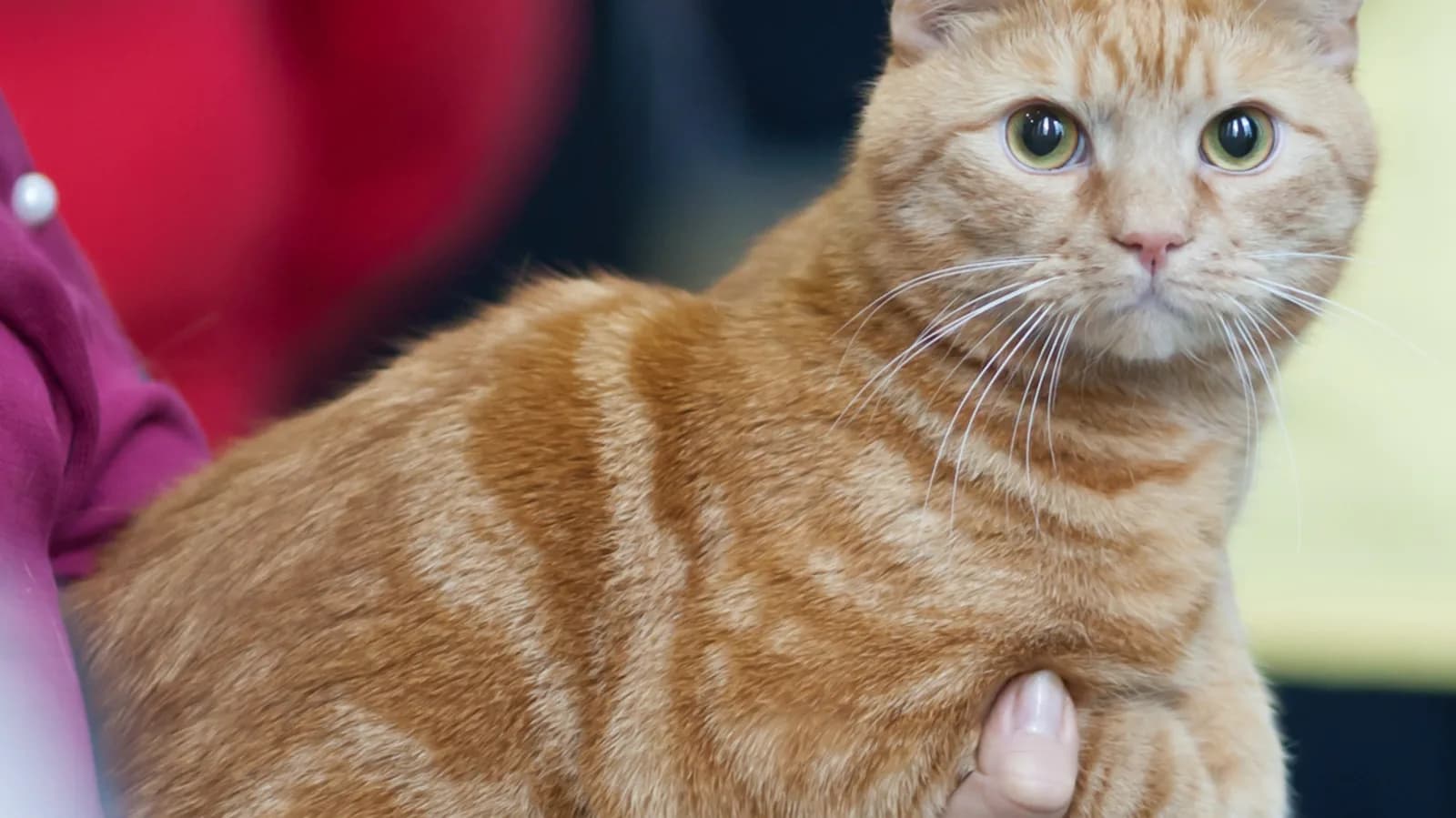
Both are sturdy, balanced shorthairs without extremes, which is why photos alone rarely settle an identification. The color rules differ in philosophy. gives the European Shorthair a closed (though multi-branch) color table, with green, amber or blue eyes. The American Shorthair's registries run broader palettes, led by its famous silver . Temperament impressions track the measured hints above: the American reads as the more openly sociable of the two on the instruments that exist, and the European's consumer reputation (shy with strangers, warm with its family) matches its Finnish survey readings.
The third cat in the question: the moggy
Most people asking this comparison actually own neither breed. In Europe, "European Shorthair" doubles in everyday speech as "any non- cat". In anglophone countries, "domestic shorthair" and "moggy" fill the same role. None of those cats is a pedigree European Shorthair, whose real population is a small, -registered, Scandinavian-centered breed. A shelter cat described with either term is a wonderful cat, and not a member of either breed on this page. Only FIFe (or, for the American, /) paperwork makes the breed claim mean anything.
And the British Shorthair?
One paragraph, because the search volume is near zero and the history is real. The European Shorthair's standard was originally shared with the British Shorthair inside , until the 1981 separation. The two remain the likeliest mix-up on the UK side, where itself points European Shorthair enquirers to the British breed. The British is the round-faced, plush-coated, cobby one; the European is the leaner, more moderate, "ordinary-cat-perfected" silhouette.
 The vet's take

Veterinary review
Are you a vet?
Your professional read belongs here: every verified practitioner can leave a note, published once our editors have reviewed it.
Sign in and get your license number verified. We check it in the public register, we never ask for or keep a copy of your diploma, and your number is never published.
Frequently asked questions
What is the difference between a European and an American Shorthair?
Continent-mirror pedigree breeds: the European is a FIFe founding breed (1949) nearly absent from US registries; the American is a CFA founding breed with the opposite footprint. They differ in color rules, measured data and registry paperwork more than in silhouette.
Is a European Shorthair just a regular cat?
The name does double duty, which is the whole confusion: the pedigree breed is real, standardised and FIFe-registered, while everyday European speech uses the same words for any non-pedigree cat. Paperwork is the only honest divider.
Which breed is better documented?
Neither, across the board, and the honest answer runs both directions: the European has a measured Swedish mortality rate the American lacks; the American has a ranked veterinarian-rated behaviour study; the European appears in the Finnish owner surveys; neither registry publishes a weight.
Is a domestic shorthair the same as an American Shorthair?
No: a domestic shorthair (or moggy) is any non-pedigree cat; the American Shorthair is a specific CFA pedigree breed. The same distinction separates European moggies from the pedigree European Shorthair.
European Shorthair vs British Shorthair: which is which?
Shared FIFe history until 1981, different cats since: the British is cobby, round and plush; the European is the moderate, lean, classic silhouette. In the UK, GCCF itself steers European enquirers to the British breed.
 Community questions
Got a question this page doesn't cover? Ask it: the best ones get published here with their answer.
This is information, not veterinary advice, and it cannot tell you what is wrong with your cat. Our rule is a simple one: if something is wrong with your cat, call your vet, and call an emergency clinic if it is out of hours. Nothing you read here is a reason to wait.
Medical information applies to every reader. Prices, legal duties and common practice do not: unless stated otherwise, they are given for the United States, and they differ in the UK, Canada and Australia, and often between states or provinces. Check with your own vet and your own local authority.
Our sources
- FIFe: European Shorthair breed standard (the 1949 founding recognition; the closed color table)
- CFA: American Shorthair breed page (the founding-breed mirror)
- GCCF: unrecognised breeds page (the Green tier and the Household Pet cross-reference)
- Egenvall et al. 2009, J Vet Intern Med: the measured Swedish mortality row (PMID 19780926)
- Takeuchi & Mori 2009, J Vet Med Sci: the 12-breed veterinarian-rated survey (PMID 19721357)
- Salonen et al. 2019, Sci Rep: the Finnish owner survey isolating the breed (PMID 31138836, via the dossier's own PMCID)

Worth keeping a paw on
Pin this guide
So you can find it the day you need it, and share it with someone whose cat does the same thing. One click and it sits in your board.
Pin it on Pinterest
 Purr or Pass
The cat newsletter
Our verified guides, no spam. Unsubscribe in one click.
The floor belongs to our members. Keep it kind, links are not allowed, and images go through moderation before anyone else sees them.