

How Many Litter Boxes, and Where to Put Them
One per cat plus one is a rule of thumb, and the guidelines say so themselves. Size is the finding nobody sells: even a jumbo box is smaller than recommended.

Published August 25, 2026Updated September 8, 2026 6 min read
Contents
Two cats, three boxes. That is the answer you will get everywhere, and it is roughly right.
What nobody tells you is that the rule's own authors are more careful than the internet is, and that the number of boxes matters considerably less than their size, which is where almost every box sold falls short.
The rule, quoted honestly
One litter box per cat, plus one spare.
The 2014 veterinary guidelines on house soiling, which are where this comes from, describe it as the historical rule of thumb and say plainly that it is not an absolute requirement.
That is a more useful sentence than the rule itself, because it tells you what to do when the rule and your house disagree. Three boxes in a one-bedroom flat with two cats who share everything happily is fine. Two boxes side by side in a corridor is worse than one box in a good place, for a reason we come to below.
The finding nobody selling boxes wants to publish
Here is the one that matters, and it is a measurement.
The guidelines say a litter box should be about one and a half times the cat's body length. Work that through for an average cat and you land at a box roughly 22 to 32 inches long (around 56 to 81 cm).
Now the shop shelf:
| What is sold | Actual size |
|---|---|
| A "standard" litter box | About 16 x 10 inches |
| A "jumbo" litter box | About 22 x 18 inches |
| What the guidance implies | About 22 to 32 inches long |
Even the jumbo is at the bottom of the recommended range. The standard is not close.
And there is direct evidence behind it: a 2014 study found cats significantly preferred a box measuring 86 x 39 cm, about 34 x 15 inches, over a smaller one. That is larger than anything most shops stock as a litter box at all, which is why a plastic storage tub with a side cut down is such a common recommendation from people who have read the research.
⚠️ One honest wrinkle: two authoritative guidelines, from 2014 and 2021, define "one and a half times the cat's length" differently. One measures nose to base of tail, the other nose to tip of tail. Nobody has reconciled them, so treat the range as a range.
Placement, and the rule that explains the corridor problem
Placement matters as much as the count, and there is one rule here that we have not seen on any competing page:
Two boxes side by side are one box, as far as a cat is concerned. And openings should not face each other.
Which explains the failure mode people run into constantly: three trays lined up neatly in the utility room is, functionally, one location. If the point of the spare box is that a cat can always reach one without passing another cat, then lining them up defeats the entire purpose.
So:
- Spread them out. Different rooms, and one per floor in a house with stairs.
- Away from food and water.
- Away from noisy appliances, especially ones that start on their own. A boiler firing while a cat is mid-squat teaches a lesson you will spend months undoing.
- Never in a dead end. A cat needs to see what is coming and have a way out that is not past it.
Which litter, and does a lid matter?
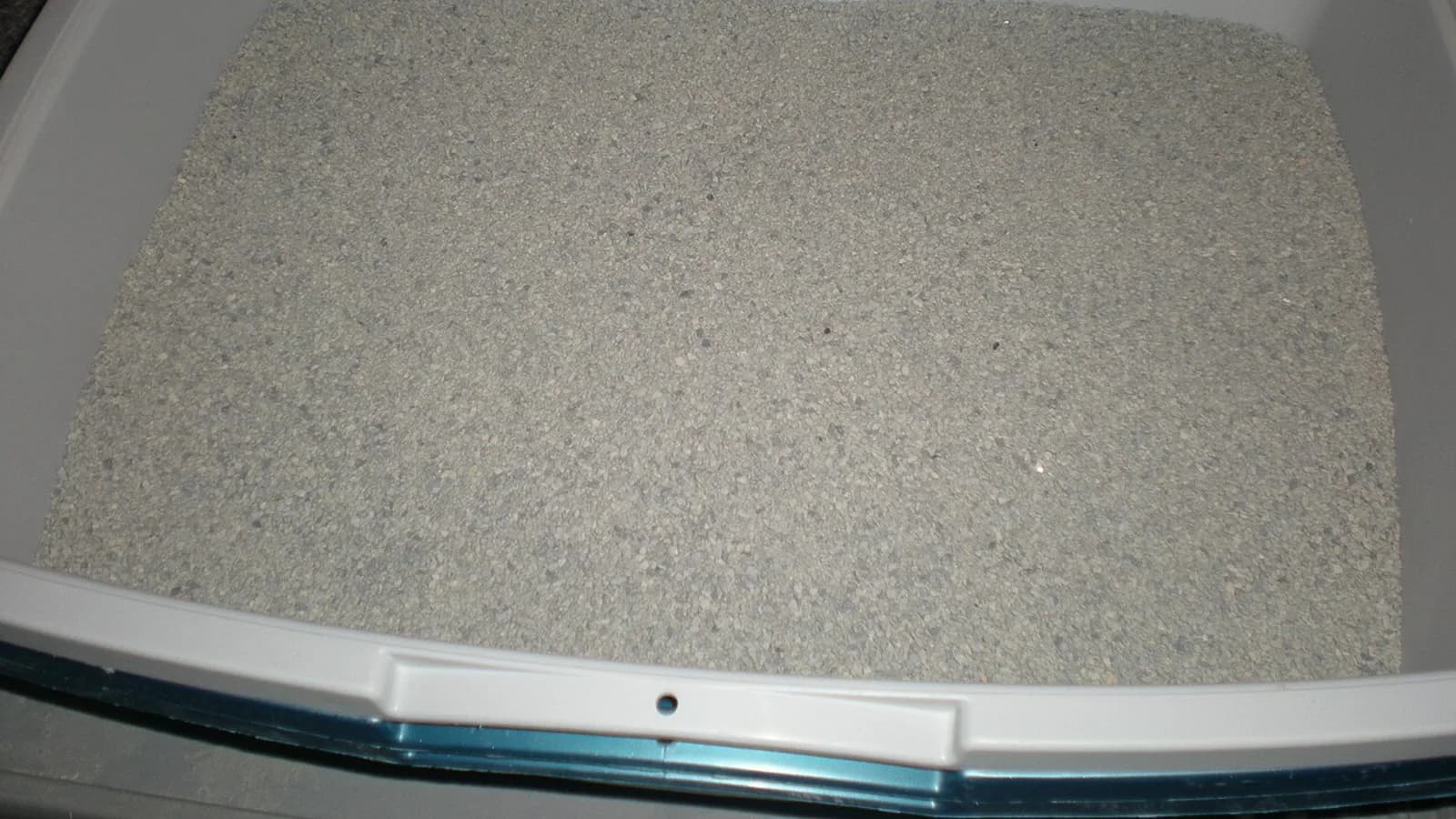
Litter type has a clear answer, and decades of preference studies converge on the same one: unscented, fine-grained, clumping clay. That is not the most expensive option and it is not the one with the nicest packaging.
Covered or uncovered has no clear answer, and the honest version is the interesting one. A 2013 study found no population-level preference: cats as a group did not favour covered or uncovered. What it did find was real individual variation, meaning your cat has an opinion even though cats in general do not.
The practical translation: offer both if you are unsure, and let the cat vote.
Skip scented litters and deodorising powders. You are solving your problem with the cat's nose.
Cleaning, and a reason you have not heard
Scoop daily, change fully on the schedule your litter type needs.
The reason everyone gives is smell. There is a better one, and it is public health: Toxoplasma oocysts shed in cat feces are not immediately infectious. They need a period in the tray to become so. Scooping daily takes the litter box out of that window entirely.
That single fact is worth more than every deodorising product on the shelf, and none of the competing pages we checked mention it.
⚠️ What to clean it with matters. Disinfectants containing chloroxylenol, the active ingredient in some common household products, are toxic to cats. Hot water and a mild detergent, rinsed properly, is the safe answer.
The litter box is a diagnostic instrument
This is the part of the page that could save an animal, so it goes in bold.
What comes out of the box, and how often, is often the first sign of urinary disease, kidney disease and diabetes. Changes worth acting on:
- More urine, or more visits
- Less urine, or straining
- Blood
- Suddenly going outside the box, in a cat that never did
⚠️ A male cat straining in the box and producing nothing is a life-threatening emergency. A complete urethral blockage can kill within 24 to 48 hours, on Cornell's own figure. It is not a wait-and-see, it is not a morning-appointment, it is now.
Anything that worries you about your cat is a reason to call your vet, and out of hours, an emergency clinic. Nothing on this page is ever a reason to wait.
If your cat has started going outside the box, that is a separate subject with its own causes, and the first question is always a medical one, because a cat that strains without producing urine is an emergency. Why a cat pees outside the litter box works through the causes in the order a vet does. The standing-up version, small amounts sprayed on vertical surfaces, is marking, and our spraying guide covers its triggers.
Words, by market
Litter box in the United States and Canada. Litter tray in the United Kingdom. Both are used in Australia. Litter itself is litter everywhere.
What to take away
- One per cat plus one is a rule of thumb, and the guidelines that gave us it say so themselves.
- Size beats count. The guidance implies 22 to 32 inches long, and even a jumbo box is at the bottom of that.
- Two boxes side by side are one box to a cat. Spread them out, one per floor.
- Unscented, fine, clumping clay wins the preference studies. Scent is for you, not the cat.
- Covered versus uncovered has no population answer and a real individual one. Let the cat vote.
- Scoop daily, and the reason is Toxoplasma rather than smell.
- A male cat straining and producing nothing is an emergency, and the window is 24 to 48 hours.
More on what a cat will actually use, and where to put it, in what makes a scratching post work.
 The vet's take

Veterinary review
Are you a vet?
Your professional read belongs here: every verified practitioner can leave a note, published once our editors have reviewed it.
Sign in and get your license number verified. We check it in the public register, we never ask for or keep a copy of your diploma, and your number is never published.
Frequently asked questions
How many litter boxes do I need for 2 cats?
Three, on the usual rule of one per cat plus one spare. Worth knowing that the 2014 veterinary guidelines this comes from call it the historical rule of thumb rather than an absolute requirement, and that spreading them out matters more than hitting the number.
How big should a litter box be?
About one and a half times your cat's body length, which works out at roughly 22 to 32 inches long for an average cat. A "standard" box is about 16 by 10 inches and even a "jumbo" is about 22 by 18, so most boxes sold are smaller than the recommendation. A study in 2014 found cats significantly preferred a box of 86 by 39 cm.
Where should I put the litter box?
Away from food and water, away from appliances that start on their own, never in a dead end, and spread across different rooms with one per floor. Two boxes side by side count as one box from the cat's point of view, and their openings should not face each other.
What is the best cat litter?
Decades of preference studies converge on unscented, fine-grained clumping clay. Scented litters and deodorising powders solve a human problem at the cat's expense.
Do cats prefer covered or uncovered litter boxes?
As a population, neither: a 2013 study found no group preference. What it did find was real variation between individuals, so your cat probably has an opinion. Offering one of each and seeing which gets used is the honest way to find out.
How often should I clean the litter box?
Scoop daily. The usual reason given is smell; the better one is that Toxoplasma oocysts in cat feces are not infectious immediately and need time in the tray to become so, and daily scooping removes that window. Clean with hot water and mild detergent, never a disinfectant containing chloroxylenol, which is toxic to cats.
My cat is straining in the litter box. Is that an emergency?
If it is a male cat straining and producing nothing, yes, immediately. A complete urethral blockage can be fatal within 24 to 48 hours. Call an emergency clinic rather than waiting for a routine appointment.
 Community questions
Got a question this page doesn't cover? Ask it: the best ones get published here with their answer.
Our sources
- Carney, Sadek et al 2014, AAFP and ISFM guidelines for diagnosing and solving house-soiling behavior in cats (calls n plus one the historical rule of thumb)
- AAHA and AAFP 2021 feline life stage guidelines, general litter box considerations (the second definition of one and a half body lengths)
- Guy, Hopson, Vanderstichel 2014, litter box size preference in domestic cats (the 86 by 39 cm finding)
- Cornell Feline Health Center, feline lower urinary tract disease (death within 24 to 48 hours of complete urethral obstruction)
- CDC, toxoplasmosis: what cat owners should know (the oocyst infectivity window behind daily scooping)
- AVSAB, what does the science say about cats and covered litter boxes (the 2013 no-population-preference finding)
- International Cat Care, choosing a litter tray for your cat, and the chloroxylenol disinfectant warning
- Ohio State Indoor Pet Initiative, litter boxes (placement, and adjacent boxes reading as one)

Worth keeping a paw on
Pin this guide
So you can find it the day you need it, and share it with someone whose cat does the same thing. One click and it sits in your board.
Pin it on Pinterest
The floor belongs to our members. Keep it kind, links are not allowed, and images go through moderation before anyone else sees them.